
Main Courses
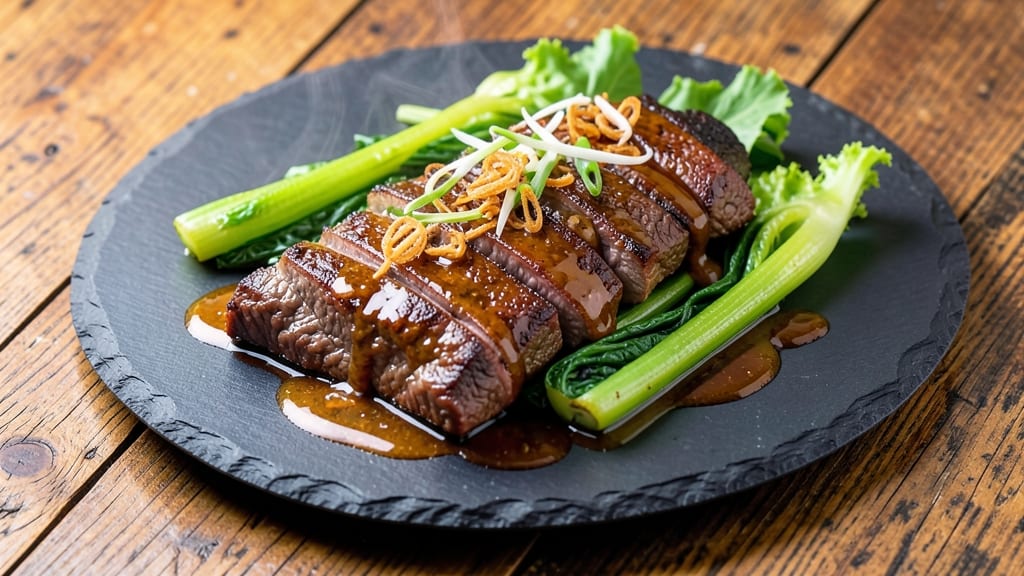
This beef and pak choi stir fry delivers restaurant-quality results with tender beef and crisp-tender greens in just 20 minutes. The secret lies in high-heat wok technique and proper prep—thinly sliced beef and blanched pak choi ensure perfect texture every time.
I've refined this recipe over countless weeknight dinners, balancing bold flavors with simplicity for home cooks.
What sets this stir-fry apart is the sauce—a savory blend of soy, oyster, and chili that caramelizes beautifully while cooking. The beef develops a slight char on the edges while staying juicy inside, while the pak choi maintains its vibrant green color and satisfying crunch.
This method works equally well in a wok or large skillet, making it adaptable to any kitchen.
By the time you plate this dish, you'll have a vibrant stir-fry with perfectly seared beef strips and bright green pak choi that wilt just enough to stay crisp.
The sauce clings to every bite, delivering layers of umami and spice that transform simple ingredients into something extraordinary. Serve over steamed rice for the full experience.
The beauty of this recipe is its flexibility—swap in broccoli or bok choy if needed, or adjust the sauce to your spice preference. It's the kind of weeknight meal that feels special without requiring hours in the kitchen. Let's get cooking!
Ingredients for beef and pak choi stir fry
High-quality ingredients transform into a restaurant-style stir fry with perfect texture and bold flavors.
| Ingredient | Amount | Notes |
|---|---|---|
| Flank Steak 🥩 | 1 lb | Thinly sliced against grain |
| Pak Choi 🥬 | 12 oz | Baby or regular, cut into halves |
| Sesame Oil 🫒 | 1 tbsp | For aroma, not cooking |
| Light Soy Sauce 🥫 | 3 tbsp | High-quality brand preferred |
| Oyster Sauce 🍶 | 2 tbsp | Kikkoman or Lee Kum Kee |
| Dark Soy Sauce 🥫 | 1 tbsp | For color depth |
| Honey 🍯 | 1 tbsp | Wildflower preferred |
| Garlic Cloves 🧄 | 4 cloves | Minced finely |
| Fresh Ginger 🌿 | 1 tbsp | Grated finely |
| Red Chili Flakes 🌶️ | 1 tsp | Adjust to taste |
| Cornstarch 🌾 | 1 tbsp | For beef tenderizing |
| Vegetable Oil 🫒 | 2 tbsp | High smoke point |
| Sesame Seeds 🌱 | 1 tbsp | Toasted for garnish |
| Steamed White Rice 🍚 | 2 cups | Cooked, for serving |
The flank steak is your workhorse here—look for well-marbled cuts at Whole Foods or your local butcher. Thinly slicing it against the grain is non-negotiable for tenderness. I always ask for it to be pre-sliced if possible, saving me 20 minutes of prep. For the pak choi, baby leaves hold up better to stir-frying than full-size heads, but either works. If you're using regular pak choi, halve the stems to ensure even cooking. Asian markets often have the freshest selection, but most grocery stores carry it now too.
No oyster sauce? Hoisin sauce plus a splash of soy gets you close, though the umami depth won't be identical. Substituting vegetarian oyster sauce works perfectly if you're avoiding seafood. The honey adds just enough sweetness to balance the soy's saltiness—agave nectar is a 1:1 swap if you prefer. For the chili flakes, Sichuan peppercorns (lightly toasted and ground) add a numbing kick that pairs beautifully. If you're short on time, pre-minced garlic and ginger from the refrigerated section at Trader Joe's save prep work without sacrificing flavor. Just measure carefully—those jars are often over-salted.
The beef marinade keeps for 3 days in the fridge, but the stir-fry itself reheats best fresh—2-3 minutes in a hot pan with a splash of water. Store leftovers in an airtight container with parchment between layers to prevent sogginess. For longer storage, freeze for up to 2 months, though the pak choi will soften further. I always make extra rice—it reheats perfectly and pairs well with the stir-fry for lunch the next day. The sesame seeds toast in 30 seconds—don't walk away, or they'll burn.
Why You'll Love This Recipe
- One-Pan Magic: I swear by this recipe when I’m too tired to scrub a million dishes—just a hot wok, a few minutes of slicing, and boom. That sesame oil finish? It coats everything in this golden aroma that makes the kitchen smell like a dim-sum spot, no takeout needed.
- Umami Bomb: The combo of light soy and oyster sauce turns that flank steak into something ridiculously tender while keeping it juicy. And pak choi? It wilts just enough to soak up all the savory goodness—crunchy stems, silky leaves, perfection.
- Lunchbox Hero: Between us, this is my go-to for meal prep. Toss the leftovers into bento boxes, and they stay fresh for days. My kid actually eats his veggies this way—honestly, the oyster sauce does half the work.
- Budget Power Move: Flank steak stretches far, and pak choi’s cheap but packs a punch. A single stir-fry feeds four for under $15, and the flavors are so bold you’d never guess. Plus, the leftovers? Even better reheated than fresh.
Step-by-step instructions for beef and pak choi stir fry
Master this wok technique for perfectly tender beef and crisp-tender pak choi every time.
🔪 Step 1: Prep the Beef for Maximum Tenderness
Slice the 1 lb flank steak thinly against the grain into ¼-inch strips. Place the sliced beef in a bowl and add 1 tbsp cornstarch and 1 tbsp light soy sauce. Toss gently to coat evenly, then let it marinate for 15 minutes at room temperature. This step is crucial—the cornstarch creates a light crust while the soy sauce tenderizes the meat.
While the beef marinates, halve the 12 oz pak choi by cutting through the stems. Rinse briefly under cold water to remove any dirt, then pat completely dry with paper towels. Keeping the greens dry ensures they'll crisp up nicely in the wok rather than steaming.
🍳 Step 2: Sear the Beef in Hot Oil
Heat 2 tbsp vegetable oil in a wok or large skillet over high heat until shimmering. Add the marinated beef in a single layer and let it sear undisturbed for 1-2 minutes until the edges turn deep golden brown. This high-heat sear locks in juices and creates that signature wok-hei flavor.
Once the beef is browned, remove it from the wok and set aside. The beef should be 80% cooked at this point but still slightly pink in the center—it'll finish cooking when combined with the pak choi. Keep the wok over heat for the next step.
🥘 Step 3: Stir-Fry Pak Choi with Aromatics
In the same wok, add 1 tbsp vegetable oil if needed, then stir in 4 cloves minced garlic and 1 tbsp grated fresh ginger. Cook for 30 seconds until fragrant but not browned—this prevents bitterness and ensures you get the full aromatic punch.
Add the halved pak choi and stir-fry for 2-3 minutes until the stems turn bright green and the leaves just begin to wilt. The pak choi should retain some crispness—overcooking turns it mushy. Push the greens to one side of the wok to make space for the sauce.
🍳 Step 4: Combine and Finish with Sauce
Return the seared beef to the wok. In a small bowl, whisk together 3 tbsp light soy sauce, 2 tbsp oyster sauce, 1 tbsp dark soy sauce, 1 tbsp honey, and 1 tsp red chili flakes. Pour this sauce over the beef and pak choi, then toss everything together vigorously for 1-2 minutes until the pak choi is bright green and coated in sauce.
Add 1 tbsp sesame oil and toss once more to distribute. The sauce should coat the beef and greens evenly, with just a slight gloss. Remove from heat immediately—this prevents the pak choi from overcooking and keeps the dish vibrant.
🍽️ Step 5: Serve Over Steamed Rice
Divide the 2 cups steamed white rice among serving plates, then top each portion with the beef and pak choi stir fry. Sprinkle with 1 tbsp toasted sesame seeds for texture and color contrast. The dish should be hot and aromatic, with the pak choi still offering a satisfying crunch.
Serve immediately while the pak choi retains its crisp-tender texture. The beef should be tender yet slightly chewy, with a glossy sauce that clings to every bite. For extra heat, add more chili flakes, or for sweetness, drizzle with additional honey.
Pro Tips For Making Beef And Pak Choi Stir Fry
- SEAR STEAK IN BATCHES: Flank steak releases way too much juice when you dump it all in at once—your pan will turn to soup, and the beef will steam instead of sear. Cut it into 1-inch strips, then work in two batches. The first batch gets that perfect crust while the second waits in a bowl. (Yes, it’s an extra step, but trust me, the difference in texture is worth it.)
- TRIM PAK CHOI STEMS THIN: Thick stems on pak choi take forever to cook and end up mushy. Hold each bunch by the leaves and slice the stems lengthwise into ¼-inch strips—like shaving them off. They’ll soften faster and blend better with the beef. (I used to skip this and always wondered why my stir-fry felt uneven.)
- DON’T OVERMIX THE SAUCE: Stir-fries taste best when the sauce clings to the beef and greens in pockets, not when it’s all blended into a uniform glaze. Toss the beef and pak choi together, then drizzle the soy-oyster mix lightly over half, fold once, then drizzle the rest. The sesame oil goes last—just a quick toss to coat, not a marinade.
- REST THE STEAK BEFORE SLICING: Flank steak is tough when raw and stays chewy if you slice it straight from the fridge. After cooking, transfer it to a plate, loosely cover with foil, and let it sit for 5 minutes. The fibers relax, and the slices stay together. (I learned this the hard way—my first stir-fry had beef that fell apart like overcooked pasta.)
Creative variations of this beef and pak choi stir fry
Spicy Sichuan Twist
Swap the red chili flakes for 1 tsp Sichuan peppercorns (toasted and ground) plus ½ tsp gochujang paste in the sauce. Add 1 tbsp doubanjiang (fermented chili bean paste) when combining with the beef for that signature numbing-spicy kick.
Garnish with thinly sliced scallions and serve with extra steamed rice> to soak up the bold flavors. 🌶️
Sweet and Tangy Fusion
Replace the honey with 1 tbsp hoisin sauce> and add 1 tsp rice vinegar> to the sauce mixture. Stir in ½ cup pineapple chunks> (fresh or canned) during the final toss for a tropical twist.
Top with crushed peanuts> for crunch and serve over jasmine rice> for an Asian-inspired fusion dish that's perfect for summer. 🍍
Vegetarian Swap
Replace the beef with 12 oz shiitake mushrooms> (sliced) and 8 oz firm tofu> (pressed and cubed). Toss the tofu in 1 tbsp cornstarch> before cooking to achieve a similar texture.
Use vegetarian oyster sauce> and add ½ tsp white pepper> to the sauce for depth. This version keeps all the umami while being fully plant-based. 🌱
Seafood Upgrade
Add 8 oz shrimp> (peeled and deveined) to the wok alongside the beef during the final toss. Increase the sauce by 1 tbsp> to accommodate the extra protein. Garnish with cilantro> and serve with lime wedges> for a bright, coastal-inspired stir-fry.
The shrimp cooks in just 1-2 minutes> at the end, so add it last. 🦐
Winter Root Version
Substitute half the pak choi with 1 cup shredded daikon radish> and ½ cup julienned carrots>. Reduce the stir-fry time to 1-2 minutes> to keep the roots crisp-tender.
Add 1 tsp grated fresh turmeric> to the sauce for warmth and serve with sesame seeds> and chopped scallions>. This hearty version is perfect for chilly evenings. ❄️
Quick One-Pan Meal
Cook ½ cup uncooked jasmine rice> directly in the wok after removing the stir-fry. Spread the rice in an even layer, add 1 cup water>, and cover with a lid.
Simmer for 15 minutes> on low heat while you prepare the stir-fry. This creates a complete one-pan meal with minimal cleanup. 🍚
Nutrition facts
Frequently asked questions
Why does my pak choi turn mushy in stir-fry?
Overcooking is the #1 culprit—pak choi should cook for just 2-3 minutes until bright green with slight wilting. Always use high heat and stir constantly. Also, ensure your greens are completely dry before cooking, as moisture steams them instead of crisping. For extra insurance, blanch pak choi in boiling water for 30 seconds before stir-frying.
Can I use flank steak substitutes?
Try ribeye (thinly sliced) or sirloin for richer flavor, or chuck roast (pounded thin) for budget-friendly results. For leaner options, use lean pork tenderloin or chicken breast (cut into thin strips). Just reduce cooking time by 30 seconds for poultry. Always slice against the grain for tenderness.
How do I fix beef that's too chewy?
Chewy beef usually means it wasn't sliced thin enough or cooked properly. Next time, slice into ¼-inch strips against the grain, and sear undisturbed for 2 minutes until browned. For immediate fixes, slice the cooked beef diagonally into thinner strips and toss with 1 tsp soy sauce and ½ tsp honey to soften. The cornstarch marinade is key—never skip it!
What's the best rice to serve with this?
Jasmine rice is ideal—its floral aroma complements the dish beautifully. For extra texture, use short-grain sushi rice or even forbidden black rice for a dramatic presentation. If you're short on time, microwaveable brown rice works too. Always cook rice slightly firmer than usual so it doesn't get soggy under the stir-fry sauce.
Can I make this ahead of time?
Yes, but with smart timing! Cook the beef and pak choi separately, then store in airtight containers for up to 2 days. Reheat only the beef in a hot pan for 1 minute, then quickly stir-fry fresh pak choi with the sauce. For best texture, serve within 30 minutes of reheating. The sauce can be pre-mixed and stored for 1 week in the fridge.