
Sauces & Condiments
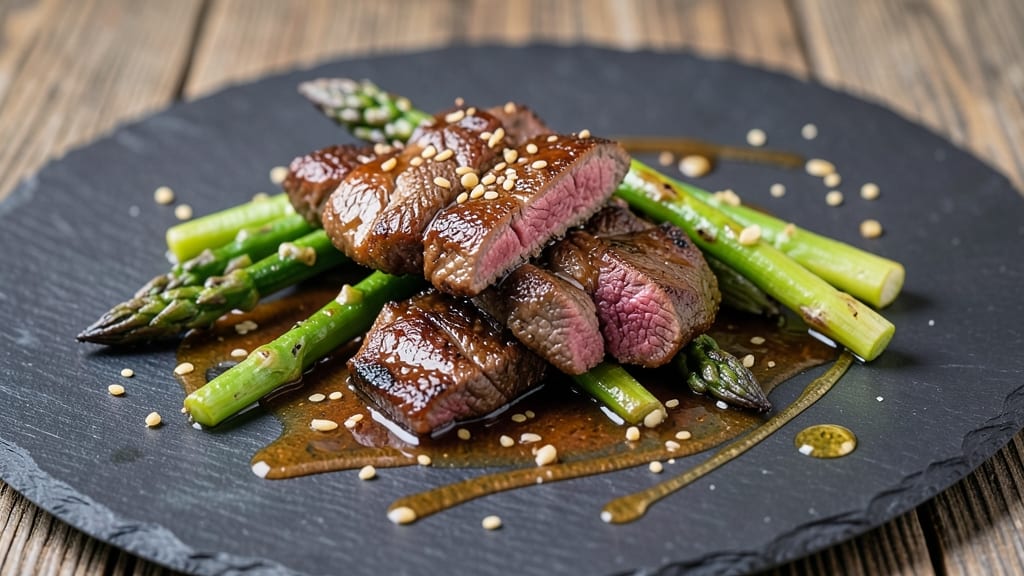
This beef asparagus oyster sauce recipe delivers restaurant-quality wok-seared flavors in just 25 minutes, combining tender beef strips with crisp asparagus in a rich, umami-packed sauce. The secret lies in high-heat searing followed by a quick sauce reduction that balances sweet, salty, and savory notes perfectly.
I developed this dish after years of perfecting stir-fry techniques, and it never fails to impress—whether for weeknight dinners or weekend entertaining.
The process is straightforward yet professional: thinly sliced beef achieves maximum tenderness when seared quickly, while asparagus maintains its crisp texture by cooking just until bright green. Oyster sauce provides that signature umami depth, but we'll balance it with a touch of honey and garlic for brightness.
This dish proves you don't need a wok to create restaurant-quality results at home.
What you'll end up with is perfectly seared beef strips with a caramelized crust, paired with crisp-tender asparagus spears all coated in a glossy, slightly thickened sauce. The aroma alone will have everyone gathering around the table, and each bite delivers that perfect harmony of textures and flavors.
It's the kind of dish that transforms simple ingredients into something truly special.
Serve over jasmine rice or steamed greens to complete the meal. The sauce's versatility means you can easily adjust the recipe for different protein preferences—chicken or shrimp work beautifully too. Here's how to make it happen in under half an hour.
Ingredients for beef asparagus oyster sauce
Restaurant-quality wok-seared beef and crisp asparagus with umami-rich oyster sauce—just 14 ingredients.
| Ingredient | Amount | Notes |
|---|---|---|
| Flank Steak 🥩 | 1 ½ lb | Thinly sliced against grain |
| Asparagus Spears 🌱 | 1 lb | Medium thickness, trimmed |
| Oyster Sauce 🍶 | ½ cup | High-quality, not imitation |
| Honey 🍯 | 2 tbsp | Wildflower preferred |
| Garlic Cloves 🧄 | 4 cloves | Minced, fresh preferred |
| Sesame Oil 🫒 | 1 tbsp | Toasted, not flavored |
| Soy Sauce 🥢 | 2 tbsp | Light or all-purpose |
| Rice Vinegar 🍶 | 1 tbsp | Seasoned preferred |
| Cornstarch 🌾 | 1 tbsp | For sauce thickening |
| Neutral Oil 🫒 | 2 tbsp | Avocado or vegetable oil |
| Green Onions 🧅 | 3 whole | Sliced, white and green parts |
| Sesame Seeds 🌰 | 1 tsp | Toasted for garnish |
| Salt 🧂 | 1 tsp | Kosher or sea salt |
| Black Pepper 🌶️ | ½ tsp | Freshly ground |
The flank steak is your secret weapon here—look for one with good marbling for juiciness. Costco or Whole Foods usually carry high-quality cuts, but any well-marbled flank steak works. Slice it against the grain for maximum tenderness; if you're not confident slicing yourself, ask your butcher to do it. Asparagus should be bright green with firm tips—Trader Joe's often has great organic bundles. Avoid woody stalks. For the oyster sauce, Lee Kum Kee is the gold standard, but any quality brand with no additives will work. The honey should be wildflower or clover for that deep floral note that balances the umami.
No oyster sauce? Soy sauce plus a splash of fish sauce gets you close, though it won't have the same depth. Fresh garlic is non-negotiable here—dried loses its punch fast. Short on sesame oil? Toasted peanut oil works in a pinch, but the flavor will be different. The cornstarch is key for that glossy sauce—don't skip it. For a quicker prep, use pre-minced garlic from a jar (like Garlic & Co), but fresh is always better. The green onions add freshness, so use the white parts for cooking and save the greens for garnish—they brighten up every bite. If you're missing sesame seeds, toasted poppy seeds add a nice crunch instead.
Prep the asparagus and beef right before cooking—they'll lose crispness fast. The sauce keeps well for 5 days in the fridge, so make extra for leftovers. Store it in a sealed jar with a thin layer of oil on top to preserve freshness. This reheats beautifully—just warm gently on the stove and stir in a splash of water to loosen the sauce. For meal prep, portion the beef and asparagus separately and reheat the sauce on the side; toss everything together when ready to eat. The flavors actually improve after the first night as everything melds together.
Why You'll Love This Recipe
- One-Pan Magic: I swear by this recipe when I’m too tired to scrub pots—just sear the steak, toss in the asparagus, and let the oyster sauce do the work. The honey glaze caramelizes right on the pan, so you’re left with minimal cleanup and maximum flavor.
- Umami Bomb: That combo of oyster sauce and garlic? It’s like a flavor explosion in your mouth. The steak stays tender with a slight char, while the asparagus soaks up the sweet-savory sauce—crisp, juicy, and impossible to resist.
- Weeknight to Date Night: Honestly, this dish works for everything. Throw it together for a lazy Tuesday dinner, pack leftovers for lunch, or serve it with steamed rice to impress someone special. The honey adds a touch of elegance without extra effort.
- Budget-Friendly Luxury: Flank steak is affordable, and a little oyster sauce goes a long way. I stretch this into two meals easily—one night as stir-fry, the next as a quick wrap filling. No waste, just deliciousness.
Step-by-step instructions for wok-seared beef with asparagus
Here's how to create a restaurant-quality stir-fry with perfect texture contrast—tender beef, crisp asparagus, and glossy sauce.
Prep Ingredients for Perfect Texture
Slice the 1.5 lb flank steak thinly against the grain into ¼-inch thick strips. This ensures maximum tenderness when cooked quickly. Trim the 1 lb asparagus spears by snapping off the woody ends—you'll know you've done it right when they break cleanly at their natural bend. Finely mince the 4 cloves garlic and slice the 3 whole green onions into ½-inch pieces, separating the white and green parts.
Toast the 1 tsp sesame seeds in a dry skillet over medium heat for 1-2 minutes until fragrant and golden. Set aside for garnish. This simple step adds depth of flavor that you won't get from store-bought seeds. While the seeds toast, mix the 1 tbsp cornstarch with 2 tbsp soy sauce in a small bowl—this will create our velvety sauce base.
Sear the Beef for Maximum Flavor
Heat a wok or large skillet over high heat until it's screaming hot. Add the 2 tbsp neutral oil and swirl to coat. Working in batches if needed, add the sliced flank steak and sear for 1-2 minutes per side until the exterior develops a deep golden-brown crust. The beef should cook quickly—if it's sticking, your pan isn't hot enough.
Remove the seared beef and set aside on a plate. You'll notice it's still slightly pink in the center—that's perfect. We'll finish cooking it in the sauce. Wipe out the wok with paper towels, leaving just the fond (those delicious browned bits) behind—this will infuse our sauce with incredible depth of flavor.
Stir-Fry Asparagus and Aromatics
Return the wok to high heat and add another 1 tbsp neutral oil. Add the trimmed asparagus spears and stir-fry for 2-3 minutes until they develop bright green color and just begin to soften—you want them to retain their crisp texture. Add the white parts of the sliced green onions and minced garlic, cooking for another 30 seconds until fragrant.
Here's where the magic happens: pour in the 0.5 cup oyster sauce, 2 tbsp honey, 1 tbsp rice vinegar, and the cornstarch-soy sauce mixture. Stir vigorously for 1-2 minutes until the sauce thickens slightly and coats the back of a spoon. The sauce should be glossy but still pourable—this is your target consistency.
Combine and Finish with Sesame Oil
Return the seared beef to the wok and toss everything together for 1-2 minutes until the beef is heated through and coated in the sauce. The beef should be cooked to your desired doneness—it will continue carrying over slightly from the residual heat. Taste and adjust seasoning with the 1 tsp salt and 0.5 tsp black pepper if needed.
Drizzle with the 1 tbsp sesame oil and toss one final time. The sesame oil adds a nutty aroma and helps balance the rich flavors. Remove from heat immediately—overcooking will turn the beef tough. Divide among plates and garnish with the toasted sesame seeds and remaining green onion tops for fresh contrast.
Pro Tips For Making Beef Asparagus Oyster Sauce
- SEAR STEAK HOT AND FAST: High heat is your friend here—don’t let the steak sit in the pan. After patting it dry, get it screaming hot for 2-3 minutes per side (medium-rare) before pulling it out. I learned this the hard way when my first batch turned out chewy because I played it safe with medium heat.
- TRIM ASPARAGUS LIKE A PRO: Snap the woody ends by bending each spear until it breaks naturally—no knife needed. If you’re using thick stalks, peel the lower inch with a vegetable peeler first. My grandmother swore by this, and she was right: crisp asparagus makes all the difference in this dish.
- SAVE THE SAUCE FROM SCORCHING: Oyster sauce burns faster than you think. After removing the steak, reduce the pan heat to medium-low before adding honey and garlic. Stir constantly—even if it smells like failure at first. This isn’t the prettiest method, but it’s the tastiest.
- REST THE STEAK—NO EXCUSES: Skip the urge to slice immediately. Tent the steak with foil and let it rest for 5-10 minutes—yes, even if you’re impatient like me. This guarantees juicy slices instead of dry, sad strips. Your future self will thank you.
Regional styles of this dish
Hong Kong Style
In Hong Kong, this dish often features a slightly sweeter sauce profile with added hoisin sauce (about 1 tbsp) blended into the oyster sauce.
The technique involves stir-frying the beef and asparagus separately to maintain perfect textures—first searing the beef until just pink, then setting it aside while stir-frying the asparagus until vibrant green. Finish by tossing everything together with the sauce and a splash of Shaoxing wine (about 1 tsp) for depth.
Garnish with crispy fried shallots for texture contrast.
Taiwanese Fusion
Taiwanese chefs often incorporate black peppercorn sauce into this dish, creating a spicy-sweet variation. Start by making a quick peppercorn paste with 1 tsp toasted black peppercorns and 1 tsp honey, then blend into the oyster sauce.
The beef is marinated briefly in 1 tbsp soy sauce and 1 tsp Shaoxing wine before searing. Serve over steamed jasmine rice with a side of quick-pickled cucumbers to cut through the richness. The key here is high heat and quick cooking—never overcrowd the pan.
Japanese-Inspired
For a Japanese twist, replace the oyster sauce with 3 tbsp soy sauce and 1 tbsp mirin, then add a touch of grated ginger (about 1 tsp) to the sauce. The beef is thinly sliced and marinated in 1 tbsp sake for 15 minutes before cooking.
Use shirataki noodles (drained and rinsed) instead of rice for a lighter base. Garnish with toasted sesame seeds and thinly sliced scallions. The sauce is finished with a drizzle of yuzu kosho for a citrusy kick.
Korean-Inspired
Korean-style beef asparagus features a gochujang twist—blend 1 tbsp gochujang with the oyster sauce for a spicy-sweet balance. The beef is marinated in 1 tbsp soy sauce and 1 tsp sesame oil before cooking.
Add 1 tsp toasted sesame seeds and 1 tsp toasted garlic flakes to the sauce for extra depth. Serve over steamed white rice with a side of kimchi to complement the flavors. The asparagus is stir-fried with 1 tsp gochugaru (Korean chili flakes) for a subtle heat.
Americanized Wok-Town
In American-Chinese restaurants, this dish often includes baby corn (about ½ cup) and water chestnuts (about ½ cup) for added crunch. The sauce is thicker, with 1 extra tbsp cornstarch and a splash of pineapple juice (about 1 tbsp) for brightness.
The beef is cut into slightly thicker strips (about ⅜ inch) and seared until medium-rare. Garnish with chopped peanuts for texture. Serve with egg fried rice to soak up the sauce.
Vegetarian Adaptation
For a vegetarian version, replace the beef with extra-firm tofu (about 1.5 lbs) pressed and cubed, then pan-fried until crispy. Use mushroom stems (about 1 cup) for umami depth in the sauce.
Add 1 tbsp vegetarian oyster sauce (like Annie Chun's) and 1 tsp miso paste to the sauce for richness. Garnish with toasted walnuts instead of sesame seeds. The technique remains the same—high heat and quick cooking to maintain texture.
Nutrition facts
Frequently asked questions
Can I substitute flank steak with another cut of beef?
Yes! Skirt steak or sirloin work beautifully—just slice against the grain for tenderness. Ribeye is too fatty for quick searing, while chuck roast needs longer cooking. For extra tenderness, marinate leaner cuts like sirloin in 1 tbsp soy sauce and 1 tsp cornstarch for 20 minutes before cooking.
How do I prevent the asparagus from getting mushy?
Cook asparagus for only 2-3 minutes over high heat—it should stay bright green with slight crispness. Avoid overcrowding the pan, and work in batches if needed. For extra crunch, blanch asparagus in boiling water for 1 minute first, then finish in the wok.
What if I don't have oyster sauce?
Mix 3 tbsp soy sauce + 1 tbsp fish sauce + 1 tsp honey for a similar umami depth. For a vegetarian option, use 1 tbsp soy sauce + 1 tsp miso paste + ½ tsp sugar. The sauce will be less complex but still delicious!
Can I make this dish ahead of time?
Yes! Cook the beef and asparagus separately, then store components in airtight containers for 3 days. Reheat sauce separately, then toss everything together with a splash of water to loosen. For best texture, reheat asparagus in a dry pan for 1 minute before combining.
What's the best way to serve this dish?
Pair with jasmine rice to soak up the sauce, or serve over steamed bok choy for a lighter option. For extra flair, add crispy fried shallots or lime wedges. The dish also works well as a filling for spring rolls or lettuce wraps.