
Main Courses
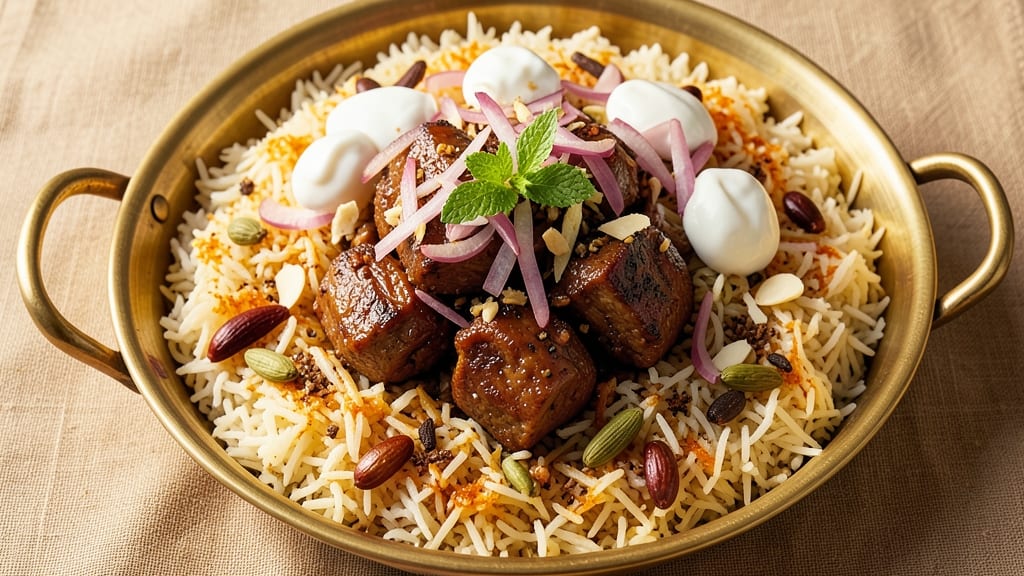
This Bangladeshi beef biryani recipe transforms a simple meal into a fragrant, layered masterpiece that brings the heart of Dhaka to your kitchen. The secret lies in slow-cooked beef marinated in yogurt and spices, then layered with fragrant basmati rice perfumed with saffron and cardamom.
Every bite delivers tender meat, fluffy rice, and complex aromas that make this dish a centerpiece for gatherings.
The magic begins with marinating the beef overnight in a blend of yogurt, ginger, garlic, and whole spices like cinnamon and cloves. This foolproof technique ensures deep flavor penetration, while the rice is partially cooked and layered with the marinated beef and fried onions.
The dish then slow-cooks, allowing the spices to meld into a harmonious symphony of flavors.
What you'll end up with is a restaurant-quality biryani with perfectly tender beef, fragrant rice infused with saffron's golden hue, and a rich gravy that ties everything together.
The dum cooking method—sealing the pot with dough—creates steam that infuses every layer with aromatic essence, resulting in a dish that's both visually stunning and deeply satisfying.
Serve with cucumber raita or boiled eggs for a complete meal that feels like a celebration. This recipe delivers the authentic taste of Bangladeshi biryani, perfect for special occasions or when you want to impress with a dish that's as beautiful as it is delicious.
Ingredients for bangladeshi beef biryani
Sixteen aromatic ingredients transform simple beef and rice into a fragrant biryani masterpiece.
| Ingredient | Amount | Notes |
|---|---|---|
| Beef Chuck Roast 🥩 | 2 ½ lb | Cut into 1.5-inch cubes, boneless |
| Plain Whole Milk Yogurt 🥛 | 1 cup | Full-fat for creaminess, unsweetened |
| Basmati Rice 🌾 | 2 cups | Uncooked, long-grain preferred |
| Red Onions 🧅 | 1 whole | Thinly sliced for layers |
| Fresh Ginger 🧄 | ½ cup | Finely grated, aromatic |
| Garlic Cloves 🧄 | 8 cloves | Minced for marinade |
| Saffron Threads 🌼 | ¼ tsp | High-quality, soaked in 2 tbsp warm water |
| Green Cardamom Pods 🌿 | 10 whole | Lightly crushed, aromatic |
| Cinnamon Sticks 🌿 | 2 whole | 2-inch pieces for infusion |
| Cloves 🌿 | 6 whole | Whole, for marinade |
| Bay Leaves 🌿 | 2 whole | For rice infusion |
| Vegetable Oil 🫒 | ½ cup | High smoke point for frying |
| Salt 🧂 | 1 ½ tbsp | Diamond Crystal preferred |
| Ground Black Pepper 🌶️ | 1 tsp | Freshly ground for heat |
| Lemon Juice 🍋 | 2 tbsp | Freshly squeezed, brightens flavors |
The beef selection is critical—chuck roast delivers the right texture and fat content for rich flavor. Look for cuts with good marbling at Whole Foods or your local butcher shop; pre-sliced options often lack the same quality. The yogurt should be full-fat and unsweetened—Fage or Siggi's work well, but any plain Greek yogurt suffices. For the basmati rice, Tilda or India Gate brands are ideal, though any long-grain basmati will do. The spices—especially saffron and cardamom—must be fresh; Penzeys or specialty Indian markets carry the highest quality. Whole spices like cinnamon and cloves should be lightly toasted in a dry pan before grinding for deeper flavor.
No saffron? Turmeric at half the amount adds color but lacks the floral notes. Fresh ginger and garlic can be swapped for paste at one-third the amount, though fresh is always preferred. The onions should be thinly sliced—mandoline works best—and fried until golden for the perfect texture. If you're short on time, pre-sliced fried onions from the grocery store can be used, though homemade adds depth. The lemon juice brightens the final dish; Meyer lemons add a subtle sweetness if available. For the dum cooking method, use store-bought puff pastry as a shortcut if making dough from scratch isn't feasible.
Marinated beef keeps for 2 days in the fridge, though flavor improves with overnight marinating. Cooked biryani reheats beautifully—steam over boiling water for 10 minutes to restore moisture. Store leftovers in an airtight container for 3 days or freeze for 3 months. The saffron-infused water should be refrigerated separately and added just before serving. For presentation, garnish with fried onions and fresh cilantro—cilantro stems are edible and add extra flavor. Serve with cucumber raita or boiled eggs to complement the rich biryani.
Why You'll Love This Recipe
- One-Pot Magic: I swear by this recipe—just brown the beef, layer in the rice and yogurt marinade, then let it steam. No flipping pans, no stress. The onions caramelize right into the rice, so you’re basically making dinner while you scroll.
- Deep, Tangy Layers: That yogurt marinade? It’s the secret. The ginger and onions mellow into something rich while the beef stays juicy, and the basmati soaks up all the flavor like a sponge. First bite is chef’s kiss—spicy, creamy, and smoky all at once.
- Weeknight or Weekend Star: Make it for a lazy Tuesday or a big gathering—same effort. Double the batch, and you’ve got leftovers that taste even better the next day. My kids beg for it, and honestly? So do I.
- Budget-Friendly Luxury: Beef chuck is affordable, and a single roast stretches across meals. The yogurt adds richness without breaking the bank, and you can use the same spices for other dishes. Fancy dinner for half the cost? Yes, please.
Step-by-step instructions for Bangladeshi beef biryani
Master the layered technique that makes authentic biryani shine with fragrant spices and tender beef.
Marinate the Beef with Spiced Yogurt
In a large mixing bowl, combine the 2.5 lb beef chuck roast cut into 1.5-inch cubes with the 1 cup plain whole milk yogurt. Add the 0.5 cup finely grated fresh ginger, 8 minced garlic cloves, 6 whole cloves, 10 lightly crushed green cardamom pods, 1.5 tbsp salt, 1 tsp freshly ground black pepper, and the 2 tbsp freshly squeezed lemon juice. Mix thoroughly until every piece of beef is well coated.
Cover the bowl and refrigerate for at least 4 hours, preferably overnight. This extended marinade ensures the beef absorbs the yogurt's acidity and the spices penetrate deeply. The yogurt will tenderize the meat while the cardamom and cloves infuse their aromatic oils. When ready, the beef should be noticeably softer to the touch and carry the rich scent of the marinade.
Parboil and Layer the Rice
Rinse the 2 cups basmati rice under cold water until the water runs clear, then soak in fresh water for 30 minutes. Drain well and set aside. In a large pot, bring 4 cups water to a boil with the 0.25 tsp saffron threads soaked in 2 tbsp warm water, 2 whole bay leaves, and 2 whole cinnamon sticks. Add the drained rice and cook until 70% done (about 6 minutes).
Drain the partially cooked rice and spread it on a tray to cool slightly. In a separate bowl, mix the 1 whole red onion thinly sliced with 0.5 cup vegetable oil until evenly coated. This oil will prevent the onions from burning during the final sear. The rice should be warm but not steaming when you begin layering.
Sear the Marinated Beef
Heat a heavy-bottomed pot or Dutch oven over medium-high heat. Add the marinated beef in batches, allowing the oil to render from the yogurt without burning. Sear each piece for 2-3 minutes per side until deeply browned and cooked to medium-rare (internal temperature 145°F). Remove the beef and set aside, reserving the rendered oil in the pot.
Real talk: Don't overcrowd the pot. Cook in batches if needed to maintain even searing. The beef should release easily from the pan when ready—this indicates proper doneness. The rendered oil in the pot will become the flavor base for your biryani layers, so don't drain it.
Assemble the Biryani Layers
Return the seared beef to the pot and arrange it in an even layer. Spread half of the oil-coated onions over the beef, then add half of the partially cooked rice. Sprinkle the remaining onions and rice over the top, pressing down gently to create an even surface. The goal is to create distinct layers that will steam together during cooking.
This layering technique is what makes biryani special. The onions caramelize slightly during cooking, adding sweetness that balances the rich beef and spiced rice. The layers ensure each bite delivers perfect harmony of textures and flavors. Don't skip this step—it's what makes biryani different from other rice dishes.
Dum Cook for Maximum Flavor
Cover the pot tightly with a lid and seal with aluminum foil to create an airtight seal. Cook on low heat for 25 minutes, then increase to medium-low for another 20 minutes. The steam will build pressure, infusing every layer with aromatic flavors. You'll know it's ready when the rice is tender and the beef reaches 160°F internally.
Here's the thing—don't peek or lift the lid during cooking. The steam is what carries all those beautiful spices throughout the dish. When done, let the biryani rest for 10 minutes before serving. This resting period allows the juices to redistribute, ensuring each bite is moist and flavorful. Garnish with additional saffron-infused water if desired for extra color and aroma.
Pro Tips For Making Bangladeshi Beef Biryani
- Marinate Meat Overnight: I learned this the hard way—rushing the marinade means tough, flavorless beef. Use the chuck roast’s full 8–12 hours (or overnight) in yogurt, ginger, and a splash of water to tenderize. The yogurt’s acidity breaks down fibers, but it needs time to work its magic.
- Sear Onions Low and Slow: Skip the high-heat rush—caramelize red onions at medium-low for 15–20 minutes until deep amber. This isn’t just for color; it builds the biryani’s sweet, rich base. Yes, it’ll take longer, but the difference is noticeable.
- Parboil Rice Separately: Crowding rice in the biryani pot turns it mushy. Parboil basmati in salted water until 70% done, then drain and spread it in a thin layer to cool. This guarantees fluffy grains that soak up flavors instead of turning gluey.
- Layer Yogurt Last: Adding yogurt too early makes rice soggy. Mix it with the cooked beef after layering parboiled rice and dum cooking. The heat will temper it just enough to add creaminess without wrecking texture. Trust the process—it’s worth the wait.
Storing and reheating this dish
Refrigerator Storage
Store your biryani in an airtight container for up to 3 days in the refrigerator. The layered structure helps maintain moisture, but I always add a damp paper towel on top before sealing to prevent drying.
Let it cool completely before storing—hot biryani creates condensation that can make the rice soggy. The flavors actually deepen overnight, so leftovers taste even better the next day! 🥘
Freezer Prep Tips
For longer storage, portion biryani into freezer-safe containers with 1-inch headspace to prevent expansion cracks. I recommend using glass containers (like Pyrex) because they preserve texture better than plastic.
Label with the date—this dish freezes beautifully for 3 months without losing its aromatic essence. Thaw overnight in the fridge before reheating. ❄️
Steam Reheating Method
My preferred reheating technique is steaming over boiling water for 10-15 minutes. Place the biryani in a heatproof dish on a rack above a pot of simmering water, covered with foil. This method restores moisture without drying out the layers.
For extra flavor, add 2 tbsp water or beef broth to the pot before steaming. The steam will revive the saffron aroma beautifully. 💫
Oven Refresh Technique
Preheat your oven to 300°F and place the biryani in an oven-safe dish with a splash of water. Cover tightly with foil and bake for 15 minutes. The gentle heat reactivates the spices while keeping the rice tender.
I often finish with 5 minutes under the broiler to crisp the top layer slightly—this adds a restaurant-quality touch. 🔥
Microwave Shortcut
For quick meals, use the microwave on 50% power for 2-3 minutes, stirring halfway. Add 1-2 tablespoons of water to prevent drying. Cover with a damp paper towel to retain moisture.
This method works best for single servings and takes about 3 minutes total. The texture won't be identical to steaming, but it's a great option when you're short on time. ⏱️
Gravy Restoration
If the biryani loses some of its signature gravy during storage, simply add ¼ cup warm water or beef broth and stir gently. The layers will absorb the liquid, recreating that luscious sauce.
For extra richness, stir in 1 tbsp yogurt and a pinch of saffron. This works particularly well for reheating frozen biryani that might have dried out slightly. 💛
Nutrition facts
Frequently asked questions
What makes Bangladeshi beef biryani different from other biryanis?
The key differences lie in the marinade technique and layering method. Bangladeshi biryani uses a long yogurt marinade with whole spices like cardamom and cloves, while the rice is partially cooked and layered with fried onions and beef. The dum cooking method (sealing the pot) creates steam that infuses every layer with aromatic flavors, unlike pot-cooked biryanis that rely on open-pot simmering.
Can I substitute beef with chicken or lamb?
Yes, but adjust cooking times and marinade ratios. Chicken cooks faster (12-15 minutes instead of 20-25) and needs less yogurt (reduce to ½ cup). Lamb requires longer marinating (8-12 hours) and higher heat (medium-high) to tenderize. The layering technique remains the same, but lamb benefits from extra bay leaves and cinnamon sticks for depth.
Why does my biryani turn out dry?
Dry biryani usually results from overcooking or improper layering. Always cook rice to 70% doneness before layering, and use the dum method to trap steam. Avoid lifting the lid during cooking—this releases moisture. For reheating, use the steam method (covered with foil over boiling water) to restore moisture without drying. A damp paper towel under the lid helps too!
How do I make biryani ahead of time for a party?
Prepare the beef marinade and rice the day before, but don't cook yet. Assemble layers in the pot and refrigerate uncovered for 4 hours to let flavors meld. Cook just before serving using the dum method. For large groups, use two pots to ensure even cooking. Serve immediately after cooking—leftovers can be reheated using the steam method.
What sides pair best with Bangladeshi beef biryani?
Classic pairings include cucumber raita (cool yogurt with grated cucumber), boiled eggs (for protein contrast), or sheermal (sweet saffron bread). For a complete meal, add a simple mixed greens salad with lemon dressing. Avoid heavy sides—the biryani is already rich and aromatic.