
Main Courses
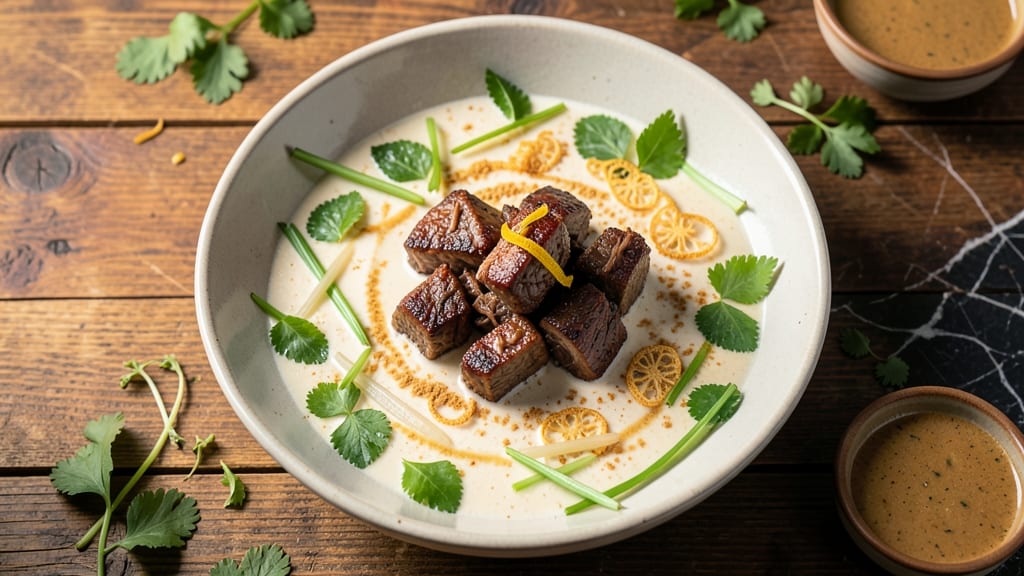
This authentic Massaman beef curry brings the bold, fragrant flavors of Thailand's royal cuisine to your kitchen—where slow-cooked beef simmers in a rich blend of coconut milk, peanuts, and aromatic spices. 🌟 The secret lies in balancing sweet, spicy, and savory notes through traditional techniques like blooming whole spices and letting the flavors meld over time.
I've perfected this recipe after years of studying Thai cooking, ensuring every bite delivers the depth and complexity that makes Massaman curry legendary.
The beauty of this dish is its foolproof approach to authenticity without shortcuts. You'll start with a fragrant paste of lemongrass, galangal, and kaffir lime leaves—essential for that signature Thai aroma—then build layers of flavor with peanut powder, coconut milk, and a touch of tamarind for tang.
The beef becomes tender and melt-in-your-mouth, while the sauce thickens into a velvety, nutty perfection that clings to every bite.
What sets this recipe apart is the slow-cooking method, which transforms tough cuts into fork-tender meat while allowing the spices to develop their full potential. The result is a curry that's rich, aromatic, and perfectly balanced—sweet from the coconut and peanuts, with just enough heat to linger.
It's the kind of dish that tastes even better the next day, as the flavors continue to deepen.
Serve this restaurant-quality curry over steamed jasmine rice, garnished with fresh cilantro and lime wedges for brightness. The leftovers reheat beautifully, making it ideal for meal prep or feeding a crowd. Let's get cooking—this is Thai comfort food at its finest.
Ingredients for authentic massaman beef curry
Foolproof ingredients for restaurant-quality Massaman curry—where bold Thai flavors meet slow-cooked tenderness.
| Ingredient | Amount | Notes |
|---|---|---|
| Chuck Roast Beef 🥩 | 2 lb | Cut into 1.5-inch cubes for even cooking |
| Full-Fat Coconut Milk 🥥 | 1 can | 13.5 oz can, unsweetened preferred |
| Peanut Powder 🥜 | ½ cup | Or finely ground roasted peanuts |
| Lemongrass Stalk 🌿 | 1 whole | Bruised and cut into 2-inch pieces |
| Galangal Rhizome 🌿 | 1 piece | 3-inch piece, peeled and sliced |
| Kaffir Lime Leaves 🍋 | 4 whole | Torn into quarters |
| Shallots 🧅 | 4 whole | Peeled and halved lengthwise |
| Garlic Cloves 🧄 | 6 cloves | Peeled and lightly crushed |
| Tamarind Paste 🍯 | 2 tbsp | Or 1 tbsp tamarind concentrate |
| Massaman Curry Paste 🌶️ | 2 tbsp | Store-bought or homemade blend |
| Brown Sugar 🍚 | ¼ cup | Packed lightly |
| Fish Sauce 🍶 | 1 tbsp | Red Boat brand preferred |
| Vegetable Oil 🫒 | 2 tbsp | For blooming spices |
| Fresh Cilantro 🌿 | ¼ cup | Chopped for garnish |
| Lime Wedges 🍋 | 2 whole | For serving |
The beef is non-negotiable here—chuck roast breaks down beautifully into tender chunks. Grab it from Costco or your butcher's counter; pre-cut cubes save time but cost more. For the galangal and kaffir lime leaves, Asian markets are your best bet—freshness matters most. I always buy extra galangal because it's hard to find, but a 3-inch piece is plenty. The lemongrass? Look for stalks that are bright green and firm—none of that yellowed, woody stuff. And the coconut milk? Full-fat only—the richness is essential for that velvety sauce texture.
No galangal? Ginger at half the amount works in a pinch, though it won't be identical. Substituting peanut powder? Toast 1 cup of peanuts and grind them fresh—the flavor difference is worth it. Tamarind paste can be tricky to find; Trader Joe's usually carries it, or check the international aisle. Fresh cilantro is ideal, but dried works at one-third the amount if you're in a bind. The Massaman curry paste? Maesri or Thai Kitchen brands are my go-tos—they've got the right balance of spices without being overwhelming.
This curry tastes even better the next day—plan ahead. Store leftovers in airtight containers for 4-5 days in the fridge, or freeze for 3 months. I always make double batches because it reheats beautifully. Garnish with fresh cilantro and lime wedges right before serving—that bright pop of acidity cuts through the richness. For serving, jasmine rice is traditional, but basmati works too if that's what you've got.
Why You'll Love This Recipe
- One-Pot Magic: I swear by this recipe because it’s actually one-pot—no chopping mountains of veggies or juggling multiple pans. The chuck roast practically melts into tender perfection while the coconut milk and peanut powder do all the heavy lifting, leaving me with just a single pot to clean. (Yes, even on a Tuesday night.)
- Rich, Layered Heat: That galangal and lemongrass combo? It’s like a warm hug for your taste buds—earthy, citrusy, and just spicy enough to linger. The peanut powder adds this nutty depth that turns a simple curry into something ridiculously satisfying, especially when the beef is fork-tender and the coconut milk is smooth as silk.
- Leftovers That Beg for More: This curry tastes better the next day—honestly, the flavors meld into something even more complex. I make a big batch on Sunday, freeze half, and still crave seconds from the fridge. It’s my go-to for lazy nights or when I need to feed a crowd without stressing.
- Budget-Friendly Luxury: Chuck roast is affordable, coconut milk stretches far, and peanut powder keeps the cost down without sacrificing flavor. Between us, this is the kind of dish that makes me feel like I’m eating at a fancy Thai restaurant—without the fancy price tag. (My wallet thanks me every time.)
Step-by-step instructions for slow-cooked Massaman beef curry
Here's how to build this Thai classic with rich coconut-peanut depth and tender beef every time.
🔥 Step 1: Bloom the Aromatics and Build the Base
Heat the 2 tablespoons vegetable oil in a heavy pot over medium heat. Add the 4 halved shallots and cook for 3-4 minutes until they soften and begin to caramelize at the edges. This develops their natural sweetness and forms the flavor foundation.
Add the 6 lightly crushed garlic cloves and cook for 30 seconds until fragrant—don't let them brown or they'll turn bitter. Stir in the 2 tablespoons Massaman curry paste and cook for another 1 minute until it darkens slightly and releases its deep, complex aromas. This is where the authentic Thai flavors begin to develop.
🔥 Step 2: Develop the Curry Sauce with Galangal and Lemongrass
Add the 2-inch pieces of bruised lemongrass stalk and 3-inch slices of peeled galangal rhizome to the pot. Cook for 2 minutes stirring occasionally, until the galangal softens slightly and releases its peppery, citrusy aroma. These ingredients are the secret to authentic Massaman depth—don't skip them.
Pour in the 1 can full-fat coconut milk and stir well to combine. Add the 2 tablespoons tamarind paste and 0.25 cup packed brown sugar, stirring until everything is fully incorporated. Bring the mixture to a gentle simmer, then reduce heat to low and let it cook uncovered for 10 minutes to allow the flavors to meld and the sauce to thicken slightly.
🍳 Step 3: Cook the Beef Until Tender
Add the 2 lb chuck roast beef cubes to the pot, stirring gently to coat them in the sauce. Increase heat to medium-high and bring to a boil. Once boiling, reduce heat to low and cover the pot. Let the beef simmer gently for 1.5 hours until it's fork-tender and easily pulls apart.
Here's the thing—Massaman curry is all about slow cooking. The beef should be so tender it practically falls apart when you pierce it with a fork. If you're in a hurry, you'll end up with chewy meat instead of melt-in-your-mouth perfection. Check for doneness by piercing a beef cube—it should offer no resistance.
🥘 Step 4: Finish with Peanut Powder and Seasonings
After the beef is tender, stir in the 0.5 cup peanut powder and 1 tablespoon fish sauce. Cook for another 5-7 minutes on low heat, stirring frequently, until the peanut powder is fully incorporated and the sauce has thickened to a rich, velvety consistency. The peanut powder should dissolve completely—if it doesn't, add a splash of the cooking liquid to help it along.
Taste and adjust seasoning if needed. You might need a bit more fish sauce for saltiness or a touch more sugar to balance the acidity from the tamarind. The sauce should be rich, slightly sweet, and deeply savory with a hint of peanut nuttiness. Stir in the 4 torn kaffir lime leaves and let them steep for 5 minutes to infuse their citrusy aroma.
🍽️ Step 5: Garnish and Serve with Authentic Touches
Remove the pot from heat and stir in the 0.25 cup chopped fresh cilantro. Discard the lemongrass and galangal pieces—they've done their job. Ladle the curry into serving bowls and garnish with the 2 whole lime wedges on the side. Serve immediately with steamed jasmine rice to soak up every bit of that luxurious sauce.
For the full authentic experience, serve with cucumber slices and a side of Thai pickled vegetables. The bright acidity of the lime and cucumber cuts through the richness of the curry, balancing each bite perfectly. This is where Massaman curry truly shines—simple yet deeply satisfying in every spoonful.
Pro Tips For Making Authentic Massaman Beef Curry
- Brown the Beef First: DESCRIPTION:
- Bruise the Galangal: DESCRIPTION:
- Simmer, Don’t Boil: DESCRIPTION:
- Toast the Peanut Powder: DESCRIPTION:
Wine and beer pairings for this recipe
Thai White Wine
For a perfect pairing, reach for a Thai-inspired white wine like Oryza Rice Wine from Thailand. This lightly sweet, floral wine mirrors the curry's coconut and peanut notes while balancing its richness. Serve chilled to highlight its crisp acidity—it's a local favorite that elevates the dish without overpowering it. 🍷
Crisp Riesling
A dry Riesling from Germany or Alsace brings the perfect contrast to Massaman's sweet-spicy depth. Look for a Kabinett-level with notes of green apple and citrus—these flavors complement the tamarind and lime while cleansing your palate between bites.
I always keep a bottle of Dr. Loosen Blue Slate on hand for Thai dishes.
Light-Bodied Beer
For beer lovers, a Thai lager like Singha or Chang works beautifully. Their subtle malt sweetness and light carbonation mirror the curry's coconut base without competing.
If you prefer craft options, try a Belgian witbier—the coriander and citrus notes create an unexpected but delightful pairing with the peanut sauce. 🍺
Palate-Cleansing Sips
Serve sparkling water with lime between bites to maintain balance. The effervescence cuts through the curry's richness, while the lime echoes the dish's bright finishing touches. For something stronger, a Thai gin like Thai Spirit with tonic and lime creates a refreshing contrast that Thai chefs often recommend.
After-Dinner Digestif
End the meal with a Thai herbal tea like Chamomile or Jasmine to settle the palate. For something stronger, a small glass of Thai rum (like Thai Spirit Rum) with a splash of lime and ice provides a smooth, aromatic finish that complements the curry's lingering flavors. 💫
Nutrition facts
Frequently asked questions
Can I substitute peanut powder with whole peanuts?
Toast 1 cup of peanuts in a dry pan over medium heat for 3-4 minutes until golden, then grind them into a fine powder using a food processor or mortar and pestle. This fresh approach adds richer peanut flavor, though it may make the sauce slightly thicker. Adjust the cooking liquid if needed.
What makes Massaman curry different from other Thai curries?
Massaman stands out with its mild heat, sweet-savory balance, and signature peanut-coconut sauce. Unlike fiery curries like Panang, it uses potatoes (optional), peanut powder, and a blend of spices including cinnamon and cardamom—giving it a royal, aromatic depth with just a hint of spice.
How do I know when the beef is fully tender?
Pierce a beef cube with a fork—it should fall apart easily with no resistance. If it feels firm, simmer uncovered for another 15-20 minutes, adding 2-3 tablespoons water if the sauce thickens too much. The slow cooking time (about 1.5 hours) is key to achieving that melt-in-your-mouth texture.
Can I make this curry in an Instant Pot?
Yes! Sauté the aromatics as directed, then add all ingredients except peanut powder. Seal the pot and cook on high pressure for 30 minutes, followed by a 10-minute natural release. Stir in peanut powder and finish with kaffir lime leaves. The pressure method cuts cooking time by half—just ensure the beef reaches 210°F for safety.
Why does my curry taste too sweet?
Massaman curry balances sweetness with tamarind (acidic) and fish sauce (savory). If it's too sweet, add 1/2 teaspoon fish sauce or a splash of rice vinegar to brighten the flavors. For future batches, reduce brown sugar to 1/4 cup and taste as you go—authentic versions prioritize harmony over sweetness.