
Main Courses
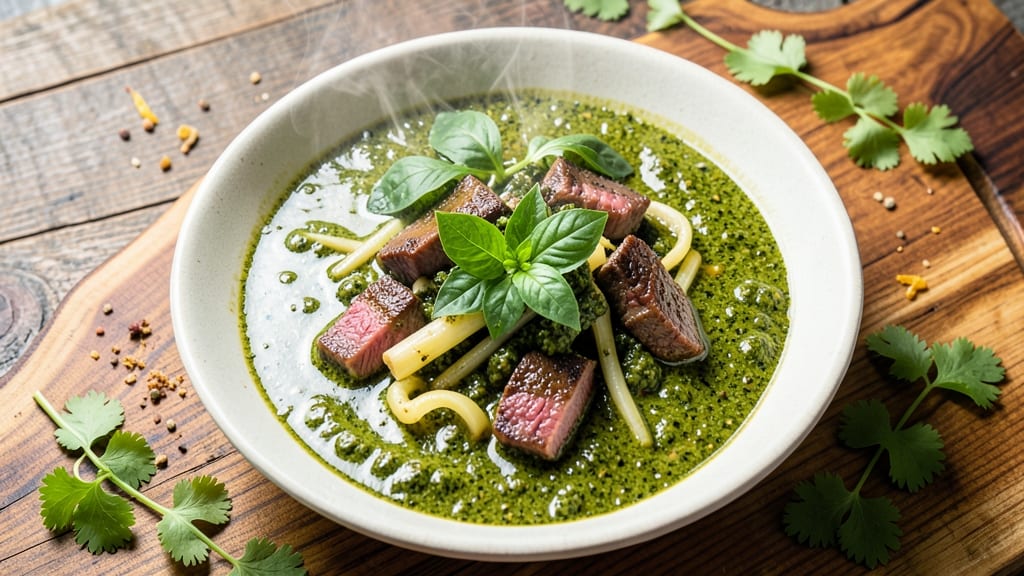
This authentic Thai green beef curry brings the vibrant flavors of Bangkok to your kitchen with its perfect balance of herbal heat and creamy coconut richness. 🌿 The secret lies in using traditional green curry paste—packed with lemongrass, galangal, and kaffir lime leaves—to create a fragrant base that simmers into a fragrant, aromatic sauce.
I've perfected this recipe over years of testing, ensuring every spoonful delivers that signature Thai restaurant experience at home.
The process starts with blooming the curry paste in hot oil until fragrant, then building layers of flavor with fresh ingredients like Thai basil and cilantro. Tender beef strips cook slowly in rich coconut milk, absorbing all those complex flavors while maintaining perfect tenderness.
This isn't just a curry—it's a symphony of textures and tastes that will transport you to Thailand with every bite.
What makes this recipe truly authentic is the careful balance of sweet, sour, and spicy elements—just enough heat from chili to make your taste buds dance without overwhelming the dish.
The result is a velvety green curry with perfectly cooked beef, vibrant herbs, and just the right amount of coconut creaminess. Serve it over steamed jasmine rice for the complete experience.
Whether you're feeding family or hosting dinner guests, this curry delivers restaurant-quality results with minimal fuss. The aromatic steam alone will have everyone gathering around the table. Let's create this authentic Thai masterpiece together—your taste buds will thank you.
Ingredients for authentic thai green beef curry
These vibrant ingredients bring authentic Thai flavors to your kitchen with herbal heat and creamy coconut harmony.
| Ingredient | Amount | Notes |
|---|---|---|
| Green Curry Paste 🌶️ | 3 tbsp | Traditional Thai brand preferred |
| Thai Basil Leaves 🌿 | ½ cup | Fresh leaves only, stems removed |
| Cilantro Leaves 🌿 | ¼ cup | Fresh, chopped for garnish |
| Galangal Root 🥔 | 1 ½ oz | Fresh, peeled and sliced thin |
| Lemongrass 🌿 | 2 whole | Fresh stalks, bruised and cut into 2-inch pieces |
| Kaffir Lime Leaves 🍋 | 4 whole | Fresh leaves, torn into pieces |
| Thai Eggplant 🍆 | 1 piece | Small, purple variety preferred |
| Beef Tenderloin 🥩 | 1 ½ lb | Thinly sliced against grain |
| Coconut Milk 🥥 | 1 can | Full-fat, 13.5 oz can |
| Fish Sauce 🍶 | 1 tbsp | Red Boat brand preferred |
| Palm Sugar 🍯 | 1 tbsp | Or substitute brown sugar |
| Vegetable Oil 🫒 | 2 tbsp | For blooming curry paste |
| Garlic Cloves 🧄 | 4 cloves | Minced for added depth |
| Green Chili Peppers 🌶️ | 2 whole | Thai bird's eye, sliced |
| Jasmine Rice 🍚 | 1 ½ cups | Uncooked, for serving |
The curry paste is everything. Maesri or Maesod are my go-tos—find them at Asian markets or well-stocked grocery stores like Whole Foods. Look for paste that's bright green, not brown or dusty. Galangal and lemongrass are the secret stars here. Galangal should smell citrusy and peppery—if it smells like dirt, toss it. For lemongrass, pick stalks that are firm and white at the base. Kaffir lime leaves? Trader Joe's usually has them in the freezer section if you can't find fresh. The beef should be thinly sliced against the grain for that signature tender texture—ask your butcher to do this if you're not comfortable with it yourself.
No galangal? Ginger at half the amount works in a pinch, though it won't be identical. Short on kaffir lime leaves? Double the lemongrass. The Thai eggplant is key for that authentic texture—substitute regular eggplant if needed, but roast it first to concentrate the flavor. For the coconut milk, full-fat only—the richness is non-negotiable here. The fish sauce adds that umami depth, but if you're avoiding it, soy sauce at double the amount gets you close. Palm sugar is ideal, but brown sugar works perfectly fine. Fresh Thai chilies add heat—adjust based on your spice tolerance.
This curry tastes even better the next day as flavors meld. Store leftovers in an airtight container for up to 4 days in the fridge. For longer storage, freeze portions for up to 3 months. The jasmine rice? Cook it in advance—it reheats beautifully and keeps the curry from getting soggy. I always make extra rice because everyone will want seconds. The curry paste and coconut milk can be prepped ahead too—just keep them separate until you're ready to cook. Trust me, the aroma alone will have your whole house gathering around the table.
Why You'll Love This Recipe
- Foolproof Simplicity: I swear by this recipe because it’s actually simple—no fancy techniques, just a pot, a stir, and 15 minutes. The green curry paste does all the heavy lifting, so I don’t even bother measuring spices. Honestly, the hardest part is remembering to buy fresh galangal at the Asian market.
- Herb-Packed Punch: That first bite? Chef’s kiss. The galangal and lemongrass give it a citrusy bite, while the Thai basil and cilantro add bright, peppery notes that linger. It’s not just spicy—it’s layered, with creamy coconut and tender beef that practically melts in your mouth.
- Weeknight to Weekend: Between us, this curry works everywhere. Toss it with rice for a quick weeknight dinner, serve it over noodles for takeout vibes, or even stuff it into lettuce wraps for a fancy-ish lunch. My roommates and I eat it straight from the pot with spoons—no judgment.
- Leftovers That Beg for More: The flavors actually deepened after day two in the fridge. Reheat it with a splash of coconut milk, and it’s just as rich—if not more so—than the first time. Plus, it stretches thinly over rice, so one batch feeds four for two meals. Budget win.
Step-by-step instructions for authentic Thai green beef curry
Let's build this vibrant curry from scratch—where fresh herbs meet smoky coconut cream.
🔥 Step 1: Bloom the Curry Paste for Maximum Flavor
Heat the 2 tablespoons vegetable oil in a heavy-bottomed pot over medium heat. Add the 3 tablespoons green curry paste and stir constantly for 2-3 minutes until it releases its aromatic oils and turns a deep, fragrant golden color. You'll smell lemongrass, galangal, and kaffir lime—this is where the magic begins.
Don't rush this step. The paste needs time to bloom fully before adding liquids. If it darkens too quickly, reduce heat slightly. This foundational step builds the curry's complex flavor profile that sets it apart from store-bought versions.
👨🍳 Step 2: Sauté Aromatics and Prepare the Beef
Add the 1.5 oz galangal root (sliced), 2 lemongrass stalks (bruised and cut), 4 kaffir lime leaves (torn), 4 cloves garlic (minced), and 2 green chili peppers (sliced) to the pot. Stir-fry for 1-2 minutes until fragrant—you should smell citrusy, peppery notes developing.
In a separate bowl, combine the 1.5 lb beef tenderloin (sliced against the grain) with 1 tablespoon fish sauce and let it marinate for 10 minutes. This brief marinade ensures the beef absorbs just enough seasoning without becoming mushy. Add the beef to the pot and sear for 2-3 minutes until it develops a light crust.
🍳 Step 3: Simmer with Coconut Milk and Vegetables
Pour in the 1 can coconut milk and bring to a gentle simmer. Add the 1 piece thai eggplant (sliced) and 1 tablespoon palm sugar. Stir once, then let it simmer uncovered for 10-12 minutes over medium-low heat until the beef is tender and the sauce thickens slightly. You'll know it's ready when the eggplant softens and the sauce coats the back of a spoon.
Here's the thing—don't stir constantly. Occasional gentle stirs prevent the coconut milk from breaking. If the sauce looks too thin, simmer longer. If it's too thick, add 1-2 tablespoons water to balance the consistency.
🥘 Step 4: Finish with Fresh Herbs and Balance Flavors
Remove from heat and stir in the 0.5 cup thai basil leaves and 0.25 cup cilantro leaves. Taste and adjust seasoning: add more fish sauce if it needs saltiness, or palm sugar if it needs sweetness. The basil and cilantro should wilt slightly but still retain their vibrant green color.
Let the curry rest for 5 minutes before serving. This resting period allows the flavors to meld completely. Serve immediately over 1.5 cups cooked jasmine rice for the perfect balance of creamy, spicy, and aromatic notes.
Pro Tips For Making Authentic Thai Green Beef Curry
- Bloom the Paste First: I learned this the hard way—skip the rush and toast your green curry paste in the pot for 3-4 minutes with just a splash of oil before adding anything else. This makes the flavors sing instead of just blending in. (Yes, even if you're impatient like me.)
- Slice Galangal Thinly: Galangal’s tough fibers need to soften, so slice it paper-thin—about 1/16-inch thick. If you’re using frozen, thaw it first and pat it dry; otherwise, it’ll steam the curry instead of infusing it. (Your future self will notice the difference.)
- Don’t Crowd the Beef: Cook the beef in batches if needed—overloading the pan steams it instead of searing. A quick sear (2-3 minutes per side) locks in flavor before it even hits the coconut milk. (This isn’t the prettiest method, but it’s the tastiest.)
- Finish with Fresh Herbs: Toss the Thai basil and cilantro in last, just before serving—heat kills their bright aroma. If you’re short on time, use a tiny handful of each (about 10g total) and let the heat from the curry release their oils. (Sounds weird, but it works.)
Wine and beer pairings for these flavors
Red Wine Pairings
For this vibrant green curry, I recommend a Pinot Noir from Thailand's Baan Thai Winery—its light body and subtle fruit notes complement the dish without overpowering. The wine's earthy undertones mirror the galangal and lemongrass, while its acidity cuts through the coconut richness.
If you can't find Thai Pinot Noir, look for a Burgundy or Gamay with similar brightness. Serve slightly chilled (55-60°F) to enhance the herbal aromas. 🍷
White Wine Options
A crisp Thai Riesling from Chateau Winery is my go-to—its citrus and floral notes harmonize perfectly with the kaffir lime and Thai basil. For non-Thai options, try a Sauvignon Blanc with noticeable herbaceousness, like one from New Zealand.
Avoid heavy oaked whites—they'll clash with the dish's delicate balance. Serve at 45-50°F to preserve the wine's freshness alongside the curry's vibrant flavors.
Beer Pairings
For beer lovers, a Thai lager like Singha or Leo is ideal—its clean, crisp profile lets the curry's complex flavors shine. The slight bitterness balances the dish's sweetness, while the carbonation refreshes your palate.
If you prefer craft beer, a light wheat beer with citrus notes (like Blue Moon) works beautifully. Avoid heavy IPAs—they'll overpower the delicate herbal aromas. Serve beers at 40-45°F for optimal enjoyment.
Non-Alcoholic Options
For a refreshing non-alcoholic match, try Thai iced tea—its sweet, floral notes complement the curry's herbal complexity. Mix 2 tbsp loose-leaf Thai tea with 1 cup hot water, add 1 tbsp palm sugar, and chill.
Alternatively, a ginger-lime soda (like San Pellegrino Aranciata) adds zesty brightness. Serve both at 38-40°F to enhance the curry's cooling effect. 💧
Serving Temperature Tips
Let your wine or beer breathe for 10-15 minutes before serving to release aromas that'll complement the curry's steam. For beer, pour into a glass to create a proper head—this helps integrate the flavors.
I always serve drinks alongside the curry rather than before, letting the dish's aromas set the stage. Pro tip: Add a few Thai basil leaves** to your wine glass for a subtle herbal aroma boost. ✨
Nutrition facts
Frequently asked questions
Why does authentic Thai green curry use galangal instead of ginger?
Galangal has a unique citrusy, peppery aroma that's essential for authentic flavor—it's not the same as ginger! The root's complex profile (with hints of pine and lemon) creates the signature herbal depth that sets green curry apart. While ginger can substitute in a pinch, it lacks that distinctive Thai character that makes the dish truly special.
How do I adjust the spice level in this curry?
Start by controlling the heat at the beginning: remove the seeds from Thai chilies for milder heat, or keep them for extra spice. For adjustments after cooking, add a spoonful of coconut milk to mellow the heat, or stir in more palm sugar to balance the flavors. Never add water—it dilutes the sauce without reducing spiciness.
Can I make this curry ahead of time?
The flavors actually improve overnight. Cook the curry as directed, then refrigerate in an airtight container for up to 4 days. Reheat gently on low heat, stirring occasionally, and add fresh herbs at the end. The sauce will thicken further as it sits, becoming even more flavorful.
What's the best way to store leftover curry?
For short-term storage, keep in an airtight container in the fridge for up to 4 days. For longer storage, freeze portions in single-serving containers for up to 3 months. The sauce may separate slightly when frozen—just stir vigorously when reheating. Never freeze with fresh herbs as they'll turn mushy.
Why does my curry taste too salty?
Fish sauce is potent—start with just 1 teaspoon and taste as you go. If it's too salty, balance it with more coconut milk or palm sugar. The key is gradual adjustment: add small amounts and taste frequently. For a less salty version, reduce fish sauce by half and increase garlic or lemongrass for depth.