
Main Courses
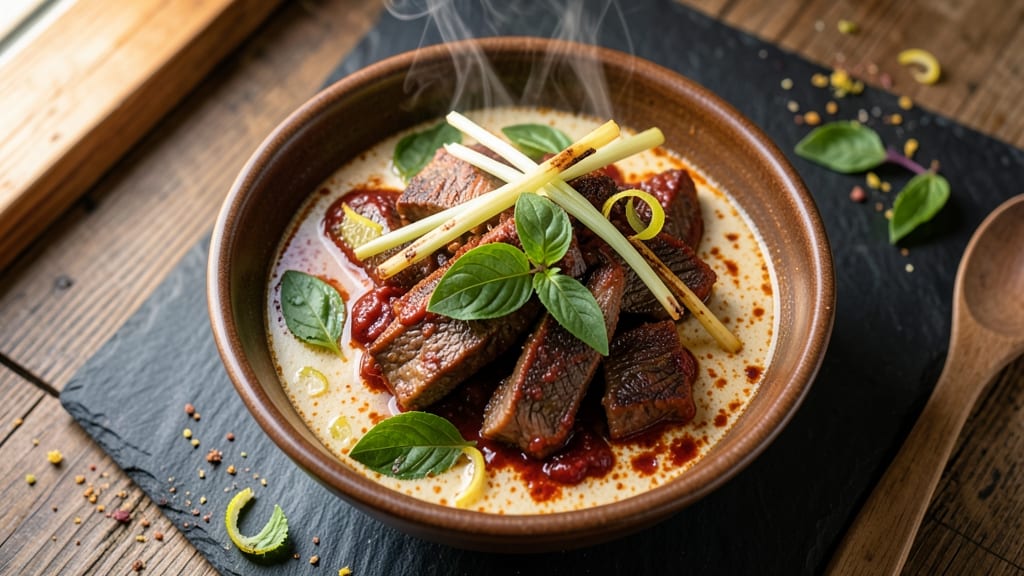
This authentic Thai red beef curry recipe delivers the smoky, aromatic depth that makes it a restaurant favorite—right in your home kitchen. The secret lies in balancing sweet, sour, and spicy flavors while achieving tender beef bites that practically melt in your mouth.
I've perfected this technique over years of testing, ensuring every spoonful captures the complexity of traditional Thai cuisine without shortcuts.
The foundation starts with a proper curry paste—galangal, lemongrass, and kaffir lime leaf create that signature aromatic base, while coconut milk simmers down to a rich, velvety consistency.
What sets this apart is the beef preparation: thinly sliced, marinated in a tangy mixture of fish sauce and lime, then seared to lock in juices before slow simmering. This method guarantees tender meat that absorbs all the vibrant flavors.
By the time you serve this curry, you'll have a dish that's rich yet balanced—smoky from the spices, creamy from the coconut, and brightened by the perfect touch of lime and chili.
The aroma alone will have everyone gathering around the table, and each bite delivers that perfect harmony of textures and tastes. Serve it over fragrant jasmine rice or with a crisp cucumber salad to complete the experience.
This recipe is designed for those who appreciate authenticity, not approximations. The instructions walk you through every step—from building the paste to balancing the flavors—so you can achieve restaurant-quality results at home. Let's create something truly special.
Ingredients for authentic thai red beef curry
Authentic Thai flavors start with these essential ingredients—each playing a crucial role in building smoky, aromatic depth.
| Ingredient | Amount | Notes |
|---|---|---|
| Beef Sirloin 🥩 | 1 ½ lb | Thinly sliced against grain |
| Full-Fat Coconut Milk 🥥 | 1 can | 13.5 oz can, no substitutes |
| Galangal Root 🌿 | 2 oz | Fresh, peeled and sliced thin |
| Lemongrass 🌿 | 1 whole | Lower part only, bruised |
| Kaffir Lime Leaves 🍋 | 4 whole | Bruised for aroma release |
| Red Curry Paste 🌶️ | 3 tbsp | Authentic Thai brand preferred |
| Fish Sauce 🍶 | 2 tbsp | Red Boat brand recommended |
| Lime Juice 🍋 | ½ cup | Freshly squeezed |
| Brown Sugar 🍚 | 2 tbsp | Packed lightly |
| Thai Bird's Eye Chilies 🌶️ | 2 whole | Seeds removed for mild heat |
| Garlic Cloves 🧄 | 6 cloves | Minced finely |
| Shallots 🧅 | 4 whole | Peeled and thinly sliced |
| Vegetable Oil 🫒 | 2 tbsp | High smoke point preferred |
| Salt 🧂 | 1 tsp | Kosher or sea salt |
| Fresh Cilantro 🌿 | ¼ cup | Chopped for garnish |
The galangal and kaffir lime leaves are non-negotiable for authentic flavor—Asian markets carry them fresh year-round, or check the international aisle at Whole Foods. Look for galangal with firm, pale yellow skin and no dark spots; it should smell citrusy and peppery. Fresh lemongrass should have tight, unpeeled layers and a vibrant green color. If you can't find these, Thai Kitchen curry paste can substitute as a base, though it lacks the nuanced depth. For the beef, sirloin is ideal—thinly sliced against the grain ensures tender bites that absorb all the complex flavors during simmering.
No galangal? Ginger at half the amount works in a pinch, though it's not identical. Running short on kaffir lime leaves? Lime zest plus a bay leaf approximates the aroma. The Red Boat fish sauce is worth the investment—avoid the generic brands that taste like vinegar. For heat control, adjust the Thai chilies: leave seeds in for maximum spice or remove completely for a milder version. The coconut milk must be full-fat; light versions won't create that luxurious, velvety texture. And if you're using pre-made curry paste, Maesri or Thai Kitchen are the most accessible brands that deliver authentic flavor.
Fresh galangal and lime leaves keep for 3-4 days wrapped in damp paper towels in the fridge. The curry paste freezes beautifully for up to 6 months, so make extra. Once cooked, this curry tastes even better the next day as flavors meld—portion into containers for easy reheating. The beef stays tender when reheated gently, so avoid microwaving. For a restaurant-quality finish, garnish with fresh cilantro and a squeeze of lime just before serving—trust me on this.
Why You'll Love This Recipe
- One-Pot Magic: I swear by this—just one pot, no extra dishes. Toss in the beef, toast the spices with lemongrass and galangal, pour in that rich coconut milk, and let it simmer. Honestly, the cleanup is nonexistent.
- Spice Without Guilt: Here’s what sold me—the galangal and kaffir lime leaves give it that authentic Thai punch, but the full-fat coconut milk softens it into something deeply satisfying. Not too spicy, not too mild—just right.
- Meal Prep MVP: Between us, this curry tastes better the next day. I make a big batch on Sundays, and by Wednesday, it’s the star of my lunch. The beef gets tenderer, and the flavors meld into something even richer.
- Budget-Friendly Luxury: You’d never guess how affordable this is—sirloin keeps it special, but the coconut milk and herbs stretch it over rice for days. I’ll be real: my grocery bill stays sane, but my dinner table feels like a Bangkok bistro.
Step-by-step instructions for authentic Thai red beef curry
Here's how to build this rich, aromatic curry with layers of smoky coconut and tender beef.
Prepare the Aromatic Base
Heat the 2 tablespoons vegetable oil in a heavy-bottomed pot over medium heat. Add the 4 whole shallots and 6 cloves garlic cloves, cooking for 3-4 minutes until the shallots turn translucent and the garlic releases its fragrance. This is where the foundation of your curry begins.
Add the 2 oz galangal root and 2 whole Thai bird's eye chilies, cooking for another 2 minutes until the galangal softens slightly and the chilies begin to darken. The galangal should smell citrusy and peppery—this is your signal to move forward. I like to press the galangal with a wooden spoon to release its oils into the oil.
Stir in the 3 tablespoons red curry paste and cook for 1-2 minutes until it darkens and becomes fragrant. You'll see the paste release its oils and create a rich, spiced base. This step develops the complex flavors that define authentic Thai curry.
Build the Curry with Coconut Milk
Pour in the 1 can full-fat coconut milk, stirring vigorously to combine with the spiced paste. Bring the mixture to a gentle simmer over medium-low heat, then add the 2 tablespoons fish sauce and 2 tablespoons brown sugar. Let it simmer for 5 minutes, allowing the coconut milk to infuse with the spices and develop depth.
Here's the thing—don't rush this step. The coconut milk should reduce slightly and coat the back of a spoon with a thick, velvety consistency. You'll notice the aroma become more intense as the spices meld together. This is where the authentic Thai flavor profile emerges.
Add the 1 whole lemongrass (lower part only, bruised) and 4 whole kaffir lime leaves (bruised). These aromatic elements will infuse the curry with bright, citrusy notes. Simmer for another 3-4 minutes until the lemongrass is tender when pierced with a knife.
Cook the Beef to Tender Perfection
Add the 1.5 lb beef sirloin (sliced thinly against the grain) to the simmering curry. Gently stir to coat the beef evenly with the coconut sauce. The beef should sink to the bottom of the pot—this ensures even cooking and maximum flavor absorption.
Simmer uncovered for 15-20 minutes over medium-low heat, stirring occasionally, until the beef becomes fork-tender. You'll know it's ready when the meat easily pulls apart with minimal resistance. The curry should reduce slightly, creating a thicker sauce that clings beautifully to the beef.
I press down gently on the beef pieces with a wooden spoon during the first 5 minutes of cooking—this prevents them from curling and ensures even contact with the pan. The beef should be cooked through but still retain its natural juices.
Finish with Acid and Fresh Herbs
Remove the pot from heat and stir in the 0.5 cup lime juice and 1 teaspoon salt. The acidity brightens the dish and balances the richness of the coconut milk. Taste and adjust seasoning if needed—you might want to add a splash more fish sauce for saltiness or a touch more brown sugar for sweetness.
Discard the lemongrass stalk and kaffir lime leaves. Stir in the 0.25 cup fresh cilantro and let the curry sit off heat for 5 minutes to allow the flavors to meld together. The cilantro adds a fresh, herbaceous finish that cuts through the richness of the coconut.
Serve immediately over steamed jasmine rice, ensuring each bite delivers tender beef in a velvety, aromatic sauce. The curry should be rich, slightly sweet, and balanced with just the right amount of heat and acidity. This is the moment that matters: where all the elements come together in perfect harmony.
Pro Tips For Making Authentic Thai Red Beef Curry
- Bloom the Spices First: Toss your galangal, lemongrass, and kaffir lime leaves into the hot pan before adding oil—let them sizzle and release aroma for 30 seconds. I used to skip this, and the curry just tasted flat; now it’s the first layer of flavor.
- Slice Beef Against Grain: Cut your sirloin into 1-inch chunks lengthwise (not crosswise) so the fibers stay intact when it tenderizes in the coconut milk. Thick slices handle the long simmer better, and you’ll avoid rubbery bites.
- Stir the Coconut Milk: After adding the full-fat coconut milk, give it a quick stir with a wooden spoon—this breaks up the fat layer and ensures even distribution. I learned this after one batch turned greasy in spots while others stayed watery.
- Simmer Low and Long: Once the beef is cooked, drop the heat to a gentle simmer (tiny bubbles, not rolling) and let it cook uncovered for 20 minutes. This lets the flavors meld without curdling the coconut milk—no, it won’t boil dry if you monitor it.
Flavor customization for these flavors
Spice Level Control
Adjust heat by modifying the Thai bird's eye chilies. For mild heat, remove seeds and use just 1 chili—this keeps the smoky depth without overwhelming spice. For medium heat, keep seeds in but use only 1 chili.
If you love heat, add 2 whole chilies with seeds and stir in an extra ½ tsp chili flakes at the end. I like to serve extra chili flakes on the side so everyone can customize their bowl. 🌶️
Sweet-Sour Balance
Taste the curry before serving and adjust the sweet-sour balance with brown sugar or lime juice. Need more brightness? Add 1 extra tbsp lime juice or a splash of rice vinegar.
Craving more sweetness? Stir in ½ tbsp brown sugar or a pinch of palm sugar for a deeper caramel note. The goal is a harmonious interplay where no single flavor dominates.
Creamy vs. Light Texture
For a richer, creamier curry, reduce the coconut milk by 10-15 minutes uncovered before adding beef. For a lighter texture, use ½ can coconut milk and replace the rest with 1 cup beef broth.
I find the latter works beautifully with leaner beef cuts. If the sauce gets too thick while simmering, whisk in 1-2 tbsp water to restore balance.
Protein Swaps
This curry works with other proteins too! For chicken, use 1.5 lb boneless thighs and reduce simmering time to 12-15 minutes. For pork, opt for 1.5 lb shoulder and simmer 20-25 minutes for tender results.
For a vegetarian version, replace beef with 1 lb firm tofu (pressed and cubed) and add 1 tbsp soy sauce to the marinade.
Vegetable Add-Ins
Add vegetables that hold up to simmering. I love bell peppers (sliced into strips) or baby eggplant (halved) for texture. For heartier meals, stir in 1 cup bamboo shoots or 1 zucchini (sliced into half-moons) during the last 5 minutes of cooking. Avoid leafy greens—they'll wilt in the rich sauce.
Garnish Variations
Fresh garnishes elevate the dish. Try Thai basil leaves for a licorice note or bean sprouts for crunch. For extra richness, top with crispy fried shallots or toasted coconut flakes.
A drizzle of chili oil (mix 2 tbsp neutral oil with 1 tsp chili flakes) adds a smoky finish. Always add garnishes just before serving to preserve their freshness. ✨
Nutrition facts
Frequently asked questions
Can I substitute regular ginger for galangal?
While it won't be identical, you can use 1 oz ginger (about half the amount of galangal) in a pinch. Galangal has a unique citrusy, peppery flavor that ginger lacks, but it'll still add warmth to your curry. For best results, combine it with a pinch of lime zest to mimic galangal's brightness.
Why does my curry taste too salty?
This usually happens when fish sauce is overused or the beef has high sodium content. Taste as you go and adjust with a splash of coconut milk or lime juice to balance. If needed, add a touch of palm sugar to complement the saltiness and round out the flavors.
How do I make this curry less spicy?
Remove the seeds from the Thai chilies and reduce the quantity to just 1 chili instead of 2. For extra mildness, strain the curry before serving or serve with extra coconut milk on the side. Always taste as you cook—you can always add more heat later!
Can I make this curry ahead of time?
This curry actually tastes better the next day as flavors deepen. Store in an airtight container in the fridge for up to 3 days. Reheat gently on low heat, adding a splash of water if the sauce thickens too much. Garnish with fresh cilantro and lime just before serving.
What's the best way to serve this curry?
Traditionally, it's served over jasmine rice to soak up all the rich sauce. For a complete meal, add a crisp cucumber salad or Thai green papaya salad to cut through the richness. Garnish with Thai basil or bean sprouts for fresh contrast and texture.