
Side Dishes
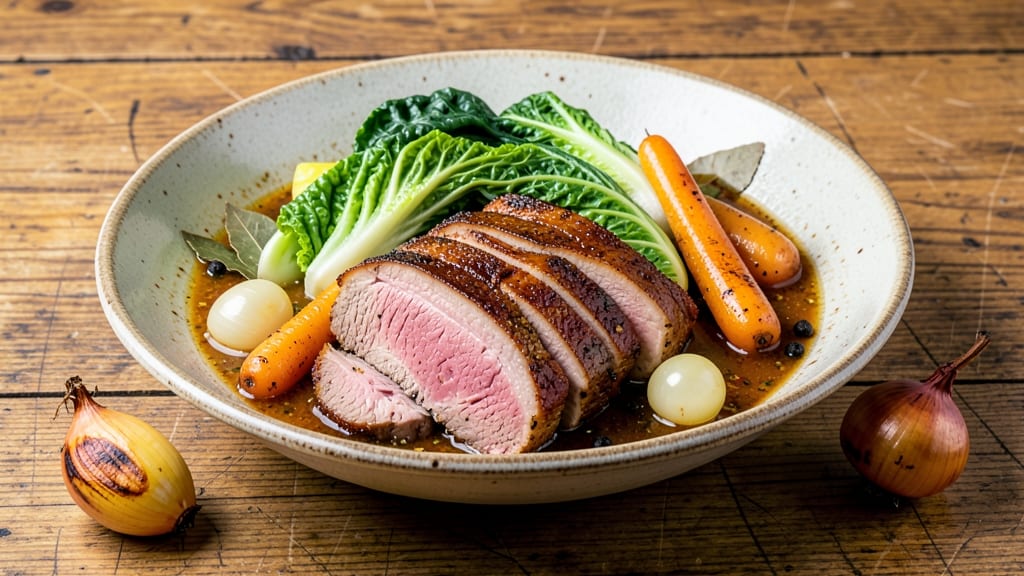
This traditional Irish corned beef and cabbage recipe delivers the hearty, savory flavors that define St. Patrick’s Day feasts and cozy Irish kitchens alike. The slow-cooked beef becomes fork-tender while absorbing its briny, aromatic cure, and the cabbage transforms into perfectly crisp-tender leaves that soak up every rich bite.
I’ve perfected this method over years of testing—balancing authenticity with modern shortcuts like a quick brine or oven finish for those pressed for time.
The secret lies in the layering of flavors: the deep umami of the corned beef brine, the earthy sweetness of cabbage caramelized just enough to stay crisp, and the subtle tang of bay leaves and peppercorns that elevate everything.
This isn’t just a side dish—it’s a centerpiece that transforms a simple meal into a celebration. The beef’s crusty exterior gives way to melt-in-your-mouth tenderness, while the cabbage retains its satisfying crunch, proving that tradition and technique can deliver restaurant-quality results at home.
What you’ll end up with is a dish that smells like comfort and tastes like celebration—golden-brown beef slices served alongside vibrant green cabbage, their flavors perfectly harmonized. The aroma alone will fill your kitchen with warmth, and every bite delivers that satisfying contrast of textures and depths.
Whether you’re hosting a St. Patrick’s Day gathering or simply craving a taste of Ireland, this recipe delivers the real deal without the fuss of complicated methods.
Serve with buttery mashed potatoes or a crisp green salad to round out the meal, and don’t forget a cold Guinness or a glass of Irish cider to complement the rich, savory flavors.
The leftovers reheat beautifully, making this a perfect make-ahead dish for busy days. Let’s get cooking—this is the corned beef and cabbage your family will beg to repeat.
Ingredients for traditional irish corned beef and cabbage
Pantry staples meet Irish tradition—just a few simple ingredients transform into a dish that smells like home.
| Ingredient | Amount | Notes |
|---|---|---|
| Corned Beef Brisket 🥩 | 3 lb | Traditional corned beef cut, not pre-cooked |
| Green Cabbage 🥬 | 1 whole | Heads roughly 2 lbs, outer leaves removed |
| Yellow Onions 🧅 | 2 whole | Medium size, sliced into wedges |
| Bay Leaves 🌿 | 4 whole | Dried, standard supermarket variety |
| Black Peppercorns 🌶️ | 1 tbsp | Whole, lightly crushed |
| Carrots 🥕 | 3 whole | Medium size, peeled and halved |
| Water 💧 | 8 cups | Filtered or spring water preferred |
| Apple Cider Vinegar 🍎 | ½ cup | For traditional tang |
| Brown Sugar 🍚 | ¼ cup | Light or dark, packed |
| Salt 🧂 | 2 tbsp | Kosher or sea salt |
| Mustard Seeds 🌿 | 1 tsp | Yellow or brown, whole |
| Garlic Cloves 🧄 | 4 cloves | Peeled, for aroma |
| Fresh Parsley 🌿 | ¼ cup | Chopped, for garnish |
| Potatoes 🥔 | 2 lb | Russet or Yukon gold, for serving |
The corned beef is the star, so pick a 3-pound brisket—not pre-cooked, not pre-cured. Butcher shops often have the best quality, but the regular grocery store meat section works too. Look for good marbling and avoid anything with a grayish tint. The cabbage should be firm with crisp leaves—green or red, whichever you prefer. I always grab a few extra carrots and onions because they add so much flavor to the cooking liquid, which you’ll use later. For the bay leaves, dried is fine, but if you can find fresh, they add a brighter note. The mustard seeds? Don’t skip them—they’re key to that authentic Irish taste.
No apple cider vinegar? White vinegar or lemon juice works in a pinch, but the flavor won’t be quite the same. Running short on brown sugar? White sugar plus a pinch of cinnamon gets you close. The potatoes can be any variety, but Russets or Yukons hold up best to boiling. If you’re feeling fancy, add a splash of Irish whiskey to the cooking liquid—just 2 tablespoons, but it adds depth. The garlic cloves can be peeled ahead of time to save steps, and the parsley is optional but adds a fresh finish. For the cabbage, green is traditional, but red holds up slightly better to long cooking.
This dish reheats beautifully—3-4 days in the fridge, 3 months frozen. I always make extra because the leftovers are even better the next day. The cabbage stays crisp if you add it to the pot just 20 minutes before serving. For serving, buttery mashed potatoes are a must, and a cold Guinness or Irish cider pairs perfectly. Store the cooked beef and cabbage separately in the fridge—they’ll keep their texture better that way.
Why You'll Love This Recipe
- One-Pot Magic: I swear by this recipe because it’s all in one pot—no chopping boards, no extra pans, just the brisket simmering with onions, peppercorns, and bay leaves while the cabbage softens right in the broth. Honestly, the cleanup is criminally easy.
- Salty-Sweet Perfection: That corned beef brisket? It’s already seasoned with garlic, mustard, and spices, so you’re not starting from scratch—just melt-in-your-mouth tender meat with crisp cabbage edges and onions caramelizing into the broth. Between us, it’s the kind of flavor that makes you slow down and savor every bite.
- Leftovers That Last: This dish begs to be made in bulk—reheat the slices for sandwiches, toss shredded beef into coleslaw, or serve it cold in wraps. I’ll be real: my fridge is always stocked with at least two portions because it’s that good, and it keeps well for days.
- Budget-Friendly Feast: A whole corned beef brisket feeds a crowd for less than takeout, and the veggies—cabbage and onions—are cheap staples. Plus, the spices (bay leaves, peppercorns) add depth without costing a fortune. It’s my go-to when I need to feed guests without breaking the bank.
Step-by-step instructions for traditional Irish corned beef and cabbage
This method delivers tender corned beef with perfectly crisp cabbage—just like your Irish grandmother made.
Prepare the Corned Beef and Vegetables
Begin by rinsing the 3 lb corned beef brisket under cold water to remove excess curing salt, then pat it completely dry with paper towels. This step is crucial for even cooking and better flavor penetration. While the meat dries, peel and halve the 3 whole carrots lengthwise, then slice the 2 whole yellow onions into wedges. Remove the outer leaves from the 1 whole green cabbage and cut it into eighths, leaving the core intact to maintain shape.
Lightly crush the 1 tbsp black peppercorns between a rolling pin and a cutting board to release their flavor. Peel the 4 cloves garlic and set aside. You'll add these aromatics later to infuse the cooking liquid with depth. The vegetables should be prepped but not yet added to the pot—keeping them separate prevents premature softening before the meat starts cooking.
Simmer the Corned Beef
Place the corned beef brisket in a large stockpot and cover it completely with the 8 cups water. Add the 0.5 cup apple cider vinegar, 0.25 cup brown sugar, 2 tbsp salt, 1 tsp mustard seeds, 4 whole bay leaves, and the crushed black peppercorns. The vinegar and sugar balance the saltiness, while the mustard seeds add subtle warmth. Bring the mixture to a boil over medium-high heat, then immediately reduce to a gentle simmer.
Here's the thing—you want small, steady bubbles breaking the surface, not a rolling boil. Skim off any foam that rises to the top during the first 10 minutes of simmering. This ensures a clear, flavorful cooking liquid. The corn beef will need to simmer uncovered for 3 to 3.5 hours, depending on your stove's heat consistency. Your oven might run hot, so start checking at the 2.5-hour mark when the internal temperature reaches 160°F in the thickest part of the meat.
Add Vegetables and Potatoes
Once the corned beef reaches 160°F, carefully remove it from the pot and set it aside on a plate. Add the prepped carrots, onions, cabbage, and the peeled garlic cloves to the cooking liquid. Return the pot to a simmer and cook for 20 minutes to soften the vegetables slightly. Then, add the 2 lb potatoes, cut into 1-inch chunks. The potatoes should cook submerged in the liquid, so you may need to add a bit more water if they rise above the surface.
Simmer all the vegetables together for 15 minutes, until the potatoes are tender when pierced with a fork. The cabbage should be just tender-crisp, not mushy. This balance of textures is key to traditional Irish corned beef and cabbage. While the vegetables cook, keep the corned beef warm in its juices—don't let it dry out.
Rest and Serve
Remove the corned beef from the pot and let it rest on a cutting board for 10 minutes. This resting period allows the juices to redistribute, ensuring every slice stays moist. Slice the meat against the grain into ½-inch thick pieces. Return the sliced corned beef to the pot with the vegetables and warm through for 2-3 minutes, allowing the flavors to meld.
Ladle the corned beef and vegetables onto serving plates, garnishing each portion with the 0.25 cup chopped fresh parsley. Serve immediately with the cooking liquid spooned over the top. The cabbage should have a satisfying crunch, the potatoes creamy, and the corned beef tender enough to pull apart with a fork. This is where all the flavors come together—salty, sweet, tangy, and rich in tradition.
Pro Tips For Making Traditional Irish Corned Beef And Cabbage
- Skim the Foam Early: That first 10 minutes of simmering will throw up a layer of foam—don’t ignore it. Skimming it off keeps the broth clear and prevents bitterness. I used to let it sit, and the liquid always tasted dull afterward. Trust me, grab a spoon and work fast.
- Don’t Rush the Cabbage: The cabbage needs just 20 minutes in the pot after the meat comes out—no more, no less. Any longer, and it turns into sad, mushy leaves. I learned this the hard way when my impatience ruined a whole batch. Leave it slightly crisp; it’s supposed to fight back a little.
- Check Meat Temp, Not Time: Your stove’s heat is a liar. Don’t guess at 3 hours—use a meat thermometer to hit 160°F in the thickest part. I’ve had beef come out tough because I trusted the clock, only to realize it needed another 20 minutes. A few minutes extra now saves you from dry, overcooked meat later.
- Prep Potatoes Last: Add the potatoes after the cabbage has softened for 20 minutes. This ensures they absorb flavor from the cooking liquid without turning to mush. I used to toss them in early, and they’d always end up gray and bland. Save them for the final 15 minutes—your future self will notice the difference.
Wine and beer pairings for traditional irish corned beef and cabbage
Irish Stout Pairing
A cold Guinness Draught is the classic choice for this dish, and for good reason. The deep, malty sweetness of a stout cuts through the salty richness of the corned beef while complementing the earthy cabbage.
I always keep a freshly chilled bottle on hand—its creamy texture and subtle roasted notes mirror the tender beef and caramelized onions. For an extra-special touch, pour a glass and let it sit for 5 minutes to settle the head before drinking. 🍺
Dry Irish Red Wine
If you prefer wine, a crisp Irish red blend like O'Shea Red or Tyler Red works beautifully. These wines balance the dish's saltiness with their bright acidity and subtle berry notes.
The tannins in red wine also help cleanse your palate between bites of rich corned beef. Serve slightly chilled—around 55°F—to enhance their freshness. 🍷
Hoppy IPA Contrast
For a more modern twist, try a hazy Irish IPA like Hazy Jane or Dublin Bay IPA. The citrusy hops and juicy malt create a refreshing contrast to the hearty flavors.
The slight bitterness helps balance the dish's saltiness, while the fruity notes echo the caramelized cabbage. This pairing is perfect if you're serving the dish at a casual gathering. 🌟
Cider for Crispness
A dry Irish cider like Bulmers Original or Magners adds a light, effervescent element that refreshes the palate. The slight tartness cuts through the richness, and the bubbles help cleanse between bites.
I often serve this at St. Patrick’s Day gatherings—it’s easy to drink and pairs effortlessly with the dish’s bold flavors. 🍎
Whiskey for Sipping
No meal is complete without a smooth Irish whiskey like Jameson or Redbreast 12-Year. Pour a small glass to sip alongside the meal—its vanilla and caramel notes complement the brown sugar and mustard seeds in the dish.
For a modern twist, try an aged whiskey like Connemara Peated for a smoky depth that pairs surprisingly well. 🥃
Nutrition facts
Frequently asked questions
Why does my corned beef turn out too salty?
Most store-bought corned beef already contains curing salt, so you shouldn't add extra. The recipe's 2 tbsp salt accounts for the brine's natural saltiness. If it's still too salty, try balancing it with sweet potatoes or caramelized onions—their natural sweetness cuts through the salt.
Can I use red cabbage instead of green?
Red cabbage works beautifully and holds up slightly better during cooking. The color will bleed into the cooking liquid, giving it a lovely pink hue. Just note that red cabbage may soften a bit faster than green—add it to the pot 15 minutes before the potatoes to maintain texture.
How do I make this in a slow cooker?
For a slow cooker version, place the rinsed corned beef in the pot with 4 cups water, vinegar, sugar, and spices. Cook on low for 8-9 hours or high for 5-6 hours. Add vegetables in the last 30 minutes to prevent overcooking. The slow cooker keeps everything tender without drying out the meat.
What's the best way to reheat leftovers?
Reheat corned beef and cabbage separately in a skillet with a splash of water or broth over medium-low heat for 5-7 minutes. For the cabbage, steam it covered for 3-4 minutes to restore crispness. Never microwave—it turns the cabbage mushy. Leftovers reheat beautifully for 3-4 days.
Can I substitute corned beef for pastrami?
Technically yes, but the flavors will differ. Pastrami has a smoky, spiced profile while corned beef offers a briny, mustardy depth. For authenticity, stick with corned beef. If using pastrami, reduce salt in the cooking liquid by half and add 1 tsp smoked paprika for depth.