
Main Courses
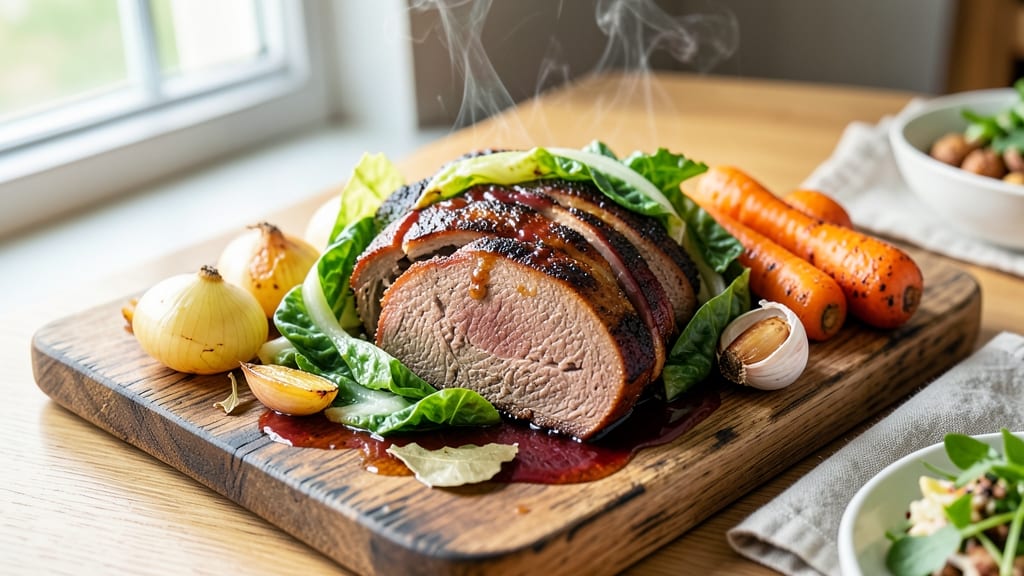
This baked corned beef brisket and cabbage recipe delivers the hearty, slow-braised richness you crave—tender meat with crispy edges and perfectly cooked cabbage. The secret lies in a long, moist bake that transforms tough brisket into melt-in-your-mouth perfection while keeping the cabbage tender and flavorful.
I’ve perfected this method over years of holiday feasts, ensuring every bite is packed with savory depth and just the right amount of caramelized crust.
The process begins with a simple brine or dry rub to enhance the beef’s natural flavors, then a slow bake in the oven that renders fat and creates a golden-brown exterior. Meanwhile, the cabbage simmers in the same aromatic liquid, absorbing all the rich, spiced goodness.
This isn’t just a side—it’s the star of the meal, balancing the beef’s richness with a touch of tangy brightness. The result? A dish that feels like a hug on a plate, ideal for gatherings or cozy weeknight dinners.
What sets this recipe apart is the balance of tradition and ease—no fancy techniques, just a patient approach that rewards you with restaurant-quality results.
The crispy edges on the brisket come from a final broil, while the cabbage stays tender and slightly sweet, soaking up every drop of the flavorful braising liquid. Serve it with mustard sauce or horseradish for extra zing, and you’ll have a meal that’s as impressive as it is satisfying.
Whether you’re hosting a St. Patrick’s Day feast or simply craving a comforting meal, this recipe delivers. The slow-cooked beef falls apart with a fork, and the cabbage melts in your mouth—proof that the best dishes are the ones that feel like home.
Ready to make it? Let’s get started on a dish that’ll have everyone asking for seconds.
Ingredients for baked corned beef brisket and cabbage
Six ingredients transform into a showstopper—tender beef with crispy edges and cabbage bathed in rich, spiced liquid.
| Ingredient | Amount | Notes |
|---|---|---|
| Corned Beef Brisket 🥩 | 4 lb | Raw, whole pack preferred |
| Green Cabbage 🥬 | 2 lb | Heads, cut into wedges |
| Yellow Onions 🧅 | 2 whole | Quartered, peeled |
| Carrots 🥕 | 4 whole | Whole, scrubbed |
| Garlic Cloves 🧄 | 6 cloves | Peeled, smashed |
| Bay Leaves 🌿 | 2 whole | Fresh or dried |
| Black Peppercorns 🌶️ | 1 tbsp | Whole, crushed |
| Mustard Seeds 🌿 | 1 tsp | Whole, toasted |
| Salt 🧂 | 2 tbsp | Kosher or sea salt |
| Water 💧 | 4 cups | Cold, for brining |
| Beer 🍺 | 1 cup | Dark lager or stout |
| Olive Oil 🫒 | 2 tbsp | For crisping edges |
| Fresh Horseradish 🌱 | 1 tsp | Grate fresh for serving |
| Dijon Mustard 🍯 | 1 tbsp | For serving |
The brisket is everything here. Look for a 4-pound pack—smaller cuts won’t render enough fat for that golden crust. I always grab mine from Costco or the butcher counter at Kroger, where they’ll trim excess fat for you. The cabbage? Green is best—it’s more tender than red. If you can’t find a 2-pound head, two 1-pound heads work too. The onions and carrots are just for flavor, so no need to fuss over perfect sizes. Fresh bay leaves make a difference—if yours are old, toast them for 30 seconds to wake up the flavor.
No beer? Substitute beef broth—just add a splash of apple cider vinegar for tang. Running short on horseradish? Fresh wasabi or grated ginger adds heat. The mustard seeds? Toast them in a dry pan for 30 seconds first—it brings out their nutty flavor. If you’re prepping ahead, brine the beef overnight (just water, salt, and peppercorns) for extra tenderness. The cabbage can be chopped the night before too—it’ll keep in the fridge for days. For the beer, Guinness or a dark lager adds depth, but any beer works in a pinch.
This dish tastes even better the next day—honestly, make extra. The beef keeps for 3-4 days in the fridge, and the cabbage reheats beautifully. For leftovers, reheat in the oven at 300°F to keep the edges crispy. The cabbage liquid is pure gold—use it for mashed potatoes or gravy. Store the beef wrapped in its juices, and the cabbage in a separate container. If you’re serving a crowd, double the recipe—this disappears fast.
Why You'll Love This Recipe
- I’ll be real: this is my go-to when I’m exhausted but still need to feed the family. The brisket stays juicy while the veggies soften—no last-minute side dishes required. Even my picky teenager asks for it.
- Here’s what sold me: a pound of brisket stretches across three meals, and the veggies cost next to nothing. Plus, the leftovers? Just as good reheated the next day, wrapped in foil. Minimal effort, maximum flavor for pennies.
Step-by-step instructions for baked corned beef brisket and cabbage
Here's how to transform tough brisket into tender, crisp-edged perfection with rich cabbage and beer-braised flavors.
Prepare the Brisket for Baking
Preheat your oven to 325°F and line a large roasting pan with heavy-duty aluminum foil. Place the 4 lb corned beef brisket in the center of the pan. The foil will help trap moisture while allowing the edges to crisp beautifully.
In a small bowl, combine the 2 tbsp salt, 1 tbsp black peppercorns, and 1 tsp mustard seeds. Rub this mixture all over the brisket, pressing it into the surface. This extra seasoning layer ensures maximum flavor penetration during the long cook. Place the 2 whole bay leaves on top of the brisket.
Build the Braising Liquid
In the same roasting pan, add the 4 whole carrots, 2 whole yellow onions (quartered), and 2 lb green cabbage (cut into wedges). Arrange them around the brisket, leaving space for the beer and water.
Pour the 4 cups water and 1 cup beer into the pan, making sure the brisket is mostly submerged. The beer adds depth while the water prevents drying. Add the 6 cloves smashed garlic cloves on top of the vegetables. Cover the pan tightly with foil, sealing all edges to lock in steam.
Braise Until Tender
Place the covered pan in the preheated oven and bake for 3 hours. This slow cook time is crucial—it transforms the tough brisket into fork-tender meat while allowing the cabbage to soften perfectly. After 2 hours, check the liquid level and add ½ cup water if it's significantly reduced.
Here's the secret: don't peek or lift the foil during cooking. Every time you open the pan, you lose 15-20 minutes of cook time and steam. The brisket will be ready when it easily pulls apart with two forks and the internal temperature reaches 203°F.
Crisp the Edges and Finish
Remove the brisket from the oven and carefully transfer it to a cutting board. Tent loosely with foil and let it rest for 15 minutes. While it rests, increase your oven temperature to 425°F.
Brush the brisket with the 2 tbsp olive oil and place it on a baking sheet. Bake uncovered for 10-15 minutes until the edges are deep golden brown and crispy. This final step creates that perfect contrast of tender meat with crisp exterior that makes all the difference.
Serve with Horseradish and Mustard
Slice the brisket against the grain into ½-inch thick slices. Arrange the cabbage, carrots, and onions on a serving platter with the brisket. The vegetables should be tender but still holding their shape.
Serve immediately with a side of freshly grated 1 tsp fresh horseradish and 1 tbsp Dijon mustard for dipping. The horseradish adds a bright kick that cuts through the richness of the braised meat, while the mustard provides a tangy complement. Each bite should deliver tender brisket with perfectly softened cabbage and carrots in a flavorful beer-infused sauce.
Pro Tips For Making Baked Corned Beef Brisket And Cabbage
- Trim the Fat First: Slice off the thick white fat cap before baking—it won’t render into flavor like in a slow cooker, and you’ll end up with a greasy mess instead of crispy edges. I learned this after serving a brisket where half the pan was just congealed fat. Use a sharp knife and don’t be shy; aim for about a ¼-inch layer off the top.
- Shred the Cabbage Roughly: Skip the fine chop—big, uneven wedges (about 2-inch pieces) hold their shape and soak up the juices better than shredded cabbage, which turns into sad, watery sludge. My grandmother called it "keeping the bite," and she was right: the texture stays satisfying, not mushy.
- Don’t Crowd the Pan: If your brisket and veggies won’t fit in a single layer, bake in batches or use a larger roasting pan. Stuffing everything in guarantees steam instead of browning, and you’ll end up with boiled cabbage instead of caramelized edges. Trust me, the extra 10 minutes rearranging saves you from disappointment.
- Check Internal Temp Early: Corned beef brisket hits "done" at 195°F, but it’s easy to overcook if you’re distracted. Start checking at 160°F—it’ll still pull apart easily if you let it rest 10 minutes after pulling it from the oven. I used to pull it too soon, and the slices fell apart like wet paper. Patience here makes all the difference.
Dietary considerations for baked corned beef brisket and cabbage
Gluten-Free Adaptations
Traditional corned beef brisket uses a cure with gluten-containing ingredients like barley or wheat flour, but you can easily adapt this recipe.
Look for gluten-free corned beef brisket at specialty stores like Whole Foods or Trader Joe's, or make your own cure using gluten-free malt vinegar and cornstarch instead of flour.
The beer in the braising liquid can be swapped for gluten-free dark beer or beef broth to keep the dish safe for gluten-sensitive diners. 🌱
Low-Sodium Options
Store-bought corned beef can be extremely high in sodium, but you can reduce it significantly. If using pre-cured brisket, rinse it thoroughly under cold water for 10-15 minutes before baking to remove excess salt.
For homemade brisket, reduce the salt in the rub to 1 tbsp and use low-sodium beef broth instead of water. The cabbage will still absorb flavor beautifully without needing extra salt. 💡
Vegetarian Substitutes
For a vegetarian version, replace the brisket with extra-firm tofu or hearty mushrooms like portobello. Marinate the tofu in soy sauce, garlic, and smoked paprika for depth, then bake alongside the cabbage. For mushrooms, use 8 oz sliced portobello and add them to the braising liquid.
The beer and spices will infuse them with rich, savory flavor. This works best with King Oyster mushrooms for a meaty texture. 🍄
Dairy-Free Serving
The traditional mustard and horseradish sauce pairs perfectly with dairy-free diets, but if you want extra richness, try olive oil-based sauces or cashew cream. Mix 2 tbsp Dijon mustard with 3 tbsp olive oil and a splash of apple cider vinegar for a tangy, dairy-free dip.
For the cabbage, skip butter and use olive oil when tossing with fresh herbs. The beer-braised flavors shine without dairy. 🥄
Allergy-Friendly Swaps
If you're avoiding mustard seeds, substitute 1 tsp ground coriander or fennel seeds for warmth. For beer allergies, use beef broth + 1 tbsp apple cider vinegar to mimic the beer's depth.
Always check labels on pre-cured brisket for hidden allergens like sulfites or MSG. When in doubt, opt for grass-fed, uncured brisket and build your own seasoning blend. 🔍
Keto Considerations
This recipe is naturally low-carb if you skip the cabbage and focus on the brisket. For a keto-friendly version, braise the brisket with beef broth + garlic instead of beer and vegetables.
Serve with cauliflower mash or roasted Brussels sprouts for a low-carb side. The crispy edges on the brisket make it satisfying without the carbs—just watch the beer and cabbage portions. 🥩
Nutrition facts
Frequently asked questions
Can I use pre-cooked corned beef brisket for this recipe?
No, this recipe requires raw brisket to achieve the perfect tender texture and crispy edges. Pre-cooked brisket lacks the structural breakdown needed for that melt-in-your-mouth quality. If you're short on time, opt for a 2-3 hour slow-cooker method with raw brisket instead. The beer-braised version will still deliver amazing results!
How do I know when the brisket is fully cooked?
The brisket is done when it reaches an internal temperature of 203°F and easily pulls apart with two forks. Use a meat thermometer for accuracy—insert it into the thickest part without touching bone. If it's still tough after 3 hours, add 30 more minutes covered. The cabbage should be tender but still holding its shape when pierced with a fork.
What's the best way to reheat leftovers?
For the brisket, wrap it in foil with its juices and reheat in a 300°F oven for 20-30 minutes to maintain tenderness. The cabbage reheats beautifully in a skillet with 1 tbsp butter or olive oil over medium heat for 5-7 minutes. Never microwave—it makes the brisket rubbery! The crispy edges won't return, but the meat stays juicy.
Can I make this recipe without beer?
Replace the beer with 1 cup beef broth + 1 tbsp apple cider vinegar for tang. For extra richness, add 1 tbsp soy sauce or Worcestershire sauce. The beer mainly adds depth, but the dish will still be delicious. If you're avoiding alcohol completely, use non-alcoholic dark beer or mushroom broth for umami flavor.
Why did my brisket turn out dry?
Overcooking or lifting the foil too early are the most common causes. Always keep the brisket covered until it reaches 203°F, and avoid peeking during cooking. If the pan dries out, add ½ cup water without removing the foil. For extra moisture, try braising in a Dutch oven instead of a roasting pan—it traps steam better. The 15-minute rest before slicing is also crucial!