
Main Courses
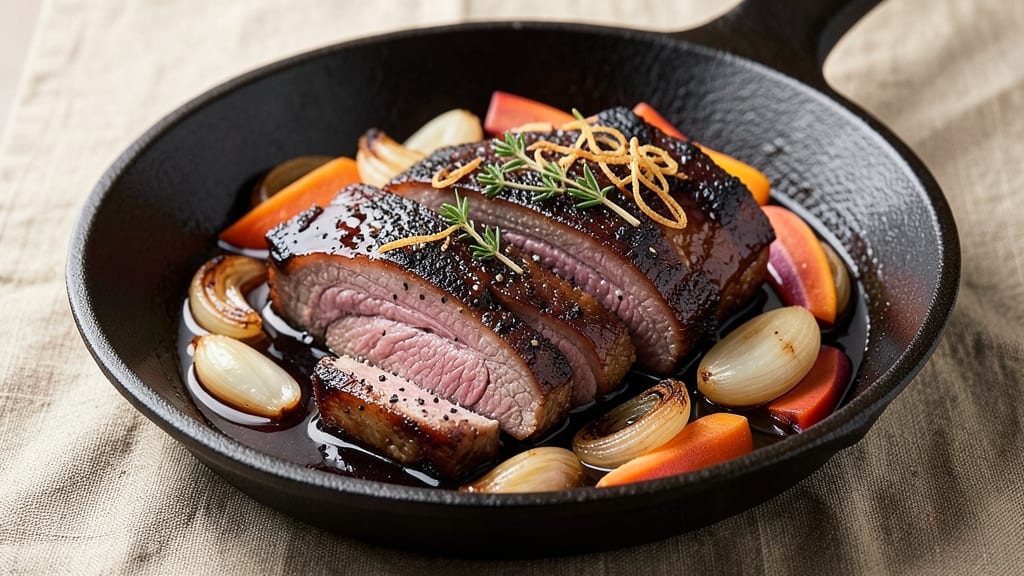
This beef short ribs Guinness recipe transforms tough cuts into melt-in-your-mouth perfection through slow braising and malty depth. The rich, caramelized sauce clings to tender meat, creating a dish that feels like a restaurant centerpiece on your dinner table.
I developed this method after years of perfecting the balance between Guinness's bold flavor and the natural richness of beef short ribs.
The process begins with a deep sear to lock in flavors, followed by a slow braise that allows the collagen to break down into velvety richness. Aromatics like onions, garlic, and thyme build complexity, while the Guinness adds that signature malty sweetness that rounds out the dish.
This isn't just a recipe—it's a technique that delivers professional-quality results with simple pantry staples and patience.
By the time you're done, you'll have fork-tender beef short ribs swimming in a glossy, Guinness-infused sauce that's rich enough to stand alone or pair beautifully with creamy mashed potatoes or crusty bread.
The aroma alone will have everyone gathering at the table, and each bite delivers that perfect harmony of tender meat and deep, savory sauce.
Whether you're cooking for a special occasion or treating yourself to a luxurious weeknight dinner, this recipe delivers restaurant-quality results at home. The key is timing and technique—slow cooking transforms tough cuts into something extraordinary. Let's get started on creating this showstopping dish.
Ingredients for beef short ribs guinness
Pantry staples meet Guinness's malty richness—simple ingredients for restaurant-quality beef short ribs.
| Ingredient | Amount | Notes |
|---|---|---|
| Beef Short Ribs 🥩 | 4 lb | Bone-in, 2-3 inches thick |
| Guinness Stout 🍺 | 1 cup | Full-bodied, not light |
| Yellow Onions 🧅 | 2 whole | Large, thinly sliced |
| Garlic Cloves 🧄 | 8 cloves | Peeled, smashed |
| Fresh Thyme 🌿 | ¼ cup | Leaves only, stems removed |
| Carrots 🥕 | 4 whole | Medium, peeled, cut into chunks |
| Tomato Paste 🍅 | ½ cup | Smooth, not chunky |
| Beef Broth 💧 | 2 cups | Low-sodium, homemade preferred |
| Balsamic Vinegar 🍷 | ¼ cup | Aged, not flavored |
| Olive Oil 🫒 | ½ cup | Extra-virgin, for searing |
| Salt 🧂 | 1 ½ tbsp | Diamond Crystal kosher |
| Black Peppercorns 🌶️ | 1 tbsp | Freshly cracked |
| All-Purpose Flour 🌾 | ¼ cup | For dusting |
| Bay Leaves 🍃 | 2 whole | Dried, standard size |
The beef short ribs are the foundation, so prioritize quality—look for cuts with good marbling and a deep red color. Whole Foods or your local butcher shop often carry the best selections, but most grocery stores stock them too. Bone-in ribs are ideal, as the bones add flavor during the long braise. If you can't find bone-in, opt for chuck roast cut into large cubes—though the texture won't be identical. Guinness is non-negotiable here; full-bodied stouts like the original work best, while light beers lack the depth. For fresh thyme, Trader Joe's sells it in small bundles that stay vibrant longer than supermarket containers.
No Guinness? Substitute with a mix of beef broth and a splash of balsamic vinegar—it won’t replicate the malty sweetness, but it’ll work in a pinch. Fresh thyme is ideal, but dried thyme at one-third the amount suffices if you’re short on time. For tomato paste, San Marzano is the gold standard, but any smooth paste will do. If you’re using pre-sliced onions, rinse them to remove excess sulfur compounds that can make the dish taste bitter. The balsamic vinegar should be aged—10+ years if you’re splurging, but standard grocery-store aged works fine. For extra depth, add a dash of Worcestershire sauce to the braising liquid.
This dish tastes even better the next day, so plan ahead—4-5 days in the fridge or 3 months frozen. Store the ribs and sauce separately in airtight containers to prevent sogginess. Reheat gently on the stove with a splash of broth to restore moisture. The sauce thickens as it cools, so thin with a little water or broth if needed. For leftovers, portion into individual containers for easy reheating—each serving is a flavorful meal on its own or over mashed potatoes.
Why You'll Love This Recipe
- One-Pot Magic: I swear by this recipe—just sear the ribs, toss in the onions and garlic, pour the Guinness, and let it slow-cook. No fancy gadgets, no extra pans, and honestly, the cleanup is just wiping one pot.
- Rich & Deep: That Guinness doesn’t just add color—it transforms the ribs into something dangerously tender with a dark, malty sweetness. The thyme ties it all together like a warm hug in a bowl.
- Game Day Ready: Between us, this is my go-to for game nights or lazy Sundays. It feeds a crowd without feeling like a chore, and the leftovers? Even better the next day—just reheat and serve with crusty bread.
- Budget Luxury: Short ribs aren’t cheap, but this recipe stretches them far. The Guinness cuts the richness, so you get restaurant-quality flavor without the guilt. Plus, the onions and garlic are cheap staples that make it feel special.
Step-by-step instructions for beef short ribs with Guinness braise
Here's the method for transforming tough beef short ribs into melt-in-your-mouth perfection using Guinness stout.
Sear the Short Ribs for Deep Flavor
Pat the 4 lb beef short ribs completely dry with paper towels. Season both sides generously with 1 tablespoon of the 1.5 tablespoons salt and 1 tablespoon of the freshly cracked black peppercorns. Heat 0.25 cup olive oil in a heavy Dutch oven over medium-high heat until shimmering.
Working in batches to avoid crowding, sear the short ribs for 3-4 minutes per side until they develop a deep mahogany crust. The ribs should release easily from the pan when ready. Transfer the seared ribs to a plate and set aside. Here's the thing—this initial sear creates the Maillard reaction that builds complex flavors in the final braise.
Build the Guinness Braising Base
In the same Dutch oven, reduce heat to medium and add the 2 whole yellow onions, sliced into thin rounds. Cook for 5 minutes until softened and slightly caramelized. Add the 8 smashed garlic cloves and cook for 30 seconds until fragrant.
Stir in the 0.5 cup tomato paste and cook for 2 minutes, allowing it to darken slightly. Pour in the 1 cup Guinness stout and scrape up any browned bits from the bottom of the pot. Add the 2 cups beef broth, 0.25 cup balsamic vinegar, 0.25 cup fresh thyme leaves, and 2 whole bay leaves. Bring to a gentle simmer.
Dust and Braise the Short Ribs
Lightly dust the seared short ribs with the 0.25 cup all-purpose flour, shaking off any excess. Return the ribs to the Dutch oven, bone-side down, and spoon the braising liquid over them. The liquid should come about halfway up the ribs.
Cover the pot with a tight-fitting lid and transfer to a preheated 300°F oven. Braise for 3 hours, then carefully flip the ribs bone-side up. Add the 4 whole carrots, cut into chunks, to the pot. Continue braising for another 2-3 hours until the meat is fork-tender and easily pulls away from the bone.
Reduce and Finish the Sauce
Once the ribs are tender, remove them from the pot and set aside. Increase heat to medium-high and simmer the braising liquid uncovered for 10-15 minutes until reduced by about one-third. The sauce should coat the back of a spoon and have a rich, malty consistency.
Return the short ribs to the pot and spoon the reduced sauce over them. Let everything heat through for 2-3 minutes. The ribs should be bathed in a glossy, flavorful sauce with visible layers of color from the Guinness and tomato paste.
Pro Tips For Making Beef Short Ribs Guinness
- Flip Ribs Early: After the first 3 hours, flipping the ribs bone-side up isn’t just about presentation—it guarantees even cooking. I used to skip this, and one side always ended up tougher. The bone side needs that extra time to render fat and melt into the sauce.
- Caramelize Onions Slowly: Those 2 whole yellow onions need the full 5 minutes at medium heat to soften and develop color. Rushing this step means your braise will taste flat and one-dimensional. Think of it like making caramel—patience pays off.
- Scrape the Pot Aggressively: When you add the 1 cup Guinness stout, grab a wooden spoon and scrape every last bit of browned crust from the bottom. That’s where the flavor hides. I learned this the hard way—skipping it means losing depth in the sauce.
- Use Full-Bodied Guinness: Light stout won’t cut it here. The recipe calls for full-bodied Guinness because it adds malty richness that light versions can’t match. If you’re tempted to substitute, resist—this is the thing that makes the sauce sing.
Wine and beer pairings for these flavors
Guinness Beer Pairing
The star of this dish is the Guinness stout itself, so why not serve it alongside? A fresh, chilled pint of Guinness Draught (served at 45-48°F) complements the rich, caramelized flavors beautifully. The creamy texture and roasted malt notes mirror the sauce's depth, creating a perfect harmony.
For an extra touch, add a dash of nutmeg to your Guinness—it enhances the malty sweetness and pairs wonderfully with the thyme and balsamic in the ribs. 🍺
Red Wine Pairings
A bold Malbec or Syrah from Argentina or France cuts through the dish's richness without overpowering it. Look for wines with 14-15% ABV and notes of dark fruit, vanilla, and spice—these echo the Guinness's maltiness while adding complexity.
I love Catena Zapata Malbec for its smooth tannins and blackberry flavors. Serve slightly cooler than room temperature (60-65°F) to let the wine's structure shine. 🍷
Port Wine Finish
For a dessert-like pairing, serve a Ruby Port (like Graham's 10-Year-Old) alongside. The port's jammy fruit and chocolate notes complement the ribs' caramelized edges and Guinness's malt. Pour a small glass after the meal to cleanse the palate—its sweetness balances the dish's savory depth.
Just 1-2 ounces is enough to elevate the experience without overwhelming it. 🍷
Beer Alternatives
If Guinness isn't available, try a dark Belgian ale like Rodenbach or a stout-style beer like Founders Kentucky Breakfast Stout. Both offer similar roasted malt and coffee notes.
For a lighter option, a dry stout (like Stout Porter) adds depth without heaviness. Just avoid hoppy IPAs—they’ll clash with the dish's richness. 🍻
Non-Alcoholic Options
For a non-alcoholic pairing, serve a sparkling apple cider (like Martinelli’s) or a root beer with vanilla notes. The effervescence cuts through the sauce's richness, while the sweetness balances the Guinness's bitterness.
For a more sophisticated touch, try a sparkling cranberry juice—it adds a tart contrast that’s surprisingly refreshing. 🍏
Nutrition facts
Frequently asked questions
Can I use bone-in or boneless beef short ribs for this recipe?
This recipe is designed for bone-in beef short ribs—they add incredible flavor during the long braise. However, if you must use boneless, look for chuck roast cut into large cubes. The cooking time will be slightly shorter (2-2.5 hours total), but the texture won't be identical. Bone-in ribs are ideal for this malty, Guinness-infused braise.
What if I don't have Guinness stout? Can I substitute?
For the best results, use a full-bodied dark beer like a stout or porter. If you're in a pinch, mix 2 cups beef broth with 2 tablespoons balsamic vinegar and 1 teaspoon molasses to mimic the maltiness. Avoid light beers—they lack the depth needed for this rich dish. The Guinness's caramel notes are key to the sauce's complexity.
How do I know when the beef short ribs are fully tender?
The ribs are done when they're fork-tender and pull away from the bone with minimal resistance. After 3 hours of braising, check by inserting a fork—if it slides in easily, they're ready. If not, add another 30-60 minutes. The sauce should also thicken noticeably as the meat releases collagen. Never rush this step—the slow cook transforms tough meat into melt-in-your-mouth perfection.
Can I make this recipe in a slow cooker instead of the oven?
After searing, transfer everything to a 6-quart slow cooker and cook on Low for 8 hours or High for 5-6 hours. Skip the carrots—they won't cook enough in the shorter time. The sauce may be thinner, so reduce it on the stovetop afterward. For best results, use the oven method for deeper flavor development.
How should I reheat leftovers?
Reheat ribs and sauce together in a skillet over medium-low heat for 5-7 minutes, adding a splash of broth or water if needed. Avoid microwaving—it makes the sauce watery. For extra richness, add a pat of butter to the pan while reheating. Leftovers taste even better the next day, so plan ahead!