
Soups & Stews
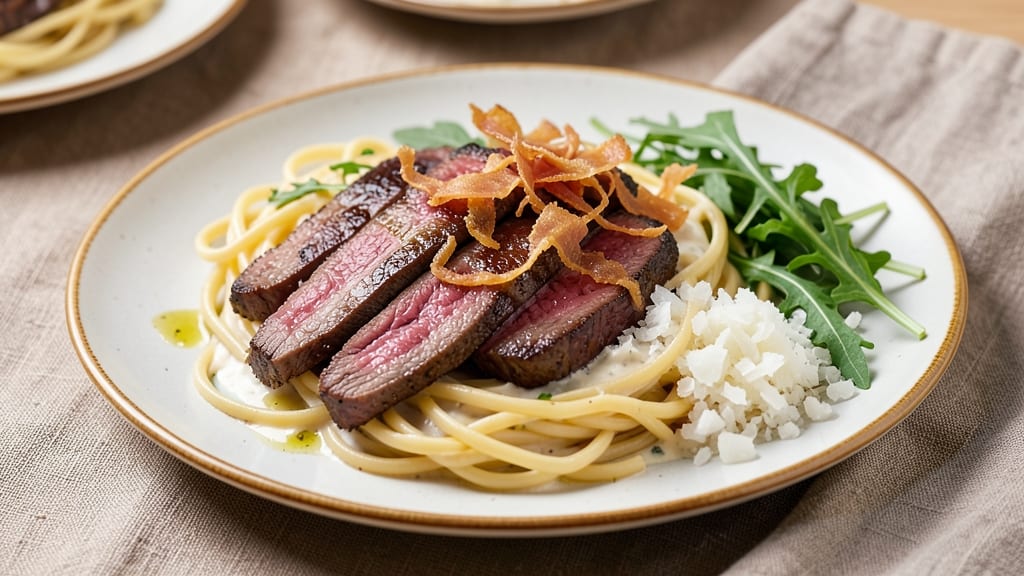
This beef bacon carbonara recipe delivers the ultimate balance of crispy pancetta, tender beef, and velvety egg sauce—all without a drop of cream. 🔥 The secret lies in high-heat searing of beef strips and perfectly rendered bacon, which infuse the starchy pasta water into a rich, golden sauce.
I’ve perfected this technique over years of testing, ensuring every bite achieves that signature Roman richness with a modern twist.
The foundation of authentic carbonara begins with al dente pasta and a simple yet powerful sauce made from eggs, cheese, and the savory fat rendered from crispy pancetta and beef.
Unlike many modern versions, this recipe stays true to tradition—no cream, no heavy intervention—just bold flavors that come together in minutes. The key is timing: whisking the sauce off the heat ensures silky perfection without scrambling the eggs.
What you’ll end up with is a dish that’s both comforting and impressive: strands of al dente pasta coated in a glossy, cheesy sauce, studded with crispy pancetta, tender beef, and flecks of black pepper.
The sauce clings effortlessly to each noodle, delivering that iconic carbonara experience with a deeper, meatier depth. It’s the kind of meal that feels indulgent yet stays true to its roots.
Serve immediately with a sprinkle of fresh parsley and extra black pepper for that final restaurant-quality touch. This recipe is designed to impress—whether for a weeknight dinner or a special occasion. Let’s get cooking!
Ingredients for beef bacon carbonara
Crispy pancetta, tender beef, and velvety egg sauce—just 10 ingredients for restaurant-quality carbonara.
| Ingredient | Amount | Notes |
|---|---|---|
| Pancetta 🥓 | 6 oz | Thinly sliced, crispy preferred |
| Ribeye Steak 🥩 | 1 lb | Thinly sliced against grain |
| Spaghetti 🍝 | 12 oz | Dry weight, al dente preferred |
| Large Eggs 🥚 | 4 whole | Room temperature, fresh |
| Pecorino Romano Cheese 🧀 | 1 cup | Freshly grated, coarse |
| Parmesan Cheese 🧀 | ½ cup | Freshly grated, coarse |
| Fresh Parsley 🌿 | ¼ cup | Chopped, for garnish |
| Ground Black Pepper 🌶️ | 1 tbsp | Freshly cracked, coarse |
| Kosher Salt 🧂 | 1 ½ tsp | For pasta water |
| Extra-Virgin Olive Oil 🫒 | 2 tbsp | For crisping pancetta |
The pancetta makes or breaks this dish. Look for thick-cut pancetta at Italian markets or the deli section of Whole Foods—it crisps better than thin slices. Ribeye steak is ideal for its fat content, but sirloin or flank steak work too. Slice it thinly against the grain for tenderness. For cheese, Pecorino Romano adds that sharp, salty bite—skip the pre-grated stuff, it’s full of anti-caking agents. If you can’t find it, Parmigiano-Reggiano works in a pinch, but it’s less acidic.
No pancetta? Thick-cut bacon is a solid swap, but render it longer for extra fat. Eggs should be room temperature—cold eggs scramble easily. For a richer sauce without cream, whisk in 1 tbsp of the pasta water at the end. Fresh parsley brightens the dish, but dried parsley at half the amount works if you’re out. The olive oil should be fruity and peppery—California or Tuscan varieties work best. And don’t skip the black pepper—it’s essential for that classic carbonara kick.
Pasta water is liquid gold here—save at least 1 cup before draining. The sauce comes together in minutes but needs to be eaten immediately—it’s delicate off the heat. Store any leftover pasta (without sauce) in the fridge for 2 days. Freeze pancetta in a single layer before bagging for up to 3 months. For extra crispiness, render the pancetta in a cold skillet and turn the heat to medium-low until golden—patience is key.
Why You'll Love This Recipe
- I’ll be real: the pancetta and ribeye are pre-sliced or quick to dice—no knife marathons here. Just toss in the fridge-cold steak and crispy pancetta, and let them sizzle while you boil water. That’s it. (Yes, even on a Tuesday night.)
- No Chopping Nightmare: I’ll be real: the pancetta and ribeye are pre-sliced or quick to dice—no knife marathons here. Just toss in the fridge-cold steak and crispy pancetta, and let them sizzle while you boil water. That’s it. (Yes, even on a Tuesday night.)
- Umami Bomb Combo: That salty, smoky pancetta meets the rich ribeye, then gets hugged by a silky egg-pecorino sauce—it’s like a flavor explosion in your mouth. The pecorino’s sharp bite cuts through the richness, and the eggs? They turn into a creamy, velvety coat that clings to every strand of pasta. Ridiculously good.
- Leftovers That Don’t Suck: Between us, most carbonara leftovers are a sad, greasy mess. Not this one. The ribeye stays tender, the pancetta keeps its crunch, and the sauce doesn’t turn gluey. Reheat with a splash of water, and it’s just as crave-worthy the next day—perfect for lunch or a lazy dinner.
Step-by-step instructions for beef bacon carbonara
Here's how to deliver restaurant-quality carbonara with crispy pancetta and silky egg sauce every time.
🔥 Step 1: Crisp the Pancetta and Sear the Ribeye
Heat a large skillet over medium heat and add the 6 oz pancetta. Let it cook undisturbed for 5-6 minutes until the fat renders out and the pancetta becomes deep golden brown and crispy. Real talk: don't stir too often—this prevents the fat from crisping properly.
Remove the pancetta with a slotted spoon and set aside, leaving the rendered fat in the pan. Add the 1 lb ribeye steak (sliced against the grain) and sear for 2-3 minutes per side until lightly browned but still slightly pink in the center. Transfer the steak to a plate and tent with foil to keep warm.
🍳 Step 2: Cook the Spaghetti Al Dente
Bring a large pot of water to a rolling boil and add 1.5 tsp kosher salt. Add the 12 oz spaghetti and cook until 1 minute shy of package directions for al dente. Reserve 1 cup of pasta water before draining—this starchy liquid is essential for the sauce.
I know it seems counterintuitive, but don't rinse the pasta. The surface starch helps the sauce cling beautifully. Drain the pasta and return it immediately to the pot, tossing with a splash of the reserved pasta water to prevent sticking.
🥘 Step 3: Prepare the Egg and Cheese Mixture
In a medium bowl, whisk together the 4 whole large eggs, 1 cup pecorino romano cheese, 0.5 cup parmesan cheese, and 1 tbsp ground black pepper until smooth and pale yellow. Here's the thing—room temperature eggs blend better, so if they're cold, let them sit at room temperature for 10 minutes before mixing.
Grating the cheeses fresh makes all the difference. Use a fine grater for the pecorino and parmesan so they melt smoothly into the sauce. The mixture should be thick but pourable—almost like a custard. If it looks too thick, add 1 teaspoon of pasta water to loosen it slightly.
🔥 Step 4: Combine Everything Off Heat
Remove the skillet with pancetta fat from heat and let it cool for 1 minute. Add the cooked spaghetti and toss to coat thoroughly in the rendered fat. Here's where it gets fun—add the egg mixture in a slow stream while tossing constantly with tongs.
The residual heat from the pasta will gently cook the eggs into a creamy sauce. If the sauce starts to thicken too much, add 1-2 tablespoons of reserved pasta water at a time until you reach your desired consistency. This is the moment that matters: keep tossing until the sauce is silky and coats the pasta completely.
🍽️ Step 5: Finish and Serve Immediately
Return the steak to the skillet along with any accumulated juices. Spoon the carbonara sauce over the steak and toss gently to combine. The steak should be warmed through but still slightly pink in the center. Plate immediately while still hot.
Garnish each serving with 1 tablespoon of the chopped fresh parsley and an extra sprinkle of pecorino romano cheese. Serve with crusty bread on the side to soak up any extra sauce. The pancetta should be crispy, the steak tender, and the sauce rich and creamy—no lumps, no scrambled eggs, just perfect carbonara.
Pro Tips For Making Beef Bacon Carbonara
- CRUSH THE PANCETTA FIRST: Dice that pancetta small—think ¼-inch cubes or smaller. I used to leave it in big chunks, and it’d stay chewy instead of crispy. If you’re impatient like me, skip the pre-cooling step and toss it straight into the pan, but watch it like a hawk so it doesn’t burn before rendering.
- SALT THE RIBEYE LIKE IT’S 1950: Generously salt the ribeye before searing—at least 30 minutes ahead if you can. I learned this the hard way: dry-brined, high-heat seared slices melt into the carbonara sauce like butter, while unsalted ones turn tough. No time? At least salt it right before cooking and let it sit uncovered for 10 minutes.
- OFF THE HEAT ONLY: Remove the pan from heat the second the pasta water hits the eggs. I used to linger, and the sauce would curdle into scrambled eggs. If you’re nervous, take it off a beat early—you can always add a splash more starchy pasta water to loosen it up.
- GRATE THAT CHEESE FRESH: Skip the pre-grated Pecorino—it’s got anti-caking agents that make the sauce grainy. Use a microplane or fine grater, and stop when you hit the orange part—that’s where the bitterness lives. I was skeptical until I tried it: the sauce clings to the pasta like it’s glued on.
Best sauces and condiments for this beef bacon carbonara
Pancetta Fat Magic
The rendered fat from crispy pancetta is the soul of this carbonara. After cooking the pancetta until deep golden brown, leave the fat in the pan—it’s liquid gold for building flavor. I recommend using 6 oz thick-cut pancetta for maximum crispiness.
If you’re short on time, render it in a cold skillet over medium-low heat for even better control. This fat carries the savory depth that transforms simple ingredients into something extraordinary. 🌟
Cheese Blend Secrets
For authentic flavor, combine 1 cup freshly grated pecorino romano with ½ cup parmesan—the pecorino’s sharp acidity cuts through the richness. Pre-grated cheese contains anti-caking agents that ruin the sauce’s texture.
I like to grate mine using a microplane for ultra-fine consistency. If you can’t find pecorino, substitute with Parmigiano-Reggiano, but reduce to 1.25 cups total to maintain balance.
Egg Sauce Perfection
Room temperature eggs blend smoothly into the sauce—cold eggs scramble easily. Whisk 4 large eggs with the cheese until pale yellow and slightly thickened. For extra richness, add 1 tbsp reserved pasta water to loosen the mixture slightly.
The key is working quickly: add the egg-cheese blend to the hot pasta in a slow stream while tossing constantly. This creates a silky emulsion without scrambling. 🥚
Pasta Water Boost
Never skip saving 1 cup pasta water—it’s essential for adjusting sauce consistency. The starch in the water helps emulsify the egg-cheese mixture, creating that signature clingy texture. If your sauce thickens too much, add pasta water 1 tbsp at a time until you reach a creamy, pourable consistency.
This is what separates homemade carbonara from restaurant-quality.
Fresh Parsley Garnish
A final sprinkle of ¼ cup chopped fresh parsley brightens the dish and adds a fresh contrast to the rich flavors. For extra flair, add a pinch of crushed red pepper flakes or a drizzle of high-quality olive oil (like California extra-virgin) before serving.
The parsley should be finely chopped—large pieces can overpower the delicate sauce. 🌿
Black Pepper Finish
Freshly cracked black pepper is non-negotiable in carbonara. Add 1 tbsp coarse black pepper directly to the egg-cheese mixture before combining with the pasta. For an extra kick, toast the peppercorns in a dry skillet for 30 seconds before grinding.
This enhances the pepper’s aroma and gives the sauce a subtle smoky depth that elevates every bite.
Nutrition facts
Frequently asked questions
Can I substitute bacon for pancetta in this beef carbonara?
Yes! For a similar flavor, use 6 oz thick-cut bacon instead of pancetta. The key is rendering it until deeply crispy—this adds the rich fat needed for the sauce. Regular bacon works, but it won't be as flavorful as pancetta's cured, fatty profile. Try to find "thick-cut" bacon at the grocery store for best results.
Why does my carbonara sauce get grainy or separate?
This usually happens when the eggs cook too quickly or the sauce gets too hot. Always work off the heat and toss constantly while adding the egg-cheese mixture. If the sauce separates, whisk in 1-2 tbsp reserved pasta water to re-emulsify. Cold eggs or overcooked pasta can also cause texture issues—keep everything hot and fresh!
Can I make this carbonara ahead of time?
No—carbonara is best served immediately after combining all ingredients. The sauce relies on residual heat to create its silky texture. You can prep components ahead: cook the pancetta and beef, grate the cheese, and boil the pasta (but don't drain it). Assemble and serve within 5 minutes of combining everything for perfect results.
What's the best pasta shape for beef bacon carbonara?
While spaghetti is traditional, bucatini or rigatoni work beautifully too. The key is choosing a shape with good surface area to hold the sauce. Avoid thin noodles like angel hair—they can break easily. For extra richness, try fresh egg pasta, which absorbs the sauce better than dried varieties.
How do I fix undercooked or overcooked beef in my carbonara?
For slightly undercooked beef, return it to the skillet for 1-2 minutes to warm through. Overcooked beef becomes tough—if this happens, remove it and slice thinly against the grain to maintain tenderness. The beef should be lightly pink in the center when served. For best results, sear it just until it reaches 130°F internal temperature.