
Soups & Stews
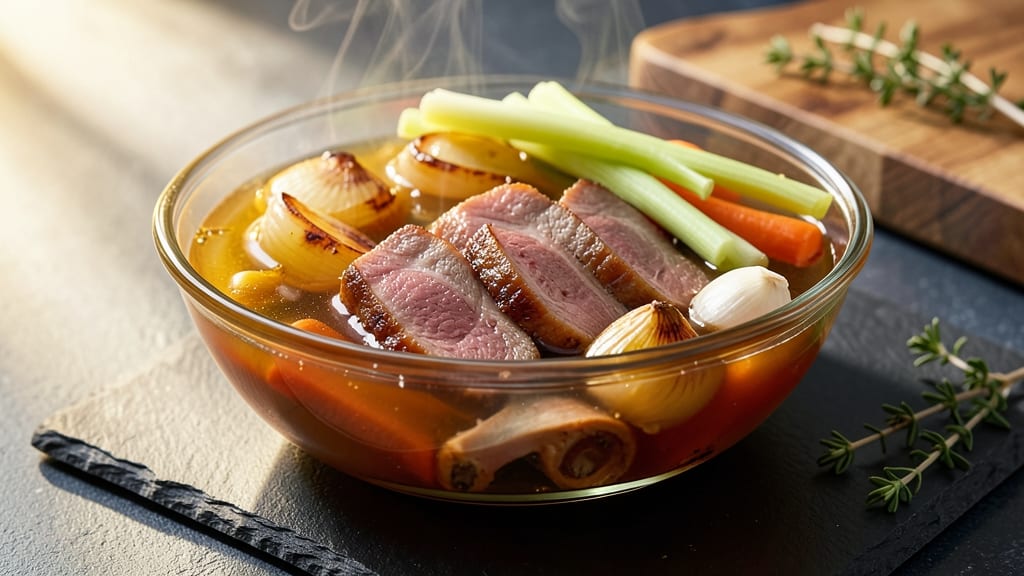
This beef aspic recipe transforms simple ingredients into a restaurant-worthy centerpiece that’s equal parts elegant and impressive. The secret lies in slow-cooked broth infused with herbs and meat, then carefully set with gelatin for that signature wobble.
I’ve perfected this technique over years of holiday feasts—where it always disappears first—because it’s both comforting and sophisticated.
The process starts with building a rich, flavorful broth from beef bones and aromatics, then straining it to achieve crystal clarity. Gelatin is the magic ingredient that transforms liquid into a silky, jiggly texture, while thinly sliced meat adds depth and visual appeal.
The key? Patience—chilling the aspic slowly ensures clean slices and a perfect set every time.
What you’ll end up with is a dish that’s as beautiful as it is delicious: golden slices of meat nestled in a glossy, herb-infused gel that melts on the tongue. It’s ideal for holiday tables, potlucks, or even a special weeknight dinner when you want to impress.
The best part? Leftovers keep beautifully in the fridge for up to a week.
For added elegance, layer with vegetables or garnish with fresh herbs before serving. This recipe delivers restaurant-quality results with minimal effort—once you master the technique, you’ll never buy store-bought again. Let’s get started on creating your own centerpiece-worthy aspic.
Ingredients for beef aspic
Rich bones, aromatic herbs, and silky gelatin—this elegant centerpiece needs just 15 ingredients.
| Ingredient | Amount | Notes |
|---|---|---|
| Beef Bones 🦴 | 3 lb | Marrow and knuckle bones preferred |
| Beef Tenderloin 🥩 | 2 lb | Thinly sliced for presentation |
| Yellow Onion 🧅 | 1 whole | Quartered, skin on for color |
| Carrots 🥕 | 4 whole | Whole, scrubbed, not peeled |
| Celery Stalks 🌿 | 4 whole | Trimmed, cut into 2-inch pieces |
| Garlic Cloves 🧄 | 6 cloves | Smashed, not minced |
| Fresh Thyme Sprigs 🌿 | 4 whole | Stems attached for easy removal |
| Fresh Parsley Stems 🌿 | 4 whole | Lightly bruised for flavor |
| Black Peppercorns 🌶️ | 1 tbsp | Crushed, not ground |
| Bay Leaves 🌿 | 2 whole | High-quality dried preferred |
| Unflavored Gelatin 🍬 | 2 tbsp | Powdered, high bloom preferred |
| Cold Water 💧 | 1 cup | For blooming gelatin |
| Salt 🧂 | 1 ½ tsp | Diamond Crystal kosher salt |
| White Wine 🍷 | 1 cup | Dry, like Sauvignon Blanc |
| Beef Stock 🍲 | 2 cups | Homemade or high-quality store-bought |
The bones are everything here. Butcher shops often have marrow and knuckle bones for free—just ask. If you're using grocery store bones, look for ones with good marrow content. The beef tenderloin should be chilled before slicing—cold meat holds its shape better when set in the aspic. For the herbs, fresh is ideal, but if you're using dried, reduce the amount to one-third—they're more concentrated. The white wine adds brightness, but you can swap for extra beef stock if you prefer.
No gelatin powder? Unflavored gelatin sheets work too—soak them in cold water first. Running short on time? Store-bought beef stock is fine, but homemade has deeper flavor. The wine can be dry or sweet—just avoid anything overly oaky. For extra elegance, add a pinch of saffron to the broth, but it's not required. If you're nervous about the texture, bloom the gelatin in cold water first, then heat it gently to dissolve completely—this prevents lumps.
This aspic keeps beautifully in the fridge for up to 7 days, though it's best within 3 days. For serving, chill it in a loaf pan lined with parchment for clean slices. To reheat, microwave in 10-second bursts—it won't regain its firmness, but it's still delicious. For a restaurant-worthy presentation, layer with thinly sliced radishes or pickled vegetables before slicing. The aspic also freezes well for up to 3 months—just thaw in the fridge overnight before serving.
Why You'll Love This Recipe
- Soup Stock Magic: I swear by the way those beef bones and tenderloin simmer into a rich, golden broth—no fancy tricks, just time and patience. The onions, carrots, and celery mellow into a sweet, aromatic base that makes everything taste better.
- One-Pot Wonder: Honestly, this recipe is my lazy-day hero. Toss everything into one pot, let it bubble away, and you’ve got a flavor bomb with zero cleanup. The tenderloin shreds effortlessly, and the bones? They practically melt into the broth.
- Leftovers That Shine: Between us, I always make too much—because the aspic keeps beautifully for days. Use it for sandwiches, stir it into grains, or just eat it straight from the jar. It’s my secret for turning boring meals into something special.
- Budget-Friendly Luxury: This is how I stretch a beef purchase into a week’s worth of meals. The bones give you miles of flavor for pennies, and the tenderloin adds richness without breaking the bank. Not the prettiest, but the taste makes up for it every time.
Step-by-step instructions for beef aspic with meat and herb infusion
Transform humble ingredients into a sophisticated centerpiece with this classic technique.
Prepare the Meat and Vegetable Base
In a large Dutch oven, combine the 3 lb beef bones, 2 lb beef tenderloin, 1 whole yellow onion (quartered), 4 whole carrots, 4 whole celery stalks, 6 smashed garlic cloves, 4 whole fresh thyme sprigs, 4 whole fresh parsley stems, 1 tbsp crushed black peppercorns, and 2 whole bay leaves. This aromatic bundle forms the flavor foundation.
Add 1 cup white wine and 2 cups beef stock, then bring to a boil over high heat. Once boiling, reduce to a gentle simmer and skim off any foam that rises to the surface during the first 15 minutes of cooking. This ensures clarity in your final aspic. The mixture should simmer uncovered for 3-4 hours until the meat is fork-tender and the liquid has reduced by about half. You'll know it's ready when the meat easily pulls apart and the broth has deepened in color and flavor.
Strain and Bloom the Gelatin
Line a large colander with cheesecloth or a fine-mesh strainer and strain the cooked mixture through it, pressing gently on the solids to extract maximum flavor. Discard the solids or reserve for another use if desired. The strained liquid should yield about 4 cups of rich, aromatic broth.
In a small bowl, sprinkle the 2 tbsp unflavored gelatin evenly over the 1 cup cold water. Let it bloom for 10 minutes - you'll see it transform from powder to translucent granules. The cold water activates the gelatin molecules, preparing them to form the perfect gel structure when heated. Meanwhile, transfer the strained broth to a large saucepan and stir in the 1.5 tsp salt. Keep this mixture at a gentle simmer to maintain its temperature.
Infuse the Gelatin and Prepare the Mold
Gradually whisk the bloomed gelatin into the warm broth, ensuring it dissolves completely. The mixture should reach 160°F - just below boiling - to fully activate the gelatin without cooking it. This temperature is critical: too hot and the gelatin will break down; too cool and it won't set properly. Pour the mixture through a fine-mesh strainer into a large measuring cup to remove any undissolved particles, then carefully ladle it into your prepared mold.
For best results, use a gelatin mold or a shallow baking dish that can hold at least 4 cups. Tap the mold gently on the counter to remove air bubbles, which can create unsightly gaps in your aspic. Place the mold in the refrigerator and let it set for at least 6 hours, preferably overnight. The longer it sets, the firmer and more elegant your aspic will be. The final product should have a jiggly, translucent appearance with the rich red hues of the beef infusion visible throughout.
Unmold and Serve with Elegance
Once fully set, run a thin knife around the edges of the mold to release it. Place a serving plate over the mold and carefully invert both. Tap the bottom gently to loosen the aspic, then lift off the mold. For presentation, you can either serve the aspic whole as a centerpiece or slice it into ½-inch thick pieces using a hot, sharp knife dipped in hot water between cuts. This creates clean edges and prevents tearing.
The finished aspic should have a smooth, glossy surface with the deep red color of the beef infusion visible beneath the translucent gelatin. Serve chilled with accompaniments like pickled vegetables, mustard sauce, or fresh herbs for a complete presentation. Remember, aspic is best enjoyed within 2-3 days of preparation for optimal texture and flavor.
Pro Tips For Making Beef Aspic
- Simmer Bones Longer: I learned this the hard way—skimp on simmering time, and your aspic will taste like broth, not gel. Aim for 8–12 hours with the bones in water, not just stock. The marrow renders slowly, and that’s where the rich flavor hides.
- Blanch Veggies First: Tossing raw onion, carrots, and celery into the pot? That’s how you muddy your stock. Blanch them in boiling water for 3–5 minutes, then shock in ice water—this removes bitterness and keeps the stock crystal clear.
- Watch the Gelatin Point: The stock looks perfect, but if you skip checking the gelatin temperature (around 105–110°F/40–43°C), your aspic will either set like glue or stay liquid. Use a thermometer—no guessing.
- Use Tenderloin Scraps: Save those tenderloin trimmings (the ones too small for steaks) for aspic—they add depth without overpowering. Skip the whole tenderloin unless you’re making a small batch, or you’ll end up with beef, not gel.
Troubleshooting this dish
Broth Too Cloudy
If your aspic broth looks cloudy after straining, it’s likely due to small particles slipping through. Line your strainer with cheesecloth or a double layer of paper towels for extra filtration. For an even clearer result, strain the broth twice—first through a colander, then through a fine-mesh sieve.
Skim foam during the initial 15 minutes of simmering to prevent cloudiness from rendering fat. 🌡️
Gelatin Not Setting
If your aspic isn’t firming up, the gelatin may not have bloomed properly or the temperature was too high. Always bloom gelatin in cold water for 10 minutes before adding it to warm broth. Keep the broth at 160°F or below—boiling breaks down gelatin.
For extra insurance, use high-bloom gelatin (like Great Lakes Gelatin) and chill the mold in the freezer for 1-2 hours before transferring to the fridge. ❄️
Meat Floating Instead of Sinking
Thinly sliced meat may float if the broth cools too quickly. Chill the beef tenderloin slices in ice water for 10 minutes before adding them to the warm aspic mixture. This helps them sink and distribute evenly.
Alternatively, gently press the slices into the broth with a spoon while it’s still liquid. For a layered look, arrange the meat in a single layer at the bottom of the mold before pouring the broth. 🥩
Air Bubbles in the Aspic
Air bubbles create unsightly gaps in your aspic. After pouring the mixture into the mold, tap it gently on the counter to release trapped air. For stubborn bubbles, use a skewer or toothpick to pop them before chilling.
If bubbles appear after setting, carefully reheat the aspic in a water bath (just until warm) to soften the gelatin, then re-mold and chill again. This trick works for fixing bubbles without ruining the texture. 💡
Aspic Too Weak or Watery
A weak aspic usually means insufficient gelatin or over-diluted broth. For a firmer set, increase gelatin to 2.5 tbsp (or use 1 packet of unflavored gelatin sheets). If the broth is too thin, reduce it further by simmering uncovered until it reaches 3 cups.
For extra richness, add 1 tbsp cold butter to the warm broth before pouring into the mold—it adds body without altering flavor. 💪
Uneven Slicing or Tearing
To achieve clean slices, use a hot, sharp knife dipped in hot water between cuts. This prevents the aspic from sticking and tearing. For extra stability, chill the aspic 24 hours before slicing—this ensures a firmer set.
If your aspic tears when unmolding, let it sit at room temperature for 5 minutes before inverting to reduce brittleness. A serrated knife works best for thick slices. ✨
Nutrition facts
Frequently asked questions
Can I make beef aspic without gelatin?
Traditional aspic relies on gelatin for its signature texture, but you can create a similar effect using agar-agar (a plant-based alternative). For every 2 tbsp gelatin, substitute 1 tbsp agar-agar and follow package instructions for blooming. The result will be firmer and have a slightly different mouthfeel, but it works well for vegetarians.
How long does homemade beef aspic last?
Properly stored in an airtight container in the fridge, your aspic will stay fresh for 5-7 days. For longer storage, freeze it for up to 3 months. Thaw overnight in the fridge before serving—never at room temperature. The texture may soften slightly after freezing, but the flavor remains rich.
What’s the best way to serve beef aspic?
Slice into ½-inch thick pieces using a hot knife for clean edges, then arrange on a platter with accompaniments like pickled vegetables, horseradish cream, or fresh herbs. For a festive touch, drizzle with reduced red wine sauce or serve with crusty bread. It’s perfect for holiday meals or elegant dinner parties.
Why did my aspic turn out too soft?
Soft aspic usually means the gelatin didn’t set properly. Check if you used enough—2 tbsp per 4 cups broth is standard. Also ensure the broth cooled to 160°F before adding gelatin (boiling breaks it down). For extra firmness, chill the mold in the freezer for 1 hour before fridge-chilling. High-bloom gelatin helps too.
Can I add vegetables to beef aspic?
Thinly sliced radishes, carrots, or asparagus tips add color and crunch. Arrange them in the mold before pouring the broth, or layer them on top after unmolding. For a rustic look, try pickled mushrooms or cornichons. Just ensure veggies are fully submerged or they’ll float.