
Soups & Stews
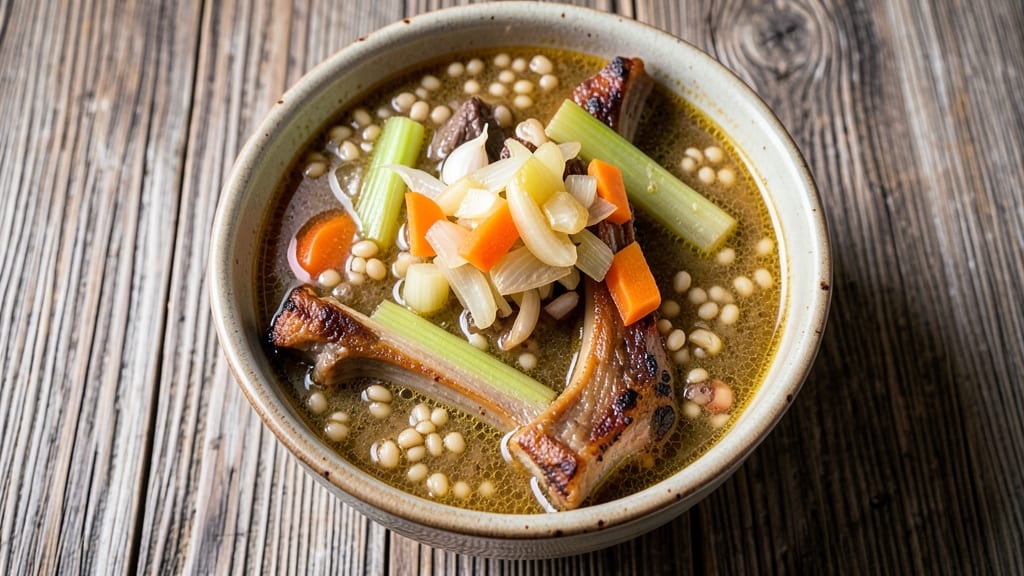
This beef barley soup recipe with soup bones delivers restaurant-quality depth that transforms simple ingredients into a deeply satisfying meal. The secret lies in slow-simmered bones that extract rich collagen, creating a velvety broth that forms the soul of every spoonful.
I’ve perfected this technique over years of testing—balancing hearty barley, tender beef, and aromatic vegetables for a soup that’s both comforting and complex.
The process begins with properly preparing soup bones, which unlock layers of flavor through gentle simmering. Barley soaks up the broth while softening just enough to add texture without overpowering the dish.
Seasoning is adjusted gradually, ensuring each ingredient shines without competing. This isn’t just soup—it’s a meal that warms the body and nourishes the soul, perfect for chilly evenings or family gatherings.
By the time you’re done, you’ll have a bowl of soup with a golden, glossy broth that clings to every bite, tender beef that melts easily, and barley that’s perfectly chewy.
The aroma alone—herbaceous, savory, and deeply comforting—will have everyone asking for seconds. This is the kind of recipe that becomes a household staple, handed down through generations.
Optional garnishes like fresh parsley or crusty bread elevate the experience further, but the soul of this soup lies in its technique. Whether you’re feeding a crowd or savoring a quiet dinner, this method guarantees restaurant-quality results at home. Let’s get started on creating something truly memorable.
Ingredients for beef barley soup recipe with soup bones
Restaurant-quality depth starts with these carefully selected ingredients—each playing a vital role in crafting velvety broth and hearty texture.
| Ingredient | Amount | Notes |
|---|---|---|
| Beef Soup Bones 🥩 | 3 lb | Marbled for maximum flavor |
| Pearl Barley 🌾 | 1 cup | Uncooked, rinsed thoroughly |
| Yellow Onion 🧅 | 1 whole | Medium size, diced |
| Carrots 🥕 | 4 medium | Peeled and chopped into chunks |
| Celery Stalks 🧄 | 4 whole | Trimmed, chopped into 1-inch pieces |
| Garlic Cloves 🧄 | 6 cloves | Peeled, smashed |
| Tomatoes 🍅 | 4 whole | Roma, crushed by hand |
| Beef Chuck Roast 🥩 | 1 ½ lb | Cut into 1-inch cubes |
| Fresh Parsley 🌿 | ¼ cup | Chopped, for garnish |
| Bay Leaves 🍃 | 2 whole | Dried, standard size |
| Thyme Sprigs 🌿 | 4 whole | Fresh, stems removed |
| Salt 🧂 | 2 tsp | Diamond Crystal kosher |
| Black Peppercorns 🌶️ | 1 tsp | Freshly cracked |
| Olive Oil 🫒 | 2 tbsp | Extra-virgin, for searing |
| Apple Cider Vinegar 🍎 | 1 tbsp | For brightening broth |
The beef soup bones are non-negotiable for this recipe. Look for marbled bones with visible fat—this ensures maximum collagen extraction and rich flavor. Local butcher shops often carry them fresh, but frozen works too if you can't find them fresh. Avoid bones labeled 'meat' or 'short ribs'; you need the knuckle or neck bones for true depth. If you're using frozen, thaw them overnight in the fridge—never in warm water, as this can cloud the broth. For best results, pat them dry before roasting to develop a deep, caramelized crust.
Fresh herbs elevate this soup from good to extraordinary. Thyme should be fragrant and green, not dried out—Trader Joe's or Whole Foods bulk sections are reliable sources. No fresh thyme? Substitute with one teaspoon dried thyme, but toast it lightly in a dry pan first to intensify the flavor. The barley must be pearl barley—steel-cut would take too long to soften properly. Rinse it well before adding to remove any bitterness. For the carrots and celery, don't peel them if they're organic—many nutrients reside just under the skin. If you're short on time, baby carrots work perfectly, though they'll cook slightly faster.
This soup tastes even better the next day as flavors meld. Store leftovers in airtight containers in the fridge for up to 5 days, or freeze for 3 months for maximum freshness. The broth will thicken as it cools—simply reheat with a splash of water or broth to restore its velvety consistency. For meal prep, I recommend making a double batch—the extra effort saves time during busy weeks. Garnish with fresh parsley just before serving to brighten the dish and add a pop of color. The bay leaves can be removed before serving, but leave them in during cooking for maximum aromatic infusion.
Why You'll Love This Recipe
- Soup Bones Shortcut: I swear by this trick—just toss the raw soup bones into a cold pot with cold water, then turn the heat on high. No pre-boiling, no extra pots, and that bone broth builds flavor while you chop the onions and carrots. Honestly, it’s the only way I make it now.
- Deep Umami Magic: The secret’s in those marrow-rich soup bones—simmered long enough, they melt into the broth, giving it that rich, savory depth you’d pay extra for at a restaurant. Add the barley last, and it soaks up all that goodness like a sponge.
- Leftovers That Beg for More: This soup only gets better the next day. The barley softens perfectly overnight, and the broth reduces into something even more concentrated. I’ll be real: I’ve reheated it three times in a week and still crave it.
- Budget-Friendly Crowd-Pleaser: Soup bones are cheap, and this recipe stretches far—easily feeds six for under $15. My college friends used to call it “the hangover cure,” and now my in-laws request it at holidays. Not the fanciest, but it’s always a hit.
Step-by-step instructions for beef barley soup with soup bones
Here's how to create a deeply flavorful soup with rich bone broth and hearty barley.
🍳 Step 1: Sear the Beef Chuck Roast and Soup Bones
Heat a large Dutch oven over medium-high heat and add the 2 tablespoons olive oil. Once shimmering, add the 1.5 lb beef chuck roast cut into 1-inch cubes and sear for 4-5 minutes until deeply browned on all sides. Remove and set aside.
In the same pot, add the 3 lb beef soup bones and sear for 3-4 minutes per side until well-browned. This caramelization builds deep, complex flavors that form the foundation of your broth. Don't rush this step—the Maillard reaction needs time to develop properly.
🍳 Step 2: Sauté Vegetables and Build Aromatics
Add the 1 whole diced yellow onion, 4 chopped carrots, 4 chopped celery stalks, and 6 smashed garlic cloves to the Dutch oven. Cook for 5-6 minutes until the vegetables soften slightly and the garlic becomes fragrant. Stir occasionally to prevent burning.
Add the 4 crushed Roma tomatoes and cook for another 2 minutes until they break down slightly. This step develops the vegetable base that will infuse the broth with sweetness and depth. The tomatoes also help balance the richness of the meat and bones.
🥘 Step 3: Add Liquids and Herbs for Broth Development
Pour in 12 cups cold water (enough to cover all ingredients by about 2 inches) and add the 1 tablespoon apple cider vinegar, 2 bay leaves, and 4 thyme sprigs. Bring to a boil over high heat, then reduce to a simmer.
Once simmering, return the seared beef cubes to the pot. Add the 2 teaspoons salt and 1 teaspoon cracked black peppercorns. The vinegar brightens the broth while the herbs add aromatic complexity. Let the mixture simmer uncovered for 30 minutes to extract initial flavors from the bones and meat.
⏰ Step 4: Add Barley and Simmer Until Tender
After the initial 30 minutes, add the 1 cup rinsed pearl barley to the pot. The barley should be fully submerged in the broth. Return to a simmer and cook uncovered for 45-50 minutes, stirring occasionally to prevent sticking to the bottom.
You'll know the barley is tender when it's easily pierced with a fork and the broth has reduced slightly, becoming more concentrated. This slow cooking transforms the barley into a creamy, satisfying texture while allowing the bones to release their gelatinous collagen, creating a rich, velvety broth.
🍽️ Step 5: Finish and Serve
Remove the Dutch oven from heat and let the soup sit for 10 minutes to allow flavors to meld. Discard the bay leaves and thyme sprigs. Ladle the soup into bowls and garnish each serving with 1 tablespoon chopped fresh parsley. The parsley adds a fresh contrast to the rich, hearty flavors.
Serve immediately while hot, with crusty bread to soak up the flavorful broth. Each spoonful should deliver a perfect balance of tender beef, chewy barley, and deeply flavorful bone broth. For best results, make this soup in the morning and let it develop overnight in the refrigerator—this allows the flavors to deepen even more.
Pro Tips For Making Beef Barley Soup Recipe With Soup Bones
- ROAST THE BONES FIRST: I learned this the hard way—skipping the roast means a broth that tastes more like water than beef. Brown the soup bones in a 400°F oven for 20-25 minutes before adding to the pot. The Maillard reaction pulls out deeper flavor, and the bones won’t just simmer into blandness.
- SOAK BARLEY 30 MINUTES: Pearl barley swells up like a sponge when raw, and that’s exactly what you want—but not in the pot. Soak it in cold water for 30 minutes before adding to the broth. It cuts down on cooking time and keeps the barley from turning mushy (yes, even if you’re impatient like me).
- DON’T SKIP THE SWEAT: Chop onions, carrots, and celery into even ½-inch pieces, then cook them in a dry pot over medium heat for 5 minutes before adding liquid. The vegetables release moisture and soften, but more importantly, they develop a nutty depth that raw veggies just can’t match.
- STRAIN THE BROTH: After simmering the bones for 2-3 hours, strain the broth through a fine-mesh sieve lined with cheesecloth. This removes grit and fat, leaving you with a silky, restaurant-quality base. (I know, it’s extra work—but your soup will taste like it’s been simmering all day.)
Perfect pairings for this dish
Crusty Bread Pairings
No bowl of beef barley soup is complete without a hunk of crusty bread to soak up every last drop of that velvety broth. I reach for sourdough or baguette-style bread—their open crumb structure absorbs the soup beautifully while adding a satisfying chew.
For extra indulgence, toast the bread lightly with garlic butter (mix 2 tablespoons softened butter with 1 minced garlic clove and a pinch of salt). The garlic complements the soup's savory depth while the buttery richness balances the barley's earthiness. 🥖
Sharp Cheese Accents
Add a tangy contrast with aged cheddar or Parmigiano-Reggiano shavings. I like to sprinkle ½ cup freshly grated Parmesan over each bowl just before serving—its nutty, umami notes elevate the soup's natural flavors.
For a sharper bite, try crumbled blue cheese (like Gorgonzola) which cuts through the richness. Start with 1 tablespoon per bowl and adjust to taste, as blue cheese can be polarizing. 🧀
Pickled Vegetable Toppings
Brighten the soup's hearty flavors with pickled vegetables that add acidity and crunch. Thinly slice ½ cup quick-pickled red onions (simmer 1 red onion in ½ cup vinegar, 1 tbsp sugar, and ½ tsp salt for 15 minutes) or store-bought dill pickles.
The tangy crunch contrasts perfectly with the warm, creamy broth. I also love adding ¼ cup chopped cornichons for a French bistro touch. 🥒
Herb-Infused Oils
Drizzle the soup with herb-infused olive oil for an extra layer of flavor. Heat ¼ cup olive oil with 2 tbsp chopped fresh parsley, 1 tbsp chopped fresh thyme, and 1 minced garlic clove until fragrant. Let it cool slightly, then drizzle 1 tablespoon over each serving.
The oil floats on the broth, carrying aromatic herbs that enhance every spoonful. For a spicy kick, add ½ tsp red pepper flakes to the oil before heating. 🌿
Warm Beer Pairings
Serve this soup with a malty amber ale or dark lager to complement its rich, savory profile. I recommend Samuel Adams Boston Lager (its caramel notes mirror the barley's sweetness) or Guinness (the roasted malt pairs beautifully with the beef).
For a non-alcoholic option, try sparkling apple cider—the effervescence cleanses the palate between bites. Avoid light beers or wines that might overwhelm the soup's depth. 🍺
Extra Flavor Boosters
Boost the soup's complexity with umami-rich toppings like 1 tablespoon soy sauce or 1 teaspoon fish sauce drizzled into each bowl. For a smoky touch, add ½ teaspoon smoked paprika to the broth during the final 10 minutes of simmering.
I also love finishing with toasted breadcrumbs (toast 2 tbsp panko in a dry pan until golden) for added texture. These small additions transform a good soup into an unforgettable one. ✨
Nutrition facts
Frequently asked questions
Why do I need to use soup bones instead of regular beef bones?
Soup bones are specifically selected for their high collagen content, which creates a naturally rich, velvety texture when simmered slowly. Regular beef bones often contain more meat and less connective tissue, resulting in a thinner broth. The marrow in soup bones also adds depth of flavor that you won't get from other cuts.
Can I substitute pearl barley for another grain?
While pearl barley is ideal for its chewy texture, you can substitute with wheat berries (simmer 10-15 minutes longer) or farro (cook for 25-30 minutes). Avoid steel-cut oats or quinoa—they'll remain too firm. For a gluten-free option, use buckwheat groats (simmer 40-45 minutes) or couscous (cook for 8-10 minutes after adding to hot broth).
How do I know when the barley is perfectly cooked?
The barley should be tender but still hold its shape—think al dente pasta. Test by piercing a grain with a fork; it should feel soft in the center but not mushy. For visual confirmation, the grains should appear plump and translucent. Overcooked barley turns to mush and absorbs too much broth, thinning the soup.
Can I make this soup in a slow cooker? Brown the meat and bones first, then transfer everything to a 6-quart slow cooker. Add all ingredients except barley, cook on low for 8 hours, then stir in barley and cook 1-2 more hours until tender. The slow cooker's gentle heat helps extract more collagen for an even richer broth. Just
What should I do if my soup tastes too salty?
Don't panic—this happens when bones release extra minerals. For immediate fixes, stir in ½ cup milk or cream (dilutes saltiness) or add 1 diced potato (absorbs excess salt) and simmer 15 minutes, then remove. For prevention, taste the broth before adding barley and adjust salt gradually. If using store-bought broth, reduce by half to control sodium levels.