
Soups & Stews
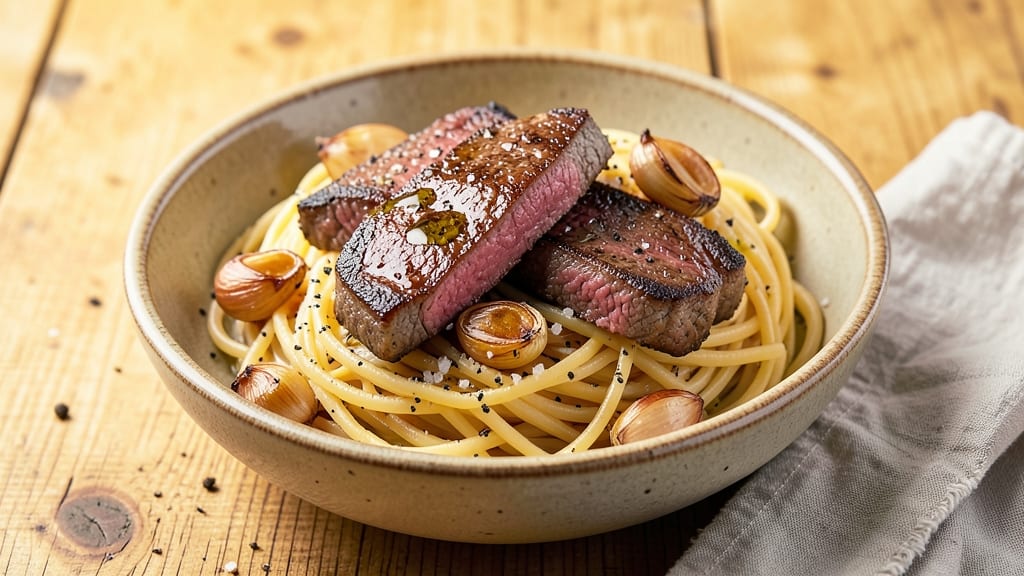
This beef and spaghetti squash recipe transforms two humble ingredients into a restaurant-worthy meal that's surprisingly simple to prepare. The secret lies in perfectly roasting the squash until its strands become tender and silky, while the beef develops a rich, caramelized crust that keeps it impossibly juicy.
I've been perfecting this combination for years, and it never fails to impress—whether for a weeknight dinner or a special occasion.
The beauty of this dish is its balance: the natural sweetness of the spaghetti squash pairs beautifully with the savory depth of the beef, creating a harmonious flavor profile without needing heavy sauces.
The squash roasts directly on the baking sheet alongside the beef, so you only have one pan to clean. This method ensures both components cook to perfection while developing those complex, caramelized flavors that make it taste like you spent hours in the kitchen.
What you'll end up with is a plate of golden, tender beef slices resting on a bed of silky squash strands—each bite delivers a perfect combination of textures and flavors.
The beef remains juicy and flavorful, while the squash strands hold their shape beautifully, creating an elegant presentation that looks as good as it tastes. This dish is hearty enough to satisfy even the hungriest eaters but light enough to feel balanced and satisfying.
Serve with a sprinkle of fresh parsley or a drizzle of olive oil for extra brightness, and you've got a complete meal that requires minimal effort but delivers maximum flavor.
The best part? Leftovers reheat beautifully, making this an ideal recipe for meal prep. Let's get started on creating this comforting, crowd-pleasing dish.
Ingredients for beef and spaghetti squash
Two ingredients, one pan, endless flavor—this beef and spaghetti squash combo delivers restaurant-quality results with minimal effort.
| Ingredient | Amount | Notes |
|---|---|---|
| Spaghetti Squash 🍠 | 1 medium | Cut lengthwise into halves |
| Ribeye Steak 🥩 | 1 ½ lb | 1-inch thick slices, trimmed |
| Extra-Virgin Olive Oil 🫒 | 3 tbsp | For roasting and drizzling |
| Kosher Salt 🧂 | 1 ½ tsp | Coarse grain preferred |
| Freshly Ground Black Pepper 🌶️ | 1 tsp | Freshly cracked for best flavor |
| Garlic Cloves 🧄 | 4 cloves | Minced for seasoning |
| Fresh Parsley 🌿 | ¼ cup | Chopped for garnish |
| Balsamic Vinegar 🍷 | 1 tbsp | For finishing drizzle |
| Fresh Rosemary 🌿 | 1 tbsp | Chopped, for seasoning |
| Fresh Thyme 🌿 | 1 tbsp | Leaves only, chopped |
| Red Wine 🍷 | ½ cup | Dry, for deglazing |
| Beef Broth 💧 | ¼ cup | Low-sodium preferred |
| Cornstarch 🌾 | 1 tbsp | For thickening sauce |
The spaghetti squash is the unsung hero here. Look for small to medium squash—they're easier to handle and cook more evenly. Costco and Trader Joe's usually have them in season, but if you can't find them, any grocery store with a produce section will have them around fall. Cutting it? Use a sharp chef's knife—score the top first to vent steam, then slice lengthwise. The beef is where the magic happens: ribeye or sirloin works best, cut into 1-inch slices for even cooking. Season them generously with salt and pepper right away—they'll soak up the flavors as they roast.
No ribeye? New York strip or flank steak are great swaps—just slice against the grain for tenderness. Fresh herbs wilt fast, so grab them last at the store and store them properly (wrap in damp paper towels, then a bag). The red wine can be swapped for beef broth plus a splash of balsamic if you're avoiding alcohol. For the squash, if you're short on time, microwave it for 5 minutes first to soften slightly before roasting. And if you're feeling fancy, deglaze the pan with a splash of red wine after removing the beef—it adds depth without extra effort.
Roasted squash keeps 3-4 days in the fridge, but the beef is best eaten fresh. Store them separately—squash in an airtight container, beef wrapped tightly in foil. Reheat gently in a skillet with a splash of water or broth to keep everything moist. This dish reheats beautifully, making it perfect for meal prep. I always make a double batch—one for dinner, one for lunches the next day. The flavors actually deepen overnight, so don't skip the leftovers!
Why You'll Love This Recipe
- I’ll be real: ribeye isn’t cheap, but here’s what sold me—you use less than you think, and the squash stretches it into a full meal. A single steak feeds two with seconds, and the squash costs a fraction of pasta. It’s the kind of dish that makes you feel like you’re treating yourself without breaking the bank.
- One-Pan Magic: I swear by this recipe when I’m too tired to scrub pots—just roast the squash and sear the steak on the same sheet, and you’re done. The squash’s natural sweetness caramelizes right alongside the steak’s crust, so you’re not stuck with a separate side.
- Steakhouse Simplicity: Honestly, ribeye feels fancy, but this dish makes it effortless. A quick sear in olive oil with salt and pepper, then a rest—no fancy sauces, no stress. The squash’s strands soak up the steak’s juices like a dream, so every bite tastes like a bite of the main event.
- Weeknight to Weekend: Between us, this is my go-to when I need something that works for Tuesday takeout or Saturday dinner. Double the squash for leftovers, and the steak reheats beautifully—just warm it through, and it’s like you’re eating fresh again. (Yes, even on a Tuesday night.)
Step-by-step instructions for beef and spaghetti squash roast
Here's how to create a restaurant-worthy dish with tender beef and silky squash strands.
Roast the Spaghetti Squash Until Tender
Preheat your oven to 400°F. Cut the spaghetti squash lengthwise into two halves and scoop out the seeds using a spoon. Place the halves cut-side down on a baking sheet lined with parchment paper.
Drizzle each half with 1 tablespoon of the extra-virgin olive oil and sprinkle with ½ teaspoon of the kosher salt. Roast for 30-35 minutes until the flesh is tender and easily pierced with a fork. You'll know it's done when the edges are slightly caramelized and the squash strands pull away cleanly.
Let the squash cool for 5 minutes before scraping the strands with a fork into a bowl. Set aside for later use. The squash should yield about 2 cups of silky strands, ready to soak up all the flavors from the beef sauce.
Sear the Ribeye Steak to Perfection
Pat the ribeye steak slices dry with paper towels and season both sides generously with the remaining 1 teaspoon kosher salt and 1 teaspoon freshly ground black pepper. Let the slices sit at room temperature for 10 minutes to ensure even cooking.
Heat a large skillet over high heat until very hot. Add 1 tablespoon of the extra-virgin olive oil and swirl to coat the pan. Working in batches if needed, add the steak slices and sear for 3-4 minutes per side until they develop a deep golden-brown crust and reach medium-rare doneness.
Remove the steak slices from the pan and transfer to a plate. Tent loosely with foil to keep warm. The residual heat will carry the steak to perfect doneness while you finish the sauce. Let the steak rest for 5 minutes before slicing against the grain.
Create the Red Wine and Herb Sauce
In the same skillet, reduce the heat to medium and add the minced garlic cloves. Sauté for 30 seconds until fragrant but not browned. Pour in the ½ cup red wine and scrape up any browned bits from the bottom of the pan with a wooden spoon.
Add the chopped rosemary and thyme, then pour in the ¼ cup beef broth. Let the mixture simmer for 3-4 minutes until slightly reduced. In a small bowl, whisk together the 1 tablespoon cornstarch with 2 tablespoons of water until smooth. Slowly pour this mixture into the skillet while stirring constantly.
Continue to stir until the sauce thickens enough to coat the back of a spoon, about 1-2 minutes. Remove from heat and stir in the 1 tablespoon balsamic vinegar. The sauce should be glossy and rich, ready to coat the beef and squash strands beautifully.
Combine and Finish the Dish
Add the roasted spaghetti squash strands to the skillet with the sauce and toss gently to coat evenly. Return the sliced ribeye steak to the pan and spoon the sauce over the top. Let everything heat through together for 1-2 minutes.
Transfer the beef and spaghetti squash mixture to a serving platter and garnish with the chopped fresh parsley. The dish should be vibrant with the deep red of the sauce contrasting against the golden squash strands and rich beef slices.
Serve immediately while the squash is still warm and the sauce is silky. Each bite should deliver a perfect balance of tender beef, sweet squash strands, and a rich, herby sauce that ties everything together beautifully.
Pro Tips For Making Beef And Spaghetti Squash
- Halve the Squash Properly: Cut the squash lengthwise—not crosswise—so the seeds are all in one half. I learned this the hard way after scooping out a mess of seeds from both sides. A spoon works better than a knife for scraping, and leave about a quarter-inch of flesh on the skin to keep it from burning.
- Sear the Ribeye First: Hit the ribeye with a screaming-hot pan and olive oil before touching the squash. The crust locks in juices, and you’ll get that restaurant-quality bite. Skip the preheating step, and you’re just cooking bland meat—no one wants that.
- Salt the Squash Early: Toss the halved squash with salt and oil before roasting, not after. The salt draws out moisture, so it crisps up better. I used to skip this, and the flesh always came out gummy—now it’s tender but firm, like al dente pasta.
- Rest the Meat Under Foil: Transfer the seared ribeye to a plate, tent loosely with foil, and let it sit for 5-10 minutes. This keeps it juicy while you finish the squash—cutting into it too soon turns it into a sad, dry mess. (Yes, even if you’re impatient like me.)
Make-ahead tips for this dish
Prep Ahead: Squash First
Roast the spaghetti squash one day ahead—it actually tastes better after resting! Store the cooked strands in an airtight container with a drizzle of 1 teaspoon olive oil to prevent drying.
The strands will soften further overnight, making them even silkier when reheated. Trust me, this step saves you 30 minutes of oven time on busy weeknights. 💫
Beef Prep Shortcut
Season and slice the beef up to 4 hours ahead, then store in a sealed container in the fridge. When ready to cook, simply sear straight from cold—no need to bring to room temperature.
For extra flavor, marinate the slices in 2 tablespoons red wine and 1 teaspoon rosemary for 1-2 hours before cooking. This technique gives you restaurant-quality depth with zero extra effort.
Sauce Assembly
Make the red wine sauce morning-of and store it in a small jar in the fridge. When reheating, warm it gently on the stove with 1 tablespoon water to restore its silky texture.
I like to keep the sauce separate until serving—it stays vibrant and glossy this way. Add a pinch of salt and a splash of balsamic when reheating to brighten the flavors. 🍷
One-Pan Reheat
Combine all components in a single oven-safe skillet and reheat at 350°F for 15-20 minutes until everything is warmed through. The residual moisture from the squash helps keep the beef juicy.
If the sauce seems too thick, add 1 tablespoon beef broth and stir until smooth. This method ensures everything heats evenly without drying out. Perfect for busy mornings!
Portion Control
Divide the dish into individual meal prep containers with ½ cup squash strands and 3-4 oz beef per serving. Store the sauce separately in a small container—this keeps the squash from becoming soggy.
When reheating, add the sauce just before eating. I pack these containers for lunches all week—they stay fresh for 3 days in the fridge. 💡
Freezer-Friendly
Both the beef and squash freeze beautifully! Wrap individual portions in foil and freeze for up to 2 months. To reheat from frozen, bake at 375°F for 25-30 minutes, covered with a damp paper towel.
The beef stays tender, and the squash absorbs the sauce perfectly. This is my go-to for last-minute dinner parties—just pull from the freezer and let the oven do the work. ❄️
Nutrition facts
Frequently asked questions
Can I substitute another type of squash?
While spaghetti squash is ideal for its stringy texture, you can use butternut squash or acorn squash as substitutes. Cut them into cubes and roast until tender (25-30 minutes at 400°F). The texture will be slightly denser, but it'll still pair beautifully with the beef. For a pasta-like consistency, try zucchini noodles instead.
How do I know when the spaghetti squash is done?
The squash is perfectly roasted when a fork slides in easily and the edges are slightly caramelized. It should take 30-35 minutes at 400°F. Press the flesh gently—if it's soft and the strands pull away cleanly, it's ready. Overcooking can make it mushy, so keep an eye on it after 25 minutes.
Can I make this dish ahead of time?
Roast the squash one day ahead and store it in an airtight container with a drizzle of olive oil. Prepare the beef sauce the morning of and reheat gently. Combine everything just before serving to keep the squash strands tender. The flavors actually improve overnight, making this a perfect meal prep option.
What's the best way to reheat leftovers?
Reheat in a skillet over medium-low heat with a splash of beef broth or water to restore moisture. For a quick oven method, cover with foil and warm at 350°F for 15 minutes. Never microwave—it makes the squash soggy. Adding a little extra sauce when reheating helps keep everything juicy.
Is this dish kid-friendly?
Most kids love the sweet, pasta-like texture of the squash! Serve the beef and squash separately at first, then mix them together. You can also add a sprinkle of grated Parmesan or a drizzle of mild marinara sauce to make it more familiar. The mild flavors make it easy to adapt for picky eaters.