
Soups & Stews
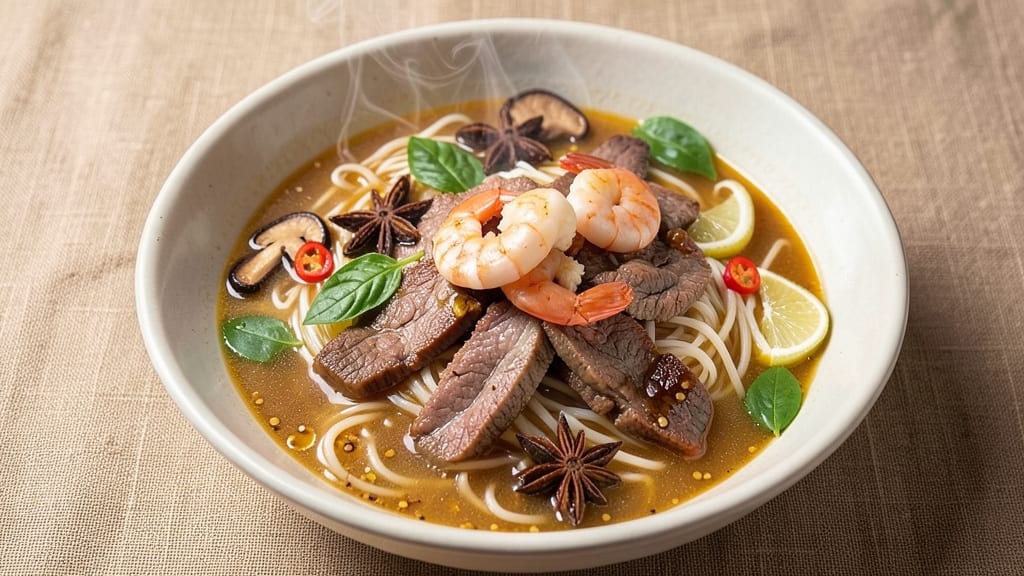
The beef and shrimp pho recipe transforms your kitchen into a fragrant Vietnamese eatery with just one pot. This aromatic broth, infused with star anise and cinnamon, forms the heart of the dish—deep, savory, and perfectly balanced.
The secret lies in layering flavors through slow simmering, where spices meld into the broth while tender beef and delicate shrimp absorb their essence.
What sets this recipe apart is the harmony between tradition and convenience. You’ll achieve restaurant-quality depth without hours of simmering, thanks to a streamlined broth-building method that preserves complexity. The beef, sliced paper-thin, cooks to tender perfection, while the shrimp adds a delicate sweetness that brightens every spoonful.
Each ingredient plays a precise role, ensuring the broth remains clear yet rich, with just the right amount of spice.
Assembling the bowl is where the magic happens: silky rice noodles cradle the beef and shrimp, while fresh herbs and lime add a burst of brightness. The result is a bowl that’s both comforting and vibrant—a perfect balance of warmth and freshness.
This recipe delivers the soul of pho in a way that’s approachable yet deeply satisfying, whether you’re serving it for a weeknight dinner or a special gathering.
Pro tip: Adjust the spice level to your preference by adding chili oil or fresh chili slices, and don’t skip the garnish—it’s what elevates the dish from good to unforgettable. Let’s get started on creating this fragrant, heartwarming masterpiece.
Ingredients for beef and shrimp pho
Eighteen ingredients crafting a symphony of Vietnamese flavors in one aromatic bowl.
| Ingredient | Amount | Notes |
|---|---|---|
| Beef Chuck Roast 🥩 | 1 ½ lb | Thinly sliced against grain |
| Large Shrimp 🦐 | 1 lb | Peeled, deveined, tail-on |
| Dried Shiitake Mushrooms 🍄 | 2 whole | Rehydrated in hot water |
| Star Anise Pods 🌟 | 2 whole | Whole pods for infusion |
| Cinnamon Sticks 🌿 | 2 whole | 2-inch pieces for aroma |
| Fresh Ginger 🧅 | ½ cup | Julienned, skin-on |
| Onion 🧅 | 1 whole | Yellow, cut into wedges |
| Garlic Cloves 🧄 | 6 cloves | Smashed, skin-on |
| Fish Sauce 🍶 | 2 tbsp | Red Boat preferred |
| Soy Sauce 🍶 | 2 tbsp | Kikkoman preferred |
| Rice Vinegar 🍶 | 1 tbsp | Seasoned preferred |
| Brown Sugar 🍯 | 1 tbsp | Lightly packed |
| Rice Noodles 🍜 | 8 oz | Flat, medium-width |
| Fresh Thai Basil 🌿 | ½ cup | Stems removed |
| Fresh Cilantro 🌿 | ¼ cup | Chopped, leaves only |
| Lime 🍋 | 2 whole | Cut into wedges |
| Bean Sprouts 🌱 | 1 cup | Fresh, rinsed |
| Jalapeño 🌶️ | 1 whole | Sliced, seeds removed |
| Sesame Oil 🫒 | 1 tbsp | Toasted, for finishing |
The beef and shrimp form the heart of this dish, so quality matters. Beef chuck roast delivers tender, rich flavor when sliced thinly against the grain—Costco or Whole Foods carry excellent cuts. For shrimp, look for wild-caught, 51/60 count at Trader Joe's or your local seafood market; they stay plump during cooking. Freshness is critical for both proteins: beef should be bright red, while shrimp should smell clean and briny. Star anise and cinnamon are non-negotiable for authentic aroma—Penzeys Spices sells high-quality whole pods that infuse beautifully without bitterness. The dried shiitake mushrooms add umami depth; rehydrate them in hot water for 20 minutes before using.
Substitutions should preserve balance. No shiitake mushrooms? Dried porcini mushrooms work equally well when rehydrated. Fresh ginger can be swapped for ground ginger at half the amount, though fresh julienned ginger delivers superior texture. For a vegetarian version, replace shrimp with extra-firm tofu or king oyster mushrooms—both absorb flavors beautifully. The fish sauce is essential for umami; Red Boat brand is widely available and superior to generic options. If you prefer less salt, reduce to 1.5 tbsp total. The rice noodles should be medium-width, flat rice noodles—never egg noodles, as they won't hold up to the broth.
Store the beef and shrimp separately in airtight containers for up to 2 days—beef in the coldest part of the fridge, shrimp over ice. The broth base (without proteins) can be made ahead and refrigerated for 3 days or frozen for 3 months. Fresh herbs like Thai basil and cilantro keep for 5 days when wrapped in damp paper towels and stored in sealed bags. For assembly, keep noodles covered with a damp towel to prevent drying. The lime should be stored whole at room temperature until ready to use—cutting it prematurely shortens its shelf life.
Why You'll Love This Recipe
- One-Pot Wonder: I swear by this recipe because it’s all about minimal cleanup—just one pot, simmering away while you chop herbs or set the table. The beef chuck roast and shrimp cook together in the same fragrant broth, so no juggling multiple pans or timers.
- Deep Umami Magic: Between the shiitake mushrooms soaking up water and the star anise and cinnamon infusing the broth, this pho has layers of savory depth. The shrimp adds a bright, juicy contrast that makes every sip feel like a little celebration.
- Weeknight Crowd-Pleaser: This isn’t just for special occasions—it’s the dish I pull out when my in-laws visit or when my kids’ friends are over. The beef is tender enough for picky eaters, the shrimp thrills seafood lovers, and the broth? Everyone asks for seconds.
- Budget-Friendly Luxury: Beef chuck roast stretches far—I often make a double batch and freeze half for lazy nights. The dried shiitakes and spices cost pennies but transform the broth into something restaurant-worthy, without the markup. Leftovers taste even better the next day.
Step-by-step instructions for beef and shrimp pho
Master this aromatic broth technique for deep, layered pho flavors that balance sweet, savory, and umami.
Prepare the Beef and Aromatics for Maximum Flavor
Slice the 1.5 lb beef chuck roast against the grain into ¼-inch thick strips. This ensures tender bites that cook quickly in the broth. Set aside half the beef for serving later - you'll want to add it fresh at the end when the broth is finished.
Rehydrate the 2 whole dried shiitake mushrooms by soaking them in 2 cups hot water for 20 minutes. The mushrooms will plump up dramatically - drain and reserve the soaking liquid. Peel the 1 whole onion and cut it into 8 wedges, leaving the root intact so it holds together. Slice the 0.5 cup fresh ginger into ¼-inch thick matchsticks, leaving the skin on for extra aroma.
Build the Broth Foundation with Slow Cooking
In a 6-quart stockpot, combine the onion wedges, ginger matchsticks, 6 smashed garlic cloves, 2 whole star anise pods, and 2 cinnamon sticks. Add 8 cups cold water and bring to a boil over high heat. Once boiling, reduce to low heat and simmer uncovered for 30 minutes to extract the aromatic oils.
Strain the broth through a fine-mesh sieve into a clean pot, pressing gently on the aromatics to release all their flavor. Return the strained broth to the pot and add the 1.5 lb beef strips, 2 tbsp fish sauce, 2 tbsp soy sauce, 1 tbsp rice vinegar, and 1 tbsp brown sugar. Bring back to a gentle simmer and cook for 1 hour, skimming any foam that rises to the surface. The broth should develop a rich, caramelized color and deep aroma.
Enhance the Broth with Mushrooms and Shrimp
Add the rehydrated shiitake mushrooms (chopped if large) and the reserved mushroom soaking liquid to the simmering broth. Cook for 20 minutes to infuse their earthy flavor. Then, add the 1 lb large shrimp (peeled and deveined with tails on) and cook for 2-3 minutes until just opaque - they'll finish cooking when added to bowls later. Remove the shrimp with a slotted spoon and set aside.
Taste the broth and adjust seasoning if needed. It should balance sweet, salty, and umami perfectly. The broth is now ready to be served over noodles, but its flavor will continue developing as it sits.
Assemble the Pho Bowls
Divide the 8 oz rice noodles among four bowls. Ladle 1½ cups hot broth over each portion of noodles. Let them soak for 1-2 minutes until just tender but still slightly chewy. Working quickly, divide the reserved beef strips, shrimp, and chopped shiitake mushrooms among the bowls.
Top each bowl with ¼ cup bean sprouts, 2 tbsp fresh Thai basil, 1 tbsp fresh cilantro, and 1 lime wedge. Drizzle with ¼ tsp toasted sesame oil and serve immediately with sliced jalapeño on the side for heat. The contrast of hot broth, cool herbs, and bright lime creates the perfect balance in every bite.
Serve with Proper Technique
Always serve pho immediately after assembly - the noodles continue cooking in the hot broth, and the aromatics release their full flavor when combined fresh. Encourage diners to add the lime wedge to their bowls just before eating, as the acidity brightens the rich broth flavors.
For the perfect first bite, take a sip of broth first to appreciate its depth, then enjoy the symphony of textures - the tender beef, plump shrimp, chewy noodles, and crisp sprouts all working together. The secret to great pho lies in balancing each element carefully, which this method ensures you'll achieve every time.
Pro Tips For Making Beef And Shrimp Pho
- BLANCH SHRIMP FIRST: I learned this the hard way—adding raw shrimp to simmering broth turns them rubbery. Instead, shock them in boiling water for 30 seconds, then ice bath them before adding to the pho. This keeps them plump and bright, not sad and chewy.
- SIMMER STAR ANISE LOW: Star anise burns faster than you’d think. After the initial 10 minutes of high heat, drop the pot to a gentle simmer—just small bubbles breaking the surface. Too much heat and you’ll end up with bitter broth instead of fragrant.
- SOAK MUSHROOMS LONG: Dried shiitakes need at least 20 minutes in hot water to rehydrate properly. I used to cut corners and end up with tough, leathery slices. Soak them, then slice—this guarantees they’ll melt into the broth like they’re supposed to.
- SAVE THE BROTH FAT: Skim the fat off pho broth? No way. That’s where the rich, umami depth lives. After the beef braises, let it cool slightly, then scoop off the top layer of fat before straining. Store it separately and stir it back in when reheating—it makes all the difference.
Serving suggestions for leftovers
Herb Garnish Variations
Fresh Thai basil and cilantro are essential, but don't be afraid to experiment! Swap Thai basil for Vietnamese coriander (rao ram) if available—its citrusy aroma elevates the dish.
For a milder profile, use Italian parsley or mint leaves, but reduce to 1 tbsp per bowl to avoid overpowering the broth. I love adding fresh lemon balm for a floral note that pairs beautifully with the shrimp. 🌿
Crunchy Toppings
Bean sprouts add freshness, but other crunchy elements can take your pho to the next level. Try thinly sliced scallions for sharpness or crispy fried shallots for a nutty crunch. For extra texture, sprinkle toasted sesame seeds or crushed peanuts over the top.
I keep a small bowl of quick-pickled carrots on the table for guests who want additional brightness. ✨
Spice Level Control
Adjust heat to your preference with these simple additions. For mild heat, serve jalapeño slices with seeds removed alongside each bowl. For medium heat, add ½ tsp chili oil directly to the broth before serving.
If you love spice, top with Thai bird's eye chili slices and a drizzle of sriracha mayo (mix 1 tbsp mayo with ½ tsp sriracha). Always serve spice on the side so everyone can customize their bowl. 🌶️
Broth Serving Style
Traditional pho is served in wide, shallow bowls to showcase the vibrant layers. If you're short on bowls, use large soup plates with deep rims to contain the broth while allowing easy access to all components.
For a rustic touch, try cast-iron skillets preheated for a few minutes—they keep the broth piping hot longer. I also recommend serving with small ceramic cups for broth on the side, letting diners ladle as much as they want. 🍜
Accompaniment Pairings
Pho pairs wonderfully with complementary sides that cut through its richness. Serve with steamed rice for soaking up extra broth, or offer warm baguette slices for dipping. For a refreshing contrast, include a cucumber salad with rice vinegar and chili flakes.
I always set out a small pitcher of iced hibiscus tea (thawed frozen concentrate) to balance the meal's hearty flavors. 🍋
Presentation Pro Tips
Arrange ingredients in a visually appealing way by placing the beef and shrimp in a fan shape on top of the noodles. Drizzle the sesame oil in a zigzag pattern for a professional touch. Keep the lime wedges on the side until serving to prevent browning.
For a restaurant-style presentation, use small stainless steel ladles for broth and tweezers for garnishes. The key is balance—never overcrowd the bowl so each element remains distinct. 💡
Nutrition facts
Frequently asked questions
Can I make this beef and shrimp pho recipe in an Instant Pot?
Use the sauté function to cook the aromatics (onion, ginger, garlic) for 3 minutes, then add all broth ingredients and pressure cook on high for 45 minutes. Quick-release the pressure, then add shrimp and cook for 2 minutes on sauté. The Instant Pot cuts cooking time to about 1 hour total while keeping flavors deep. Just be sure to strain the broth afterward for clarity.
How do I prevent the shrimp from turning rubbery?
Cook shrimp only until just opaque (2-3 minutes)—they'll finish cooking in the hot broth when assembled. For extra tenderness, add a pinch of baking soda (⅛ tsp per pound) to the cooking water to raise the pH slightly. Also, avoid overcrowding the pot when cooking shrimp to maintain even heat distribution.
What's the best way to reheat leftover beef pho?
Reheat broth and proteins separately in a saucepan over medium-low heat, adding 1 tbsp water per cup of broth to prevent scorching. Warm noodles in a separate pot with 1 tsp sesame oil for 30 seconds, then assemble bowls fresh. Never microwave noodles—they become mushy. For best results, reheat just before serving.
Can I substitute chicken for the beef?
Yes, but choose bone-in chicken thighs for richer flavor. Simmer for 25 minutes after adding to broth, then shred or slice. Chicken pho benefits from a 1 tbsp extra fish sauce to compensate for the milder protein. The texture will be slightly different but still delicious—just reduce cooking time by 15 minutes compared to beef.
Why does my broth look cloudy?
Cloudiness usually means unstrained aromatics or excessive foam. For crystal-clear broth, strain through a fine-mesh sieve after simmering, pressing gently on solids. Skim foam regularly during cooking. If using bone-in proteins, simmer longer (2 hours) to break down collagen naturally. For immediate clarity, chill broth overnight and skim fat from the top before reheating.