
Soups & Stews
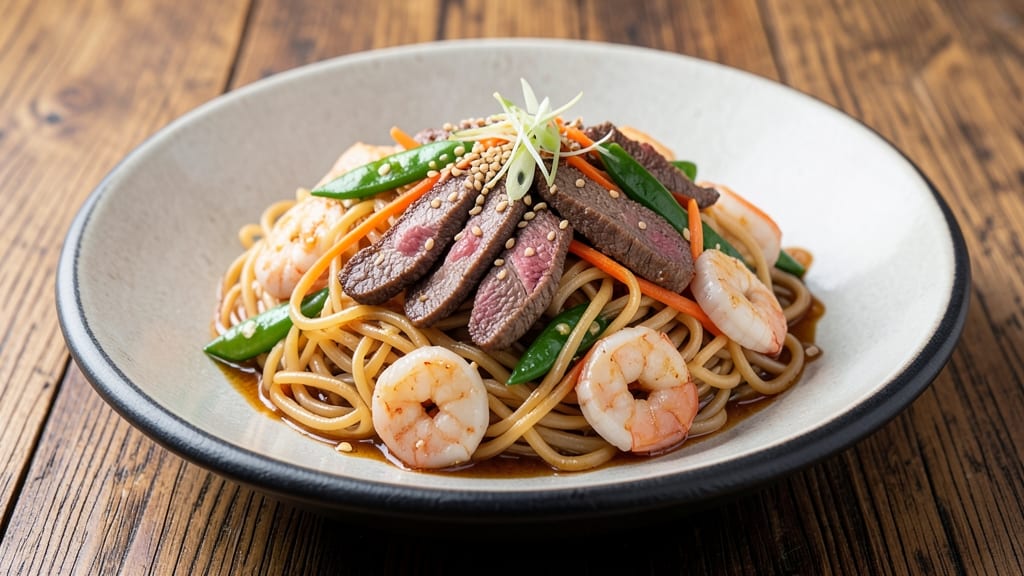
This beef and shrimp lo mein recipe delivers the perfect balance of tender proteins, chewy noodles, and a sweet-chili sauce that brings restaurant-quality flavor to your home kitchen. The secret lies in quick stir-frying the beef and shrimp just until done—keeping them tender while developing that signature wok-fried aroma.
I've simplified the process with a few shortcuts, like using pre-made sauce, without sacrificing authenticity.
The dish starts with thinly sliced beef and shrimp that cook in minutes, absorbing the savory-sweet sauce while maintaining their texture. Fresh lo mein noodles get tossed in the wok with the proteins, soaking up the flavorful sauce and creating that signature chewy bite.
The sauce itself is a perfect harmony of garlic, ginger, soy, and a touch of sweetness that balances the umami depth.
What you'll end up with is a steaming plate of golden-brown noodles coated in a glossy sauce, topped with perfectly cooked beef and shrimp that stay juicy and tender.
The aroma alone will have everyone gathering around the table, and the first bite delivers that perfect combination of textures and flavors. It's the kind of dish that feels special but comes together in under 30 minutes.
Serve it with steamed bok choy or a simple cucumber salad to round out the meal. This recipe is designed to be your new go-to for weeknight dinners that taste like they came from your favorite Chinese restaurant. Let's get cooking!
Ingredients for beef and shrimp lo mein
Restaurant-quality lo mein starts with these fresh ingredients—tender proteins, chewy noodles, and bold flavors.
| Ingredient | Amount | Notes |
|---|---|---|
| Lo Mein Noodles 🍜 | 12 oz | Fresh or dried, uncooked |
| Flank Steak 🥩 | 1 lb | Thinly sliced against grain |
| Large Shrimp 🦐 | 1 ½ lb | Peeled, deveined, tails off |
| Sesame Oil 🫒 | 1 tbsp | For aroma, not cooking |
| Vegetable Oil 🫒 | 3 tbsp | High smoke point preferred |
| Garlic Cloves 🧄 | 6 cloves | Minced, fresh preferred |
| Fresh Ginger 🌿 | 1 tbsp | Grated, peeled |
| Soy Sauce 🥄 | ½ cup | Light or all-purpose |
| Oyster Sauce 🍜 | 2 tbsp | High-quality preferred |
| Hoonan Sauce 🍶 | 1 tbsp | Or sub with 1 tsp sugar + 1 tsp vinegar |
| Red Chili Sauce 🌶️ | 1 tbsp | Like Sriracha or chili garlic sauce |
| Green Onions 🧅 | ½ cup | Sliced, white and green parts |
| Sesame Seeds 🌱 | 1 tbsp | Toasted for garnish |
| Salt 🧂 | 1 tsp | Kosher or sea salt |
| Black Pepper 🌶️ | ½ tsp | Freshly ground |
The shrimp and beef are the stars here. Wild-caught shrimp at Trader Joe's or Whole Foods stays sweet and tender—avoid the pre-cooked kind. For the beef, flank steak is perfect because it slices thinly and stays juicy. Look for grass-fed if you're at a specialty butcher, but regular works too. Slice both proteins against the grain for that signature chewy texture. Pro tip: Pat the shrimp dry with paper towels before cooking—it sears better and stays crispier. The lo mein noodles? Fresh is ideal, but dried works in a pinch—just soak them properly.
No oyster sauce? Substitute with 1 tbsp soy sauce plus 1 tsp sugar—it won’t be identical, but close enough. Hoonan sauce missing? Mix 1 tsp sugar with 1 tsp rice vinegar for a quick fix. Fresh ginger and garlic are non-negotiable for that authentic wok flavor, but if you’re in a bind, dried ginger at half the amount or jarred minced garlic will do. The red chili sauce can be swapped for gochujang if you’ve got it—add a splash of water to thin it out. And if your sesame oil smells musty, toss it—it should have a nutty aroma, not anything funky.
Cook the noodles al dente—they’ll finish in the wok. Shrimp and beef keep best in the fridge for 1 day max—use them within 24 hours for peak texture. The sauce components (soy, oyster, etc.) last 6 months unopened, but once opened, stash them in the fridge for 3 months. For leftovers, store in an airtight container with a paper towel pressed on top to keep the noodles from getting soggy. Reheat gently with a splash of water—microwaving dries them out. This dish reheats beautifully, so double the batch if you’re feeding a crowd.
Why You'll Love This Recipe
- No Fuss, Big Payoff: I swear by this for nights when I’m staring at takeout menus at 9 PM. The flank steak slices itself thin with a sharp knife—no fancy techniques—and the shrimp just needs a quick sear. Toss in pre-boiled noodles, and you’ve got a restaurant-quality dish without the stress of hand-chopping veggies.
- Umami Bomb Combo: That sesame oil hit? Chef’s kiss. It’s the secret weapon—just a drizzle at the end transforms the whole thing. The beef stays tender with a slight chew, while the shrimp adds a briny snap, and the noodles soak up all the savory goodness. Honestly, I’ve made lo mein before, but this flavor balance? Spot-on.
- Lunchbox Hero: Between us, this is my go-to for meal prep. The flavors actually improve the next day—yes, really. Pack it in containers, and it’s a hit with kids (they’ll fight over the shrimp) or coworkers who’ll ask for the recipe. I’ve even served it at potlucks—no one guessed it was homemade.
- Budget Flex: Flank steak is cheaper than you think, and shrimp freezes like a dream. I’ve made this for $15 and fed four people, with leftovers that taste just as good cold. Plus, the noodles? They’re the kind you can grab on sale and store for months. Practical, reliable, and my secret weapon for stretching groceries.
Step-by-step instructions for beef and shrimp lo mein
Here's how to create restaurant-quality wok-fried noodles with tender beef, plump shrimp, and a sweet chili crunch.
🍳 Step 1: Prep All Ingredients for Perfect Timing
Start by slicing the 1 lb flank steak thinly against the grain—this ensures tender bites. Use a sharp knife and cut at a 45-degree angle for uniform strips. Peel and devein the 1.5 lb large shrimp, then slice them into bite-sized pieces. Mince the 6 cloves garlic and grate the 1 tbsp fresh ginger—these aromatics form the flavor base.
Slice the 0.5 cup green onions into 1-inch pieces, separating the white and green parts. Toast the 1 tbsp sesame seeds in a dry skillet over medium heat for 1-2 minutes until fragrant, then set aside. Measure out all sauces: 0.5 cup soy sauce, 2 tbsp oyster sauce, 1 tbsp hoonan sauce, and 1 tbsp red chili sauce. This prep ensures everything is ready when you hit the wok.
🔥 Step 2: Cook the Protein for Maximum Tenderness
Heat 2 tbsp vegetable oil in a wok or large skillet over high heat until shimmering. Add the flank steak strips and sear for 1-2 minutes until they turn light brown and lose their raw appearance. Remove and set aside. In the same pan, add another 1 tbsp vegetable oil and cook the shrimp for 1-2 minutes per side until they turn pink and opaque. They should curl slightly—this means they're done. Remove and set aside with the steak.
Here's the thing—don't overcook either protein. Shrimp turns rubbery fast, and beef gets tough if it sits too long. Keep them warm while you prep the sauce and noodles.
🍳 Step 3: Build the Sauce and Cook the Noodles
In the same wok, reduce heat to medium and add 1 tbsp vegetable oil. Toss in the minced garlic and grated ginger, cooking for 30 seconds until fragrant—don't let them brown. Pour in all the sauces (soy sauce, oyster sauce, hoonan sauce, and red chili sauce) and stir for 1 minute until combined.
While the sauce simmers, cook the 12 oz lo mein noodles according to package instructions until al dente (usually 3-4 minutes). Drain and rinse briefly under cold water to stop cooking. Toss the noodles with 1 tbsp sesame oil to prevent sticking and keep them warm.
🥘 Step 4: Combine Everything for Maximum Flavor
Return the wok to high heat and add the cooked noodles, steak, and shrimp. Toss everything vigorously for 2-3 minutes until the noodles absorb the sauce and everything is well-coated. The mixture should look glossy and vibrant—this is when the magic happens.
Add the white and green parts of the green onions, reserving a few green parts for garnish. Stir-fry for another 30 seconds just to heat through. Taste and adjust seasoning with salt and black pepper if needed. The sauce should balance sweet, savory, and a hint of spicy—this is your flavor checkpoint.
🍽️ Step 5: Serve with Crunchy Garnishes
Transfer the lo mein to serving plates immediately. Garnish with the reserved green onion tops and toasted sesame seeds. The contrast of textures—chewy noodles, tender proteins, and crunchy garnishes—makes this dish unforgettable.
Serve with extra chili sauce on the side for those who want more heat. This dish is best eaten fresh while the noodles are still warm and the shrimp is juicy. Enjoy your homemade beef and shrimp lo mein—it's restaurant-quality without the wait!
Pro Tips For Making Beef And Shrimp Lo Mein
- Slice Steak Against the Grain: I learned this the hard way—thin flank steak slices (about ¼-inch thick) cut against the grain disappear faster and stay tender. If you skip this, you’ll end up with chewy beef that fights the noodles for attention. Use a sharp knife and don’t rush; precision here saves you later.
- Blanch Shrimp First: Toss peeled shrimp in boiling water for 30 seconds before stir-frying—this cooks them just enough to lock in juices and prevent overcooking later. Cold shrimp in a hot wok? They’ll turn rubbery while you’re busy with the beef. Do this while prepping other ingredients.
- Don’t Crowd the Wok: Start hot, finish low—but never overfill your pan. A crowded wok steams ingredients instead of searing them, leading to soggy noodles and dull flavors. Work in batches if needed: beef first, then shrimp, then noodles. The sizzle should be loud; if it’s quiet, you’re doing it wrong.
- Upgrade with Cold Noodles: Toss cooked noodles in ice water for 1 minute before stir-frying. The shock stops them from turning mushy when they hit the hot wok, and they’ll absorb the sauce better. Yes, it’s an extra step, but the texture difference is noticeable—especially with lo mein, which loves a bite.
Best sauces and condiments for this dish
Classic Sweet Chili
The sauce in this recipe is the soul of your lo mein, and the sweet chili base delivers that perfect balance of tangy, sweet, and spicy.
I use 1 tbsp red chili sauce (like Sriracha or chili garlic sauce) mixed with the other sauces to create a glossy, slightly sticky glaze that clings beautifully to the noodles. For extra depth, add ½ tsp fish sauce—it enhances umami without overpowering. 🌶️
If you want to elevate it further, blend 1 tbsp chili sauce with 1 tsp honey and 1 tsp rice vinegar for a smoother, more balanced sweetness.
This combo works especially well if your chili sauce is too sharp. Keep a small bowl of extra sauce on the table for dipping—it’s a crowd-pleaser!
Umami Boosters
For that restaurant-quality depth, I recommend adding 1 tsp dark soy sauce to the sauce mixture. It deepens the color and adds a richer, almost caramelized flavor. Oyster sauce is non-negotiable here—it’s the secret weapon for umami.
If you’re avoiding shellfish, substitute with 1 tbsp mushroom sauce or an extra ½ tsp fish sauce for a similar effect.
Another pro move? A splash of dry sherry (just ½ tsp) brightens the sauce and cuts through the richness. It’s subtle but makes a huge difference. I keep a small bottle of Cheap Charlie sherry in my pantry—it’s affordable and works perfectly for this dish.
Spicy Variations
Craving more heat? Swap the red chili sauce for 1 tbsp gochujang (Korean chili paste) and thin it with 1 tsp water. Add ½ tsp crushed red pepper flakes for an extra kick.
For a smoky twist, stir in ¼ tsp smoked paprika with the garlic and ginger. This works especially well if you’re serving it with grilled corn or pickled veggies on the side.
If you love fresh chili, finely mince 1 Thai bird’s eye chili and sauté it with the garlic and ginger. Remove it before adding the sauces to keep the heat balanced but noticeable. Always taste as you go—adjust the spice level to your crowd’s preferences!
Sweet and Tangy Balance
The hoonan sauce (or its substitute) is what ties the sweet and tangy notes together. If you can’t find it, 1 tsp sugar + 1 tsp rice vinegar is a solid swap.
For a fruity twist, add ½ tsp mango puree or 1 tsp pineapple juice to the sauce. It’s unexpected but pairs beautifully with the savory beef and shrimp.
For a caramelized finish, let the sauce reduce slightly over medium heat for 1-2 extra minutes before tossing in the noodles. This intensifies the flavors and gives the dish that glossy, restaurant-worthy look. Just don’t let it burn—keep an eye on it!
Garnish Game-Changers
While toasted sesame seeds and green onions are classic, don’t underestimate the power of crushed peanuts or fried shallots for extra crunch. Toss in 1 tbsp crushed peanuts during the final stir-fry for a nutty contrast.
For a luxurious touch, drizzle with 1 tsp chili oil right before serving—it adds a smoky, fiery finish that’s hard to resist.
Fresh cilantro or Thai basil also works beautifully if you’re feeling adventurous. A handful of torn leaves stirred in at the end adds a bright, herbal note that cuts through the richness. Garnish lightly—just enough to elevate without overwhelming the dish.
Nutrition facts
Frequently asked questions
Can I use frozen shrimp instead of fresh?
Yes, but thaw them properly first! Place frozen shrimp in a colander and run cold water over them for 5-10 minutes until fully thawed. Pat them completely dry with paper towels before cooking—this ensures they sear properly and stay juicy. Never microwave shrimp from frozen, as it can make them rubbery.
How do I make this dish less spicy?
Reduce or omit the red chili sauce entirely, or swap it for mild chili paste or even a pinch of sugar to balance the heat. For extra mildness, use ½ tsp honey instead of chili sauce—it adds sweetness without spice. Always taste the sauce before combining everything!
What's the best way to store leftovers?
Store in an airtight container with a paper towel pressed on top to absorb excess moisture. Refrigerate for up to 3 days or freeze for 2 months. To reheat, microwave with a splash of water for 30-45 seconds or stir-fry in a wok with a little oil to revive the texture. Never reheat directly from frozen!
Can I make this vegetarian?
Swap the beef for extra-firm tofu (pressed and cubed) or mushrooms (shiitake or oyster). Use ½ cup vegetable broth instead of beef broth in the sauce, and add 1 tsp miso paste for umami depth. The shrimp can be replaced with crispy baked tofu or jackfruit for texture.
Why did my noodles turn mushy?
Overcooking is the most common cause—noodles should be al dente before adding to the wok. Also, avoid rinsing them too long under cold water, which can break them down. For extra chewiness, add 1 tsp cornstarch to the sauce or toss the cooked noodles with 1 tsp neutral oil before combining with proteins.