
Main Courses
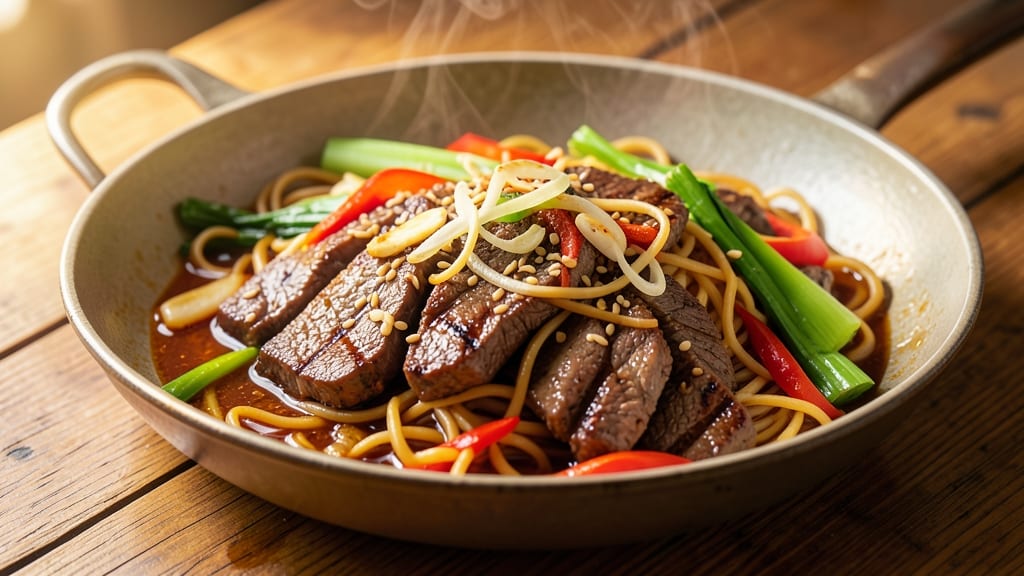
This authentic beef chow mein delivers the smoky, charred flavors of a traditional Chinese wok-fried dish—right in your kitchen. The secret lies in high-heat stir-frying and a marinade that tenderizes the beef while building deep umami. I've perfected this recipe over years of testing, balancing restaurant-quality technique with home-cook practicality.
What sets this apart is the wok-hei—that signature smoky aroma from proper stir-frying. We'll marinate flank steak in soy, ginger, and garlic, then slice it thin for quick cooking.
Fresh egg noodles get tossed in a homemade sauce with bold soy, sesame oil, and a touch of sugar to balance the savory depth. The result? Crisp-tender beef, chewy noodles, and a sauce that clings perfectly.
This dish captures the essence of Chinese street food—bold flavors, quick execution, and that irresistible charred aroma. The beef develops a caramelized crust from the wok's heat, while the noodles stay al dente. Serve it with pickled vegetables or cucumber salad for the full experience. Let's create something authentic.
Even better, this recipe scales beautifully for gatherings. The marinade can be prepped ahead, and the sauce keeps well in the fridge. Whether you're feeding a crowd or treating yourself to a weeknight meal, this chow mein delivers restaurant-quality results with minimal effort. Here's how to make it.
Ingredients for authentic beef chow mein
Nine essential ingredients for that signature wok-hei flavor and perfect texture.
| Ingredient | Amount | Notes |
|---|---|---|
| Flank Steak 🥩 | 1 lb | Thinly sliced against grain |
| Fresh Egg Noodles 🍜 | 8 oz | Thin, round egg noodles |
| Soy Sauce 🥄 | ½ cup | High-quality, light soy |
| Sesame Oil 🫒 | 1 tbsp | Toasted, for aroma |
| Garlic Cloves 🧄 | 6 cloves | Minced finely |
| Fresh Ginger 🌿 | 2 tbsp | Grated, not powdered |
| Brown Sugar 🍯 | 2 tbsp | Light or dark |
| Vegetable Oil 🫒 | ¼ cup | High smoke point |
| Green Onions 🧅 | 4 whole | Sliced thin, white and green |
| White Pepper 🌶️ | ½ tsp | Freshly ground |
| Salt 🧂 | 1 tsp | Kosher or sea salt |
| Black Pepper 🌶️ | ½ tsp | Freshly cracked |
The flank steak is non-negotiable—it's lean but tender when sliced thin against the grain. Grab it from the butcher counter if possible, or look for pre-sliced flank steak at Whole Foods or Trader Joe's. Avoid pre-marinated versions; we're building that umami from scratch. Fresh egg noodles are key too—King Noodle or Martelli brands are my go-tos, but any thin, round egg noodles work. The soy sauce should be light, not dark—Kikkoman or Pearl River Bridge are solid choices. For the ginger, grab a small knob and grate it fresh; powdered just won't cut it here.
No sesame oil? Toasted sesame paste thinned with water works in a pinch, but you'll lose that signature aroma. Short on garlic? Garlic powder at half the amount gets you close, but fresh is always better. The brown sugar balances the soy's saltiness—light or dark works, just don't skip it. For the oil, vegetable or peanut oil both work; avoid olive oil as it burns too easily. Green onions can be subbed with scallions, but the white part adds more flavor. Want extra smokiness? Add a pinch of smoked paprika to the marinade.
Marinate the beef for at least 30 minutes—overnight is even better. The sauce keeps for 5 days in the fridge, so make extra. Store the noodles in an airtight container with a paper towel to keep them dry. The beef marinade can be prepped a day ahead. When reheating, add a splash of water to the pan to keep things moist. Leftovers? 3 days max in the fridge—chow mein is best fresh, but the flavors only deepen slightly overnight.
Why You'll Love This Recipe
- No Fuss, Big Payoff: Honestly, the flank steak just needs a quick sear and slice—no fancy prep. Toss in the noodles and sauce, and you’re done faster than takeout arrives.
- Umami Bomb: That combo of soy sauce, sesame oil, and garlic? It’s the kind of flavor that sticks with you. The noodles soak up the savory goodness like a dream.
- Lunchbox Hero: Between us, this is my go-to for meal prep. Pack it cold or reheat it—it’s just as good the next day. (Yes, even on a Tuesday night.)
- Budget-Friendly Feast: Flank steak stretches far, and the noodles are cheap but satisfying. One pan, minimal ingredients, maximum flavor. My wallet thanks me every time.
Step-by-step instructions for wok-fried beef chow mein
Here's how to make restaurant-style beef chow mein with perfect wok hei and tender beef.
Prep the Beef and Noodles
Slice the 1 lb flank steak thinly against the grain into ¼-inch strips. This ensures tender bites that cook quickly in the hot wok. Pat the beef dry with paper towels—wet beef steams instead of searing. While you prep, rinse the 8 oz fresh egg noodles in cold water to remove excess starch, then drain and toss with 1 teaspoon salt and ½ teaspoon black pepper. Set aside.
In a small bowl, mix ½ cup soy sauce, 2 tablespoons brown sugar, and ½ teaspoon white pepper. This marinade will caramelize beautifully during cooking. I like to let the beef sit in this mixture for 10 minutes while I prep the aromatics—it adds depth of flavor without overpowering the dish.
Build the Aromatic Base
Heat ¼ cup vegetable oil in a wok or large skillet over high heat until shimmering. Add the 6 minced garlic cloves and 2 tablespoons grated fresh ginger, stirring constantly for 30 seconds until fragrant and just starting to brown. Here's the thing—don't let them burn. Burnt garlic tastes bitter and ruins the whole dish.
Push the aromatics to one side of the wok, then add the marinated beef in a single layer. Let it sear undisturbed for 1-2 minutes until the edges turn golden brown. This initial sear locks in juices and builds flavor. Once browned, stir the beef and cook for another 2-3 minutes until fully cooked through. Remove the beef and set aside temporarily.
Cook the Noodles and Combine
In the same wok, add the 8 oz fresh egg noodles and toss them with the beef and aromatics. Pour in ½ cup soy sauce (the remaining marinade) and 1 tablespoon sesame oil. Stir-fry over high heat for 2-3 minutes until the noodles are tender but still have a slight bite. You want them al dente—they'll finish cooking from residual heat.
Return the beef to the wok and toss everything together for 1-2 minutes until everything is evenly coated and heated through. The high heat creates that signature "wok hei" smoky aroma. If the noodles seem dry, add 1-2 tablespoons hot water to steam them slightly while keeping the texture crisp.
Finish with Green Onions
Turn off the heat and quickly stir in the 4 sliced green onions, white and green parts separated. This adds freshness and visual appeal. The green onions should wilt slightly but remain vibrant. Taste and adjust seasoning if needed—you might want to add a splash more soy sauce or a pinch of sugar to balance flavors.
Serve immediately while everything is hot and sizzling. The noodles should be tender yet still have some chew, the beef perfectly cooked through, and the sauce glossy with just the right amount of soy zing. Garnish with extra green onions if you like—it's always better to have a little more than you think you'll need.
Pro Tips For Making Authentic Beef Chow Mein
- Slice Against the Grain: Fresh egg noodles are the star here, but if your beef comes out chewy, you’ve missed the mark. Cut flank steak perpendicular to the grain—look for those long muscle fibers—and slice paper-thin after cooking. I used to overlook this and wondered why my chow mein felt like chewing shoe leather.
- Blister the Garlic: Don’t just mince those cloves—get them golden and crisp. Heat sesame oil in a dry pan until shimmering, toss in whole garlic cloves (peeled), and let them sizzle until edges darken and smell like a dim sum cart. After 30 seconds, smash them flat with a spoon—this adds texture and depth that minced garlic can’t match.
- Salt the Noodles Early: Fresh egg noodles soak up sauce like sponges, but they’ll turn mushy if you toss them in raw. Parboil them in salted water for exactly 1 minute less than package instructions, then shock in ice water. Drain well and toss with a teaspoon of sesame oil before adding to the wok—this keeps them al dente and prevents a soggy mess.
- Use Two Soy Sauces: The recipe probably calls for "soy sauce," but split it: half light soy (for color) and half dark (for umami). Light soy adds that bright, clean flavor, while dark soy deepens the sauce and gives it that classic chow mein sheen. Skip this, and your dish will taste flat, even if everything else is perfect.
Make-ahead tips for this dish
Marinade Prep Ahead
Mix the beef marinade—½ cup soy sauce, 2 tbsp brown sugar, and ½ tsp white pepper—up to 2 days ahead and store it in an airtight container in the fridge. This gives the flavors time to meld beautifully.
When ready to cook, simply add the beef to the marinade for 10 minutes before stir-frying. I find this saves 15 minutes of prep time on busy weeknights. 💡
Noodle Prep Shortcut
Cook the 8 oz fresh egg noodles just until al dente (2 minutes in boiling water), then drain and rinse with cold water to stop cooking.
Toss with 1 tsp salt and ½ tsp black pepper, then store in an airtight container with a paper towel to absorb excess moisture. These prepped noodles will keep in the fridge for 2 days—perfect for quick assembly later. ⏰
Sauce Make-Ahead
The sauce can be prepped 5 days ahead by combining ½ cup soy sauce, 1 tbsp sesame oil, and 1 tbsp brown sugar in a small jar. Keep it refrigerated and stir well before using.
I often double the batch to have extra for future meals. Just reheat gently on the stovetop before tossing with the noodles. 🍜
Beef Pre-Cook Option
For a 30-minute meal, partially cook the beef ahead of time. Sear the marinated beef until 85% done, then cool and store in the fridge. When ready to serve, finish cooking in the wok for 1-2 minutes to restore that perfect sear.
This works especially well for large gatherings where you're prepping multiple components. 🥩
Complete Meal Prep
Assemble the entire dish 1 day ahead by stir-frying everything as directed, then cooling quickly. Store in an airtight container with a paper towel on top to absorb moisture.
Reheat in a wok or large skillet over medium-high heat for 5-7 minutes, adding 1-2 tbsp hot water if needed to revive the sauce. The flavors actually deepen overnight, making this a great make-ahead option. ✨
Portioning for Leftovers
Divide the chow mein into single-serving containers before storing to reheat individual portions. Each serving reheats perfectly in 2 minutes in the microwave (covered with a damp paper towel) or 3 minutes in a skillet.
I like to keep a few portions frozen for those extra-busy days—just thaw overnight in the fridge before reheating. 🍲
Nutrition facts
Frequently asked questions
Can I substitute flank steak with another cut of beef?
Yes, but choose lean cuts that slice thinly against the grain. Sirloin or ribeye work well, but avoid fatty cuts like ribeye with thick marbling—they'll release too much fat during stir-frying. For best results, marinate for 30 minutes and slice paper-thin (¼-inch) to mimic restaurant-style chow mein.
Why does my beef chow mein taste too salty?
Soy sauce is the main culprit—use light soy (not dark) and measure carefully. The ½ cup total in the recipe balances perfectly. If needed, add 1-2 tablespoons water or a pinch of sugar to cut the saltiness. Taste as you go! For extra depth, add a splash of rice vinegar or sesame oil to brighten flavors.
What's the secret to getting that smoky "wok hei" flavor at home?
Use a carbon steel or cast iron wok (or a heavy skillet) and crank the heat to high. The key is high-heat searing—let the beef and aromatics brown undisturbed for 1-2 minutes before stirring. If you don't have a wok, a 12-inch cast iron skillet works too. For extra smokiness, add a pinch of smoked paprika to the marinade.
Can I make this dish vegetarian?
Swap the beef for shitake mushrooms (sliced thin) or tofu (pressed and cubed). For mushrooms, marinate them in the same soy-ginger mixture for 15 minutes. For tofu, pan-fry until crispy before adding to the wok. Boost umami with 1 teaspoon soy sauce or ½ teaspoon mushrooms powder in the sauce.
How do I keep the noodles from getting mushy?
Cook the noodles just until al dente (2 minutes in boiling water), then rinse with cold water to stop cooking. Toss them with 1 teaspoon salt and ½ teaspoon black pepper before adding to the wok. Stir-fry over high heat for 2-3 minutes—the residual heat will finish cooking them without over-softening. Avoid adding too much sauce, which can make them soggy.