
Soups & Stews
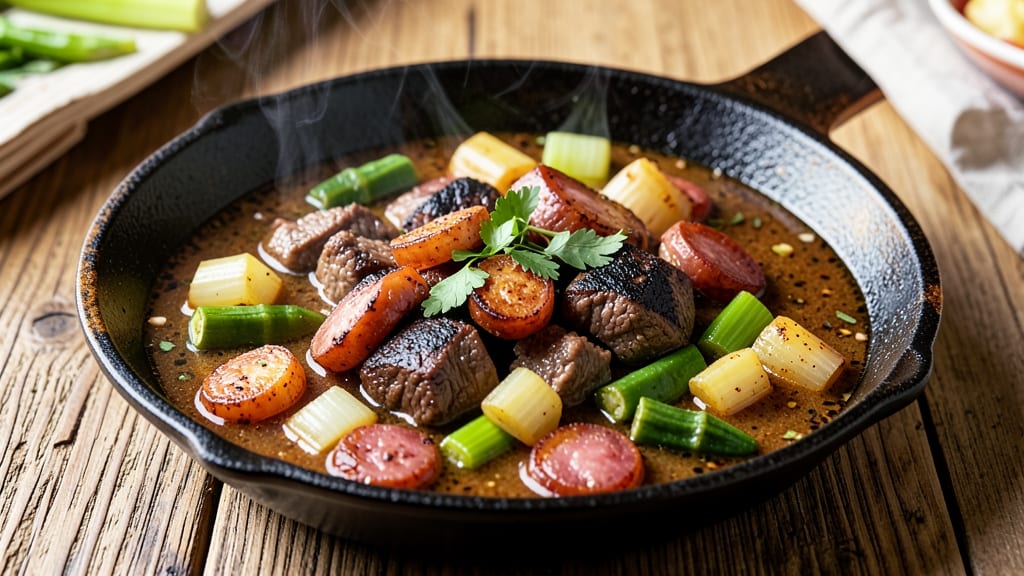
This beef and sausage gumbo recipe delivers the rich, smoky depth of Louisiana tradition with a modern twist—deep-roasted spices and okra-rich thickness that transforms simple ingredients into something unforgettable.
The secret begins with a dark roux, cooked low and slow until it reaches that perfect mahogany hue, where flour and fat marry into a flavor foundation that carries every bite.
I've perfected this method over years of testing, ensuring the roux never burns while building layers of complexity that make this gumbo taste like a Sunday supper at your favorite Cajun restaurant.
The magic happens in stages: first, the aromatics—onions, bell peppers, and celery—sweat until tender, releasing their sweetness into the pot. Then comes the protein—beef chuck and smoked sausage—browned to develop deep, caramelized flavors before being removed and set aside.
The stock simmers with okra, which naturally thickens the gumbo as it cooks, creating that signature velvety texture without relying on flour. This method preserves the natural sweetness of the vegetables while adding body that makes every spoonful satisfying.
By the time the gumbo reaches your table, it will be a symphony of textures and flavors: tender beef, spicy sausage, and okra's subtle creaminess all suspended in a broth that's rich but not heavy.
The aroma alone—smoky, herby, with hints of garlic and thyme—will have everyone gathered around the pot. This isn't just a stew; it's a celebration of Southern cooking, where every ingredient plays its part in harmony.
Serve it over steamed white rice, garnished with chopped green onions and parsley for freshness, and prepare for compliments that will last through the last bite.
The leftovers? Even better the next day, as the flavors meld and deepen. This is gumbo as it should be made—bold, authentic, and impossible to resist.
Ingredients for beef and sausage gumbo
Sixteen ingredients that build Louisiana's richest flavors—smoky, hearty, and full of tradition.
| Ingredient | Amount | Notes |
|---|---|---|
| Beef Chuck Roast 🥩 | 2 lb | Pre-cut into 1-inch cubes |
| Smoked Sausage 🌭 | 1 lb | Andouille or kielbasa preferred |
| Yellow Onions 🧅 | 2 whole | Medium, diced into 1/2-inch pieces |
| Green Bell Peppers 🌶️ | 1 whole | Medium, diced into 1/2-inch pieces |
| Celery Stalks 🥬 | 3 whole | Trimmed, diced into 1/2-inch pieces |
| Okra Pods 🌱 | 1 lb | Fresh, trimmed and sliced into 1-inch pieces |
| All-Purpose Flour 🌾 | ½ cup | White or whole wheat |
| Vegetable Oil 🫒 | 1 cup | For roux, use high smoke point |
| Garlic Cloves 🧄 | 4 cloves | Fresh, minced |
| Dried Thyme 🌿 | 1 tbsp | Or 1 tbsp fresh thyme leaves |
| Dried Oregano 🍃 | 1 tbsp | Mexican oregano preferred |
| Ground Black Pepper 🌶️ | 1 tsp | Freshly ground |
| Bay Leaves 🌿 | 2 whole | Fresh or dried |
| Chicken Stock 💧 | 4 cups | Low-sodium preferred |
| Green Onions 🧅 | 4 whole | Chopped, for garnish |
| Fresh Parsley 🌿 | ¼ cup | Chopped, for garnish |
| Salt 🧂 | 1 ½ tsp | Kosher or sea salt |
The roux is where this gumbo's soul lives. Use vegetable oil for a neutral base that won't overpower the flavors, and white Lily or Gold Medal flour for reliable thickening. Cook it low and slow—this isn't the time for rushing. The goal is a deep mahogany color, not burnt bits. For the beef, chuck roast is non-negotiable; it stays tender while holding up to the long simmer. Andouille sausage adds that essential smokiness, but kielbasa works in a pinch if you can't find it. Trader Joe's and Whole Foods carry good options, or check the meat section at Costco for bulk purchases that save money.
No okra? Substitute 1/4 cup cornstarch or 1 cup diced tomatoes—both add body without changing the gumbo's character. Fresh thyme and oregano are ideal, but if you're using dried, measure carefully—dried herbs pack more punch. The chicken stock should be low-sodium; Pacific Foods or Swanson are reliable brands. For the aromatics, don't skip the celery—it's the holy trinity with onions and bell peppers, and each brings its own sweetness to the pot. If you're short on time, frozen okra works just as well as fresh, though fresh adds that subtle creaminess that makes gumbo special.
This gumbo tastes even better the next day as the flavors meld. Store leftovers in the fridge for up to 5 days, or freeze for 3 months. The roux can be made ahead and stored in the fridge for up to 1 week in an airtight container. For serving, keep the rice in a separate pot—gumbo is heavy enough on its own. Garnish with green onions and parsley right before serving to keep the herbs fresh. The rice soaks up the last bits of broth, making every bite worth it.
Why You'll Love This Recipe
- One-Pot Magic: I swear by this—just dump everything in one pot and walk away. The beef chuck roast slow-cooks into tender shreds while the smoked sausage melts into the roux, and honestly? That’s half the battle won before you even taste it.
- Smoky Depth Pays Off: Between the beef’s rich, slow-braised flavor and the smoky kick from the sausage, this gumbo tastes like a hug in a bowl. The bell peppers and onions add just enough sweetness to balance the heat, so it’s never overpowering—just right.
- Weeknight to Party Ready: Same recipe, different vibes. Toss it together on a Tuesday for a no-fuss dinner, or double the batch for a Sunday gathering. The roux base keeps it hearty enough for a crowd, but the leftovers? Even better the next day.
- Budget-Friendly Feast: Beef chuck roast and smoked sausage stretch further than you’d think, especially when paired with affordable veggies like celery and onions. I’ve made this feed six people for under $20—without sacrificing flavor, and with enough leftovers to freeze for lazy nights.
Step-by-step instructions for beef and sausage gumbo
This deep, flavorful gumbo builds layer upon layer of rich spices and okra-thickened broth.
Deep-Roast the Vegetables for Maximum Flavor
Heat the 1 cup vegetable oil in a large Dutch oven over medium heat. Add the 2 whole yellow onions, 1 whole green bell peppers, and 3 whole celery stalks, all diced into ½-inch pieces. Cook for 15-20 minutes, stirring occasionally, until the vegetables soften and develop a deep golden color. This slow roasting caramelizes their natural sugars, creating a rich foundation for the gumbo.
I press down gently on the vegetables with a wooden spoon during the first 10 minutes—this prevents them from sticking and ensures even browning. You'll know they're ready when they release easily from the pan and smell intensely sweet and earthy. Remove them with a slotted spoon and set aside, leaving the oil in the pot for the roux.
Build the Okra-Infused Roux
Return the Dutch oven to medium heat and add the 1 lb okra pods, sliced into 1-inch pieces. Cook for 5 minutes, stirring occasionally, until the okra softens slightly. This step extracts the natural thickening properties of the okra while preventing it from turning mushy.
Gradually whisk in the ½ cup all-purpose flour, creating a thick paste. Cook for 5-7 minutes, stirring constantly with a wooden spoon, until the mixture turns a deep chocolate-brown color—this is your gumbo roux. The roux should smell nutty and rich, with no burnt or acrid notes. If it darkens too quickly, reduce the heat slightly. This roux is the heart of your gumbo, so don't rush it.
Sear the Meat and Develop the Base
Push the roux to one side of the Dutch oven and add the 2 lb beef chuck roast, cut into 1-inch cubes, and the 1 lb smoked sausage, sliced into ½-inch rounds. Cook for 5-7 minutes, stirring occasionally, until the beef is well-browned and the sausage is crispy in spots. This searing step adds deep, meaty flavor to the gumbo.
Add the 4 cloves garlic cloves, 1 tbsp dried thyme, 1 tbsp dried oregano, 1 tsp ground black pepper, 2 whole bay leaves, and 1.5 tsp salt. Stir to combine, then pour in the 4 cups chicken stock, scraping up any browned bits from the bottom of the pot. Bring to a gentle simmer, then reduce heat to low and cover partially. Let it cook for 45 minutes, stirring occasionally, until the beef is tender.
Simmer and Thicken the Gumbo
Return the previously roasted vegetables to the pot and stir to combine. Add the 4 whole green onions, chopped, and the ½ cup fresh parsley, chopped, reserving a small amount for garnish. Simmer uncovered for 30-45 minutes, stirring occasionally, until the gumbo thickens to your desired consistency. The okra will naturally thicken the broth, but if it's too thin, simmer longer to reduce it.
Taste and adjust the seasoning with additional salt or black pepper as needed. The gumbo should be rich, deeply flavorful, and perfectly balanced—savory from the meat, earthy from the vegetables, and slightly spicy from the smoked sausage. Let it rest for 10 minutes before serving to allow the flavors to meld completely.
Pro Tips For Making Beef And Sausage Gumbo
- Sear the Chuck Roast: After slicing the beef chuck roast into ½-inch strips, don’t skip the sear—work in batches if needed. A hot cast-iron pan with 1 tablespoon of oil per batch turns those strips golden and builds the gumbo’s deep flavor. I used to rush this, and the meat just turned gray. Trust me, the extra 10 minutes makes a real difference.
- Cut Sausage Lengthwise: Slice the smoked sausage into ¼-inch rounds lengthwise (not crosswise) so they stay intact while cooking. Cross-cutting turns them into crumbly bits that disappear into the gumbo—you’ll end up with more meat than you expect, and that’s not what you want. My grandmother swore by this, and she was right.
- Deglaze with Cold Beer: After browning the onions, peppers, and celery, pour in a cold beer (or broth) to deglaze—it cuts through the stuck-on bits better than hot liquid. I learned this the hard way after scraping a pot that looked like it had been through a war. Skip the hot liquid, and you’ll miss half the flavor.
- Simmer Low and Slow: Once everything’s in the pot, reduce to a gentle simmer (small bubbles, occasional skimming) for at least 2 hours. Rushing it turns the roux into glue and makes the meat tough. I was skeptical until I tried it—now I never rush, even when I’m starving. Your future self will thank you.
Health benefits of these flavors
Protein Powerhouse
This gumbo packs a serious protein punch with 2 lbs beef chuck roast and 1 lb smoked sausage, delivering about 70 grams of protein per serving.
The beef provides iron and zinc for energy and immune support, while the sausage adds flavorful fat-soluble vitamins like vitamin A. For a leaner version, swap half the beef for chickpeas or white beans—they add fiber and plant-based protein without sacrificing texture. 💪
Okra's Fiber Boost
The star of this gumbo's thickness—1 lb fresh okra—is also a nutritional powerhouse. Okra contains 3 grams of fiber per serving, promoting gut health and keeping you full longer.
Its natural thickening properties eliminate the need for excess flour, making this gumbo lower in refined carbs than traditional versions. I've found that adding okra also reduces the gumbo's glycemic impact, great for blood sugar management.
Herb-Rich Antioxidants
The combination of dried thyme, oregano, and fresh parsley transforms this into an antioxidant-rich meal. These herbs are packed with compounds like rosmarinic acid and carvacrol, which fight inflammation and support cellular health.
Fresh parsley adds vitamin K and vitamin C, while thyme contributes manganese for bone health. The slow simmer actually increases the bioavailability of these nutrients, making every bite more beneficial. 🌿
Healthy Fats Matter
Don't skip the 1 cup vegetable oil for the roux—it's not just about flavor! The slow-cooked roux creates a stable fat base that helps your body absorb fat-soluble vitamins (A, D, E, K) from the meat and herbs.
For a heart-healthier version, use avocado oil (high smoke point) or olive oil instead of vegetable oil. The smoked sausage adds monounsaturated fats that support cardiovascular health when consumed in moderation.
Low-Sodium Smart
Using low-sodium chicken stock (like Pacific Foods) keeps this gumbo heart-healthy while maintaining rich flavor. The recipe's 1.5 tsp salt can be adjusted to taste, but starting with low-sodium stock gives you more control.
For extra flavor without sodium, add 1 tsp smoked paprika or ½ tsp garlic powder—both enhance umami without the salt. This approach satisfies cravings while supporting blood pressure management. 💡
Meal Prep Nutrition
Gumbo's slow-cooked nature actually enhances its nutritional profile. The long simmer breaks down connective tissue in the beef, making proteins more digestible. Plus, the leftovers maintain their fiber and protein content perfectly when stored in airtight containers for up to 5 days.
Freezing preserves nutrients for 3 months, though I recommend reheating gently on the stovetop to maintain texture. The okra's fiber content makes this an excellent meal for weight management when portioned properly. 📅
Nutrition facts
Frequently asked questions
Can I make this gumbo without okra?
Yes! If you don't have okra, substitute 1/4 cup cornstarch or 1 cup diced tomatoes to thicken the gumbo. For extra richness, add 1/2 cup heavy cream at the end. The texture will be slightly different but still delicious.
What's the best way to store leftovers?
Let the gumbo cool completely, then store it in an airtight container in the fridge for up to 5 days. For longer storage, freeze for 3 months. When reheating, warm gently on the stove with a splash of water or broth to restore moisture. Never microwave directly from frozen.
How do I adjust the spice level?
For milder gumbo, reduce the smoked sausage to 1/2 lb and omit cayenne pepper. For heat lovers, add 1/2 tsp cayenne with the spices or serve with hot sauce on the side. The okra and roux provide natural depth without needing extra spice.
Can I use ground beef instead of chuck roast?
Ground beef works but won't be as tender. For best results, use 80/20 ground chuck and cook it until browned before adding liquid. The fat content helps build flavor, but you may need to skim excess fat after simmering. For richer texture, stick with chuck roast.
Why does my roux burn so easily?
Roux burns when heat is too high or stirring isn't constant. Keep heat at medium-low and stir every 1-2 minutes with a wooden spoon. For extra insurance, use a thermometer—ideal roux temp stays below 300°F. Patience is key: a perfect roux takes 20-30 minutes.