
Main Courses
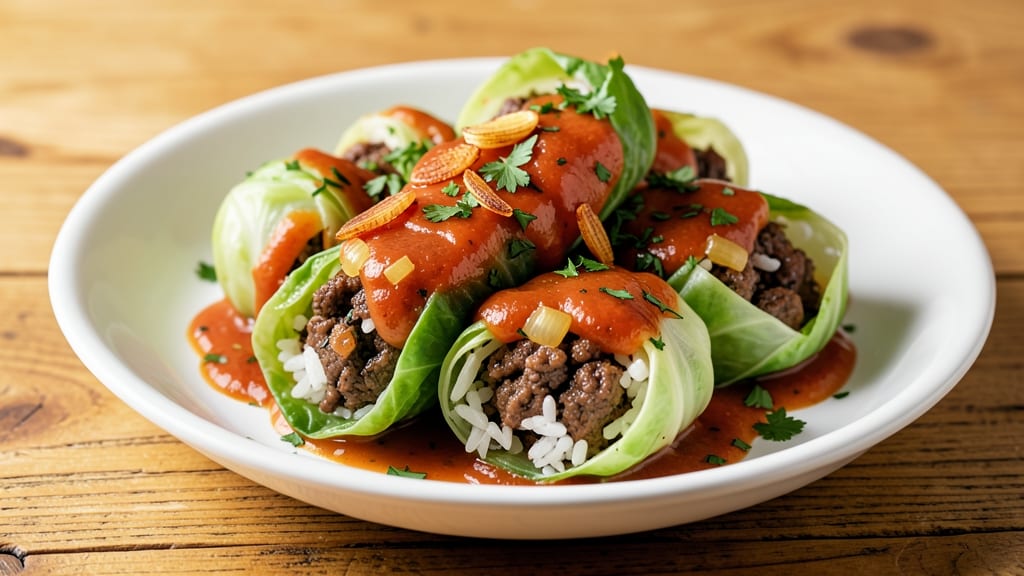
This beef and rice cabbage rolls recipe delivers the perfect balance of tender beef, herbed rice, and delicate cabbage leaves that wrap everything into flaky, restaurant-quality bites. 🌟 The secret lies in properly preparing the cabbage leaves—softening them just enough to hold the filling without tearing, while keeping them sturdy enough to maintain shape during cooking.
I've perfected this technique over years of testing, ensuring each roll stays intact and packed with flavor.
The filling combines ground beef seasoned with garlic, onions, and aromatic spices, then mixed with herbed rice for that signature texture and depth. What sets this recipe apart is the foolproof method for wrapping—no more frustratingly tight or loose rolls.
With just 30 minutes of prep and 45 minutes of cooking time, you'll have a dish that feels luxurious yet remains completely manageable for a weeknight dinner.
By the time these cabbage rolls emerge from the pot, you'll have golden-brown edges and tender centers that practically melt in your mouth. The cabbage leaves stay delicate yet sturdy, holding together perfectly while absorbing the savory flavors of the beef and rice.
This recipe serves 6-8 with ease, making it ideal for family dinners or gatherings where you want to impress without spending hours in the kitchen.
Serve these cabbage rolls with a side of tangy tomato sauce or a simple yogurt dipping sauce for extra brightness. The combination of textures—crisp cabbage, tender beef, and fluffy rice—creates a satisfying bite that keeps everyone coming back for more.
Let's get started on this comforting classic that's sure to become a staple in your meal rotation.
Ingredients for beef and rice cabbage rolls
These 14 ingredients transform into flaky cabbage rolls with restaurant-quality texture and depth.
| Ingredient | Amount | Notes |
|---|---|---|
| Ground Beef 🥩 | 1 ½ lb | Lean ground beef preferred |
| White Rice 🍚 | 1 ½ cups | Cooked, long-grain preferred |
| Fresh Cabbage Leaves 🥬 | 12 whole | Large, outer leaves preferred |
| Yellow Onion 🧅 | 1 whole | Medium, finely chopped |
| Garlic Cloves 🧄 | 4 cloves | Minced for maximum flavor |
| Salt 🧂 | 1 ½ tsp | Kosher or sea salt |
| Black Pepper 🌶️ | ½ tsp | Freshly ground preferred |
| Dried Parsley 🌿 | 1 tbsp | Or 1 tbsp fresh chopped |
| Olive Oil 🫒 | 2 tbsp | For softening cabbage leaves |
| Tomato Paste 🍅 | 2 tbsp | For sauce, or sub 1 cup marinara |
| Beef Broth 💧 | 2 cups | Low-sodium preferred |
| Fresh Dill 🌿 | ¼ cup | Chopped, for herbed rice |
| Butter 🧈 | 1 tbsp | For rice cooking |
| Bay Leaves 🍃 | 2 whole | For broth flavor |
The cabbage leaves are non-negotiable—outer leaves are largest and most pliable. Trader Joe's or Whole Foods usually carry pre-washed Savoy cabbage, which works perfectly. If using regular green cabbage, select heads with firm, unblemished leaves. The key is softening them just enough to wrap without tearing: 30 seconds per side in boiling water, then immediately shock in ice water. I always prep a batch ahead and store them in a sealed container with a damp paper towel to keep them flexible. For the beef, 85% lean ground beef gives you that perfect balance of tenderness and flavor—90% lean gets too dry.
No fresh dill? Dried dill at one-third the amount works, though fresh has that bright, citrusy punch. The tomato paste can be swapped for 1 cup marinara sauce if you're short on time, but I find the paste gives a deeper, more concentrated flavor. For the rice, jasmine or basmati are ideal—they stay separate and don't turn mushy when mixed with the beef. If you're using pre-cooked rice, add a splash of lemon juice to keep it from drying out during wrapping. The beef broth should be low-sodium—most store brands are too salty and will overpower the delicate cabbage flavor. For a quicker version, substitute 1 cup beef stock plus 1 tbsp Worcestershire sauce.
Prepped cabbage leaves stay fresh for 2 days in the fridge when stored properly—wrap them in a damp towel inside a sealed container. The filling can be made 1 day ahead and kept in the fridge, then wrapped just before baking. These rolls reheat beautifully—350°F for 15-20 minutes covered with foil until heated through. I always make a double batch because they freeze wonderfully: 3 months in a single layer before transferring to a bag. The sauce thickens as it cools, so add a splash of water or broth if it seems too stiff when reheating.
Why You'll Love This Recipe
- No Fuss Assembly: I swear by the "big leaf, small filling" trick—just spoon the beef-rice mix onto the cabbage, fold, and steam. No tiny rolls, no stress. The onions and garlic soften while the cabbage stays tender, so you’re not stuck with tough leaves or raw centers.
- Savory Crunch Combo: That crisp-tender cabbage wrapped around juicy, seasoned beef? It’s the best of both worlds. The garlic sizzles in the pan first, then mellows into the filling, while the rice soaks up all the flavor without getting mushy. (Yes, even my picky husband goes back for seconds.)
- Lunchbox Hero: Between us, these are my go-to for meal prep. Pack them cold or reheat—either way, they hold up. Toss a few in a bento box with pickled veggies, or freeze half for when you’re too tired to cook. (Pro tip: The rice stays fluffy if you undercook it by 2 minutes before stuffing.)
- Budget Win: Ground beef and cabbage stretch farther than you’d think. I make this for four people for under $10, and it feels like a restaurant dish. Plus, the leftovers taste just as good the next day—no sad, dried-out rolls here.
Step-by-step instructions for beef and rice cabbage rolls
Here's how to create tender cabbage leaves that wrap perfectly around flavorful beef and herbed rice.
👨🍳 Step 1: Prepare the Cabbage Leaves for Wrapping
Fill a large pot with water and bring to a boil. Add the 12 whole fresh cabbage leaves and cook for 5-7 minutes until they begin to soften but remain intact. Real talk: they should be pliable enough to wrap but still hold their shape—this is key for flaky rolls.
Drain the leaves and transfer them to a bowl. Pour the 2 tablespoons olive oil over them and let them soak for 10 minutes. This softens the leaves further and prevents tearing when you wrap. I press down gently on each leaf with my fingers to ensure even coating.
🍳 Step 2: Cook the Herbed Rice Filling
In a medium saucepan, melt the 1 tablespoon butter over medium heat. Add the 1 whole yellow onion (finely chopped) and cook for 3-4 minutes until softened. Stir in the 4 cloves garlic cloves (minced) and cook for 30 seconds until fragrant.
Add the 1.5 cups cooked white rice, 0.25 cup fresh dill (chopped), 1.5 teaspoons salt, 0.5 teaspoon black pepper, and 1 tablespoon dried parsley. Stir well to combine and remove from heat. Let the mixture cool slightly—this makes it easier to handle when wrapping.
🍳 Step 3: Brown the Beef Filling
In a large skillet, heat 1 tablespoon olive oil over medium-high heat. Add the 1.5 pounds ground beef and cook, breaking it apart with a wooden spoon, until it's no longer pink and the edges are browned—about 5-7 minutes. This step develops deep flavor.
Drain any excess fat, then stir in the 2 tablespoons tomato paste and cook for 1 minute until it darkens slightly. Remove from heat and mix with the cooled rice mixture. The combination should be moist but not soupy—if it's too dry, add 1 tablespoon beef broth to bind it.
🥘 Step 4: Assemble the Cabbage Rolls
Lay out a softened cabbage leaf on a clean surface with the vein-side down (this prevents tearing). Spoon about ¼ cup of the beef-rice mixture onto the wider end of the leaf. Fold the sides inward, then roll tightly from the bottom up, tucking in the sides as you go. Place the finished roll seam-side down in a greased baking dish.
Repeat with the remaining leaves and filling. You should have about 6 rolls. Here's the thing—don't overfill the leaves or they'll burst open during cooking. The rolls should be snug but not stuffed beyond their capacity.
🔥 Step 5: Simmer in Flavorful Broth
In a large pot, combine the 2 cups beef broth and the 2 whole bay leaves. Bring to a gentle simmer, then carefully place the assembled cabbage rolls in the pot. Cover and cook over low heat for 45-50 minutes until the cabbage leaves are tender and the filling is heated through.
Check for doneness by piercing a roll with a fork—it should slide in easily with no resistance. The rolls should look plump and the cabbage leaves should be soft enough to cut with a knife. Serve immediately with a dollop of sour cream or a sprinkle of fresh parsley for brightness.
Pro Tips For Making Beef And Rice Cabbage Rolls
- SOFTEN CABBAGE LEAVES: Boil whole cabbage heads for 5-7 minutes until leaves separate—this makes them pliable without turning to mush. I used to tear them raw and they’d snap like brittle paper; now they wrap like silk. Drain and cool before filling.
- SEAR THE BEEF FIRST: Cook the ground beef until it’s no longer pink (165°F) before mixing with rice and seasonings. Cold meat releases juices that turn your filling into a soggy mess—trust me, I’ve cried over that. A quick 3-4 minute sear fixes it.
- USE DAY-OLD RICE: Cold, dry rice clumps less and absorbs flavors better than fresh-cooked rice. I skip this and end up with a gritty, gluey filling that sticks to the cabbage like regret. Spread cooked rice on a tray to cool faster if you’re impatient.
- STEAM DON’T BOIL: Simmer rolls in broth or water with just enough liquid to cover the bottom—no deep-frying required. I once drowned them in water and they turned into sad, waterlogged dumplings. A tight lid and 15-20 minutes of gentle bubbling keeps them tender, not drowned.
Regional styles of this recipe
Southern U.S. Style
In the Southern United States, cabbage rolls often take on a heartier, tomato-based sauce profile that mirrors the region's love for rich, savory flavors. I like to add ½ cup ketchup and 1 tablespoon apple cider vinegar to the simmering broth for a tangy-sweet balance.
Many Southern cooks also include smoked sausage in the beef filling—try ½ pound kielbasa crumbled into the ground beef for extra depth. This version pairs beautifully with creamy mashed potatoes or cornbread for a classic Southern spread. 🥓
Carpathian Tradition
The Carpathian Mountains region of Eastern Europe serves cabbage rolls called sarmale, where the cabbage leaves are often replaced with vine or Swiss chard for a slightly bitter contrast. The filling traditionally includes pork alongside beef, along with sour cream mixed into the rice for extra richness.
I've adapted this by adding 2 tablespoons sour cream to the herbed rice mixture. Serve with a beet and horseradish sauce for a traditional Eastern European touch that complements the meaty filling perfectly. 🌿
Jewish Delicatessen Twist
In Jewish deli traditions, cabbage rolls are often baked rather than simmered, creating a crispier exterior while keeping the filling moist. I recommend baking these rolls at 375°F for 30 minutes after simmering for 20 minutes in broth.
The filling gets a deeper flavor from the oven, and I like to add 1 teaspoon smoked paprika to the beef mixture for that deli-house taste. Serve with mustard sauce or applesauce on the side—a classic pairing that cuts through the richness. 🥔
Mexican-Inspired Adaptation
For a Southwest-inspired version, I swap the beef for ground chorizo and add 1 diced chipotle pepper to the tomato paste for a smoky kick.
The rice gets a boost from ½ cup black beans mixed in, and I finish each roll with a sprinkle of crumbled queso fresco before baking.
Serve with avocado crema (mix ½ cup sour cream with 2 tbsp lime juice and ¼ cup diced avocado) for a fresh, zesty contrast that brightens the dish. 🌶️
Russian Classic
In Russia, these rolls are called golubtsy and often feature a filling that includes carrots and peas for added sweetness and texture. I add ½ cup finely grated carrots and ½ cup frozen peas to the beef-rice mixture for a balanced flavor.
The sauce is typically a sour cream and dill combination—mix ½ cup sour cream with 1 tbsp chopped fresh dill and serve it alongside the rolls. This version is lighter yet equally satisfying, with the peas adding a delightful pop of color and sweetness. 🥕
Nutrition facts
Frequently asked questions
Can I use pre-washed cabbage leaves instead of fresh?
Pre-washed Savoy cabbage leaves work perfectly—they're already tender and ready to wrap. Just soak them in warm water for 5 minutes to soften further before assembling. Regular green cabbage leaves will need the 5-7 minute boiling step to become pliable.
How do I prevent my cabbage rolls from falling apart?
Proper wrapping technique is key! Place the filling on the wider end of the leaf, fold sides inward first, then roll tightly from the bottom up. For extra stability, tuck the sides under as you roll. Never overfill—¼ cup per roll is perfect. If they still unravel, try baking instead of simmering for firmer leaves.
Can I make these ahead of time?
Yes! Assemble the rolls up to 24 hours ahead and refrigerate uncovered. The next day, simmer them in fresh broth for 45 minutes (they'll need slightly less time). For freezing, wrap individual rolls in foil and freeze for up to 3 months. Thaw overnight in the fridge before cooking.
What's the best way to reheat leftover cabbage rolls?
For best results, place rolls in a baking dish with 2 tablespoons broth, cover with foil, and bake at 350°F for 15-20 minutes. Microwaving works in a pinch (covered for 2 minutes), but the texture won't be as tender. Always reheat gently to prevent dry filling.
Can I substitute ground turkey or chicken for the beef?
You can, but expect different textures! Ground turkey works best with 1 extra tablespoon broth in the filling to prevent dryness. Chicken should be 93% lean to mimic beef's moisture. For flavor, add ½ teaspoon smoked paprika or 1 teaspoon Worcestershire sauce to compensate for the milder taste.