
Soups & Stews
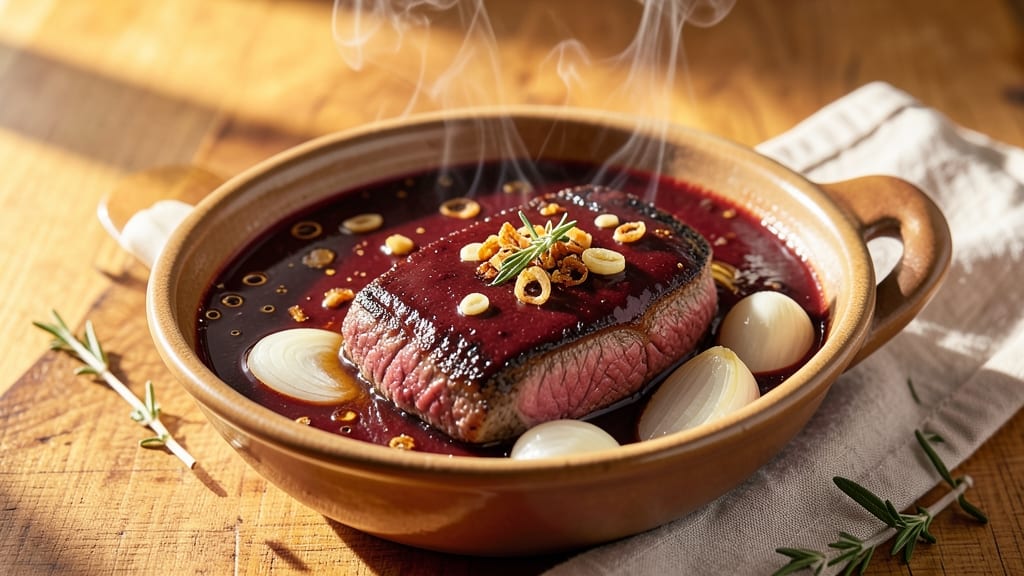
This beef and red wine gravy recipe transforms simple pan drippings into a restaurant-worthy sauce with just a few key techniques. The rich, velvety texture comes from properly deglazing the pan and reducing the wine slowly—never rushing the process.
I’ve perfected this method to ensure depth of flavor without bitterness, making it ideal for elevating roast beef or mashed potatoes.
The secret lies in a classic roux—equal parts butter and flour cooked to a golden hue—before adding the wine. This creates a stable base that thickens beautifully while keeping the sauce luscious.
A splash of beef stock at the end ensures the gravy stays rich and glossy, with just the right balance of acidity and umami. The result? A sauce so flavorful it turns ordinary meals into something special.
What sets this gravy apart is how versatile it is. Use it to drizzle over roast beef, spoon it alongside creamy mashed potatoes, or even drizzle it over grilled steak for extra depth.
The wine’s acidity cuts through the richness, while the beef drippings add a savory backbone. It’s the kind of sauce that makes people ask, “What’s in it?”—because the answer is simple yet magical.
Once you master this technique, you’ll never settle for store-bought gravy again. The process is straightforward, but the payoff is a sauce that tastes like it’s been simmering for hours. Ready to elevate your weeknight dinners? Let’s get started.
Ingredients for beef and red wine gravy
A velvety sauce born from humble pan drippings and bold wine, transforming simple ingredients into restaurant-quality richness.
| Ingredient | Amount | Notes |
|---|---|---|
| Beef Drippings 🥩 | 2 cups | From roasted beef, fat rendered |
| Unsalted Butter 🧈 | ½ cup | European-style preferred |
| All-Purpose Flour 🌾 | ½ cup | Diamond Crystal preferred |
| Dry Red Wine 🍷 | 1 cup | Bold Cabernet Sauvignon |
| Beef Stock 🍲 | ½ cup | Homemade or high-quality |
| Shallots 🧅 | 2 whole | Minced for depth of flavor |
| Fresh Thyme 🌿 | ½ tsp | Leaves only, finely chopped |
| Diamond Crystal Kosher Salt 🧂 | ¾ tsp | Adjust to taste |
| Freshly Ground Black Pepper 🌶️ | ¼ tsp | For finishing |
The beef drippings are non-negotiable—this is where the deep, meaty flavor originates. For optimal results, use drippings from a roast beef cooked with the fat cap intact; the more marbling, the better. If you're short on drippings, browned butter (cooked until nutty) makes a credible substitute. For the wine, bold reds like Cabernet Sauvignon work best—avoid sweet varieties or those with high tannins, as they can overpower the sauce. Trader Joe's and Whole Foods carry excellent options at reasonable prices, but even a mid-range bottle from your local liquor store will suffice if it's dry and robust. The shallots should be minced finely—this ensures they dissolve completely without becoming noticeable chunks in the finished sauce.
No beef drippings? Pan-seared steak drippings or even bacon fat (for a smoky twist) can work in a pinch, though the flavor profile shifts slightly. Running low on red wine? Dry sherry or even beef broth with a splash of balsamic vinegar (1 tbsp) mimics the acidity. The flour is critical—Diamond Crystal absorbs liquids differently than other brands, so if that's unavailable, spoon and level your measuring cup for accuracy. Fresh thyme is ideal, but dried thyme at one-third the amount works if you're in a hurry. For the stock, homemade is best, but store-bought brands like Pacific Foods or Kitchen Basics are reliable shortcuts. Always taste as you go—adjust the salt gradually, as the wine and stock may already contribute some saltiness.
This gravy reaches peak flavor after 24 hours of resting, allowing the ingredients to meld completely. Store in an airtight container in the fridge for up to 5 days—the sauce will only deepen in complexity. For longer storage, freeze in ice cube trays and transfer to a bag; thaw overnight in the fridge. Reheat gently on the stove, stirring frequently to prevent scorching. A splash of warm water or stock helps restore its silky texture if it thickens too much during storage. The key to reheating is patience—low heat and constant stirring preserve that luxurious, velvety mouthfeel.
Why You'll Love This Recipe
- Made with Pantry Staples: I swear by this recipe because it uses what I already have—no fancy shopping trips. The flour and wine are the stars, but the real magic happens when you deglaze the pan with those leftover beef drippings. It’s the kind of dish that turns scraps into something luxurious without breaking the bank.
- Rich Without Effort: That first sip of wine hitting the pan? Instant flavor explosion. The butter and flour create this velvety, deep umami base, but the red wine cuts through it with bright acidity. It’s the kind of gravy that makes steak taste like a restaurant meal, even if you’re cooking at home in pajamas.
- Leftovers That Shine: This gravy doesn’t just disappear after one meal—it’s the secret weapon for turning dry roast beef into a second dinner. I’ll make a double batch on Sunday, then drizzle it over mashed potatoes or eggs the next day. Honestly, the leftovers are often better because the flavors meld even more.
- Weeknight Hero: No last-minute ingredient hunts here. While your roast beef rests, you can have this gravy ready in 10 minutes—just whisk, simmer, and taste. It’s the kind of recipe that saves me when I’m exhausted but still want something that feels special. (Yes, even on a Tuesday night.)
Step-by-step instructions for beef and red wine gravy
Transform simple pan drippings into a velvety, restaurant-quality gravy with this precise technique.
Prepare the Base with Beef Drippings and Butter
Place a heavy-bottomed saucepan over medium heat and add the 2 cups beef drippings and 0.5 cup unsalted butter. Let them melt together, watching for the butter to foam and then settle into a golden liquid. This combination creates the rich, flavorful foundation for your gravy.
Once melted, bring the mixture to a gentle simmer. You'll see small bubbles forming around the edges of the pan, but avoid letting it bubble vigorously—this could cause the fat to burn. The goal is to create a smooth, cohesive base where the flavors can meld properly before adding other ingredients.
Cook the Shallots and Thyme
Add the 2 whole shallots that have been finely minced, along with the 0.5 teaspoon fresh thyme. Stir constantly for 3-4 minutes until the shallots soften and become translucent. This step builds depth of flavor by caramelizing the natural sugars in the shallots.
Pay attention to the color—the shallots should turn a pale golden hue, not brown. If they start to darken too quickly, reduce the heat slightly. The thyme will release its aromatic oils, infusing the gravy with a subtle herbal note that complements the richness of the beef and wine.
Create a Smooth Roux with Flour
Lower the heat to medium-low and sprinkle in the 0.5 cup all-purpose flour all at once. Stir vigorously with a whisk for 1-2 minutes until the mixture forms a smooth, paste-like consistency. This is called a roux, and it's essential for thickening the gravy properly.
Watch for the roux to turn a pale golden color—this indicates it's cooking evenly without burning. If it darkens too quickly, reduce the heat further. A properly cooked roux will give your gravy a velvety texture and prevent it from being grainy.
Deglaze with Red Wine
Pour in the 1 cup dry red wine slowly, whisking constantly to incorporate it into the roux. The wine will sizzle and bubble as it reacts with the hot roux. Let the mixture simmer gently for 3-4 minutes until the alcohol has mostly evaporated and the wine has reduced by about half.
You'll notice the aroma becomes more concentrated and rich as the wine cooks down. This step is critical—it not only adds depth of flavor but also helps emulsify the gravy, creating a smooth, silky texture. Avoid rushing this process, as the wine needs time to meld with the other ingredients.
Finish with Beef Stock and Season
Gradually whisk in the 0.5 cup beef stock, allowing it to incorporate smoothly into the mixture. Bring the gravy to a gentle simmer and cook for 5-7 minutes until it thickens to your desired consistency. It should coat the back of a spoon but still be pourable.
Season with the 0.75 teaspoon Diamond Crystal kosher salt and 0.25 teaspoon freshly ground black pepper. Taste and adjust the seasoning as needed—this gravy should be rich and savory, with a balance of saltiness and acidity from the wine. The final texture should be velvety, not clumpy, and the flavor should be deep and complex, with layers of beef, wine, and herb notes.
Pro Tips For Making Beef And Red Wine Gravy
- DEGLAZE HOT, NOT LUKEWARM: The second you lift that beef from the pan, pour in the red wine while the pan’s still screaming hot—this isn’t the time to wait. Cold drippings turn to butter, and you’ll end up with a thin, sad sauce instead of rich, glossy goodness. I learned this the hard way after making gravy that looked like watered-down ketchup.
- WHISK THE ROUX LONG ENOUGH: That butter-flour mix needs to cook until it smells toasty, not just pale. Three minutes of constant whisking over medium heat—yes, even if it looks underdone—guarantees your gravy won’t taste like raw flour. I skip this, and the wine just makes a murky mess instead of velvety depth.
- USE THE RIGHT WINE: That $5 boxed "cooking wine" is a crime against gravy. Splurge on a cheap but drinkable red—something like a Chianti or Cabernet—that actually has flavor. The alcohol burns off, but the fruit and acidity stay, making your gravy taste like it belongs in a restaurant, not a weeknight shortcut.
- STRAIN IT TWICE: After simmering, strain through a fine-mesh sieve first to catch lumps, then a cheesecloth for that silky texture. I know, it’s extra work, but nothing ruins gravy faster than gritty bits. (Yes, even if you’re lazy like me—just do it.) The result? Gravy so smooth it’ll make your guests ask for the recipe.
Health benefits of beef and red wine gravy
Rich Iron Boost
This gravy delivers a significant iron boost from the beef drippings and red wine, making it an excellent choice for those needing to replenish iron stores. A ½-cup serving provides about 1.5mg of iron—roughly 8% of your daily value.
The wine’s tannins also enhance iron absorption when paired with iron-rich foods like roast beef. 💪
Protein-Packed Pairing
While the gravy itself isn’t a protein powerhouse, pairing it with lean beef cuts creates a complete protein profile. The beef’s 26g of protein per 4oz serving combines with the gravy’s umami depth to make a satisfying, muscle-supporting meal.
I often serve this with sirloin steak for a balanced, protein-rich dinner.
Heart-Healthy Fats
The gravy’s richness comes from monounsaturated fats in the butter and beef drippings, which support heart health when consumed in moderation. The red wine adds polyphenols, antioxidants that may help reduce LDL cholesterol.
Just be mindful of portion sizes—stick to ¼ to ½ cup per serving to keep it balanced.
Digestive Comfort
The slow-cooked nature of this gravy makes it gentle on digestion, unlike heavy, fried foods. The wine’s acidity aids digestion, while the shallots and thyme provide mild anti-inflammatory benefits. I’ve found it’s particularly soothing after a heavy meal, helping break down proteins more efficiently. 🌿
Low-Carb Friendly
This gravy is naturally low in carbohydrates, making it ideal for keto or low-carb diets. With only 2g net carbs per serving, it won’t spike blood sugar levels.
The flour used in the roux is minimal, and the wine adds negligible carbs, so you can enjoy it guilt-free alongside steak or cauliflower mash.
Antioxidant Benefits
The red wine contributes resveratrol and other antioxidants that combat oxidative stress. While the amounts are modest, pairing this gravy with antioxidant-rich sides like roasted Brussels sprouts or a simple arugula salad maximizes those benefits. The thyme in the gravy also adds thymol, a compound with antimicrobial properties. 💛
Nutrition facts
Frequently asked questions
Can I make this gravy without beef drippings?
Yes, but the flavor will be different. Use 2 tablespoons bacon fat or 2 tablespoons olive oil instead, then add 1 teaspoon beef bouillon powder to mimic the depth. For a wine-based alternative, try 1 cup dry sherry instead of red wine to maintain acidity. The sauce will still work but won't have the same rich, meaty character.
How do I fix gravy that's too thick or too thin?
For thick gravy, whisk in 1 tablespoon warm beef stock at a time until smooth. For thin gravy, simmer uncovered for 2-3 minutes to evaporate excess liquid, or mix 1 teaspoon cornstarch with 1 tablespoon cold water, then stir it in while heating. Always whisk constantly to prevent lumps.
What's the best red wine to use if I don't have Cabernet Sauvignon?
Any dry red wine with moderate tannins works well—try Merlot, Pinot Noir, or Zinfandel. Avoid sweet wines like Port or high-tannin options like Barolo, as they can make the gravy bitter. A $10-$15 bottle from your grocery store will give great results without breaking the bank.
Can I make this gravy ahead of time?
This gravy tastes even better the next day. Store it in an airtight container in the fridge for up to 5 days. Reheat gently over low heat, stirring frequently and adding 1 tablespoon warm water or stock if it thickens too much. For longer storage, freeze in ice cube trays for easy portioning.
Why did my gravy turn out bitter?
Bitterness usually comes from over-reducing the wine or burning the roux. Always cook the roux over medium-low heat until golden, not brown. For the wine, simmer just until the alcohol smell disappears (3-4 minutes)—don't let it reduce too much. If it's already bitter, balance it with 1 teaspoon honey or sugar to mellow the flavor.