
Soups & Stews
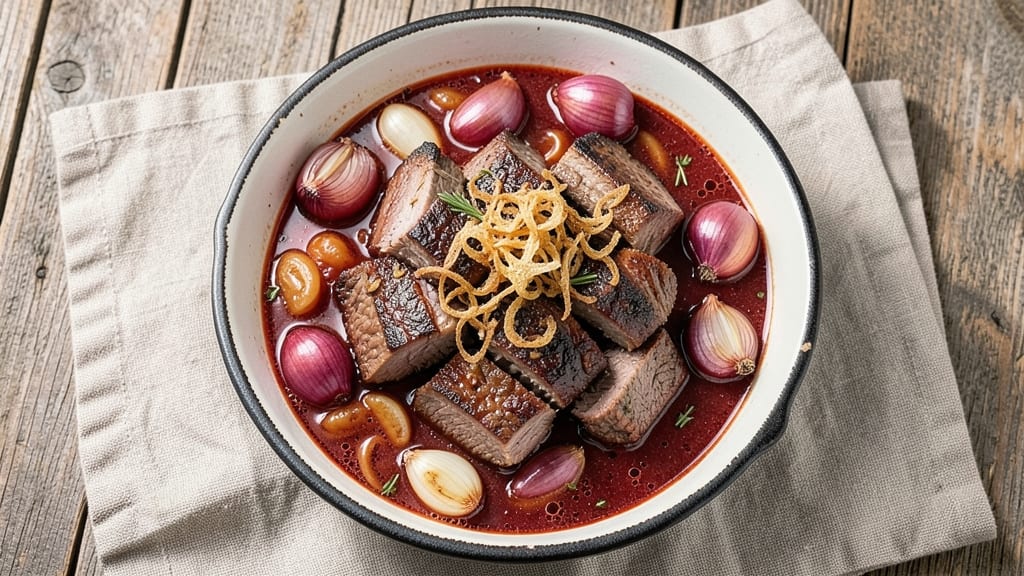
This beef and onion stew recipe transforms tough cuts into melt-in-your-mouth tenderness with caramelized layers that make every bite irresistible. The secret lies in slow simmering, where deep flavors develop and onions turn sweetly golden—creating a rich, velvety sauce that clings to every forkful.
I've perfected this technique over years of testing, ensuring the beef stays fork-tender while absorbing all that aromatic goodness.
What sets this recipe apart is the balance of techniques: browning the beef properly creates a flavorful crust, while deglazing the pan captures every savory bit. Yellow onions caramelize slowly, adding natural sweetness that cuts through the beef's richness.
A splash of red wine (or broth) deepens the complexity, while herbs and spices work together to create layers of flavor that build as it simmers.
The result is a hearty stew with perfectly tender beef chunks swimming in a thick, aromatic broth that's rich yet balanced. The onions become tender and sweet, their caramelized edges adding texture contrast.
This is the kind of comforting meal that warms the soul on cold evenings, with flavors that improve as it sits—making it even better the next day.
Serve with crusty bread for soaking up every last drop or alongside roasted potatoes for a complete meal. The recipe scales beautifully, whether you're feeding a family or planning leftovers. Let's create this deeply satisfying stew that brings warmth to any table.
Ingredients for beef and onion stew
Six core ingredients create this deeply satisfying beef and onion stew with rich caramelized layers.
| Ingredient | Amount | Notes |
|---|---|---|
| Chuck Roast 🥩 | 2 ½ lb | Pre-cut into 1.5-inch cubes |
| Yellow Onions 🧅 | 3 whole | Peeled, halved lengthwise |
| Red Wine 🍷 | 1 cup | Bold dry variety like Cabernet |
| Beef Broth 💧 | 4 cups | Low-sodium preferred |
| Tomato Paste 🍅 | 2 tbsp | Smooth, not chunky |
| Garlic Cloves 🧄 | 4 cloves | Minced finely |
| Fresh Thyme 🌿 | 2 tbsp | Leaves only, chopped |
| Bay Leaves 🍃 | 2 whole | Dried, standard size |
| Black Peppercorns 🌶️ | 1 tsp | Freshly cracked |
| Olive Oil 🫒 | 2 tbsp | Extra-virgin preferred |
| Salt 🧂 | 1 ½ tsp | Kosher or sea salt |
| All-Purpose Flour 🌾 | 1 tbsp | For thickening |
| Fresh Parsley 🌿 | ¼ cup | Chopped, for garnish |
The chuck roast is non-negotiable—its marbling ensures melt-in-your-mouth texture. Costco or butcher sections carry the best cuts, often pre-cubed for convenience. Look for pieces with visible fat marbling, which renders during cooking for extra richness. Yellow onions should be sweet varieties like Vidalia or Maui—Walmart or Kroger usually stock them year-round. Fresh thyme is ideal, but dried works at one-third the amount if you're in a pinch. The red wine adds depth, so grab whatever bold dry red you have open—Cabernet, Merlot, or even a generic house red from Trader Joe's will work.
No red wine? Substitute beef broth and a splash of balsamic vinegar for similar depth. Fresh thyme unavailable? Dried thyme or Italian seasoning bridges the flavor gap. For extra richness, add a splash of soy sauce or Worcestershire (ensure it's vegetarian). The tomato paste can be omitted entirely if you prefer a more classic beef and onion stew—just reduce the broth slightly. If your onions start browning too quickly, add a splash of water or broth to the pan. The flour is just for thickening at the end—don't skip it entirely, but if you're watching carbs, reduce to 1 teaspoon and stir vigorously.
This stew tastes even better the next day as flavors meld. Store in an airtight container in the fridge for up to 5 days. For longer storage, freeze portions for 3 months. I always make a double batch—leftovers reheat beautifully and make quick lunches. The caramelized onions keep well in the fridge for 5 days too, so you can prep them ahead. For serving, warm the stew gently on the stove over medium-low heat, stirring occasionally. The crusty bread you'll serve with it? Toast it right before serving so it stays fresh.
Why You'll Love This Recipe
- One-Pot Magic: I swear by this recipe when I’m too tired to scrub pots—just dump everything in one Dutch oven and let it simmer. The onions caramelize right in the broth, so no extra pans or prep mess.
- Wine-Infused Richness: That splash of red wine? It’s the secret weapon—deepens the flavor without tasting like cooking wine. The tomato paste gives it a subtle sweetness that makes every bite feel indulgent.
- Leftovers for Days: This stew only gets better after sitting overnight. I make a double batch on Sundays, freeze half, and pull it out for lazy nights when I don’t want to cook.
- Budget-Friendly Feast: Chuck roast is cheap, and this recipe stretches it into hearty portions. My kids beg for seconds, and I’m left with enough for lunch the next day—no takeout needed.
Step-by-step instructions for beef and onion stew
Master this rich, layered stew with tender beef and caramelized onions through precise technique.
🍳 Step 1: Sear the Chuck Roast for Deep Flavor
Heat the 2 tablespoons olive oil in a large Dutch oven over medium-high heat until shimmering. Pat the 2.5 lb chuck roast dry with paper towels—this ensures a good sear. Working in batches if needed, add the beef cubes and sear for 3-4 minutes per side until deeply browned and developing a crust.
Don't crowd the pan or the temperature will drop. You're building flavor through the Maillard reaction, so let each piece get golden before moving. Once all beef is browned, transfer it to a plate and set aside. The residual fat in the pot will become the foundation of your stew.
🍳 Step 2: Caramelize the Onions for Sweet Depth
In the same Dutch oven, add the 3 whole yellow onions, halved lengthwise. Cook over medium heat for 15-20 minutes, stirring occasionally, until the onions soften and develop a deep golden brown color. This slow caramelization creates natural sweetness that balances the rich beef.
Resist the urge to rush this step. You'll know they're ready when they're tender enough to pierce with a fork and have developed that beautiful caramelized color. If they start to stick, add 1 tablespoon water and scrape up the browned bits—they're packed with flavor.
🍳 Step 3: Build the Flavor Base with Aromatics
Add the 2 tablespoons tomato paste and cook for 1 minute, stirring constantly to prevent burning. Then add the 4 cloves minced garlic, 2 tablespoons chopped fresh thyme, 2 whole bay leaves, and 1 teaspoon freshly cracked black peppercorns. Stir for 30 seconds until fragrant.
This aromatic trio forms the flavor backbone of your stew. The tomato paste adds depth, while the garlic and thyme brighten the rich beef. The bay leaves and peppercorns contribute subtle earthy notes that will develop as the stew simmers. Keep the heat at medium to prevent burning these delicate ingredients.
🥘 Step 4: Deglaze and Simmer the Stew
Pour in the 1 cup red wine, scraping up all the browned bits from the bottom of the pot. Let it simmer for 2-3 minutes until reduced by half. Then add the 4 cups beef broth and 1.5 teaspoons salt. Stir to combine, then return the beef to the pot.
Bring to a gentle boil, then reduce heat to low and cover partially. Simmer for 2-2.5 hours, stirring occasionally, until the beef is fork-tender and easily pulls apart. The stew should reduce slightly, creating a thick, velvety sauce that coats the beef and onions.
🥘 Step 5: Thicken and Finish with Fresh Herbs
Remove the 2 whole bay leaves and discard. In a small bowl, whisk together the 1 tablespoon all-purpose flour with 2 tablespoons water to create a slurry. Slowly stir this into the stew and simmer uncovered for 5-7 minutes until the sauce thickens slightly.
Finally, stir in the 0.25 cup chopped fresh parsley and adjust seasoning if needed. The parsley adds a bright finish that cuts through the richness. Let the stew sit off heat for 5 minutes before serving to allow flavors to meld completely. Serve hot with crusty bread to soak up every delicious bite.
Pro Tips For Making Beef And Onion Stew
- SEAR THE ONIONS FIRST: I learned this the hard way—adding onions raw to the pot makes the stew taste raw too. Sauté them until deep golden (about 10 minutes) before adding anything else. The flavor develops way more, and they won’t turn to mush later.
- USE COLD BROTH: Pouring cold beef broth into the hot pot prevents a sudden temperature spike that can turn your stew rubbery. Start with room-temp broth, then add ice cubes if you’re really worried—it’ll melt fast but keeps the meat tender.
- DEGLAZE WITH WINE IMMEDIATELY: That browned crust on the bottom? Don’t scrape it out—it’s packed with flavor. Splash in the red wine right after searing and let it bubble for 2 minutes before adding anything else. Skimp here, and you’re wasting the best part.
- SKIP THE PRE-COOKED PASTE: Mixing tomato paste directly into the broth at the start makes it clump like glue. Instead, dissolve it in a splash of cold water or broth first, then stir it in. Your stew will be smoother, and the color will be richer—no weird texture surprises.
Regional styles of this beef and onion stew
French Classic Style
In France, this stew is often called bœuf bourguignon when wine is the star, but the onion-focused version is equally beloved. The French technique involves adding mushrooms (about 8 oz cremini) with the onions and using dijon mustard (1 tbsp) to brighten the sauce.
A splash of cognac (2 tbsp) flamed off in the pot adds depth. I've made this version with a red Bordeaux instead of Cabernet—it's richer and pairs beautifully with crusty baguette. 🍷
Irish Hearty Version
Irish stews often feature potatoes (about 1 lb Yukon gold, peeled and chopped) added with the beef. The Irish also use stout beer (1 cup Guinness) instead of wine for a malty depth.
A pinch of nutmeg (¼ tsp) and rosemary (1 sprig) replace thyme, giving it a cozy, earthy profile. Serve with soda bread for that authentic Irish touch. This version is perfect for cold evenings and tastes even better reheated. 🥔
German-Inspired Sauerbraten
While not exactly the same, German sauerbraten shares the slow-cooked beef concept but uses a vinegar-marinated approach. For a fusion twist, marinate the beef overnight in ½ cup apple cider vinegar, 2 tbsp brown sugar, and 1 tbsp caraway seeds before cooking.
Add sauerkraut (2 cups) with the onions for tangy contrast. The Germans also love serving it with spätzle or dumplings to soak up the sauce. 🥬
Caribbean Twist with Rum
In the Caribbean, stews get a tropical makeover. Swap the red wine for dark rum (½ cup) and add scotch bonnet peppers (1-2, seeded) for heat. Include plantains (1 ripe, sliced) and bell peppers (1) with the onions.
The rum caramelizes beautifully, creating a sweet-spicy sauce that pairs perfectly with coconut rice. This version is a crowd-pleaser at summer BBQs. 🌶️
Italian-Inspired Spezzatino
Italy's spezzatino takes this stew to another level with san marzano tomatoes (1 can, crushed) and pancetta (4 oz) instead of wine. The pancetta adds smoky depth, while oregano (1 tsp) replaces thyme.
Serve with polenta or crusty ciabatta to soak up the rich tomato-infused sauce. The Italians also love adding sun-dried tomatoes (¼ cup) at the end for extra umami. 🍅
American Comfort Version
In the US, this stew often becomes a beef and barley stew by adding ½ cup pearl barley with the beef. The barley thickens the stew naturally, and Worcestershire sauce (1 tbsp) adds a savory depth.
Top with sharp cheddar cheese (¼ cup, shredded) before serving for a gooey finish. This version is a staple at American potlucks and tastes amazing with cornbread. 🧀
Nutrition facts
Frequently asked questions
Can I use a different cut of beef for this stew?
While chuck roast is ideal for its marbling, you can substitute with stew meat (like round or brisket) or even chuck shoulder. For tougher cuts, increase simmering time by 30-45 minutes to ensure tenderness. Avoid lean cuts like sirloin—they'll dry out.
How do I prevent the stew from becoming too watery?
Use a thickening slurry (flour + water) at the end, as shown, or reduce the broth by ½ cup if your recipe yields more liquid. For extra richness, simmer uncovered for 10-15 minutes after adding the slurry. If it's still too thin, repeat with another ½ teaspoon flour mixed with 1 tablespoon water.
Can I make this stew in a slow cooker?
Yes! Brown the beef and caramelize the onions in a skillet first, then transfer everything to the slow cooker. Add the remaining ingredients and cook on low for 7-8 hours or high for 4-5 hours. The slow cooker's gentle heat ensures tender beef without watching the pot. Just add the flour slurry at the end to thicken.
What's the best way to reheat leftovers?
Reheat gently on the stove over medium-low heat, stirring occasionally, until warmed through (5-7 minutes). Avoid microwaving—it can make the sauce watery. For best results, reheat only what you'll serve immediately. Leftovers taste even better the next day as flavors meld!
Can I make this stew vegetarian?
Swap the beef for mushrooms (1 lb cremini) or lentils (1.5 cups cooked) and use vegetable broth. Add 1 tablespoon soy sauce or miso paste for umami depth. The caramelized onions and wine base still shine!