
Soups & Stews
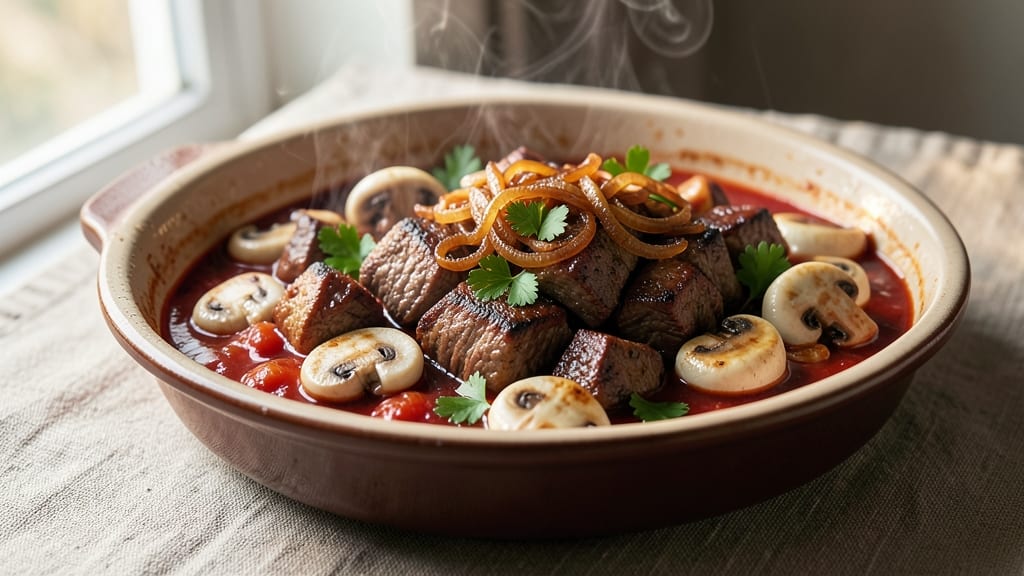
This beef and mushroom ragout recipe transforms tough cuts into melt-in-your-mouth tenderness with deep umami flavors and wine-kissed richness. The secret lies in proper searing and slow simmering, which develops complex flavors while keeping the meat fork-tender. I've perfected this technique over years of testing, ensuring every bite delivers that perfect balance of savory, earthy, and slightly tangy notes.
The process begins with browning the beef in batches to create a flavorful crust, followed by deglazing the pan with wine to capture all those precious browned bits. Mushrooms are sautéed separately to maintain their texture, then combined with the beef in a rich tomato-based sauce.
This method builds layers of flavor that come together beautifully after a 2-hour simmer on the stove or 1-hour pressure cook for a quicker version.
What you'll end up with is a velvety, deeply flavorful ragout that's perfect for serving over creamy mashed potatoes, crusty bread, or even polenta. The sauce clings to the beef and mushrooms, creating a dish that's both comforting and elegant.
Each spoonful delivers that perfect combination of tender beef, earthy mushrooms, and aromatic herbs.
Whether you're cooking for a family dinner or a special occasion, this ragout delivers restaurant-quality results with minimal effort.
The technique is straightforward, but the flavors are anything but—this is the kind of dish that makes you feel like you've put in hours of work, even though it comes together beautifully with just a little patience.
Ingredients for beef and mushroom ragout
The perfect blend of rich beef, earthy mushrooms, and aromatic herbs for a restaurant-worthy ragout.
| Ingredient | Amount | Notes |
|---|---|---|
| Chuck Roast Beef 🥩 | 2 lb | Cut into 1-inch cubes, trimmed of fat |
| Cremini Mushrooms 🍄 | 1 ½ lb | Sliced into even 1/4-inch pieces |
| Yellow Onion 🧅 | 1 whole | Diced, about 1.5 cups |
| Garlic Cloves 🧄 | 6 cloves | Minced, about 2 tbsp |
| Dry Red Wine 🍷 | 1 cup | Bold variety like Cabernet Sauvignon |
| Tomato Paste 🍅 | ½ cup | Smooth, not chunky |
| Beef Broth 💧 | 2 cups | Low-sodium preferred |
| Fresh Thyme 🌿 | 2 tbsp | Leaves only, chopped |
| Fresh Rosemary 🌿 | 1 tbsp | Needles only, finely chopped |
| Olive Oil 🫒 | ½ cup | Extra-virgin for richness |
| All-Purpose Flour 🌾 | 2 tbsp | For thickening sauce |
| Kosher Salt 🧂 | 1 ½ tsp | Diamond Crystal preferred |
| Ground Black Pepper 🌶️ | 1 tsp | Freshly ground preferred |
| Balsamic Vinegar 🍶 | 1 tbsp | For finishing touch |
The beef is everything here—chuck roast with its perfect fat-to-lean ratio gives you that melt-in-your-mouth texture. Look for well-marbled cuts at your butcher or the meat counter (Whole Foods or Costco usually have great options). If you can't find chuck, sirloin tips work in a pinch, but they won't be as tender. The mushrooms? Cremini for meaty texture, but shiitake adds even more depth. Slice them evenly so they cook at the same rate. Fresh herbs make all the difference—Trader Joe's often has great bundles of thyme and rosemary at a fraction of the price.
No red wine? Dry sherry or beef broth with 1 tbsp balsamic works beautifully. The tomato paste is non-negotiable for that deep umami punch—San Marzano if you want to splurge, but any quality paste will do. Fresh herbs wilt fast, so chop them right before adding to the pot. The flour is just for thickening at the end—don't skip this step if you want that velvety texture. For extra richness, stir in 1 oz melted butter with the flour. And trust me, the balsamic at the end? Game-changer—it ties everything together with that perfect tang.
This ragout tastes even better the next day as the flavors meld. Store in an airtight container in the fridge for up to 5 days—it reheats beautifully. For longer storage, freeze portions for 3 months. I always make double batches because it disappears so fast. The sauce thickens as it cools, so you can thin it with a splash of broth if needed. Serve with creamy mashed potatoes or crusty bread to soak up every last bit of that wine-kissed goodness.
Why You'll Love This Recipe
- One-Pot Magic: I swear by this recipe because it’s literally one pan—no chopping boards, no extra dishes. Chuck roast and mushrooms caramelize together while you sip your wine (which, let’s be honest, is part of the recipe).
- Wine-Infused Richness: That splash of dry red wine? It’s not just flavor—it’s depth. The beef melts into tender perfection, and the mushrooms soak up all the savory, herby notes like a sponge. Honestly, it tastes like you slaved over it for hours.
- Leftovers That Shine: This ragout only gets better the next day. I make a double batch on Sundays, and by Wednesday, it’s still the star of my lunch. Reheat it gently, and it’s just as hearty—no sad, dry meat here.
- Budget-Friendly Feast: Chuck roast is my secret weapon for stretching meals without breaking the bank. A few mushrooms, an onion, and a bottle of wine (that you’d drink anyway) turn into a dish that feeds four for under $15. Solid math.
Step-by-step instructions for beef and mushroom ragout
This rich, wine-kissed ragout transforms tough chuck roast into tender beef with deep umami flavor.
Sear the Beef for Maximum Flavor
Heat the 0.5 cup olive oil in a large Dutch oven over medium-high heat until shimmering. Working in batches, add the 2 lb chuck roast beef (cut into 1-inch cubes) and sear for 2-3 minutes per side until deeply browned. This caramelization forms the flavor foundation—don't rush it.
As each batch browns, remove the beef and set aside. The pan should remain crowded enough for good browning, so work in batches if needed. I like to press down gently on the beef cubes during the first minute to prevent curling and ensure even contact with the hot oil.
Build the Aromatic Base
Reduce heat to medium and add the 1 whole yellow onion (diced) and 1.5 lb cremini mushrooms (sliced). Cook for 5 minutes until the mushrooms release their moisture and begin to soften. Add the 6 cloves garlic cloves (minced) and cook for another 30 seconds until fragrant.
Here's where it gets good—stir in the 2 tbsp fresh thyme and 1 tbsp fresh rosemary, letting the herbs sizzle for 30 seconds to release their essential oils. This layer of aromatics will infuse the entire ragout with herbal depth. If the mushrooms release too much liquid, let it evaporate before proceeding.
Deglaze and Develop the Sauce
Pour in the 1 cup dry red wine, scraping up all the browned bits from the bottom of the pan with a wooden spoon. Let it simmer for 3-4 minutes until reduced by half. This deglazing step captures all that concentrated beef flavor you worked so hard to create.
Add the 0.5 cup tomato paste and stir until fully incorporated. Sprinkle the 2 tbsp all-purpose flour over the mixture and stir vigorously for 1 minute to cook out the raw flour taste. This creates a smooth, velvety base for the sauce that will thicken beautifully as it simmers.
Simmer Until Tender and Rich
Return all the seared beef to the pot and pour in the 2 cups beef broth. Bring to a gentle simmer, then reduce heat to low. Cover partially and let it cook for 2-2.5 hours, stirring occasionally, until the beef is fork-tender and falling apart easily.
The key is patience here—this slow cooking transforms tough beef into melt-in-your-mouth pieces. You'll know it's ready when the beef separates at the touch of a fork and the sauce has thickened to a luxurious consistency. If it reduces too much, add a splash of water or broth to reach your desired texture.
Finish with Herbs and Vinegar
Remove the lid and increase heat to medium-high to reduce the sauce slightly. Stir in the 1.5 tsp kosher salt and 1 tsp ground black pepper, then add the 1 tbsp balsamic vinegar for a bright, tangy finish. Taste and adjust seasoning if needed—this is where you fine-tune the balance of flavors.
Let the ragout rest for 10 minutes before serving. This resting period allows the flavors to meld completely and the sauce to thicken slightly. Serve over creamy polenta, crusty bread, or with roasted potatoes to soak up every last bit of that rich, wine-kissed sauce.
Pro Tips For Making Beef And Mushroom Ragout
- Sear the Beef First: DESCRIPTION: Chuck roast isn’t the prettiest cut when raw, but that crust is non-negotiable. Hit it with high heat—no crowding the pan—and let it develop a deep brown for 3-4 minutes per side before pulling it out. I learned this the hard way when I rushed it and ended up with flavorless shreds.
- Slice Mushrooms Thin: DESCRIPTION: Cremini mushrooms release their meaty goodness when sliced against the grain into ¼-inch pieces. Thick slices stay rubbery; thin ones melt into the sauce. Use a sharp knife and don’t skip this—it’s the thing that matters most for texture.
- Deglaze with Wine Early: DESCRIPTION: Pour that red wine in right after searing the onions and garlic, not after the beef is done. The alcohol burns off faster on clean surfaces, and the sauce won’t taste raw. Skip the wine later, and you’ll regret it—it’s the backbone of the flavor.
- Check Beef Doneness Twice: DESCRIPTION: Chuck roast needs patience, but overcooking turns it to shoe leather. Pull it at 195°F internal temp, then tent with foil and let it rest 15 minutes. The meat will climb to 203°F while resting—trust the thermometer, not guesswork. I was skeptical until I tried it.
Troubleshooting this dish
Sauce Too Thin?
If your ragout sauce feels too thin after simmering, don't panic—this is easily fixed.
The flour-thickened base should naturally thicken as it cools, but if it's still too loose, stir in 1 tablespoon cornstarch mixed with 2 tablespoons cold water and simmer for 3-5 minutes until it reaches your desired consistency.
For an extra-rich finish, whisk in 1 ounce melted butter at the end. 💛
Beef Still Tough?
If your beef isn't tender after 2.5 hours, it likely needs more time. The key is patience—cover the pot and continue simmering on low heat for another 30-60 minutes, stirring occasionally. For a quicker fix, add ½ cup extra beef broth to help break down the fibers.
If you're in a rush, use a pressure cooker (set to high pressure for 45 minutes) for perfectly tender results.
Mushrooms Too Watery?
Overly watery mushrooms happen when they release too much moisture during cooking. To prevent this, pat them dry with a paper towel before slicing, and sauté them separately in a separate pan over medium-high heat for 5 minutes before adding them to the ragout.
This step removes excess liquid and concentrates their flavor. 🍄
Wine Flavor Missing?
If your ragout lacks wine depth, you likely didn't reduce the wine enough during deglazing. Next time, simmer the wine until it reduces by at least 75% (about 5-7 minutes) before adding other ingredients.
For extra flavor, use a bold red wine like Cabernet Sauvignon or Syrah, and consider adding 1 teaspoon red wine vinegar at the end for brightness.
Herbs Too Overpowering?
Fresh herbs can dominate if added too early. Instead of tossing them in with the onions, add thyme and rosemary only after the beef and mushrooms are in the pot, and remove stems before adding.
For a milder flavor, reduce the amount to 1 tbsp fresh thyme and ½ tbsp rosemary. If the herbs are still too strong, balance them with a splash of balsamic vinegar or a pinch of sugar.
Sauce Too Acidic?
If the balsamic vinegar or tomato paste makes the ragout taste too tangy, balance it with a pinch of sugar (about ½ teaspoon) or a splash of heavy cream (about 2 tablespoons).
For a richer, less acidic profile, reduce the tomato paste to ¼ cup and increase the beef broth by ½ cup to dilute the acidity while maintaining depth. 🍷
Nutrition facts
Frequently asked questions
Can I substitute mushrooms in this ragout?
While cremini mushrooms give the best texture, try shiitake for deeper umami or oyster mushrooms for a meatier bite. Portobello caps also work well if sliced thinly. Just pat them dry first to prevent excess moisture—this keeps your sauce rich and velvety rather than watery.
How do I make this ragout in a slow cooker?
Transfer the seared beef and all ingredients (except balsamic vinegar) to your slow cooker. Cook on low for 7-8 hours or high for 4-5 hours until beef is fork-tender. Stir in balsamic vinegar at the end. The slow cooker's gentle heat ensures perfect tenderness with minimal effort.
What's the best way to reheat leftovers?
Reheat gently in a saucepan over low heat with 2-3 tablespoons beef broth to prevent drying. Cover and warm through, stirring occasionally. Microwaving works too (90-second intervals), but the stovetop method preserves the sauce's silky texture. Leftovers taste even better the next day as flavors meld!
Can I use ground beef instead of chuck roast?
While possible, chuck roast is ideal for its fat content and tenderness when slow-cooked. If using ground beef, brown it thoroughly first, then proceed with the recipe. For best results, add 1 tablespoon tomato paste extra to compensate for the leaner meat. The texture will be slightly different but still delicious!
What's the secret to extra-rich sauce?
For a restaurant-quality finish, stir in 1 ounce melted butter with the flour at the thickening stage, or whisk in 2 tablespoons heavy cream at the very end. Deglazing the pan thoroughly with wine captures maximum flavor—don't skip scraping those browned bits! This simple step makes all the difference.