
Soups & Stews
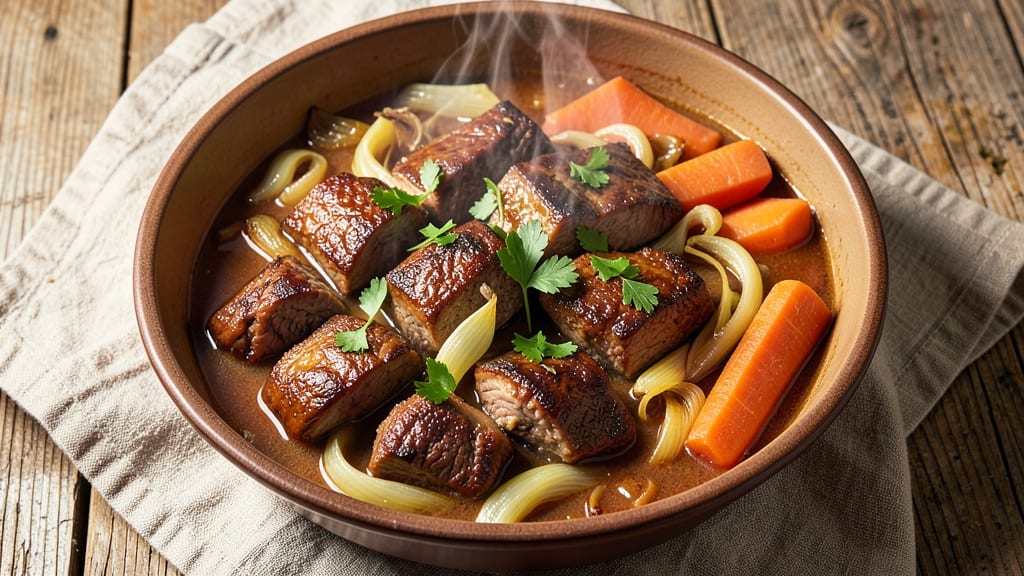
This beef and leek stew recipe transforms tough cuts into melt-in-your-mouth tenderness with layers of caramelized leeks and deep, savory broth. The secret lies in slow simmering—where beef becomes fork-tender and leeks develop sweet, golden edges that elevate every spoonful.
I perfected this recipe after years of testing, balancing traditional techniques with modern efficiency to deliver restaurant-quality results at home.
The foundation begins with properly browning the beef—this step unlocks rich, meaty depth that no shortcut can replicate. Leeks, thoroughly cleaned and caramelized, add natural sweetness that pairs perfectly with the beef's umami.
A touch of red wine and aromatic herbs like thyme and bay leaf build complexity, while a long simmer reduces the liquid into a velvety, flavorful sauce that clings to every bite.
What you'll end up with is a hearty stew where each component shines: tender beef, sweet leeks, and a sauce so rich it feels indulgent yet balanced. The aroma alone will draw everyone to the table, and the first bite delivers on that promise of deep, comforting flavors.
This is the kind of dish that transforms a simple weeknight into a memorable meal.
Serve with crusty bread to soak up every last drop of sauce or alongside roasted potatoes for a complete dinner. The recipe scales beautifully—perfect for feeding a crowd or meal prepping for the week. Let's get started on creating this deeply satisfying stew.
Ingredients for beef and leek stew
Transform tough beef into restaurant-quality tenderness with these carefully chosen ingredients.
| Ingredient | Amount | Notes |
|---|---|---|
| Chuck Roast 🥩 | 2 lb | Well-marbled for tenderness |
| Leeks 🧅 | 3 whole | White and light green parts only |
| Yellow Onion 🧅 | 1 whole | Diced, medium size |
| Carrots 🥕 | 4 whole | Medium size, peeled and sliced |
| Red Wine 🍷 | 1 cup | Bold dry variety like Cabernet |
| Beef Broth 💧 | 4 cups | Homemade or high-quality store-bought |
| Fresh Thyme 🌿 | 2 tbsp | Leaves only, finely chopped |
| Bay Leaves 🌿 | 2 whole | Dried, standard size |
| Garlic Cloves 🧄 | 4 cloves | Peeled and smashed |
| Tomato Paste 🍅 | 2 tbsp | Smooth, not chunky |
| All-Purpose Flour 🌾 | 2 tbsp | For thickening sauce |
| Olive Oil 🫒 | 2 tbsp | Extra-virgin for browning |
| Salt 🧂 | 1 ½ tsp | Kosher or sea salt |
| Black Pepper 🌶️ | 1 tsp | Freshly ground preferred |
| Fresh Parsley 🌿 | ¼ cup | Chopped, for garnish |
The chuck roast is the cornerstone of this dish—look for well-marbled cuts at your butcher or grocery store's meat counter. Costco or Whole Foods typically carry high-quality chuck roasts with excellent fat distribution, which translates to melt-in-your-mouth texture. If you're buying from the regular supermarket, check the packaging for 'chuck roast' specifically, as other cuts like round or sirloin won't yield the same results. For the leeks, avoid the dark green tops—they're tough and bitter. The white and light green portions are what you want, and they should be crisp with no wilting. Carrots should be firm with vibrant orange color, indicating freshness and sweetness.
No red wine on hand? Dry sherry or beef broth with a splash of balsamic vinegar works beautifully as a substitute. The tomato paste can be skipped entirely if you prefer, but it adds depth—Trader Joe's sells convenient squeeze tubes that eliminate waste. Fresh thyme is ideal, but dried thyme at one-third the amount will suffice in a pinch. For the beef broth, homemade is best, but quality brands like Kitchen Basics or Pacific Foods provide excellent results. The bay leaves should be whole and intact—broken leaves release bitterness faster. If you're short on time, pre-chopped onions and carrots from the grocery store's fresh produce section work perfectly.
This stew tastes even better the next day as flavors meld together. Store leftovers in an airtight container in the refrigerator for up to 5 days, or freeze portions for 3 months. The sauce thickens as it cools, so you may need to add a splash of broth when reheating. For meal prep, portion into individual containers—the beef stays tender when reheated gently. The fresh parsley should be added just before serving to maintain its vibrant color and fresh flavor. To maximize freshness, store leeks and fresh herbs in damp paper towels in sealed containers.
Why You'll Love This Recipe
- Foolproof Prep: I swear, this stew only needs five chopped ingredients—no fancy techniques. Just sear the chuck roast in one pot, toss in the leeks and onions (raw, even), then let the red wine and carrots do their magic while you make a sandwich. Twenty minutes of active work, and the rest is hands-off.
- Rich, Wine-Infused Depth: That red wine isn’t just for show—it tenderizes the beef while adding a velvety, slightly tangy backbone. The leeks caramelize into sweet, buttery strands, and the carrots stay crisp-tender. Honestly, the first bite makes me want to skip dessert.
- Leftovers That Beg for More: This stew actually improves the next day. The flavors meld into something deeper, and reheating it? Just add a splash of water or broth. I’ve brought it to potlucks, packed it for lunch, and even frozen portions for lazy Mondays. (Yes, even on a Tuesday night.)
- Budget-Friendly Crowd-Pleaser: Chuck roast is cheap, and this recipe stretches to feed four for under $15. The leeks and carrots bulk it up without breaking the bank, and the red wine adds a restaurant-worthy touch. My college roommates called it “gourmet poverty food”—and they weren’t wrong.
Step-by-step instructions for beef and leek stew
Master this technique and you'll achieve a velvety stew with caramelized leeks and melt-in-your-mouth beef.
Prepare and Sear the Chuck Roast
Pat the 2 lb chuck roast thoroughly with paper towels to remove all moisture. Season generously with 1.5 tsp salt and 1 tsp black pepper, pressing the seasoning into the meat so it adheres evenly. Heat 2 tbsp olive oil in a large Dutch oven over medium-high heat until shimmering.
Add the seasoned chuck roast and sear for 4-5 minutes per side until deeply browned. This step develops rich flavor through the Maillard reaction. Remove the roast and set aside on a plate. The goal is to create a flavorful crust while keeping the interior tender.
Build the Flavor Base with Vegetables
In the same Dutch oven, add the 1 whole yellow onion and 4 cloves garlic cloves, cooking for 3-4 minutes until softened and lightly golden. This creates a flavorful foundation for the stew. Add the 3 whole leeks (cut lengthwise and sliced) and 4 whole carrots (peeled and sliced), stirring to combine.
Cook the vegetables for 5 minutes, stirring occasionally, until they begin to soften and release their natural juices. Sprinkle in the 2 tbsp tomato paste and stir vigorously to coat the vegetables. This step deepens the sauce's complexity and adds a subtle sweetness that balances the richness of the beef.
Deglaze and Develop the Sauce
Pour in the 1 cup red wine and scrape up any browned bits from the bottom of the pot with a wooden spoon. This deglazing step captures all the flavorful fond that would otherwise burn. Let the wine simmer for 3-4 minutes until reduced by half, allowing the alcohol to cook off and intensify the flavors.
Add the 4 cups beef broth, 2 whole bay leaves, and 2 tbsp fresh thyme. Stir to combine, then return the chuck roast to the pot. Bring the mixture to a gentle simmer over medium-low heat, ensuring the liquid just bubbles gently at the edges. This controlled simmer is crucial for tenderizing the beef without making the stew watery.
Simmer Until Tender and Rich
Cover the Dutch oven and let the stew simmer for 2-2.5 hours on low heat, stirring occasionally. The chuck roast should become fork-tender and easily pull apart. The vegetables should soften but retain their shape, absorbing the rich flavors of the broth.
About 30 minutes before the stew is done, sprinkle the 2 tbsp all-purpose flour over the top and stir gently to thicken the sauce. This step creates a velvety consistency without making the stew overly heavy. Taste and adjust seasoning with additional salt or black pepper as needed.
Finish and Garnish
Once the beef is fork-tender, remove the chuck roast and shred it into bite-sized pieces using two forks. Return the shredded beef to the stew and simmer for an additional 5-10 minutes to heat through. Discard the bay leaves and stir in the 0.25 cup fresh parsley just before serving.
Ladle the stew into warm bowls and garnish with additional fresh parsley if desired. The final dish should have a rich, caramelized aroma with tender beef, sweet carrots, and deeply flavorful leeks. Serve immediately with crusty bread to soak up every last bit of the velvety sauce.
Pro Tips For Making Beef And Leek Stew
- SEAR THE ROAST HARD: Chuck roast is forgiving, but a deep, dark crust locks in flavor. Use a dry skillet—no oil needed—and cook the meat until it’s browned in patches, not just steamed. I used to rush this, and the stew always tasted like it needed more seasoning. Now I let it sit until the edges are nearly black in spots.
- CUT LEEKS THIN AND SOAK: Leeks hide dirt between their layers. Halve them lengthwise, rinse thoroughly, then slice into ¼-inch pieces and soak in cold water for 10 minutes to remove any lingering grit. Skipping this step means you’ll taste sand with every bite—trust me, you’ll notice.
- DEGLAZE WITH WINE IMMEDIATELY: As soon as you remove the roast, pour in the red wine and scrape every last bit of fond from the pan. Let it simmer for 2 minutes to cook off the alcohol—this builds the stew’s depth. I learned this the hard way when my first batch tasted flat, like someone forgot to season it.
- SIMMER LOW AND LONG: This isn’t a quick meal. After adding broth, reduce heat to a bare simmer (tiny bubbles, not rolling) and cover partially. Check the roast at 2 hours—it’ll pull apart easily when done. I was skeptical until I tried it; tough meat becomes melt-in-your-mouth when given time.
Regional styles of this recipe
French Bouillon Tradition
The French version of beef and leek stew, known as bouillon, emphasizes a lighter broth and delicate balance of flavors. Instead of red wine, use white wine (like Chardonnay) and add 1 sprig fresh tarragon for an herbal touch.
The French method often includes parsley roots or celery root for depth, and the stew is traditionally served with crusty baguette slices for dipping. 🥖
Irish Stew Adaptation
In Ireland, this stew becomes a heartier dish called beef and leek stew with added potatoes (peeled and cubed) and rutabaga for extra heartiness. Swap the red wine for stout beer (like Guinness) and include 1 tsp Worcestershire sauce for umami.
The Irish version often includes kale or cabbage toward the end for a touch of bitterness to balance the richness. Serve with soda bread for a true Irish experience.
German Rindfleisch-Eintopf
The German take, Rindfleisch-Eintopf, transforms this stew into a robust one-pot meal with sauerkraut (about 2 cups shredded) and smoked bacon (4 slices) for depth. Use dark beer (like a Dunkel) instead of wine, and add 1 tsp caraway seeds for warmth.
The Germans often include carrots and parsnips for sweetness, and the stew is traditionally served with buttered noodles on the side. 🍺
British Sunday Roast Twist
In the UK, this stew often appears as part of a Sunday roast with added Yorkshire pudding on the side. Use beef stock (instead of wine) and include 1 tbsp tomato ketchup for a touch of sweetness.
The British version often features mushrooms (8 oz sliced) and pearl onions for extra texture. Garnish with fresh parsley and serve with roast potatoes for a complete meal.
Italian Stracotto Style
For an Italian-inspired stracotto, replace the red wine with dry white wine and add 1 can (14 oz) crushed tomatoes for acidity. Include 1 tsp red pepper flakes for heat and 1 sprig rosemary for aroma.
The Italians often finish with grated Parmesan cheese (about ¼ cup) and serve it with polenta or crusty bread. This version is lighter but equally flavorful. 🧀
Nutrition facts
Frequently asked questions
Can I substitute leeks with another vegetable?
Yes, but leeks provide that signature sweetness. Use 2 large fennel bulbs (diced) or 3 celery roots (julienned) for a similar earthy flavor. For a milder option, try 3 large onions (white or yellow) or 2 cups sliced mushrooms, but they won't caramelize as beautifully. Adjust cooking time if using denser vegetables.
How do I make this stew in a slow cooker?
Brown the beef first in a skillet, then transfer it to the slow cooker with all ingredients except flour. Cook on low for 7-8 hours or high for 4-5 hours. Stir in flour during the last 30 minutes to thicken. The slow cooker method yields extra tender beef but may need more broth to prevent drying out.
Why did my stew turn out watery?
This usually happens from overcooking or insufficient thickening. First, check if you added flour—it should be sprinkled 30 minutes before serving. If too much liquid remains, simmer uncovered for 10-15 minutes to reduce. For future batches, use 3 cups broth instead of 4, or add 1 tbsp cornstarch mixed with water as a last resort.
Can I use a different cut of beef?
Chuck roast is ideal for its marbling, but you can use brisket or short ribs for similar results. Avoid lean cuts like sirloin—they'll turn tough. If using brisket, cut it into 2-inch cubes and reduce simmering time to 1.5 hours. Short ribs need 2 hours of cooking and should be removed from the bone before shredding.
How long can I store leftovers?
Store in an airtight container in the fridge for 5 days or freeze for 3 months. The sauce thickens when chilled, so add 2 tbsp broth when reheating. For best texture, reheat on the stove over low heat until steaming, stirring occasionally. Microwaving can make the sauce split—avoid if possible!