
Soups & Stews
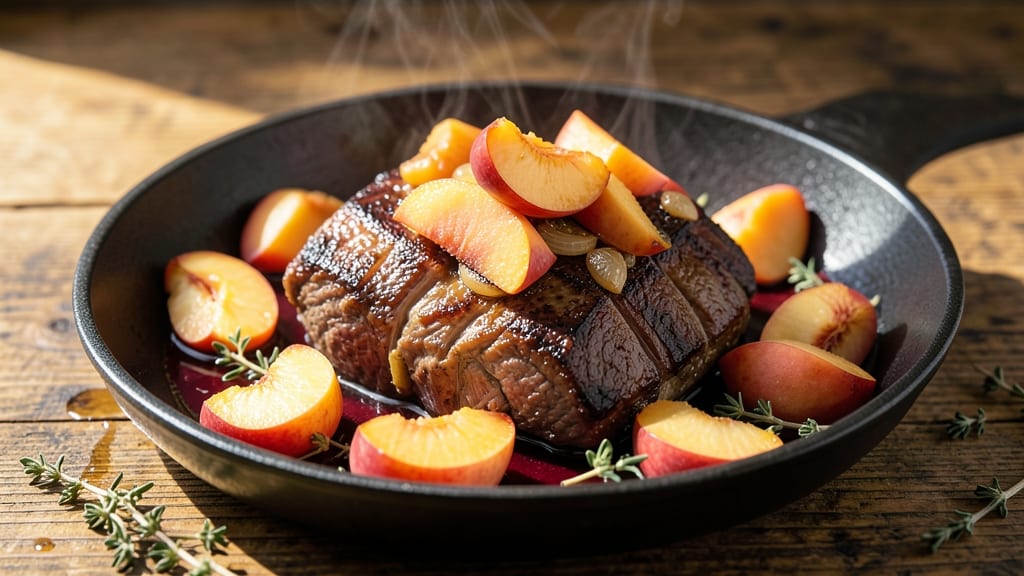
This beef and peaches recipe transforms summer's sweetest fruit into a rich, caramelized stew where tender beef melts into a sauce as complex as it is comforting. The secret lies in slow cooking—letting the natural sugars in peaches deepen into a glossy, savory-sweet glaze while the beef becomes fork-tender.
I first discovered this technique while experimenting with braised dishes, and it quickly became a go-to for dinner parties where I wanted to impress without fuss.
The beauty of this recipe is its balance: bold beef flavors meet juicy peaches in a harmony that feels both rustic and refined. You'll start with a sear to build depth, then simmer everything in a rich broth until the peaches break down into a velvety sauce.
The result is a dish that's hearty enough for a cold evening but light enough to feel summery—perfect for when you crave something special without the effort of a multi-course meal.
What makes this stew truly stand out is how the peaches caramelize into the sauce, creating pockets of sweetness that contrast beautifully with the savory beef. The sauce thickens just enough to coat every bite, while the peaches retain enough texture to add a pleasant bite.
This isn't just a stew; it's a restaurant-quality main course that feels like a hug in a bowl.
Pair it with crusty bread to soak up every last drop of that luscious sauce, or serve alongside roasted potatoes for a complete meal. The flavors are rich enough to stand alone but also versatile enough to complement other sides.
Whether you're cooking for a crowd or treating yourself to a weeknight indulgence, this recipe delivers unexpected depth with minimal effort.
Ingredients for beef and peaches
Bold beef meets summer peaches in this rich, caramelized stew that's restaurant-quality simple.
| Ingredient | Amount | Notes |
|---|---|---|
| Beef Chuck Roast 🥩 | 2 lb | Cut into 1.5-inch cubes |
| Yellow Onion 🧅 | 1 whole | Diced, about 1.5 cups |
| Garlic Cloves 🧄 | 4 cloves | Minced, for depth |
| Ripe Peaches 🍑 | 4 whole | Pitted, sliced into wedges |
| Beef Broth 💧 | 4 cups | Low-sodium preferred |
| Dry Red Wine 🍷 | 1 cup | Bold like Cabernet |
| Tomato Paste 🍅 | 2 tbsp | For richness |
| Olive Oil 🫒 | 2 tbsp | For searing |
| Fresh Thyme 🌿 | ½ cup | Leaves only, chopped |
| Fresh Rosemary 🌿 | 1 tbsp | Chopped, for aroma |
| Salt 🧂 | 1 ½ tsp | Kosher or sea salt |
| Black Pepper 🌶️ | 1 tsp | Freshly ground |
| Brown Sugar 🍚 | 1 tbsp | Enhances caramelization |
| All-Purpose Flour 🌾 | 1 tbsp | For thickening |
The beef is everything here—chuck roast for that melt-in-your-mouth texture, not tougher cuts. Grab the pre-cubed kind from Costco or your butcher counter to save time. Peaches? Ripe but firm is key—look for vibrant color, not mushy spots. If you can't find fresh, frozen peaches work too, just thaw and drain them. The wine adds depth, but any dry red will do—Cabernet, Merlot, whatever's open. For the broth, low-sodium prevents salt overload later.
No red wine? Beef broth with a splash of balsamic works in a pinch. Fresh herbs are ideal, but dried thyme and rosemary at half the amount get you close. The tomato paste can be skipped if you're short, but it adds that umami punch. For extra richness, stir in 1/2 cup of heavy cream at the end (optional). If your peaches are extra juicy, reduce the broth by 1/2 cup to balance the sauce. The brown sugar might seem odd, but it helps caramelize the peaches for that perfect sweet-savory balance.
This stew tastes even better the next day—make extra if you can. Keeps 4-5 days in the fridge, freezes for 3 months. I always make a double batch—one for dinner, one for lunches. The sauce thickens as it cools, so add a splash of broth if it's too stiff when reheating. Serve with crusty bread or over mashed potatoes to soak up every last drop.
Why You'll Love This Recipe
- One-Pot Magic: I swear by this recipe when I’m too tired to dirty three pans. Sear the beef, toss in onions and garlic, then let the peaches and broth do the work—minimal stirring, maximum flavor.
- Sweet-Savory Balance: That first bite of tender beef with juicy peaches melting into the sauce? It’s like summer in a bowl. The caramelized onions and garlic make the sweetness sing without being cloying.
- Weeknight to Dinner Party: Honestly, I make this for lazy nights, but it’s fancy enough for guests. Swap the beef broth for red wine if you’re feeling fancy, or keep it simple for a weeknight win.
- Budget-Friendly Leftovers: A chuck roast stretches forever, and peaches in season are cheap. I often make double batches—perfect for sandwiches or reheating with crusty bread the next day.
Step-by-step instructions for sweet-savory beef and peaches stew
Here's how to build a rich, caramelized stew that balances sweet peaches with deep beef flavors.
Sear the Beef for Maximum Flavor
Heat the 2 tablespoons olive oil in a large Dutch oven over medium-high heat until shimmering. Working in batches, add the 2 lb beef chuck roast cut into 1.5-inch cubes—don't crowd the pan. Let each piece sear undisturbed for 2-3 minutes until deeply browned on all sides. This step creates the Maillard reaction that forms the stew's rich foundation.
As the beef browns, it releases its natural juices and develops a caramelized crust. I press down gently on each piece during the first minute to prevent curling. If the pan gets too crowded, work in two batches to maintain even searing. Remove the beef and set aside—you'll add it back later.
Build the Sweet-Savory Base
In the same Dutch oven, add the diced yellow onion and cook for 5 minutes until softened and golden. Stir in the minced garlic cloves, 2 tablespoons tomato paste, 1 tablespoon brown sugar, 1.5 teaspoons salt, and 1 teaspoon black pepper, cooking for another 2 minutes until fragrant. The sugar will begin caramelizing here, adding depth to the stew.
Here's where it gets good—pour in the 1 cup dry red wine and scrape up all those browned bits from the bottom of the pan. These bits, called fond, are packed with flavor. Let the wine simmer for 3-4 minutes until reduced by half. You'll know it's ready when the alcohol smell has cooked off and you're left with a rich, jammy consistency.
Simmer the Beef and Broth
Return the seared beef to the Dutch oven. Add the 4 cups beef broth, 0.5 cup chopped fresh thyme, and 1 tablespoon chopped fresh rosemary. Bring to a gentle boil, then reduce heat to low and cover partially. Let it simmer for 1.5 hours, stirring occasionally, until the beef is fork-tender. You're aiming for beef that pulls apart easily but still holds its shape.
Real talk: This is where patience pays off. The beef needs time to break down and absorb all those sweet-savory flavors. If the liquid reduces too much before the beef is tender, add a splash of water or broth to maintain the right consistency. The stew should coat the back of a spoon but not be watery.
Add Peaches and Finish the Stew
About 20 minutes before the beef is fully tender, stir in the 4 sliced ripe peaches and 1 tablespoon all-purpose flour. The flour will help thicken the stew slightly as it cooks. Simmer uncovered for the final 20 minutes, allowing the peaches to soften and caramelize. You'll see the edges of the peach slices turn golden—this is your signal they're ready.
The flour will create a gentle thickening, but don't worry if it looks too thick. The peaches will release their juices as they cook, balancing the texture. Taste and adjust seasoning with more salt or pepper if needed. The peaches should be tender but still hold their shape slightly, adding a pleasant contrast to the beef.
Rest and Serve with Confidence
Once the beef is perfectly tender and the peaches have softened, turn off the heat and let the stew rest for 10 minutes. This resting period allows the flavors to meld completely and the juices to redistribute throughout the stew. It also gives you a chance to gather your serving dishes and prepare any sides.
Ladle the stew into bowls, making sure each serving gets a good portion of beef, peaches, and that rich, caramelized sauce. The contrast of tender beef with sweet, juicy peaches creates a perfect balance of sweet and savory. Serve with crusty bread to soak up every last drop of that delicious sauce—you'll want to savor every bite.
Pro Tips For Making Beef And Peaches
- SEAR THE CHUCK FIRST: I learned this the hard way—skipping the sear means flavorless beef. Hit the chuck roast with a hot cast-iron or heavy skillet until it’s deep brown on all sides (about 3-4 minutes per side). The crust locks in juices and carries the sweetness of the peaches later—no excuses for a pale slab of meat.
- PEEL THOSE PEACHES: Yes, even if they’re ripe. Peeling removes bitterness and keeps the texture clean when they break down in the sauce. Use a paring knife or the "blanch-and-roll" method: dip in boiling water for 30 seconds, then ice bath, peel slides off like magic. (Your future self will thank you.)
- LOW AND SLOW FOR TENDERNESS: Chuck needs patience—don’t rush. After searing, drop the heat to 275°F (135°C) and cook covered until the beef hits 195°F internal (about 3-4 hours). The fat renders slowly, basting the meat while the peaches caramelize naturally. Skipping this step? You’ll end up with chewy beef and mushy fruit.
- SAVE TIME WITH ONION GARLIC PASTE: Dice and pulse onions and garlic in a food processor until it looks like wet sand. Sauté this paste instead of whole chunks—it dissolves faster and builds flavor deeper. Works especially well if you’re also adding a splash of red wine or tomato paste later. (I skip chopping now, and the sauce still tastes like it simmered all day.)
Storing and reheating this recipe
Refrigerator Storage
Let your beef and peaches stew cool completely before transferring to airtight containers—I use glass Pyrex with snap-on lids for best results. Store at 40°F or below for up to 4 days, though I’ve found the flavors actually deepen overnight as the peaches and beef meld further.
The sauce will thicken slightly in the fridge, so add a splash of beef broth when reheating if it seems too stiff. 🥫
Freezer Storage
This stew freezes beautifully for up to 3 months if stored properly. Use quart-sized freezer bags (like Ziploc or Stasher bags)—they’re more space-efficient than containers and prevent freezer burn. Leave 1 inch of headspace for expansion, and squeeze out excess air before sealing.
For easy reheating, portion into individual servings before freezing. Thaw overnight in the fridge before reheating. ❄️
Stovetop Reheating
My preferred method is stovetop reheating—it preserves the stew’s texture and depth. Pour the stew into a heavy-bottomed pot (I love my All-Clad) and heat over medium-low heat for 10-15 minutes, stirring occasionally. Add ¼ cup beef broth if the sauce looks too thick.
Taste and adjust seasoning—stews often need a pinch of salt or black pepper after reheating. Keep the heat gentle to avoid curdling the peach juices. 🔥
Microwave Reheating
For quick meals, microwave individual portions in microwave-safe bowls covered with a damp paper towel. Heat on 50% power for 3-4 minutes, stir, then continue in 1-minute intervals until reaching 165°F.
The damp towel prevents splattering from the peach juices. If the stew seems dry, add 1-2 tablespoons of broth and stir well. This method works best for single servings. ⏱️
Reviving Texture
If reheated stew feels too thick, stir in 1-2 tablespoons of water or broth to loosen it up. For extra richness, add a pat of butter or a splash of red wine (just 1 tablespoon) while reheating.
The peaches might soften further, but the balance of sweet and savory remains perfect. I often reheat leftovers with a sprinkle of fresh thyme for an extra aromatic boost. 💫
Make-Ahead Tip
Double the batch and freeze half for future meals—this stew tastes even better the second time around. Label containers with the date and reheating instructions. When you’re ready to serve, let it sit at room temperature for 10 minutes before reheating to ensure even warmth.
The peaches will caramelize slightly again, adding another layer of depth to the dish. 💡
Nutrition facts
Frequently asked questions
Can I substitute peaches with another fruit?
For a similar sweet-savory balance, try pears or apricots—they caramelize beautifully. If you prefer tartness, cherries or plums work well too. Just adjust cooking time: softer fruits (like peaches) take 20 minutes while firmer fruits (like pears) may need 5-10 minutes less.
What cut of beef works best for this recipe?
The recipe calls for chuck roast because it's flavorful and breaks down perfectly during slow cooking. If you're short on time, chuck steak or stew meat work too—just reduce simmering time to 1 hour instead of 1.5 hours. Avoid lean cuts like sirloin; they won't tenderize properly.
How do I know when the beef is fully cooked?
Use the fork-tender test: The beef should pull apart easily when pierced with a fork but still hold its shape slightly. For medium-rare doneness, aim for an internal temp of 145°F (use a meat thermometer). If you prefer well-done beef, cook until it reaches 160°F—just know the texture will be firmer. Never rely on color alone!
Can I make this recipe without red wine?
Yes! Replace the wine with 1 cup beef broth plus 1 tablespoon balsamic vinegar for depth. Alternatively, use 1 cup apple juice or white wine (though the flavor will be lighter). The key is balancing acidity—add a pinch of citric acid or lemon juice if needed. The sauce will still caramelize beautifully.
Why does my stew taste too sweet?
This usually happens if the peaches weren't ripe enough or the sauce reduced too much. Balance it by adding 1-2 tablespoons of beef broth and a pinch of salt to enhance savory notes. For future batches, use 1/2 tablespoon brown sugar instead of 1 tablespoon—the peaches' natural sweetness will shine through. Taste as you go!