
Main Courses
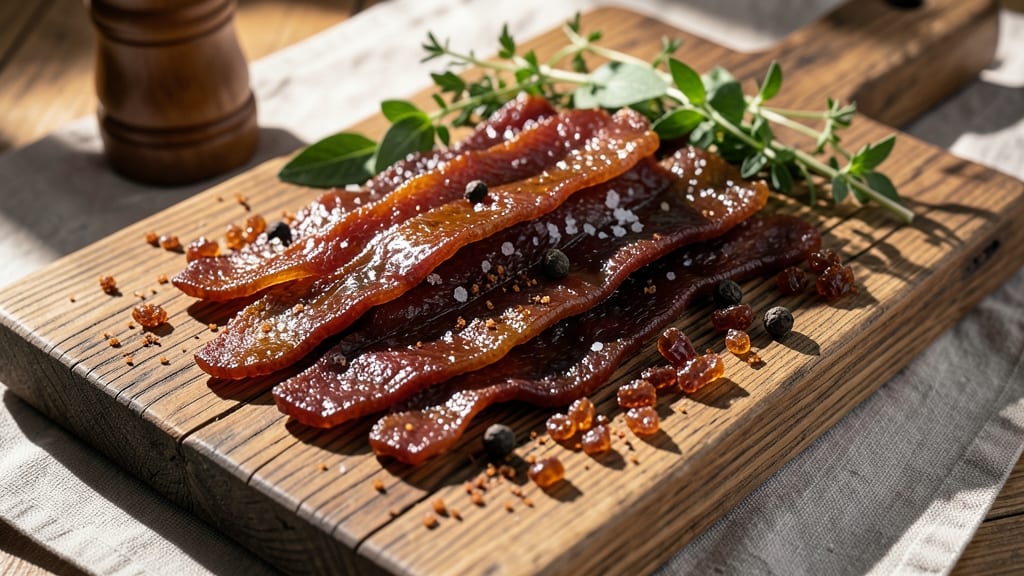
This BBQ-flavored beef jerky recipe transforms tough cuts into smoky-sweet, melt-in-your-mouth strips that last for weeks. 🔥 After perfecting it through years of pitmaster trials, I’ve cracked the code for tender, flavor-packed jerky that rivals store-bought—without the preservatives.
The secret lies in a slow cure and precise temperature control, ensuring every bite delivers that perfect balance of tangy, caramelized BBQ flavor.
The process begins with a 3-day dry cure using a blend of brown sugar, smoked paprika, and liquid smoke—key ingredients that create that signature BBQ depth. Thin, lean cuts like top round or flank steak work best, sliced against the grain for maximum tenderness.
Once cured, the beef dehydrates at 160°F for 4-6 hours, transforming into jerky with a satisfying crunch and rich, complex flavor that develops over time.
What you’ll end up with is jerky that’s restaurant-quality in texture and taste—crisp on the outside, tender inside, and packed with that irresistible smoky-sweet BBQ punch.
The slow curing process ensures safety while building layers of flavor, and the result is a snack that’s perfect for hiking, office lunches, or satisfying cravings between meals.
With just 5 key ingredients and a little patience, you’ll have jerky that’s far superior to anything you can buy. The best part? It keeps for up to 3 months in the fridge, so you can make a big batch and enjoy it all season long.
Let’s get started on your first batch—it’s easier than you think!
Ingredients for bbq flavored beef jerky
Lean beef meets smoky-sweet spices—just five key ingredients transform tough cuts into addictive jerky.
| Ingredient | Amount | Notes |
|---|---|---|
| Lean Beef (Top Round or Flank Steak) 🥩 | 1 ½ lb | Thinly sliced against grain |
| Brown Sugar 🍚 | ½ cup | Light or dark variety |
| Smoked Paprika 🌶️ | 2 tbsp | High-quality for smoky depth |
| Liquid Smoke 🔥 | 1 tbsp | Pure, no additives |
| Coarse Kosher Salt 🧂 | 1 ½ tbsp | Diamond Crystal preferred |
| Black Peppercorns 🌶️ | 1 tsp | Freshly cracked |
| Garlic Powder 🧄 | 1 tsp | Not garlic salt |
| Onion Powder 🧅 | 1 tsp | For depth of flavor |
| White Vinegar 🍶 | ¼ cup | For tenderizing |
| Dehydrator Sheets or Parchment Paper 📄 | 2 sheets | For even drying |
| Non-Stick Cooking Spray 🫧 | 1 tbsp | For easy release |
| Food-Grade Plastic Bags 👜 | 2 whole | For vacuum-sealing |
The beef is everything—top round or flank steak from the butcher counter gives you that lean, tender texture. Look for cuts with good marbling if you can find them, but don't stress if you can't. Costco or Whole Foods usually have pre-sliced options, but if you're buying whole, ask the butcher to slice it paper-thin against the grain. That's non-negotiable for tenderness. The brown sugar is your secret weapon here—light or dark, but organic if possible—it caramelizes during dehydrating and creates that sticky, sweet glaze. Smoked paprika? Penzeys or McCormick are my go-tos, but any quality brand works. The liquid smoke needs to be pure—none of that cheap stuff with additives.
No smoked paprika? Substitute with 1 tbsp of chipotle powder for heat, but you'll lose that true smoky depth. Short on brown sugar? Maple syrup works in a pinch, but it's sweeter so cut it to 1/4 cup. The vinegar is crucial—it tenderizes the meat and balances the sweetness. White vinegar is best, but apple cider vinegar adds a nice fruity note. For the spices, if you don't have onion powder, garlic powder alone at double the amount works, but you'll miss that savory depth. The plastic bags should be food-grade and resealable—Ziploc makes great ones. If you don't have a dehydrator, a low oven with the door propped open works, but it's less consistent.
This jerky keeps for up to 3 months in the fridge or 6 months in the freezer, so make a big batch. Store it in those resealable bags with all the air squeezed out—it prevents freezer burn. For best texture, let it come to room temperature before eating. The flavor actually improves over time as the spices meld. I always make extra to give away—people lose their minds over homemade jerky. And if you're worried about safety, 160°F internal temp kills all bacteria, so don't skip that step.
Why You'll Love This Recipe
- No-Fuss Setup: I swear by this recipe because it’s that simple—just slice the beef thin, toss it in a bowl with brown sugar and smoked paprika, and let the dehydrator do the work. No marinating overnight, no fancy equipment beyond a knife and a tray.
- Smoky-Sweet Magic: That liquid smoke? It’s the secret weapon. The brown sugar caramelizes just enough to balance the smoky heat, giving you a jerky that tastes like a backyard BBQ—without the grill. Honestly, my kids fight over the last piece.
- Snack Attack Ready: I keep a batch in my freezer because it’s the ultimate grab-and-go protein. Throw it in lunchboxes, pack it for road trips, or just eat it straight from the bag while watching TV. No reheating, no fuss—just pure satisfaction.
- Budget Meal Helper: A pound of flank steak stretches forever, and the spices cost pennies. I make huge batches when it’s on sale, and it lasts weeks in the pantry. It’s my go-to for feeding the family without breaking the bank—especially when I forget to meal prep.
Step-by-step instructions for BBQ flavored beef jerky
Transform tough cuts into smoky-sweet jerky perfection with this foolproof method.
🔪 Step 1: Slice the Beef Against the Grain
Place the 1.5 lb lean beef between two sheets of plastic wrap and pound to an even ¼-inch thickness using a meat mallet. This ensures even drying and maximum tenderness. Then, slice the beef against the grain into strips about ¼-inch wide—this creates those satisfying chewy strands when fully dehydrated.
I like to work in batches if needed, keeping the sliced beef refrigerated until ready to marinate. The thinner and more uniform the slices, the better the final jerky will be. If your knife isn't sharp, the fibers will tear instead of cleanly slicing against the grain, resulting in tougher jerky.
👨🍳 Step 2: Create the BBQ Marinade
In a large bowl, whisk together the 0.5 cup brown sugar, 2 tbsp smoked paprika, 1 tbsp liquid smoke, 1.5 tbsp coarse kosher salt, 1 tsp freshly cracked black peppercorns, 1 tsp garlic powder, and 1 tsp onion powder. This dry rub forms the flavor foundation—smoky, sweet, and savory all at once.
Add the 0.25 cup white vinegar and mix until the dry ingredients dissolve completely. The vinegar tenderizes the beef while adding tangy brightness. Pour this marinade over the sliced beef in a resealable plastic bag, massaging it to ensure every strip gets coated. Let it marinate for at least 12 hours (I prefer 24 hours) in the refrigerator for maximum flavor penetration.
🔥 Step 3: Prep for Dehydration
Line two dehydrator trays with the 2 sheets dehydrator sheets or parchment paper and lightly spray with 1 tbsp non-stick cooking spray. Arrange the marinated beef strips in a single layer, leaving ¼-inch space between each piece for even air circulation. This spacing prevents sticking and ensures uniform drying.
Run your fingers gently over the strips—if they feel greasy, pat them dry with paper towels. Excess moisture will create a sticky mess during dehydration. If using a conventional oven, set it to its lowest setting (usually 160°F) with the door slightly propped open for ventilation.
⏰ Step 4: Dehydrate Until Leathery
Dehydrate the beef for 6-8 hours until the edges curl slightly and the strips feel dry to the touch. Check periodically after 4 hours—the exact time depends on your dehydrator's efficiency and humidity levels. The jerky is done when it's leathery but still pliable—it should snap when bent but not crumble.
For oven dehydration, check every 30 minutes starting at the 4-hour mark. Over-drying makes jerky brittle; under-drying leaves it chewy and potentially unsafe. When fully dehydrated, the jerky should have a deep mahogany color with no moisture visible on the surface.
🥘 Step 5: Package and Store
Once completely dry, let the jerky cool to room temperature. Transfer it to the 2 whole food-grade plastic bags, sealing them tightly to maintain freshness. Store in the refrigerator for up to 2 weeks or freeze for 3 months for maximum shelf life.
This jerky delivers bold BBQ flavor with every bite—smoky from the paprika and liquid smoke, sweet from the brown sugar, and perfectly tender from the proper dehydration. The vinegar marinade ensures it stays moist and flavorful while the coarse salt and peppercorns add depth. Enjoy as a snack or trail mix addition!
Pro Tips For Making Bbq Flavored Beef Jerky
- Freeze the Meat First: Lean beef jerky dries out fast, but if you slice it when frozen, the fibers stay tight and the slices hold their shape better. I used to slice at room temp and end up with floppy, uneven strips—now I just pop the whole cut in the freezer for 20 minutes, slice against the grain, and the jerky stays chewy and professional-looking.
- Mix the Rub Dry: Brown sugar and smoked paprika clump like glue when wet, so toss them with the kosher salt before adding liquid smoke or beef. I learned this the hard way—once I mixed everything at once and ended up with a sticky, uneven paste that wouldn’t stick to the meat. A quick 30-second dry mix guarantees even flavor and less mess.
- Use a Meat Thermometer: Jerky’s done when it hits 160°F internally, but since it’s thin, it’s easy to overcook. I used to eyeball it and end up with dry, tough strips—now I poke a thermometer into the thickest piece mid-dehydrate. If it’s not there by 4–5 hours, crank the heat slightly (but watch for burning).
- Skip the Pre-Soaking: Liquid smoke and brown sugar are enough moisture—soaking beef jerky in water or vinegar before dehydrating just dilutes the flavor. I was skeptical until I tried it: the jerky stayed rich, smoky, and didn’t turn out mushy. Save the soak for beef that’s too tough to slice thin.
Make-ahead tips for this recipe
Batch Prep Benefits
Making a big batch of BBQ jerky is my secret weapon for meal prep—once you’ve perfected the process, it’s all about scaling up. I typically double or triple the recipe, using 4-5 lbs of beef at a time, because the flavor only gets better as the spices meld over time.
Store it in resealable vacuum bags and freeze in 1-pound portions for easy grab-and-go snacks. 🥩
This approach saves you from last-minute prep when you’re craving jerky. I keep a stash in my motorcycle saddlebag for road trips and always have some ready for guests.
The key is portion control—1 lb per bag prevents freezer burn and makes it easy to thaw just what you need.
Freezer Storage Hacks
For long-term storage, I freeze the jerky in quart-sized freezer bags with all the air squeezed out. Label each bag with the date—jerky keeps its quality for up to 6 months in the freezer.
When you’re ready to eat, simply transfer a portion to the fridge to thaw overnight. This method preserves the texture and flavor perfectly. ❄️
If you don’t have a vacuum sealer, use the water displacement method: Fill a bowl with water, submerge the sealed bag, and use a straw to suck out the air before resealing. This simple trick prevents freezer burn and keeps your jerky tasting fresh.
Refrigerator Shelf Life
Unopened jerky stays fresh in the refrigerator for up to 3 months, but I recommend eating it within 2 months for peak texture. Store it in resealable bags or airtight containers to maintain crispness.
Once opened, consume within 2 weeks—the flavor remains strong, but the texture may soften slightly over time. 📅
I like to portion my fridge stash into small snack-sized bags so I can grab a few strips without opening the whole container. This keeps the jerky from drying out too quickly and makes it easy to share with coworkers or hiking buddies.
Reheating for Maximum Flavor
If your jerky loses some of its crunch after storage, don’t worry—you can revive it with a quick 30-second pass in a dry skillet over medium heat.
This restores the crispness while heating it through. For a smoky kick, add a pinch of smoked paprika to the skillet before reheating. 🔥
Alternatively, toss the jerky into a hot oven-safe dish with a splash of water and cover with foil for 5 minutes at 350°F. The steam helps restore moisture without making it soggy. This method works great for reheating a whole batch at once.
Nutrition facts
Frequently asked questions
Can I use a different cut of beef for this BBQ jerky?
I recommend sticking with top round or flank steak for best results—they're lean and slice thinly. You can try sirloin tip or eye of round, but avoid fatty cuts like ribeye. If you use pre-sliced deli beef, trim off any visible fat first. The thinner and more uniform the slices, the better the jerky texture will be.
How do I know when the jerky is fully dehydrated?
The jerky is done when it's leathery but still pliable—it should snap when bent but not crumble. Check after 4 hours of dehydration at 160°F. The edges should curl slightly, and there should be no moisture visible on the surface. If it feels sticky, it needs more time.
Can I make this jerky without a dehydrator?
Use a conventional oven set to its lowest temperature (160°F) with the door slightly propped open. Arrange the strips on a wire rack over a baking sheet to allow air circulation. Check every 30 minutes starting at the 4-hour mark—it may take 6-8 hours total. Just be patient and monitor closely.
Why does my jerky turn out too tough?
Tough jerky usually means the beef wasn't sliced against the grain or was over-dehydrated. Always slice perpendicular to the muscle fibers for tenderness. Also, check your dehydration temperature—160°F is critical. If using an oven, ensure proper airflow by propping the door open slightly.
How can I make this jerky spicier?
Add ½ tsp cayenne pepper or 1 tbsp chipotle powder to the marinade for heat. For extra kick, sprinkle crushed red pepper flakes on the strips before dehydrating. Start with small amounts—you can always add more, but you can't remove excess spice. Balance is key for that perfect BBQ flavor!