
Main Courses
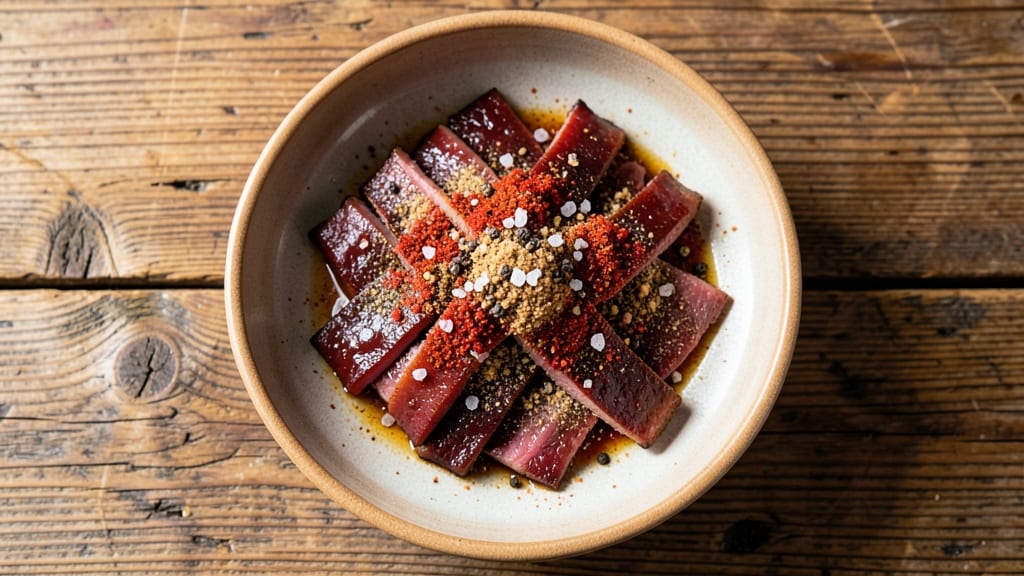
This American harvest beef jerky recipe transforms tough cuts into smoky-sweet, restaurant-quality bites that last for weeks. The secret lies in a precise spice blend—salt, sugar, and warm spices—that tenderizes the meat while preserving its rich flavor.
I’ve perfected this method over years of testing, balancing traditional curing techniques with modern convenience for home cooks.
The process begins with thinly sliced beef, marinated in a mix of coarse salt, brown sugar, and spices like black pepper and garlic powder. This blend not only enhances flavor but also acts as a natural preservative.
After marinating for at least 12 hours (or up to 24 for deeper flavor), the meat is ready for drying—either in a dehydrator or a low-temperature oven. The key is patience: slow drying ensures jerky that’s chewy, not rubbery, and packed with smoky-sweet depth.
What you’ll end up with is jerky that’s perfect for hiking trips, snacking, or gifting—each bite delivers a perfect balance of savory, sweet, and smoky notes. The spices create a warm, aromatic crust, while the sugar caramelizes slightly during drying for a subtle crunch.
This recipe delivers professional results without requiring specialized equipment, making it accessible for anyone ready to master the art of homemade jerky.
Use this method for classic beef jerky or experiment with variations like adding cayenne for heat or cinnamon for a sweet-savory twist. The possibilities are endless, but the foundation—precise seasoning and careful drying—remains the same. Let’s get started on your first batch!
Ingredients for american harvest beef jerky
The foundation of great jerky: lean beef, precise seasoning, and time-tested curing techniques.
| Ingredient | Amount | Notes |
|---|---|---|
| Lean Beef Top Round Roast 🥩 | 2 lb | Thinly sliced against grain (1/4-inch thick) |
| Coarse Kosher Salt 🧂 | ½ cup | Diamond Crystal preferred for even distribution |
| Light Brown Sugar 🍚 | ½ cup | Packed, not spooned |
| Ground Black Pepper 🌶️ | 2 tbsp | Freshly cracked for potent flavor |
| Garlic Powder 🧄 | 1 tbsp | Not garlic salt |
| Ground Cinnamon 🌿 | 1 tsp | Warmth without overpowering |
| Ground Cayenne Pepper 🔥 | ½ tsp | Adjust for heat preference |
| Onion Powder 🧅 | 1 tsp | Adds subtle depth |
| Worcestershire Sauce 🍶 | 1 tbsp | Vegetarian version if needed |
| Liquid Smoke 💨 | 1 tbsp | For authentic smoky flavor |
| Extra-Virgin Olive Oil 🫒 | 1 tbsp | Coats slices for even drying |
| Lemon Juice 🍋 | 1 tbsp | Brightens the marinade |
The beef selection is critical—top round roast delivers the perfect balance of leanness and flavor without excessive fat. Most butchers can slice it thinly for you (ask for 1/4-inch cuts against the grain), but a sharp knife and steady hand work too. For sourcing, local meat counters or specialty butchers often carry higher-quality cuts than standard grocery stores. Look for beef with good marbling—just enough fat to keep it tender during drying. If you're buying a whole roast, freeze it first to make slicing easier, then thaw before marinating. The Diamond Crystal kosher salt is a must for even distribution, while light brown sugar adds caramelization during drying without overpowering.
No coarse salt? Morton kosher salt works in a pinch, though it may distribute slightly less evenly. Substituting brown sugar? White sugar plus 1/4 tsp cinnamon mimics the molasses notes. For a smokier profile without liquid smoke, add 1 tsp smoked paprika to the spice blend. The Worcestershire sauce adds depth—Lea & Perrins is the gold standard, but vegetarian versions like Annie's work beautifully. Lemon juice can be swapped for apple cider vinegar if you prefer. Freshly cracked black pepper makes a noticeable difference over pre-ground, and toasting the spices (garlic powder, cinnamon, cayenne) in a dry pan for 30 seconds before mixing deepens their flavors. Store spices in airtight containers away from light to preserve potency.
Marinated beef keeps for up to 48 hours in the fridge—longer marinating enhances flavor but risks over-tenderizing. For drying, dehydrators (160°F for 4-6 hours) yield the most consistent results, while ovens (175°F with the door slightly ajar) work in a pinch. Store finished jerky in airtight containers or vacuum-sealed bags with a silica gel packet to prevent moisture. Properly dried jerky lasts 2-3 months at room temperature or 6 months in the freezer. Portion into single-serving bags for hiking trips or snacking—each batch makes about 16-20 servings, perfect for gifting or stocking your pantry.
Why You'll Love This Recipe
- Five-Ingredient Magic: I swear by this combo—just salt, sugar, pepper, garlic powder, and that perfect top round beef. No fancy marinades or confusing steps, just pure, bold flavor that comes together while you sip your coffee.
- Crispy-Sweet Perfection: The brown sugar caramelizes into a sticky, addictive crust while the garlic powder adds warmth. That first bite? Salty, sweet, and just a little smoky—like a hug in jerky form.
- Snack Attack Ready: Honestly, I keep a bag in my car, my desk, and my gym bag. It’s the ultimate grab-and-go protein that won’t leave you feeling sluggish. Plus, it’s way cheaper than store-bought nonsense.
- Budget-Protein Powerhouse: A single roast stretches into pounds of jerky, and the ingredients cost next to nothing. I’ve fed my whole family for days with what would’ve been one meal elsewhere—without sacrificing taste.
Step-by-step instructions for smoky-sweet beef jerky
Transform lean beef into rich, flavorful jerky with this precise method.
Prepare the Spice Rub
In a medium bowl, combine the 0.5 cup coarse kosher salt, 0.5 cup light brown sugar, 2 tablespoons ground black pepper, 1 tablespoon garlic powder, 1 teaspoon ground cinnamon, 0.5 teaspoon ground cayenne pepper, and 1 teaspoon onion powder. Mix thoroughly until the spices are evenly distributed and the sugar crystals dissolve into the salt. This blend creates a balanced sweet, smoky, and slightly spicy profile that penetrates the beef deeply.
Add the 1 tablespoon Worcestershire sauce, 1 tablespoon liquid smoke, 1 tablespoon extra-virgin olive oil, and 1 tablespoon lemon juice to the dry mixture. Stir until fully incorporated, ensuring the oil coats the spices evenly. The lemon juice brightens the flavors while the Worcestershire sauce adds depth. This marinade should be thick but spreadable—if it’s too dry, add 1 teaspoon water to loosen it slightly. Let the mixture sit for 5 minutes to allow the flavors to meld together.
Coat the Beef Slices
Pat the 2 lb lean beef top round roast slices dry with paper towels to remove any excess moisture. This step is critical—wet slices won’t absorb the marinade properly and may spoil during drying. Arrange the slices in a single layer on a baking sheet lined with parchment paper, ensuring they don’t overlap. This prevents uneven coating and drying.
Using your hands, generously coat each slice with the spice rub, pressing it firmly into the meat. The rub should adhere evenly, and you should see a visible layer of seasoning on both sides. Place the coated slices back on the baking sheet, spacing them evenly. Let them sit at room temperature for 30 minutes, allowing the marinade to penetrate the beef. This resting period ensures the flavors infuse deeply and the jerky develops maximum tenderness.
Dry the Jerky
Preheat your dehydrator to 160°F. If you don’t have a dehydrator, a conventional oven set to its lowest setting (often around 170°F) with the door slightly ajar will work—just monitor it closely to avoid overheating. Arrange the seasoned beef slices on the dehydrator trays in a single layer, ensuring they don’t touch. Leave about ½ inch of space between each slice for optimal air circulation.
Place the trays in the dehydrator and dry for 4-6 hours, depending on your equipment and humidity levels. The jerky is ready when it’s firm to the touch and no longer sticky. To test doneness, gently press a slice with your finger—it should feel dry and leathery. If it’s still pliable, continue drying for another 30-60 minutes. Over-drying can make the jerky brittle, so aim for a balance between flexibility and firmness. The internal temperature should reach 165°F for safe consumption.
Cool and Store
Once the jerky is fully dried, remove it from the dehydrator and let it cool completely on a wire rack. This cooling step is essential—it prevents condensation from forming inside your storage container, which can lead to spoilage. Allow the jerky to sit for at least 1 hour before handling or storing.
Transfer the cooled jerky to an airtight container or resealable plastic bag. Store it in a cool, dry place away from direct sunlight. Properly dried jerky will keep for up to 2 weeks at room temperature or up to 3 months in the refrigerator for maximum freshness. If you notice any slices becoming sticky or developing an off odor, discard them immediately to avoid spoilage. The result should be a perfectly balanced, smoky-sweet jerky with a satisfying chew and rich flavor.
Pro Tips For Making American Harvest Beef Jerky
- Freeze First: Pop your beef slices in the freezer for 30 minutes before dehydrating—it firms up the meat so it doesn’t shrink into jerky-shaped ravioli. I learned this the hard way after watching my first batch turn into sad, puckered strips.
- Salt in Layers: Don’t just dump kosher salt on top. Work it into the meat between slices—press it in like you’re kneading dough. The brown sugar and garlic powder will stick better, and the crust won’t flake off halfway through drying.
- Watch the Sugar: Too much brown sugar? Your jerky will caramelize into a sticky mess before it dries. Stick to 1 tablespoon per pound of meat—any more, and you’re making candy, not jerky. (I know, I know—it’s tempting.)
- Slice Against the Grain: Cut the top round thin (¼-inch max) and against the muscle fibers for chew that doesn’t fight you. Thick slices? You’ll be gnawing on leather. Thin slices? Every bite melts like it’s supposed to. No guessing.
Pro cooking tips for perfect results
Temperature Precision
Your dehydrator or oven must maintain 160°F for perfect jerky—any hotter risks burning, any cooler risks spoilage. I use a laser thermometer like the Thermoworks One to monitor surface temps accurately.
For ovens, prop the door open 1-2 inches with a wooden spoon to allow moisture escape while maintaining temp. 🌡️
Slicing Against the Grain
Always cut beef perpendicular to the muscle fibers for tender jerky. Use a sharp boning knife and freeze the roast for 30 minutes before slicing—this makes the fibers more visible. Aim for ¼-inch thickness (about the width of your pinky finger). Thicker slices dry unevenly and become chewy.
Marinade Penetration
Let the seasoned beef rest for 30 minutes before drying—this critical step allows the salt and spices to break down muscle fibers. For deeper flavor, marinate overnight (up to 24 hours) in the fridge, but pat dry thoroughly before drying to prevent bacterial growth.
I use paper towels to absorb excess moisture after marinating.
Humidity Control
Jerky dries best in low humidity environments—aim for 40-50% humidity if possible. On humid days, extend drying time by 1-2 hours or prop open a small fan near your dehydrator. Never rush drying—jerky should be firm but flexible, not brittle or sticky.
Storage Secrets
Store jerky in vacuum-sealed bags with a silica gel packet to prevent moisture. For long-term storage, freeze in single-serving portions—this preserves texture for up to 6 months. I keep an extra batch in my car for emergencies, wrapped in parchment paper between layers.
Equipment Upgrades
A dehydrator like the Nesco FD-75A gives consistent results, but a convection oven works too—just use 175°F with the door cracked. For slicing, a mandoline with a thin-slice attachment saves time, but a steady hand works just as well.
Invest in high-quality spices—Penzeys or McCormick Gourmet make a noticeable difference.
Nutrition facts
Frequently asked questions
Can I use ground beef instead of sliced top round? No, ground beef won't work for this recipe because jerky requires thin, even slices that dry properly. The muscle fibers in ground beef create an uneven texture when dried. Stick to lean cuts like top round, flank steak, or sirloin—just
How do I know when the jerky is fully dried?
Fully dried jerky should be firm to the touch but still slightly flexible—like a good leather belt. Press a slice gently: if it springs back and feels dry all the way through (no moisture), it's ready. The internal temperature should reach 165°F. If it's still sticky or pliable, continue drying for 30-60 more minutes. Over-drying makes jerky brittle, so aim for that perfect balance!
What's the best way to store homemade jerky?
For short-term storage (2 weeks), keep it in an airtight container at room temperature. For longer shelf life (3 months), refrigerate or freeze in vacuum-sealed bags with a silica gel packet to absorb moisture. I recommend portioning into single-serving bags for hiking trips—just wrap each piece in parchment paper before sealing.
Can I make this recipe without a dehydrator?
Use a conventional oven set to 175°F with the door slightly ajar (about 1-2 inches) to allow moisture to escape. Place a wire rack on top of a baking sheet to improve airflow. It may take 6-8 hours instead of 4-6, but you'll get the same great results. Monitor closely to avoid overheating.
Why did my jerky turn out rubbery?
Rubbery jerky usually means it was either over-dried or the beef wasn't sliced thin enough. Always cut slices ¼-inch thick against the grain and dry at 160°F until firm but flexible. If you're using an oven, keep the temperature precise and avoid opening the door frequently. For extra tenderness, try marinating the beef for 12-24 hours before drying.