
Main Courses
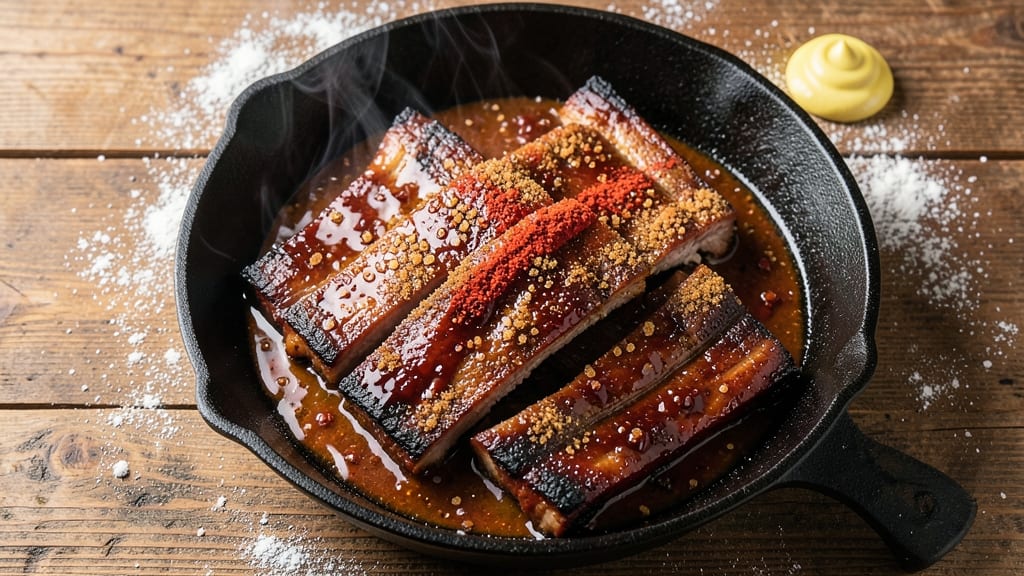
This BBQ beef spare ribs recipe delivers the kind of fall-off-the-bone tenderness and smoky bark that turns casual cookouts into legendary meals. I've perfected this method through years of testing—balancing dry rub penetration, low-and-slow cooking, and sauce application for maximum flavor without sacrificing texture.
The secret lies in patience and technique, not shortcuts.
What sets these ribs apart is the three-stage cooking process: an aggressive dry rub for flavor development, followed by slow cooking at 225°F until the meat is tender enough to pull apart, and finishing with a quick sauce glaze for that sticky, caramelized crust.
This approach works equally well on a smoker, grill, or even your oven with a DIY setup. The result? Ribs so tender they practically melt in your mouth, with a bark that's crisp enough to stand up to toothpicks.
You'll end up with ribs that carry all the hallmarks of Kansas City-style BBQ—rich, smoky, and deeply flavorful—without requiring specialized equipment. The dry rub creates a flavorful crust while the slow cook transforms tough meat into something luxurious.
This is the kind of dish that makes people ask for seconds before they've even finished their first plate.
Whether you're hosting a summer BBQ or craving comfort food on a chilly evening, these ribs deliver restaurant-quality results at home. The method scales perfectly for crowds, and leftovers reheat beautifully. Let's get started on creating ribs that'll have everyone begging for the recipe.
Ingredients for bbq beef spare ribs recipe barbecue
Six pounds of meaty spare ribs and fifteen spices that transform tough cuts into melt-in-your-mouth Kansas City perfection.
| Ingredient | Amount | Notes |
|---|---|---|
| Beef Spare Ribs 🍖 | 4 lb | Bone-in, meaty ends preferred |
| Yellow Mustard 🍯 | ½ cup | For initial coating |
| Brown Sugar 🍚 | 1 cup | Light or dark variety |
| Smoked Paprika 🌶️ | 2 tbsp | For deep smoky flavor |
| Chili Powder 🌶️ | 1 ½ tbsp | Medium heat preferred |
| Garlic Powder 🧄 | 1 ½ tbsp | Freshly ground preferred |
| Onion Powder 🧅 | 1 ½ tbsp | For balanced sweetness |
| Ground Black Pepper 🌶️ | 1 tbsp | Freshly cracked preferred |
| Kosher Salt 🧂 | 1 ½ tbsp | Diamond Crystal preferred |
| Apple Cider Vinegar 🍏 | ¼ cup | For tenderizing marinade |
| BBQ Sauce 🍅 | 1 ½ cups | Kansas City style preferred |
| Aluminum Foil 📄 | 2 sheets | Heavy-duty for wrapping |
| Wood Chips 🌳 | 2 cups | Hickory or oak preferred |
| Yellow Onion 🧅 | 1 whole | Sliced for glaze |
| Fresh Thyme 🌿 | ¼ cup | Chopped for finishing |
The ribs are non-negotiable—meaty ends matter most for flavor. Costco or local butcher shops carry the best cuts, often pre-trimmed for convenience. Look for good marbling and avoid ribs with excessive fat trim. The dry rub ingredients should be freshly ground—pre-ground spices lose potency fast. For the brown sugar, light brown gives subtle molasses notes while dark adds more caramel depth. If you're short on time, pre-mixed BBQ rubs from Trader Joe's work in a pinch, though homemade always tastes better.
No smoked paprika? Regular paprika plus a pinch of liquid smoke gets you close. Substituting vinegar? Lemon juice at double the amount works, though it lacks the apple undertones. The BBQ sauce can be store-bought (Starkist or Bull's-Eye are crowd-pleasers) or homemade—just ensure it's thick enough to cling. For the wood chips, hickory delivers classic BBQ flavor while oak adds a fruitier note. If you can't source fresh thyme, dried thyme at one-third the amount suffices, though fresh is ideal for that bright finish.
Ribs reheat beautifully—350°F for 15 minutes wrapped in foil restores moisture. Store leftovers in the fridge for 4-5 days or freeze for 3 months wrapped tightly. The dry rub keeps indefinitely in an airtight container. For large gatherings, double the batch—these ribs disappear fast. The key to leftovers is reheating slowly to prevent drying. A slow cooker on low works wonders for reviving ribs the next day.
Why You'll Love This Recipe
- One-Pan Wonder: I swear by this recipe because it’s all about minimal cleanup. Just ribs, a sheet pan, and that sticky-sweet glaze—no pots, no pans, no stress. The mustard and brown sugar caramelize right on the metal while the ribs cook, and honestly? Wiping down one pan is my kind of victory.
- Sweet Heat Magic: That combo of smoked paprika and chili powder gives it a deep, smoky kick, but the yellow mustard and brown sugar keep it from being too heavy. It’s got that perfect balance—tangy enough to cut through the richness, with just enough heat to linger. My husband always grabs seconds, and he’s not the sentimental type.
- Tailgate Ready: Between us, this is my go-to for game days or lazy Sundays. It’s hearty enough for a crowd but easy enough to scale back for two. (Yes, even on a Tuesday night.) The leftovers? They’re just as good cold the next day—ideal for packing in lunches or feeding hungry teenagers after soccer practice.
- Budget-Friendly Feast: Beef ribs don’t have to break the bank, and this recipe proves it. A full pack of spare ribs stretches across multiple meals—think sandwiches, salads, or even breakfast hash the next morning. Plus, the ingredients are pantry staples, so you’re not scrambling for obscure spices. Solid, reliable, and always delivers.
Step-by-step instructions for perfectly smoked beef spare ribs
Achieving fall-off-the-bone tenderness requires patience and precision—here's how to execute it flawlessly.
Prepare the Dry Rub and Initial Marinade
In a medium bowl, combine the 1 cup brown sugar, 2 tablespoons smoked paprika, 1.5 tablespoons each of chili powder, garlic powder, and onion powder, 1 tablespoon ground black pepper, and 1.5 tablespoons kosher salt. Mix thoroughly until the sugar dissolves completely and the spices are evenly distributed. This dry rub will form the flavor foundation for your ribs.
Transfer the ribs to a large resealable plastic bag and pour in the 0.5 cup yellow mustard and 0.25 cup apple cider vinegar. Add the dry rub mixture and massage it into every crevice of the ribs, ensuring complete coverage. Seal the bag tightly and refrigerate for at least 4 hours, or preferably overnight. This marinating process tenderizes the meat and allows the flavors to deeply penetrate the surface.
Set Up the Smoker and Preheat
Fill a smoker box or tube with the 2 cups wood chips (hickory or oak preferred) and soak them in water for 30 minutes before using. Assemble your smoker according to manufacturer instructions and preheat to 225°F. Maintain a consistent temperature—fluctuations will affect cook time and bark development. I recommend using a digital thermometer probe to monitor the internal temperature of the ribs.
Once the smoker reaches the target temperature and you see steady, blue smoke (not thick white vapor), place the ribs bone-side down on the smoker grates. This orientation allows the meat to cook evenly while the bones help conduct heat. Close the lid and resist the urge to peek—each time you open it, you lose heat and moisture, potentially extending cook time by 15-20 minutes.
Smoke Until the Stall (Approximately 5-6 Hours)
Smoke the ribs undisturbed for 5-6 hours, or until the internal temperature reaches 165-170°F. This is when you'll encounter "the stall"—a period where the temperature plateaus as moisture evaporates from the meat. Don't panic; this is normal and expected. The ribs should have developed a dark, sticky bark on the exterior, indicating proper smoke penetration.
During this time, I recommend adding a small water pan to the smoker to maintain humidity levels. If you notice the ribs drying out prematurely, you can spritz them lightly with apple juice or cider vinegar every 90 minutes to help maintain moisture without compromising bark development.
Wrap and Finish Cooking
Once the ribs hit the stall, it's time to wrap them in 2 sheets heavy-duty aluminum foil. First, lay out one sheet and place the ribs on it. Then, spoon 1.5 cups BBQ sauce evenly over the top of the ribs. Add the 1 whole yellow onion, sliced into rings, and sprinkle with 0.25 cup chopped fresh thyme. Fold the foil tightly to create a sealed packet, trapping steam that will gently cook the ribs to perfection.
Return the wrapped ribs to the smoker and continue cooking until the internal temperature reaches 203°F (about 2-3 additional hours). The ribs should be fork-tender with no resistance when pierced. This final stage ensures the connective tissue breaks down completely, resulting in that coveted fall-off-the-bone texture.
Rest and Serve
Remove the ribs from the smoker and carefully open the foil packet. Let them rest at room temperature for 10-15 minutes before serving. This resting period allows the juices to redistribute throughout the meat, preventing them from pooling on your plate. The ribs will continue to carry over in temperature by about 5°F, so they'll be perfect when you're ready to serve.
Slice the ribs between the bones and serve immediately. The exterior should be dark and glossy from the BBQ sauce, with a crisp bark that gives way to tender, juicy meat underneath. Each bite should deliver a perfect balance of smoky, sweet, and slightly spicy flavors with that unmistakable fall-apart texture.
Pro Tips For Making Bbq Beef Spare Ribs Recipe Barbecue
- Trim the Fat First: I learned this the hard way—skipping the fat trim on beef spare ribs means a greasy sauce and uneven cooking. Use kitchen shears to snip off the thick silver skin and any excess fat along the bones before seasoning, or your mustard-browning step will turn into a mess.
- Baste with Mustard Twice: Don’t just slap mustard on once and walk away. After the first 15 minutes of searing, flip the ribs and baste again—this time with a mix of mustard and a splash of water. The steam helps tenderize while the mustard caramelizes into a sticky, flavorful crust.
- Skip the Crowding: I used to pile ribs bone-to-bone in the pan, and they’d steam instead of brown. Leave space between them—even if it looks sparse—and cook in batches if needed. You want that brown sugar to crisp, not dissolve into a sticky glaze too soon.
- Save the Chili Juice: After sprinkling chili powder and smoked paprika, don’t shake off the excess—let it sit. The spices cling to the ribs like glue, and the leftover powder in your bowl? Toss it back on after resting. It’s the difference between dusting and deep flavor.
Pro cooking tips for bbq beef spare ribs recipe barbecue
Smoker Temperature Control
Consistent temperature is the backbone of perfect ribs. I use a Traeger Pellet Grill set to 225°F for the entire cook, but any smoker works if you maintain precision. Fluctuations beyond ±10°F can ruin your bark or overcook the meat.
I recommend a Meater thermometer with two probes—one for smoker temp and one for meat. If your smoker runs hot, add more wood chips or reduce airflow slightly. 🌡️
For charcoal smokers, I swear by the two-zone method: light one side of the grill with charcoal and leave the other side empty for airflow. This creates a consistent heat zone.
If your ribs start drying out before reaching 165°F, add a water pan to the smoker to maintain humidity. The goal is to keep the smoker environment stable—just like baking a cake!
The Wrap Technique
Wrapping ribs at the stall is non-negotiable for tenderness. I use double-layered heavy-duty aluminum foil (like Reynolds Wrap) to create a tight seal. Before wrapping, I spoon 1.5 cups BBQ sauce directly on the ribs and add sliced onions and thyme for extra flavor.
The foil trap steams the meat gently, breaking down collagen without drying it out. For extra insurance, I add a ½ cup apple juice to the foil packet to keep things moist. 🍯
Some pitmasters swear by butcher paper instead of foil—it allows for better bark development while still trapping steam. If you go this route, wrap the ribs loosely and don't add extra liquid.
The key is to find what works for your setup and stick with it. I've tried both methods, and foil always gives me more consistent results for large batches.
Sauce Application Timing
Applying BBQ sauce too early can create a sticky glaze that prevents smoke penetration. I add sauce only during the final 30 minutes of cooking, right after unwrapping the ribs.
For extra shine, I brush on Starkist Original BBQ Sauce (it's my go-to for that classic Kansas City flavor) and let it caramelize slightly. If you're using a thinner sauce, apply it in two thin layers—first during the last hour, then again in the final 15 minutes. 🍅
For a smoky-sweet balance, I sometimes mix ½ cup of the dry rub into the sauce before applying. This gives the sauce an extra depth of flavor that complements the meat perfectly.
Just be careful not to over-sauce—you want the ribs to shine, not drown in liquid. A light, even coat is all you need.
Resting Like a Pro
Resting ribs is where many home cooks make mistakes. I let them rest for 15-20 minutes in a cooling rack (never directly on the counter) to prevent steam buildup. This allows the juices to redistribute evenly.
If you're short on time, a 10-minute rest still works, but you'll lose some moisture retention. The ribs will carry over about 5°F, so they'll be perfect when you're ready to serve. 🕒
Pro tip: If you're making ribs ahead for a party, rest them at room temperature while you finish other dishes. The waiting time is perfect for setting up your serving platter.
And always slice against the grain—this makes each bite more tender and easier to eat. Trust me, this small step makes a huge difference in presentation and texture.
Nutrition facts
Frequently asked questions
Can I use beef spare ribs with the bone-in meaty ends removed?
While you can use trimmed ribs, the meaty ends add incredible flavor and help with moisture retention during cooking. The ends contain more connective tissue that breaks down beautifully during the slow cook, creating that signature fall-apart texture. If you must trim them, consider adding extra brown sugar to the rub to compensate for lost natural sweetness.
How do I know when the ribs have reached the stall?
The stall occurs when the internal temperature plateaus around 165°F for about 30-60 minutes. You'll notice the temperature on your probe stop rising despite consistent heat. This is normal and happens as moisture evaporates. The ribs will develop a dark, sticky bark—this is your visual cue that it's time to wrap them up for the final cooking stage.
What's the best way to reheat leftover ribs?
Warm leftovers gently to preserve moisture—wrap them in foil and reheat at 350°F for 15 minutes. For extra tenderness, add a splash of apple cider vinegar to the foil before reheating. Avoid microwaving as it dries out the meat. These ribs reheat beautifully and taste almost as good as fresh, making them perfect for meal prep.
Can I make these ribs without a smoker?
Use an oven set to 225°F with a water pan on the bottom rack for moisture. Place the ribs on a rack over a baking sheet. For grill enthusiasts, set up a two-zone fire (indirect heat) and maintain 225°F using a thermometer. The key is consistent low heat—just like with a smoker. Expect slightly longer cook times (about 1-2 extra hours).
Why do my ribs sometimes turn out tough?
Most often, this happens from cooking too fast or not reaching the proper internal temperature. The ribs need to hit 203°F for the collagen to fully break down. If your smoker runs hot, add more wood chips or reduce airflow. Also ensure you're using a meat thermometer—never guess! The wrap stage is crucial for tenderness, so don't skip it even if the ribs seem done earlier.