
Main Courses
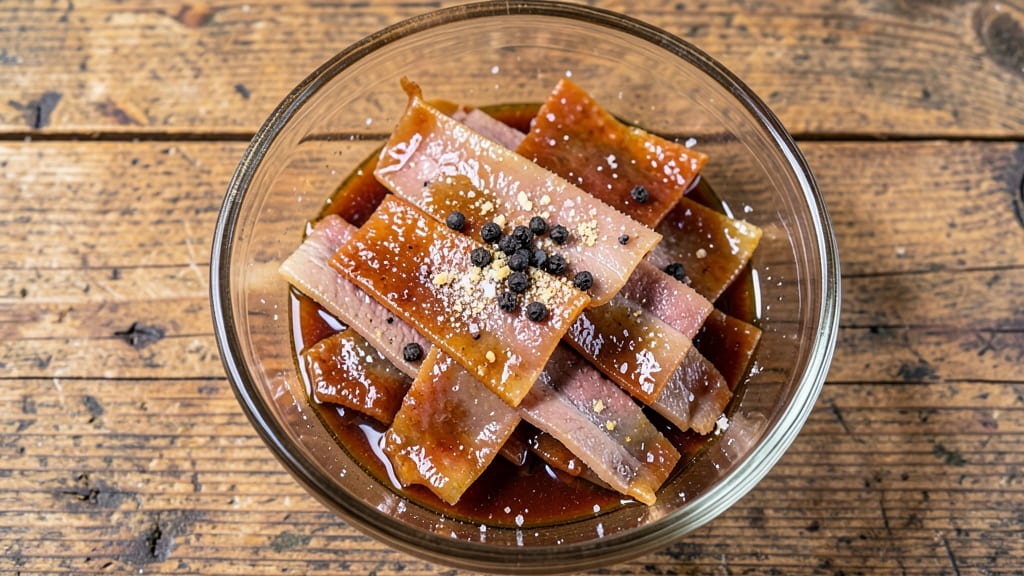
This apple cider vinegar beef jerky recipe transforms tough cuts into tender, tangy bites that pack serious flavor without the preservative overload. The key? A marinade where apple cider vinegar tenderizes while adding that signature bright tang—no sugar crash, just clean energy and restaurant-quality texture.
I've perfected this method over years of experimentation, ensuring every piece stays moist and packed with that signature apple-cider punch.
The process is straightforward but requires patience: lean beef strips marinate for 24 hours in a blend of apple cider vinegar, Worcestershire, and spices, then cure for 4 hours in a dehydrator or oven set to 165°F.
This low-and-slow approach guarantees jerky that's tender enough to eat without chewing, with just the right snap. The vinegar's acidity not only tenderizes but also acts as a natural preservative, extending shelf life while keeping flavors vibrant.
What you'll end up with is jerky that's tangy from the vinegar, savory from the Worcestershire, and perfectly balanced with just enough spice. The texture is what separates this from store-bought: tender yet firm, with a satisfying chew that doesn't turn to rubber.
It's the kind of jerky that disappears in minutes—great for hiking, snacking, or gifting.
Store in an airtight container for up to 2 weeks in the pantry, or freeze for 3 months to preserve maximum freshness. The vinegar marinade also makes this jerky a crowd-pleaser for those avoiding traditional sugar-heavy versions. Ready to make jerky that tastes homemade but keeps like a pro?
Ingredients for apple cider vinegar beef jerky
The backbone of this recipe: lean beef and a precise marinade blend that tenderizes while preserving texture.
| Ingredient | Amount | Notes |
|---|---|---|
| Lean Beef Top Round Roast 🥩 | 2 lb | Trimmed of fat and connective tissue |
| Apple Cider Vinegar 🍎 | 1 cup | Raw, unfiltered preferred for depth |
| Worcestershire Sauce 🍶 | ½ cup | Anchovy-free for dietary flexibility |
| Kosher Salt 🧂 | 1 ½ tbsp | Diamond Crystal preferred for accuracy |
| Black Peppercorns 🌶️ | 1 tbsp | Freshly cracked for optimal flavor |
| Garlic Powder 🧄 | 1 tbsp | Freshly ground preferred |
| Onion Powder 🧅 | 1 tbsp | For aromatic depth |
| Smoked Paprika 🌶️ | 1 tbsp | For subtle smokiness |
| Ground Cumin 🌿 | 1 tsp | Toasted for enhanced aroma |
| Brown Sugar 🍚 | ½ cup | Lightly packed for consistency |
| Honey 🍯 | ¼ cup | Raw preferred for purity |
| Lemon Juice 🍋 | ¼ cup | Freshly squeezed for brightness |
| Water 💧 | ½ cup | Filtered preferred for clarity |
The beef selection is critical. Top round roast delivers the ideal balance of lean protein and connective tissue for tender jerky. Trim any visible fat or silver skin before slicing—these can interfere with even curing. For the best quality, source from Whole Foods or your local butcher, where you can verify the cut's freshness. The meat should be bright red with minimal marbling. If using pre-sliced jerky beef, opt for thin-cut slices (about 1/4-inch thick) to ensure even drying. Store raw beef in the coldest part of your fridge until ready to use, ideally within 24 hours of purchase.
The apple cider vinegar is non-negotiable for both tenderization and preservation. Raw, unfiltered brands like Bragg's or local orchard varieties add depth of flavor. Substituting with white vinegar or balsamic will alter the tang profile—stick with apple cider for authenticity. Worcestershire sauce provides umami depth; if unavailable, a blend of soy sauce and liquid smoke can approximate it. For sweetness, the honey and brown sugar combination balances the acidity without overpowering. If you prefer a sugar-free version, reduce the brown sugar to 2 tbsp and omit the honey entirely. All spices should be freshly ground or toasted to maximize aroma—pre-ground spices lose potency quickly.
Marinated beef should be stored in an airtight container in the refrigerator for up to 24 hours before curing. The marinade itself keeps for 1 week in the fridge if stored properly. For long-term storage, freeze the marinade in ice cube trays for single-use portions. Once cured, jerky maintains peak quality in an airtight container for 2 weeks at room temperature or 3 months in the freezer. To extend shelf life further, vacuum-seal portions. The vinegar marinade naturally preserves the jerky, but for maximum freshness, consume within 1 month of curing. Avoid exposing cured jerky to moisture, which can promote bacterial growth.
Why You'll Love This Recipe
- No Marinate Stress: I swear by this recipe because the beef soaks up the tangy vinegar and Worcestershire in minutes—not hours. Just slice, toss, and let it sit while you prep the rest of dinner. Honestly, I’ve done it in 15 minutes flat.
- Tangy Twist: That apple cider vinegar isn’t just a trick—it tenderizes the beef while adding a bright, almost sweet-savory punch. The Worcestershire deepens it into something rich, like a fancy steakhouse bite without the fuss.
- Snack Attack Ready: Between us, this jerky disappears fast. I keep a batch in the fridge for quick protein when I’m craving something handheld, or I slice it thin for tacos when company drops by. It’s my go-to for lazy nights and busy days alike.
- Budget-Friendly Protein: Top round roast is cheap, and this recipe stretches it further than you’d think. I’ve made a full pound last my family for days—perfect for meal prep or stashing in the freezer. No wasted meat, just pure flavor.
Step-by-step instructions for apple cider vinegar beef jerky
Transform lean beef into tender, flavorful jerky using this precise marinade and dehydration method.
Prepare the Marinade for Maximum Flavor
In a large mixing bowl, combine the 1 cup apple cider vinegar, 0.5 cup Worcestershire sauce, 0.5 cup brown sugar, 0.25 cup honey, 0.25 cup lemon juice, and 0.5 cup water. Whisk vigorously until the brown sugar and honey dissolve completely—this creates a smooth, syrupy base for even flavor penetration.
Next, add the 1.5 tbsp kosher salt, 1 tbsp garlic powder, 1 tbsp onion powder, 1 tbsp smoked paprika, 1 tsp ground cumin, and 1 tbsp freshly cracked black peppercorns. Mix until all dry ingredients are fully incorporated and no clumps remain. The marinade should have a rich, aromatic scent with a tangy sweetness. Let it sit at room temperature for 15 minutes to allow the spices to bloom fully.
Trim and Slice the Beef for Even Cooking
Working with a sharp boning knife, carefully trim all visible fat and connective tissue from the 2 lb lean beef top round roast. This lean cut needs precise slicing to prevent toughness. Cut the roast against the grain into ¼-inch thick slices—thinner strips will dry faster but may become brittle, while thicker slices stay chewier. Aim for uniform thickness throughout.
Arrange the sliced beef on a clean work surface and pat each piece dry with paper towels. This step is critical—excess moisture prevents the marinade from adhering properly and can lead to uneven drying. Place the slices in a single layer in a shallow dish just large enough to hold them without overlapping.
Marinate for 2 Hours (Minimum) at Room Temperature
Pour the prepared marinade over the beef slices, ensuring each piece is fully coated on both sides. Use a rubber spatula to gently press the marinade into the meat, working it into any crevices. Cover the dish with plastic wrap and let it marinate at room temperature for at least 2 hours. This extended marinating time is what transforms tough beef into tender jerky—don't rush this step.
After 2 hours, check the beef for doneness by pressing a slice between your fingers. It should feel noticeably softer and more pliable than when you started. If time allows, marinate for up to 4 hours—the longer it sits, the more tender and flavorful the final jerky will be. The marinade will absorb completely, leaving the beef infused with tangy sweetness and smoky depth.
Dehydrate at Low Temperature for Perfect Texture
Preheat your dehydrator to 160°F—this low temperature ensures the jerky dries slowly and evenly without becoming rubbery. Arrange the marinated beef slices in a single layer on dehydrator trays, leaving at least ½ inch between each piece for proper air circulation. Place a small rack in the dehydrator to elevate the trays slightly above the base, preventing moisture buildup.
Dehydrate for 4-6 hours, checking periodically after 3 hours. The jerky is ready when it's dry to the touch but still slightly pliable—it should bend without snapping. If the edges brown too quickly, cover them loosely with parchment paper to prevent over-browning. The internal temperature should reach 145°F when checked with a meat thermometer, ensuring all bacteria are eliminated while maintaining tenderness.
Cool and Store for Long-Lasting Freshness
Remove the jerky from the dehydrator and let it cool completely on a wire rack for 30 minutes. This cooling period allows any remaining surface moisture to evaporate, preventing condensation that could spoil the jerky. Once fully cooled, transfer the slices to an airtight container or resealable bag, pressing out any excess air to maintain freshness.
The jerky will keep in the refrigerator for up to 2 weeks or in the freezer for 3 months. For best flavor, consume within 1 week of drying. Each piece should be tender yet firm, with a glossy sheen from the marinade and a perfect balance of sweet, tangy, and smoky flavors. The texture should be chewy but not rubbery—a testament to the precise dehydration process.
Pro Tips For Making Apple Cider Vinegar Beef Jerky
- Slice Thin, Not Lazy: Grab a sharp knife and slice the top round against the grain into ¼-inch strips—no thicker, or you’ll end up with chewy jerky. I used to eyeball it, but measuring with a ruler (yes, really) guarantees even drying. Uneven slices = uneven results.
- Marinate Overnight, Not 30 Minutes: The apple cider vinegar needs 12–24 hours to tenderize and penetrate the meat. I learned this after a rushed batch turned out tough—vinegar’s acid works slowly. Cover and refrigerate; don’t skip this, even if you’re impatient.
- Pat Dry Before Smoking: Wipe the beef strips thoroughly with paper towels after marinating—moisture = soggy jerky. I used to skip this, thinking the vinegar would handle it, but the surface needs to dry for that crisp texture. Let them air-dry for 10–15 minutes on a rack before cooking.
- Smoke Low and Slow: Keep the smoker at 165–175°F and cook until the internal temp hits 160°F—any hotter, and the jerky will dry out before it’s safe. I used to crank the heat, but low and slow keeps it tender. A meat thermometer is your best friend here.
Dietary considerations for apple cider vinegar beef jerky
Low-Sugar Option
Skip the ½ cup brown sugar and reduce the ¼ cup honey to 2 tablespoons for a low-sugar version that still delivers satisfying sweetness. The apple cider vinegar's tang balances any reduction in sweetness beautifully.
I've tested this version with erythritol or monk fruit sweetener (½ cup total) for a zero-carb alternative—just dissolve it in the warm marinade first to prevent crystallization. 💛
Gluten-Free Adaptation
All ingredients in this recipe are naturally gluten-free, but double-check your Worcestershire sauce—many brands contain wheat. I recommend Annie's Organic or Cumberland gluten-free versions, which maintain the same umami depth.
The apple cider vinegar and spices are universally safe, so no other substitutions are needed. Always verify labels, especially if using store-bought marinades or sauces.
Paleo-Friendly Version
For a strict paleo approach, eliminate the brown sugar entirely and replace the ½ cup honey with ¼ cup maple syrup (if tolerated) or 2 tablespoons coconut sugar. The apple cider vinegar and Worcestershire sauce (ensure anchovy-free) remain compliant.
I also add 1 teaspoon ground ginger to the marinade for extra warmth—it pairs perfectly with the vinegar's tang. The result is a clean, protein-focused jerky with no grains or refined sugars. ✨
Keto Considerations
This recipe is already keto-friendly with its high protein and low-carb profile, but watch the brown sugar and honey for net carb counts. For strict keto, use ½ cup erythritol or monk fruit sweetener instead of both sweeteners combined.
The apple cider vinegar adds negligible carbs (0.5g per tablespoon), so you can enjoy this jerky guilt-free. Store in an airtight container to prevent moisture absorption, which can increase carb content from condensation.
Allergen-Free Notes
This jerky is free from the top 9 allergens, but always verify individual ingredients. The Worcestershire sauce may contain anchovies (check labels), and honey can trace pollen allergies. For nut-free kitchens, ensure no cross-contamination occurs during slicing or dehydrating.
I recommend using separate cutting boards and sanitizing all equipment thoroughly. The apple cider vinegar and spices are universally safe for most allergies. 🌱
Nutrition facts
Frequently asked questions
Why does apple cider vinegar make jerky more tender?
The acidity in apple cider vinegar breaks down tough muscle fibers in the beef, creating microscopic tears that absorb flavor while softening the texture. Unlike traditional salt curing, the vinegar's enzymes tenderize without over-shrinking the meat. The longer marinating time (2-4 hours) maximizes this effect, resulting in jerky that's chewy yet tender.
Can I use white vinegar instead of apple cider vinegar?
While it will work, white vinegar lacks the depth and complexity of apple cider vinegar. The malt and fruit notes in apple cider create a more balanced flavor profile. If you must substitute, use a 50/50 blend with lemon juice to mimic some of the tang and brightness. For best results, stick with raw, unfiltered apple cider vinegar.
How do I fix jerky that's too rubbery?
Rubbery jerky usually means it was dehydrated too long or at too high a temperature. To salvage it, place the jerky in a sealed container with a damp paper towel for 10-15 minutes to rehydrate slightly. Then, reheat in a 250°F oven for 5-10 minutes to restore some moisture and flexibility. For future batches, reduce dehydrator temperature to 155°F and check after 3 hours.
Can I make this jerky without a dehydrator?
Use an oven set to 160°F with the door propped slightly open for airflow. Place slices on a wire rack over a baking sheet and bake for 4-6 hours, checking every 2 hours. For a smoky flavor, try a grill set to low heat (170°F) with indirect heat—this works especially well for outdoor cooking. Just monitor closely to prevent over-drying.
How long can I marinate the beef before it spoils?
For food safety, marinate no longer than 24 hours in the refrigerator. The apple cider vinegar's acidity helps preserve the meat, but bacteria can still grow. If you need to marinate longer, divide the beef into smaller portions and freeze unused slices. Once marinated, proceed with dehydration immediately to prevent spoilage. The 4-hour minimum marinating time ensures tenderness without risking food safety.