
Sauces & Condiments
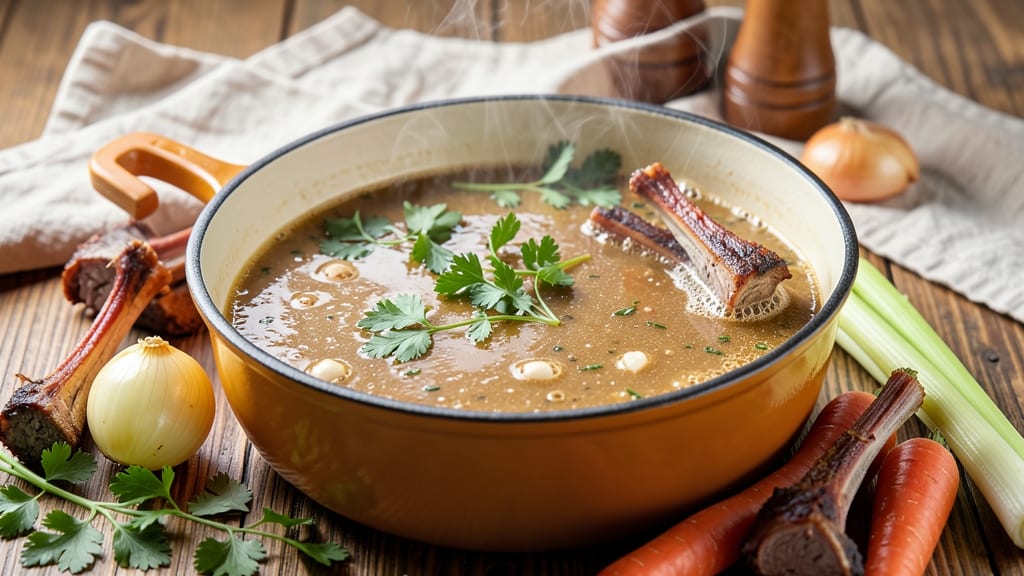
This basic beef broth recipe transforms simple ingredients into a deeply flavorful foundation for soups, stews, and braising. The secret lies in slow simmering bones and vegetables to extract maximum umami and richness—no shortcuts, just time-honored technique.
I developed this version after years of testing, ensuring every batch delivers restaurant-quality depth with minimal effort.
The process is straightforward: roast bones and aromatics to deepen flavor, simmer gently for hours to dissolve collagen, then strain for a smooth, golden liquid. What you’ll end up with is a concentrated, savory broth that enhances any dish it touches—whether used as a soup base or for deglazing pans.
The key is patience; rushing this step means sacrificing flavor.
This broth serves as the backbone of countless meals, from hearty beef stews to delicate risottos. Its versatility makes it a kitchen essential, and the technique scales perfectly for small batches or large pots. Store it properly, and you’ll have a pantry staple that keeps giving for weeks.
For extra depth, consider adding roasted vegetables or herbs during simmering, but the core method remains the same. Let’s get started—your kitchen’s flavor foundation is about to get an upgrade.
Ingredients for basic beef broth
Eleven essential ingredients for a restaurant-quality beef broth foundation.
| Ingredient | Amount | Notes |
|---|---|---|
| Beef Bones 🦴 | 3 lb | Marrow and knuckle bones preferred |
| Yellow Onion 🧅 | 1 whole | Quartered, skin on for color |
| Carrots 🥕 | 4 whole | Large, peeled, cut into chunks |
| Celery Stalks 🌿 | 4 whole | Cut into 2-inch pieces |
| Garlic Cloves 🧄 | 6 cloves | Smashed, skins left on |
| Fresh Parsley 🌿 | ¼ cup | Stems included, roughly chopped |
| Tomato Paste 🍅 | 2 tbsp | High-quality, no sugar added |
| Apple Cider Vinegar 🍎 | 1 tbsp | For brightness and acidity |
| Kosher Salt 🧂 | 2 tsp | Diamond Crystal preferred |
| Black Peppercorns 🌶️ | 1 tsp | Crushed, not ground |
| Bay Leaves 🌿 | 2 whole | Fresh if possible, dried acceptable |
The bones are the heart of this recipe—marrow and knuckle bones yield the richest flavor and gelatinous texture. Source them from a reputable butcher or specialty market like D'Artagnan for optimal quality. Avoid bones with excessive meat clinging, as they burn easily. If using store-bought, check for organic or grass-fed labels for superior depth. The aromatics—onion, carrot, celery—form the flavor base known as 'mirepoix,' and their balance ensures complexity without bitterness. For extra umami, add a dried shiitake mushroom to the roasting pan.
No beef bones? Pork femurs or chicken backs work in a pinch, though flavor will differ. Fresh parsley can be swapped for thyme or rosemary at half the amount, but parsley's mild sweetness complements the broth beautifully. Tomato paste is non-negotiable for depth—San Marzano is ideal, but any high-quality brand suffices. Vinegar adds brightness; sub with lemon juice or white wine vinegar if needed. For salt, Diamond Crystal kosher dissolves cleanly, while table salt may over-salt. Pre-ground pepper loses potency quickly, so crush whole peppercorns just before using for maximum aroma.
Store finished broth in glass jars or airtight containers in the refrigerator for up to 5 days or freeze in ice cube trays or silicone molds for 6 months. Label with date and contents—frozen broth expands, so leave headspace. For long-term storage, use vacuum-sealed bags to preserve flavor. Reheat gently on the stove or microwave until steaming. This broth is most flavorful after 24 hours of refrigeration, as flavors meld and collagen fully dissolves—patience is key.
Why You'll Love This Recipe
- Pantry Magic: I swear by this broth—no fancy ingredients, just the bones from a roast, a chopped onion, and the classic "sofrito" trio (carrots, celery, garlic). The beauty? I can pull it together while watching TV or waiting for the oven to preheat.
- Deep Umami Love: That first sip? Rich, savory, and layered—thanks to the marrow in the bones and the slow-simmered garlic. It’s the kind of flavor that makes you pause mid-spoonful, even though it’s just broth.
- Weeknight Swiss Army: Use it for ramen, braise chicken thighs, or deglaze a pan. Freeze half for when you’re too tired to cook. Honestly, I’ve made soup, dumplings, and even a quick stew from this same batch—no waste, all wins.
- Budget Hero: A single roast’s leftover bones yield gallons. Between us, this is how I stretch a $10 cut into three meals. Plus, the veggies? They’re the cheap, crunchy kind you can buy in bulk. Smart spending, zero guilt.
Step-by-step instructions for crafting rich beef broth
This method transforms simple ingredients into a deeply flavorful foundation for any dish.
Prepare and Roast the Bones for Maximum Flavor
Preheat your oven to 450°F. Place the 3 lb beef bones on a rimmed baking sheet, arranging them in a single layer. Roast for 20-25 minutes until the bones develop a deep mahogany color and you can smell the caramelized proteins in the air.
This roasting step is non-negotiable—it develops the Maillard reaction, creating complex flavors that will infuse your broth. Turn the bones occasionally to ensure even browning. For knuckle bones, you'll see the collagen-rich surfaces crisp up, which will later melt into a velvety texture.
Sear Aromatics and Build the Broth Base
In a large stockpot, combine the quartered yellow onion, 4 whole carrots (cut into chunks), 4 whole celery stalks (cut into 2-inch pieces), 6 smashed garlic cloves (skins left on), 2 tbsp tomato paste, and 1 tbsp apple cider vinegar. Add the roasted bones and 8 cups water (enough to cover everything by about 2 inches).
Bring to a rolling boil over high heat, then immediately reduce to a gentle simmer. Skim any foam or impurities that rise to the surface during the first 10 minutes—this ensures clarity in your finished broth. The vinegar helps extract collagen from the bones while adding brightness.
Simmer Low and Slow for Deep Flavor Extraction
After skimming, add the 2 tsp kosher salt, 1 tsp crushed black peppercorns, and 2 whole bay leaves. Partially cover the pot and maintain a simmer at 180-190°F (a gentle bubble at the surface) for 3-4 hours. I like to check the water level after 2 hours—if it's reduced by more than half, add hot water to maintain coverage.
The low temperature breaks down collagen into gelatin, creating that signature richness. You'll know it's working when the broth takes on a cloudy, opalescent quality. Don't rush this step—patience is what transforms good broth into exceptional broth.
Finish with Fresh Herbs and Strain
Remove the pot from heat and stir in the 0.25 cup fresh parsley (stems included). Let the broth sit for 15 minutes to absorb the parsley's freshness. Then strain through a fine-mesh sieve into a clean container, pressing gently on the solids to extract maximum flavor without making the broth cloudy.
The parsley adds a bright, herbal note that balances the deep umami. For best results, use the broth within 3-4 days or freeze in ice cube trays for portion control. This method yields about 6 cups of concentrated, restaurant-quality broth perfect for soups, braising, or deglazing pans.
Pro Tips For Making Basic Beef Broth
- BLANCH BONES FIRST: I learned this the hard way—skipping the quick sear and boil in water first means your broth ends up cloudy. Toss the bones in a pot, cover with cold water, bring to a boil for 5 minutes, then drain. This removes impurities and gets the collagen flowing faster later.
- CHAR THE VEGETABLES: Don’t just toss the onion, carrots, and celery in raw. Sear them in oil over medium-high heat until the onion turns golden and the celery darkens slightly—about 8-10 minutes. This builds flavor that simmers into depth, not just blandness.
- SKIP THE CROWDED POT: Overfilling the pot with bones and veggies slows the broth down. Aim for a 1:3 ratio of bones to water (e.g., 2 lbs bones to 6 cups water) and remove any veggies that turn mushy before 2 hours. More space = cleaner, faster extraction.
- ADD GARLIC LATE: Whole garlic cloves can turn bitter if simmered too long. Toss in peeled cloves (or 2 smashed halves) only in the last 30 minutes. For extra punch, crush the cloves first—it releases more aroma without burning.
Flavor customization for this basic beef broth
Herb-Infused Variations
For a fresh herbal twist, add 1 tbsp fresh thyme or 1 sprig rosemary during the final 30 minutes of simmering. These herbs pair beautifully with beef flavors.
I like using dried porcini mushrooms (about 2 tbsp) for an earthy depth—simmer them with the bones for 1 hour before straining. Remove them afterward to avoid bitterness. 🌿
Spicy Kick Options
Transform your broth into a bold, spicy base by adding 1-2 dried chili peppers (like guajillo or ancho) or 1 tsp smoked paprika during the roasting phase. For heat lovers, I toss in ½ tsp cayenne pepper with the salt at the 2-hour mark.
Remove the peppers before straining to avoid texture issues. This works perfectly for chili or tacos.
Umami Boosters
Elevate the savory depth with 1 tbsp fish sauce or 1 tsp soy sauce during the final 15 minutes of simmering. These add a complex umami punch without overpowering. For a vegetarian-friendly boost, add 1 tbsp nutritional yeast (it mimics meaty flavors) when stirring in the parsley.
I also love adding 1 tbsp Worcestershire sauce for a tangy, fermented kick.
Vegetable-Forward Adaptations
Swap out some beef bones for roasted vegetables to create a lighter, vegetable-packed broth. Use 2 cups roasted mushrooms or 1 cup roasted bell peppers (add during the final 30 minutes).
For a Mediterranean twist, include 1 fennel bulb and 1 orange peel strip (remove before straining). These additions work wonderfully in risottos or pasta dishes.
Smoky Depth Additions
Infuse your broth with smoky char by adding 1 smoked salt (like Morton's Kosher Smoked Salt) or ½ tsp liquid smoke during the last 10 minutes of simmering. For a wood-fired touch, simmer the broth over applewood or hickory chips (soaked first) for 1 hour.
This technique mimics traditional campfire broths and pairs perfectly with grilled meats or barbecue.
Creamy Texture Tweaks
Create a silky-smooth broth by adding 1 cup cooked white beans (like cannellini) during the final 30 minutes. Blend a portion of the broth after straining with ½ cup heavy cream or coconut milk for a luxurious base—ideal for creamy soups or sauces.
For a lighter option, whisk in 1 tbsp cornstarch mixed with 2 tbsp cold water at the end for a subtle thickening.
Nutrition facts
Frequently asked questions
Can I use leftover roasted bones from a holiday meal?
Leftover roasted bones work perfectly—they've already developed deep flavor through the Maillard reaction. Just remove any large meat chunks and follow the same simmering process. The key is ensuring they're clean and free of excess fat or meat that could make the broth cloudy.
Why does my broth look cloudy after straining?
Cloudiness usually means undissolved collagen or fine particles. For clearer broth, press the solids more gently through a fine-mesh sieve or use cheesecloth. If you prefer the cloudy texture (which actually indicates gelatin content), it's completely fine—just simmer longer to break down more collagen.
How do I make this broth vegetarian?
Swap beef bones for mushroom stems (about 2 cups), soy sauce (2 tbsp), and 1 tbsp miso paste for umami. Add 1 tbsp tomato paste and 1 tsp smoked paprika to mimic the beefy depth. Simmer for 2-3 hours with 2 tbsp nutritional yeast at the end for a meaty flavor.
Can I make this in an Instant Pot?
Yes! Roast the bones first, then add everything to the Instant Pot with 8 cups water. Cook on high pressure for 90 minutes, then natural release for 1 hour. Strain and finish with parsley. The pressure method extracts collagen faster but may yield slightly less gelatin than stovetop.
What's the best way to use up extra broth?
Freeze in ice cube trays for perfect portions in cooking, or reduce it by half for a concentrated beef stock to use in sauces. It also makes an excellent base for risottos, braising liquids, or even a flavorful pasta water. Label containers with the date—fresh broth tastes best within 3 days.