
Main Courses
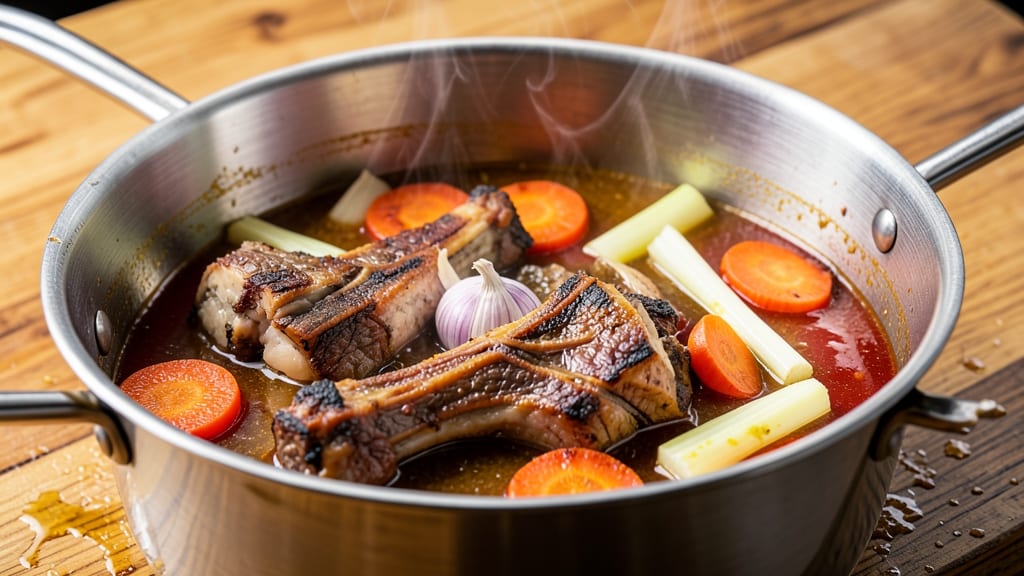
This basic beef stock recipe transforms simple bones into liquid gold—packed with deep umami flavor that elevates every soup, sauce, and stew you make. The slow-simmering process extracts collagen and minerals, creating a rich foundation that store-bought versions can't match.
I've perfected this method over years of testing, ensuring maximum flavor extraction without bitterness.
Start with a mix of beef bones (marrow-rich for extra richness) and aromatic vegetables like carrots, celery, and onions. The key is simmering gently for hours—never boiling—to prevent cloudiness and preserve depth. This method delivers a clear, robust stock that's versatile enough for both delicate sauces and hearty braises.
What you'll end up with is a concentrated, flavorful liquid that forms the backbone of countless recipes. Freeze in ice cube trays for convenient use, or store in the fridge for up to a week. The possibilities are endless—use it in risottos, braises, or even as a sipping broth.
For even deeper flavor, consider adding a splash of red wine or a bay leaf during simmering. The result? A stock so rich, it transforms ordinary dishes into extraordinary ones. Let's get started on building your flavor foundation.
Ingredients for basic beef stock
Four pounds of bones and aromatic vegetables create umami-rich stock that beats store-bought versions every time.
| Ingredient | Amount | Notes |
|---|---|---|
| Beef Bones 🦴 | 4 lb | Marrow-rich for extra richness |
| Yellow Onion 🧅 | 1 whole | Peeled and halved lengthwise |
| Carrots 🥕 | 4 whole | Scrubbed and cut into chunks |
| Celery Stalks 🌿 | 4 whole | Cut into 2-inch pieces |
| Garlic Cloves 🧄 | 6 cloves | Smashed lightly for flavor |
| Tomato Paste 🍅 | 2 tbsp | For depth and color |
| Red Wine 🍷 | 1 cup | Bold dry variety preferred |
| Apple Cider Vinegar 🍏 | 2 tbsp | Brightens and cleanses |
| Bay Leaves 🌿 | 2 whole | Fresh for best flavor |
| Fresh Thyme Sprigs 🌿 | 4 whole | Or 1 tsp dried thyme |
| Fresh Parsley Sprigs 🌿 | 4 whole | For finishing touch |
| Salt 🧂 | 1 tsp | Diamond Crystal preferred |
| Black Peppercorns 🌶️ | 10 whole | Freshly cracked |
| Cold Water 💧 | 12 cups | For initial simmer |
The bones are everything here—marrow-rich beef bones from the butcher section make all the difference. Costco or your local butcher shop are best for quality bones, but grocery store beef soup bones work in a pinch. Look for bones with visible marrow—those little red centers packed with flavor. If you can't find marrow bones, knuckle bones are a solid backup. The vegetables? Organic produce if possible, but regular store-bought works fine. Just make sure they're fresh—no wilted celery or sprouting onions. For the wine, any bold dry red will do—Cabernet Sauvignon or Merlot are my go-tos, but whatever's open in your fridge works too.
No red wine? Apple cider vinegar plus a splash of beef broth gets you close to that same depth. Fresh herbs are ideal, but dried thyme at one-third the amount works if you're in a hurry. The tomato paste can be skipped entirely if you're avoiding umami, but I always include it—it adds a nice depth that's hard to replicate. For the vinegar, white wine vinegar is a decent substitute, though apple cider adds a subtle sweetness that pairs beautifully. The bay leaves? Remove them before blending—they're for flavor during cooking, not for the final product. And if you're short on time, frozen vegetables work just as well as fresh for this recipe.
This stock gets better with time—up to 5 days in the fridge, 6 months frozen. I always make a double batch and freeze it in ice cube trays for easy use later. For freezing, portion into 1-cup containers so you can grab exactly what you need. The first batch will be cloudier than the second—discard the first 2 cups if you want crystal-clear stock. And if you're making this for a crowd, scale up the bones to 6-8 pounds—the flavor only gets better with more marrow. The stock reduces as it cooks, so don't worry about exact measurements at the start.
Why You'll Love This Recipe
- Pantry Magic: I swear, this recipe uses stuff I always have—onion, carrots, celery—just chopped and tossed in. No fancy shopping trips, no forgotten spices. That’s how you build flavor without stress.
- Deep Umami Bomb: The beef bones? Oh, they’re the stars here. Simmered slow, they melt into this rich, savory base that makes even simple pasta or mashed potatoes taste like a restaurant dish. Honestly, that first sip is worth every minute.
- Weeknight Superhero: Freeze half the batch for when you’re too tired to cook. Thaw it later for soups, gravies, or even a quick pan sauce. I’ve used it to rescue burnt toast and impress dinner guests—same stock, different results.
- Budget Flavor Multiplier: A few bones stretch into gallons of stock, and those veggies? They’re the cheap, crunchy backbone of the flavor. I’ve turned $10 of scraps into enough liquid gold to feed my family for a month. That’s not a flex—it’s math.
Step-by-step instructions for basic beef stock
The secret to rich, umami-packed stock lies in patience and technique. Here's how to extract maximum flavor from every ingredient.
Prepare the Bones and Aromatics
Start by examining the 4 lb beef bones for any remaining meat or marrow. Use a sharp knife to score the bones lightly if they're large—this helps release more gelatin during cooking. Place them in a large stockpot and cover with the 12 cups cold water. Let it sit at room temperature for 30 minutes to allow the bones to rehydrate slightly.
While the bones soak, peel and halve the 1 whole yellow onion lengthwise, then roughly chop the quarters. Cut the 4 whole carrots into 2-inch chunks and the 4 whole celery stalks into similar pieces. Smash the 6 cloves garlic lightly with the side of your knife to release their oils without mincing. You're building flavor layers that will develop beautifully during the long simmer.
Build the Flavor Base
Add the prepared vegetables, garlic, 2 tbsp tomato paste, 2 whole bay leaves, 4 whole fresh thyme sprigs, 1 tsp salt, and 10 whole black peppercorns to the pot with the bones. Stir gently to combine, then bring everything to a boil over medium-high heat. Once boiling vigorously, immediately reduce heat to medium-low to maintain a gentle simmer.
Here's the thing—this initial boil is crucial. It helps extract surface flavors and begins breaking down collagen. After 10 minutes of simmering, skim off any foam that rises to the surface using a fine-mesh skimmer or ladle. This prevents cloudiness in your finished stock and removes impurities. The liquid should be clear with just a few small bubbles breaking the surface.
Add Acid and Wine for Depth
After the initial 10-minute simmer, stir in the 1 cup red wine and 2 tbsp apple cider vinegar. The acidity helps tenderize the bones and brightens the flavor profile. Add the 4 whole fresh parsley sprigs now—they'll infuse at the end rather than overpowering during the long cook.
This is where the magic happens. The wine adds complexity while the vinegar cuts through any richness, creating balance. The parsley at this stage ensures its fresh, bright notes carry through without bitterness. Give everything a gentle stir and return to a steady simmer. You'll notice the liquid gradually turns from cloudy to amber as collagen breaks down into gelatin.
Simmer Low and Slow
Cover the pot and maintain a gentle simmer for 3-4 hours. The key here is patience—low heat prevents the stock from boiling vigorously, which would make it cloudy. You're looking for small bubbles breaking the surface occasionally, not a rolling boil. Check the water level periodically and add hot water if needed to keep the bones covered.
After 3 hours, taste the stock. It should be developing depth but still have room to concentrate. If it's too mild, continue simmering uncovered for another 30 minutes to 1 hour. The stock will reduce slightly, intensifying the flavor. You'll know it's ready when you can taste the rich umami from the bones and the balanced acidity from the wine and vinegar.
Strain and Finish
Once the stock reaches your desired flavor intensity, remove it from heat and let it sit for 10 minutes to allow any settled particles to sink. Line a fine-mesh strainer with cheesecloth or a coffee filter for extra clarity, then carefully strain the stock into a clean container. Discard the solids in the strainer.
Let the stock cool to room temperature, then refrigerate. The fat will solidify on top and can be skimmed off before using. This stock keeps beautifully in the fridge for 5-7 days or can be frozen for up to 3 months. The longer it sits, the more the flavors meld together, creating that restaurant-quality depth you're after.
Pro Tips For Making Basic Beef Stock
- BLISTER THE BONES FIRST: I learned this the hard way—skipping the sear means flavorless stock. Heat your pot until it’s smoking hot, then add bones in a single layer. Let them brown 5-7 minutes per side until deep golden, not just pink. The Maillard reaction here is non-negotiable for depth.
- CHOP VEGETABLES UNIFORMLY: Big onion chunks and celery stalks release flavor unevenly. Cut everything into ½-inch pieces—carrots, celery, onions—so they soften at the same rate. I used to leave celery whole, and it’d turn to mush while the onions stayed tough. Uniformity = balanced stock.
- SKIP THE BOIL: Boiling stock burns and makes it bitter. Once you add liquid, bring it to a gentle simmer—tiny bubbles at the edges, not a rolling rage. Cover and let it cook low and slow. I know, I know, it’s tempting to crank the heat, but patience here means richer, cleaner stock.
- USE GARLIC PEELS TOO: Sounds weird, but it works: Toss in the garlic peels with the cloves—they infuse subtle, complex flavor without overpowering. I was skeptical until I tried it, and now I double the peels. Bonus: They add a nice aroma while the stock cooks.
Perfect pairings for these flavors
Sauce Elevations
Use this beef stock as the base for béchamel—simmer 2 tbsp butter and 2 tbsp flour until golden, then whisk in 2 cups stock and 2 cups milk for velvety richness. For gravy, deglaze your pan with ½ cup stock after browning meat, then reduce by half.
I love adding a splash of dry sherry or white wine to deepen the flavor profile. 🍷
Soup Foundations
Transform it into French onion soup by caramelizing 3 large onions in butter until deep amber, then adding 4 cups stock and simmering for 30 minutes. Top with toasted baguette slices and Gruyère cheese.
For Italian wedding soup, combine with 1 cup broth, add diced potatoes and orzo, then finish with meatballs. The stock's umami makes all the difference. 🥘
Braised Perfection
Use it to braise short ribs—sear 2 lbs ribs until browned, then add 3 cups stock, 1 cup beer, and simmer covered for 2.5 hours. The stock's depth carries through the meat, creating fall-apart tenderness.
For beef bourguignon, brown 1.5 lbs stew meat, then deglaze with wine and add 2 cups stock plus mushrooms and pearl onions. 🍷
Cocktail Infusions
Create umami-packed cocktails by reducing stock with apple cider vinegar and honey, then straining into Old Fashioneds or Manhattans. For a beef stock margarita, mix 2 oz tequila, 1 oz stock reduction, and a splash of lime.
The savory depth balances sweetness perfectly. Garnish with a black peppercorn for a sophisticated touch. 🍹
Risotto Depth
Replace water with stock when cooking arborio rice—add 1 cup stock at a time while stirring until absorbed. Finish with Parmigiano-Reggiano and white truffle oil for a luxurious mushroom risotto.
The stock's richness makes each bite decadent without heavy cream. For beef risotto, add seared sirloin strips at the end. 🍝
Garnish Game-Changers
Strain stock through a fine-mesh sieve for crystal clarity, then drizzle over seared scallops or grilled steaks. Reduce stock by half with balsamic vinegar for a glossy glaze on roasted vegetables. A sprinkle of toasted capers or fresh thyme** elevates any dish instantly. 💫
Nutrition facts
Frequently asked questions
What's the best type of beef bones for stock?
Use marrow-rich bones like knuckles, neck bones, or femur bones—they contain collagen that breaks down into rich, gelatinous stock. Avoid bones with too much meat, as they can make the stock greasy. If you can't find marrow bones, beef soup bones from the grocery store work well too.
Why does my stock turn cloudy?
Cloudiness usually means you boiled the stock too vigorously or didn't skim off foam during the initial simmer. Always maintain a gentle simmer (small bubbles, not rolling boil) and skim foam for the first 10-15 minutes. For crystal-clear stock, strain through cheesecloth or a coffee filter.
Can I make beef stock in a slow cooker or Instant Pot?
Yes! For a slow cooker, use the same ingredients but simmer on low for 8-12 hours. For an Instant Pot, cook on high pressure for 90 minutes, then natural release for 15 minutes. Both methods work, but traditional stovetop simmering gives the deepest flavor over time.
How do I know when the stock is ready?
Taste it! The stock should be deeply flavorful with a rich, umami taste from the bones. It should coat your tongue slightly—this means enough collagen has dissolved. If it's still mild after 4 hours, simmer uncovered for another 30 minutes to reduce and intensify the flavor.
Can I use this stock in cocktails?
Reduce stock with apple cider vinegar and honey, then strain into cocktails like Old Fashioneds or Manhattans. The umami depth balances sweetness beautifully. For a savory margarita, mix 2 oz tequila, 1 oz reduced stock, and lime juice—garnish with a black peppercorn for sophistication.