
Soups & Stews
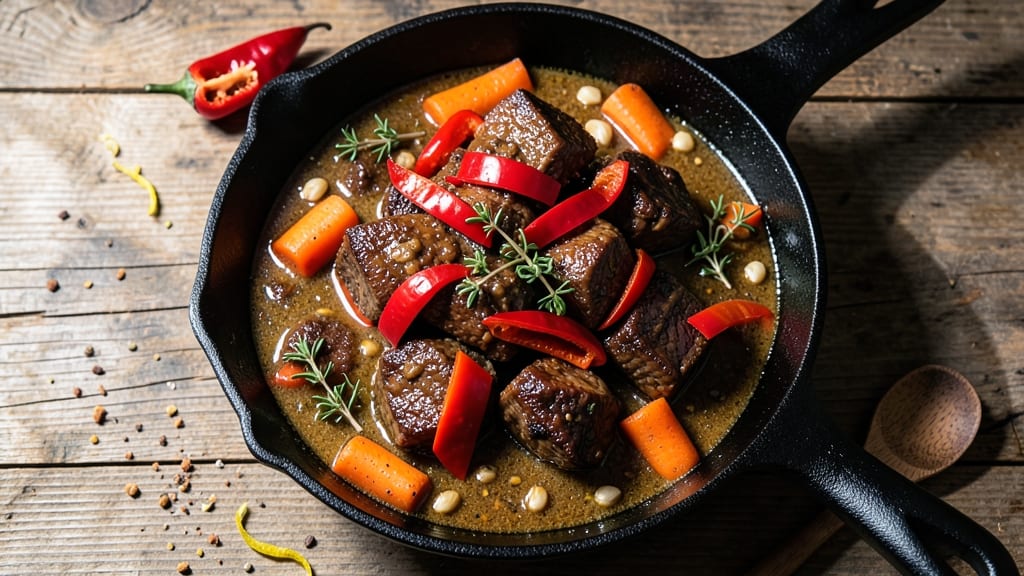
This Bajan beef stew recipe brings the rich, aromatic soul of the Caribbean to your kitchen in one comforting pot. 🌟 The secret lies in slow-simmered beef, tenderized by bold spices like thyme, scallions, and Scotch bonnet—each ingredient playing its part in creating a dish that’s as hearty as it is flavorful.
What makes this stew special is how the spices meld together over time, transforming tough cuts into melt-in-your-mouth perfection.
The process starts with browning the beef for deep flavor, then layering in garlic, ginger, and a blend of Caribbean spices that infuse the meat with warmth.
A splash of tomato paste and coconut milk creates a velvety base, while root vegetables like carrots and potatoes soak up every bit of that rich, spiced broth. The result? A stew so satisfying, it feels like a hug in a bowl.
By the time it’s done simmering—about 2.5 hours—the beef will be fork-tender, the vegetables perfectly soft, and the sauce thick enough to coat each bite. This is the kind of dish that tastes even better the next day, making it ideal for meal prep or feeding a crowd.
Serve it with steamed rice, dumplings, or fresh breadfruit for the full Bajan experience.
What sets this recipe apart is its balance of heat and comfort—just enough Scotch bonnet to wake up your palate without overpowering the tender beef. The slow-cooking method ensures deep, layered flavors, while the one-pot simplicity makes it perfect for weeknight dinners or special gatherings. Let’s get cooking!
Ingredients for bajan beef stew
Sixteen ingredients, one unforgettable pot of Bajan comfort food.
| Ingredient | Amount | Notes |
|---|---|---|
| Beef Chuck Roast 🥩 | 3 lb | Cut into 1.5-inch cubes |
| Yellow Onion 🧅 | 2 whole | Chopped into 0.5-inch pieces |
| Garlic Cloves 🧄 | 6 cloves | Minced for depth of flavor |
| Fresh Thyme 🌿 | ¼ cup | Stems removed, chopped |
| Scotch Bonnet Pepper 🌶️ | 1 whole | Seeds removed for mild heat |
| Carrots 🥕 | 3 whole | Cut into 1-inch chunks |
| Russet Potatoes 🥔 | 3 medium | Cut into 1-inch cubes |
| Tomato Paste 🍅 | 2 tbsp | For rich, velvety base |
| Coconut Milk 🥥 | 1 can (13.5 oz) | Full-fat for creaminess |
| Beef Broth 💧 | 4 cups | Low-sodium preferred |
| Olive Oil 🫒 | 2 tbsp | For browning beef |
| Ground Allspice 🌶️ | 1 tsp | Earthy depth of flavor |
| Ground Cinnamon 🌿 | ½ tsp | Warmth without overpowering |
| Salt 🧂 | 1 ½ tsp | Adjust to taste |
| Black Pepper 🌶️ | 1 tsp | Freshly ground preferred |
The beef is non-negotiable here—chuck roast delivers that melt-in-your-mouth texture after slow cooking. Grab it from the butcher counter if possible, as pre-packaged versions often have less marbling. For the Scotch bonnet, Caribbean markets or specialty stores carry them fresh, but don't worry if you can't find one—habanero or serrano peppers work in a pinch (just reduce the amount by half). The thyme should be vibrant green, not wilted, and the coconut milk? Full-fat canned is best—it adds that luscious creaminess that makes this stew so special. If you're using dried thyme, cut the amount to one-third of what's listed.
No Scotch bonnet? Habanero or serrano peppers work, but use half the amount since they're hotter. The tomato paste can be swapped for 1 cup crushed tomatoes if you prefer, though it adds a slightly different texture. For the allspice, ground is fine, but whole allspice berries toasted and ground make this dish sing. The beef broth matters—low-sodium is key so you can control the saltiness. If you're short on time, coconut milk in a carton works, but the canned version has more body. The potatoes should be Russet or Yukon Gold—they hold up better during long cooking.
This stew tastes even better the next day, so make extra if you can. Store in an airtight container in the fridge for up to 5 days, or freeze portions for 3 months. The flavors deepen over time, so don't hesitate to reheat leftovers. For meal prep, double the recipe—it's perfect for feeding a crowd. The coconut milk separates when chilled, so stir it well before reheating to restore that creamy texture. Serve with steamed rice or fresh breadfruit if you can find it, but even plain rice works beautifully.
Why You'll Love This Recipe
- One-Pot Magic: I swear by this recipe—just dump everything in a pot, let it simmer, and walk away. The beef practically melts into tender perfection while you handle the rest of your day.
- Heat with Depth: That Scotch bonnet pepper doesn’t just add spice—it layers warmth and complexity that lingers. Honestly, the thyme and garlic turn this into something far richer than your average stew.
- Meal Prep MVP: Make a big batch on Sunday, and you’ve got hearty lunches all week. The flavors actually get better as it sits, and reheating? Just a splash of water and a few minutes on the stove.
- Budget-Friendly Feast: A chuck roast stretches across multiple meals without breaking the bank. Between us, this is how I feed my whole family for under $15—and no one complains about the leftovers.
Step-by-step instructions for Bajan beef stew
Transform tough beef into melt-in-your-mouth tenderness with this rich Caribbean-inspired method.
🔥 Step 1: Sear the Beef for Deep Flavor
Heat a large Dutch oven over medium-high heat and add the 2 tablespoons olive oil. Working in batches if needed, add the 3 lb beef chuck roast cut into 1.5-inch cubes and sear for 3-4 minutes per side until deeply browned. This step creates the Maillard reaction that builds rich, caramelized flavor.
Don't crowd the pan—sear in batches if necessary to maintain heat. Once browned, transfer the beef to a plate and set aside. You'll notice the beef releases easily from the pan when properly seared, indicating it's ready for the next step.
👨🍳 Step 2: Build the Aromatic Base
In the same Dutch oven, add the 2 whole yellow onions chopped into 0.5-inch pieces and cook for 5-6 minutes until softened and lightly golden. Add the 6 cloves minced garlic and cook for 30 seconds until fragrant—this prevents the garlic from burning.
Stir in the 1 whole scotch bonnet pepper with seeds removed, 0.25 cup chopped fresh thyme, 1 teaspoon ground allspice, and 0.5 teaspoon ground cinnamon. Cook for 1 minute to toast the spices, releasing their essential oils. This aromatic blend forms the flavor foundation of the stew.
🍳 Step 3: Develop the Rich Base
Add the 2 tablespoons tomato paste and cook for 2 minutes until it darkens slightly. Pour in the 4 cups beef broth and scrape up any browned bits from the bottom of the pot—these contain concentrated flavor. Bring to a gentle simmer and return the seared beef to the pot.
Partially cover the Dutch oven and let the stew simmer for 1 hour at a gentle boil. This initial simmer helps break down the tough beef fibers while allowing the spices to infuse. Stir occasionally to prevent sticking, and add water if the liquid reduces too much.
🥘 Step 4: Add Vegetables and Simmer
Add the 3 whole carrots cut into 1-inch chunks and 3 medium russet potatoes cut into 1-inch cubes to the stew. Stir gently to distribute them evenly. Pour in the 1 can (13.5 oz) full-fat coconut milk and stir well to combine.
Continue simmering uncovered for 45-60 minutes until the beef is fork-tender and the vegetables are easily pierced with a fork. The stew should have a thick, velvety consistency with the beef falling apart easily. Taste and adjust seasoning with the 1.5 teaspoons salt and 1 teaspoon black pepper as needed.
⏰ Step 5: Rest and Serve
Remove the stew from heat and let it rest for 10 minutes before serving. This resting period allows the flavors to meld and the juices to redistribute throughout the stew. The coconut milk will thicken slightly as it cools, creating an even richer texture.
Serve the Bajan beef stew hot, ladling the tender beef, vegetables, and flavorful sauce over steamed rice or crusty bread. The combination of tender beef, sweet potatoes, and aromatic spices creates a comforting, hearty meal that captures the essence of Caribbean home cooking.
Pro Tips For Making Bajan Beef Stew
- Sear the Roast Hard: I learned this the hard way—skipping a deep sear means your stew will taste like it simmered, not caramelized. Get that beef chuck roast screaming hot in a dry pan for 5-7 minutes per side until it’s got a dark crust. The Maillard reaction here isn’t just for show; it’s what builds flavor when the stew cooks low and slow.
- Char the Scotch Bonnet: Sounds weird, but it works: quickly char the whole Scotch bonnet pepper (seeds and all) over an open flame or in a hot pan before chopping. That smoky bite cuts through the richness of the beef and onions, giving your stew that authentic, slightly fiery depth. Just don’t inhale the fumes—these peppers are no joke.
- Deglaze with Rum (Yes, Really): After searing the onions and garlic, don’t just splash in water—pour in ½ cup of dark rum (or even cheap overproof rum) and let it bubble for 2 minutes. The alcohol burns off, leaving behind a caramelized, slightly sweet base that makes the stew taste like it’s been simmering for hours. (And if you’re worried about alcohol content, it’s negligible after cooking.)
- Simmer Low and Covered: I skip this when I’m lazy, but the dish is noticeably better when I don’t: after the initial 30 minutes of browning and deglazing, drop the heat to a true simmer (tiny bubbles, not a rolling boil) and cover the pot. The steam keeps the beef tender without drying it out, and the flavors meld into that rich, spiced consistency Bajans love. Check it at the 2-hour mark—it’ll be perfect.
Regional styles of this dish
Jamaican Home-Style
The Jamaican version of this stew often includes jerk seasoning—a blend of allspice, thyme, and Scotch bonnet—that gets rubbed directly onto the beef before browning. I like to add 1 tablespoon of jerk seasoning (store-bought or homemade) to the seared beef before simmering.
Jamaican cooks also frequently toss in green bananas instead of potatoes for a starchy, slightly sweet contrast. 🌶️
Trinidadian Twist
In Trinidad, this stew might feature dasheen leaves (similar to taro) or callaloo (a leafy green) for added texture and nutrients.
The Trinidadian approach also incorporates pumpkin or sweet potatoes instead of regular potatoes, and sometimes a splash of rum (about 2 tablespoons) is added while simmering to deepen the flavor.
The heat level is often cranked up with more Scotch bonnet peppers—sometimes even keeping the seeds in for extra fire.
Barbadian Adaptation
On Barbados, this stew is traditionally called "Bajan Beef Stew" but often includes breadfruit (cooked separately and served alongside) or dasheen for a more authentic touch. Barbadian chefs might also add okra to the stew for a slightly slimy, thickening effect—about ½ cup sliced okra added with the potatoes.
The spices are kept bold but balanced, with extra ground cinnamon (up to 1 teaspoon) for warmth. 🌿
Modern Fusion
For a contemporary take, I’ve experimented with adding roasted butternut squash (about 2 cups cubed) in place of potatoes and swapping half the beef for shredded chicken thighs—cooked separately and added back in the last 30 minutes of simmering.
A drizzle of honey (about 1 tablespoon) at the end adds a subtle sweetness that pairs beautifully with the spicy Scotch bonnet. This version is perfect for a crowd-pleasing, lighter stew.
Slow-Cooker Shortcut
If you’re short on time, transfer the seared beef and all spices to a 6-quart slow cooker, then add the remaining ingredients (including coconut milk and broth) and cook on low for 8 hours or high for 5 hours.
The slow cooker’s gentle heat ensures the beef stays tender without constant monitoring. I’ve found this method works best with pre-cut beef and pre-chopped vegetables for convenience. Just stir occasionally and adjust salt at the end—slow-cooked stews can sometimes need a little more seasoning. ⏰
Spice-Forward Variations
For those who love heat, increase the Scotch bonnet to 2 peppers (seeds removed) and add ½ teaspoon of ground cayenne to the spice blend.
If you prefer a smoky depth, swap ½ teaspoon of ground allspice for ½ teaspoon of smoked paprika—this adds a subtle charred note without overpowering the dish.
For a sweeter profile, stir in 1 tablespoon of brown sugar during the final 15 minutes of simmering to caramelize the flavors slightly. 🔥
Nutrition facts
Frequently asked questions about Bajan beef stew
Can I substitute the Scotch bonnet pepper?
Yes! If you can't find Scotch bonnet, use habanero or serrano peppers—but reduce the amount by half since they're hotter. For a milder heat, jalapeño or bell pepper works, though the flavor won't be as authentic. The key is balancing the heat with the other spices like allspice and cinnamon.
How do I make this stew in an Instant Pot?
Sear the beef first, then add all ingredients (except coconut milk) to your Instant Pot and cook on high pressure for 40 minutes. Quick-release the pressure, stir in the coconut milk, and let it sit for 10 minutes before serving. The Instant Pot version cooks faster but still delivers tender beef and rich flavors.
What's the best way to store leftovers?
Store in an airtight container in the fridge for up to 5 days or freeze for 3 months. The flavors actually improve overnight! When reheating, stir well (especially the coconut milk) and warm on low heat or in the microwave until bubbly. Never reheat directly from frozen—thaw first.
Can I make this stew less spicy?
Remove all seeds from the Scotch bonnet before chopping, or use half the amount listed. For extra mildness, swap it for bell pepper entirely. The allspice and thyme will still provide depth without the heat. The coconut milk also helps balance any remaining spiciness.
What's the secret to tender beef?
The key is low-and-slow cooking—simmering for at least 2.5 hours breaks down the tough fibers. Also, browning the beef first creates flavorful crusts that stay tender when cooked. Don't rush the process, and avoid boiling vigorously, which can make the meat tough.