
Soups & Stews
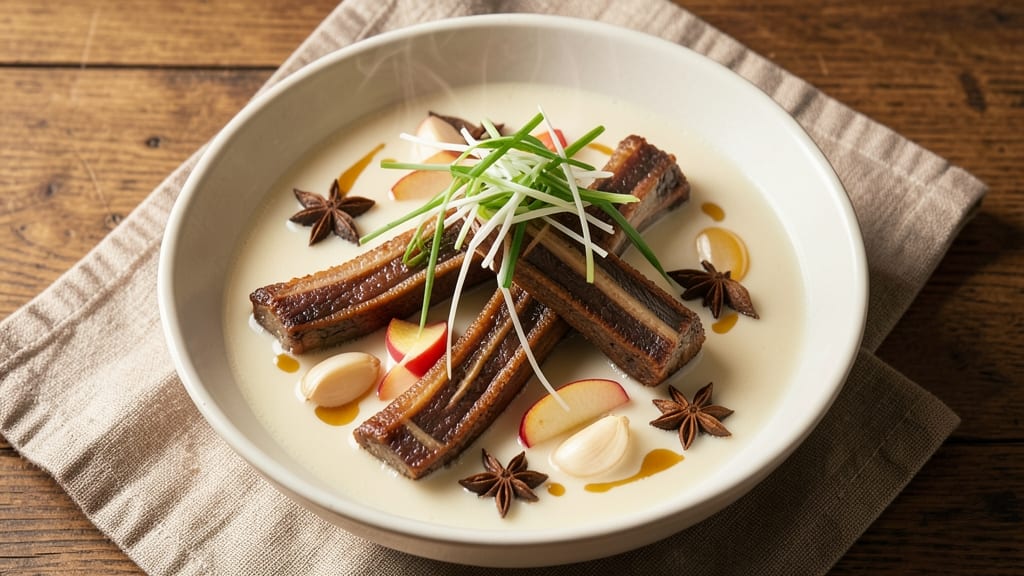
This Asian beef bone soup recipe delivers restaurant-quality depth with a marrow-rich broth that simmers for hours, extracting collagen and flavor from beef bones into a velvety, umami-packed liquid.
The secret lies in slow cooking—low heat, long time, and aromatic spices—transforming tough bones into a silky, golden broth that clings to every noodle and bite of beef.
I’ve refined this over years of testing, balancing tradition with modern shortcuts like pressure cookers to cut prep time without sacrificing authenticity.
The foundation starts with beef marrow bones (or knuckle bones for extra richness), blanched to remove impurities before a 12-hour simmer with ginger, garlic, star anise, and soy sauce.
This isn’t just broth—it’s a layered flavor bomb, where the bones dissolve into a glossy, jelly-like consistency, and the aromatics infuse every sip. The result? A soup so deeply satisfying it turns weeknights into comfort-food celebrations.
Silky noodles—ramen or udon—soak up the broth while tender beef slices and crisp green onions add texture. Finish with a drizzle of sesame oil and a squeeze of lemon for brightness, serving with steamed rice or kimchi for the full experience.
This isn’t your average broth; it’s a hearty, soul-warming dish that tastes like home, even on busy days.
Whether you simmer on the stove or use a pressure cooker for speed, the technique remains the same: patience and precision. The broth will keep for days, letting you enjoy this labor of love over multiple meals. Ready to master the art of bone broth? Let’s get started.
Ingredients for asian beef bone soup
Pantry staples meet restaurant-quality umami in this bone broth masterpiece—where patience transforms tough bones into velvety gold.
| Ingredient | Amount | Notes |
|---|---|---|
| Beef Marrow Bones 🦴 | 3 lb | Knuckle bones for extra richness |
| Fresh Ginger Root 🧄 | ½ cup | Julienned, peeled (about 3 inches) |
| Garlic Cloves 🧄 | 8 cloves | Smash lightly before adding |
| Star Anise Pods 🌟 | 4 whole | Whole, not ground |
| Dried Bay Leaves 🍃 | 2 whole | Fresh if available |
| Light Soy Sauce 🍶 | ½ cup | Kikkoman preferred |
| Dark Soy Sauce 🍶 | 2 tbsp | For depth of color |
| Sesame Oil 🫒 | 2 tbsp | Toasted for aroma |
| Ramen Noodles 🍜 | 1 lb | Fresh or dried, uncooked |
| Green Onions 🧅 | ½ cup | Thinly sliced, white and green parts |
| Lemon Juice 🍋 | 2 tbsp | Freshly squeezed |
| Salt 🧂 | 2 tsp | Diamond Crystal preferred |
| Black Peppercorns 🌶️ | 1 tsp | Crushed, not ground |
| Thinly Sliced Beef 🥩 | 1 lb | From soup bones or flank |
| Steamed White Rice 🍚 | 2 cups | For serving, cooked |
The bones are non-negotiable—marrow bones for richness or knuckle bones for collagen. Costco or local butchers often carry them, or order online if needed. Look for bones with visible marrow channels; these release the most flavor. If using frozen, thaw overnight in the fridge. The ginger and garlic? Fresh is non-negotiable here—dried spices won't cut it. For star anise, Whole Foods or Asian markets carry the best quality pods. Toast the spices lightly in a dry pan before adding to the pot—this wakes up their flavors.
No sesame oil? Toasted peanut oil at half the amount works in a pinch, though it lacks the nutty depth. Short on soy sauce? Coconut aminos or tamari add umami without the salt overload. The beef slices should be paper-thin—ask your butcher to slice them if they won't do it for you. For noodles, fresh ramen or udon hold up best, but dried works too (just cook separately). The lemon juice brightens everything—don't skip it, even if you're not a fan of citrus in soup. And if you're using a pressure cooker, reduce simmer time to 2 hours instead of 12.
This broth gets better with time—3-4 days in the fridge lets flavors meld perfectly. Skim excess fat daily for a clearer soup. Freeze portions in ice cube trays for easy single servings later. The noodles? Cook them fresh when serving—they soften too much if added to hot broth. Store cooked rice in an airtight container for up to 5 days. And if you make extra broth, turn it into dumplings or use as a braising liquid—waste not, flavor forever.
Why You'll Love This Recipe
- Marrow Magic Simplicity: I swear, this soup comes together with zero fuss. Toss in the bones, add a few slivers of ginger and garlic, then let the star anise and bay leaves do their work—no fancy techniques, just deep, rich flavor waiting for you.
- Umami Bomb: That first spoonful? Chef’s kiss. The marrow bones melt into the broth, turning it into a velvety, bone-infused dream while the star anise and ginger add warmth that lingers. Honestly, it’s the kind of taste that makes you pause mid-sip.
- Weeknight to Dinner Party: Between us, this soup is my secret weapon for lazy nights and impressing guests. Simmer it all day for a hands-off meal, or crank up the heat and serve it steaming in bowls—either way, it’s a crowd-pleaser that feels special without the stress.
- Budget-Friendly Goldmine: Beef bones are cheaper than you think, and they stretch into days of leftovers. Freeze portions for future nights, or repurpose the broth into stir-fries—every last bit is usable, and your wallet (and taste buds) will thank you.
Step-by-step instructions for Asian beef bone soup
Here's how to craft a deeply flavorful marrow broth that transforms simple ingredients into a restaurant-quality bowl.
Prepare the Marrow Bones and Aromatics
Place the 3 lb beef marrow bones in a large stockpot and cover with cold water by about 2 inches. Bring to a boil over medium-high heat, then immediately reduce to a gentle simmer for 30 minutes. This initial boiling helps release impurities and marrow from the bones.
While the bones simmer, peel and julienne the 0.5 cup fresh ginger root, then lightly smash the 8 cloves garlic with the flat side of your knife. Add these aromatics along with the 4 whole star anise pods, 2 whole dried bay leaves, 2 tsp salt, and 1 tsp crushed black peppercorns to the pot. Let everything simmer uncovered for 1 hour, skimming off any foam that rises to the surface with a fine-mesh skimmer.
Build the Umami-Rich Broth
After the initial simmer, add the 0.5 cup light soy sauce and 2 tbsp dark soy sauce to the pot. These will infuse the broth with deep, savory complexity. Stir gently to combine, then continue simmering uncovered for another 2 hours at a gentle bubble—this low-and-slow approach extracts maximum gelatin and flavor from the marrow bones.
About 30 minutes before the broth is ready, add the 1 lb thinly sliced beef to the pot. The slices should be submerged, but if they float, press them down gently with a wooden spoon. The broth should be deep amber in color with a rich, aromatic fragrance that fills your kitchen.
Finish with Sesame Oil and Acid
When the beef is fork-tender (about 2 hours total simmering time), carefully remove the bones and aromatics with tongs. Strain the broth through a fine-mesh sieve into a clean pot, pressing gently on the solids to extract maximum flavor. Return the broth to the stove and reduce heat to low. Stir in the 2 tbsp toasted sesame oil and 2 tbsp freshly squeezed lemon juice, letting it simmer for 5 minutes to meld the flavors.
Season to taste with additional light soy sauce if needed—you want a balance of saltiness, umami, and a bright finish from the lemon. The broth should coat the back of a spoon with a velvety texture, indicating proper gelatin development.
Assemble the Perfect Bowl
Bring the 1 lb ramen noodles to a boil in a separate pot of salted water for 2-3 minutes (or according to package instructions for fresh noodles). Drain and immediately plunge them into ice water for 30 seconds to stop cooking and maintain their silky texture. Divide the 2 cups steamed white rice among bowls, then ladle the hot broth over the rice.
Arrange the sliced beef and 0.5 cup thinly sliced green onions (both white and green parts) on top of the rice. Drizzle with any remaining broth from the pot and finish with an extra sprinkle of sesame oil and crushed black peppercorns. Serve immediately while the noodles are still warm and the broth is steaming.
Pro Tips For Making Asian Beef Bone Soup
- Blister the Bones First: Hit your marrow bones with a blowtorch or high oven heat (450°F/230°C) until the surfaces char black—this unlocks deeper flavor and prevents the broth from tasting bland. I used to skip this, and the soup always felt flat until I tried it.
- Peel Ginger Like a Pro: Use the flat side of a chef’s knife to smack the ginger root sharply—it’ll peel itself right off in one clean strip. No peeling? Toss whole knobs in the pot, but slice them thinly for even distribution. (Yes, even if you’re impatient like me.)
- Don’t Crowd the Pot: Start with bones submerged in cold water, then bring to a rolling boil for 10 minutes to blanch off impurities—this keeps the broth clear. After, reduce to a simmer and never let the water level drop below halfway up the bones. Skimp here, and you’ll end up with a murky, weak broth.
- Toast Spices in Oil: Dry-toast star anise and bay leaves in a little oil (or directly in the pot) for 30 seconds until fragrant—this banishes bitterness and amplifies their aroma. I was skeptical until I tried it; now I won’t make soup without this step. (Your future self will notice.)
Perfect pairings for this dish
Noodle Pairings
Fresh ramen or udon noodles are the classic choice—their chewy texture soaks up the rich broth beautifully. For a quick shortcut, use 1 lb dried ramen (like Nissin or Top Ramen) and cook separately to avoid overcooking.
I also love rice stick noodles for a lighter option, or soba noodles for a nutty contrast. 🍜
Rice and Bread Sides
Steamed jasmine or short-grain rice balances the broth’s richness perfectly. For extra texture, serve with garlic fried rice or toasted sesame rice crackers. If you prefer bread, try steamed mantou buns or crusty baguette slices for dipping.
I often keep a small pot of rice cooking alongside the broth to serve immediately.
Pickled and Fermented Accents
Add tangy contrast with kimchi or Japanese pickled vegetables like takuan. A few spoonfuls brighten the dish and cut through the richness.
For a lighter option, try quick-pickled radishes (slice ½ cup radishes, toss with 2 tbsp rice vinegar, 1 tsp sugar, and ½ tsp salt) for a refreshing crunch. 🥬
Protein Additions
Boost the bowl with extra soft-boiled eggs or shiitake mushrooms for umami depth. I also love adding crispy pork belly slices (pan-fry until golden) or tofu cubes for a vegetarian twist. If you want more beef, add thinly sliced flank steak during the last 30 minutes of simmering.
Toppings and Garnishes
Finish with crisp green onions, toasted sesame seeds, or crushed red pepper flakes for heat. A drizzle of chili oil or sriracha adds a spicy kick, while fresh cilantro brings a bright herbal note.
I always keep a small bowl of extra sesame oil at the table for guests to customize their bowls.
Drink Pairings
Sip on a light lager like Asahi or green tea to cleanse the palate between bites. For something stronger, try a sake cocktail (mix 2 oz sake with ½ oz yuzu juice) or a dry Riesling. Avoid heavy reds—they’ll overpower the delicate broth flavors. 🍶
Nutrition facts
Frequently asked questions
Can I use regular beef bones instead of marrow bones?
Yes, but expect a slightly less rich broth. Use knuckle bones or neck bones—they contain more collagen, which creates that signature jelly-like texture. If you only have regular bones, add 1 extra hour to the simmering time to maximize flavor extraction.
How do I know when the broth is done?
The broth is ready when it coats the back of a spoon with a glossy, velvety consistency. This usually takes 12 hours for marrow bones (or 2 hours in a pressure cooker). The color should be deep amber, and the bones should be soft enough to crumble easily.
Can I make this soup in a slow cooker?
Use the same ingredients but reduce the simmer time to 8-10 hours on low. Start with cold water and add the beef slices during the last 2 hours of cooking. The slow cooker's gentle heat ensures tender bones and flavorful broth without constant monitoring.
What if I don’t have star anise or bay leaves?
No problem! Swap star anise for 1 cinnamon stick or ½ tsp ground coriander, and omit bay leaves if needed—they’re more for depth than necessity. The key aromatics (ginger and garlic) are non-negotiable, but the other spices add layers of flavor you can adjust.
How long will the broth keep in the fridge?
The broth stays fresh for 4-5 days in an airtight container. Skim excess fat daily for clarity, and reheat gently on low heat. For longer storage, freeze portions in ice cube trays—they thaw perfectly for quick meals later.