
Soups & Stews
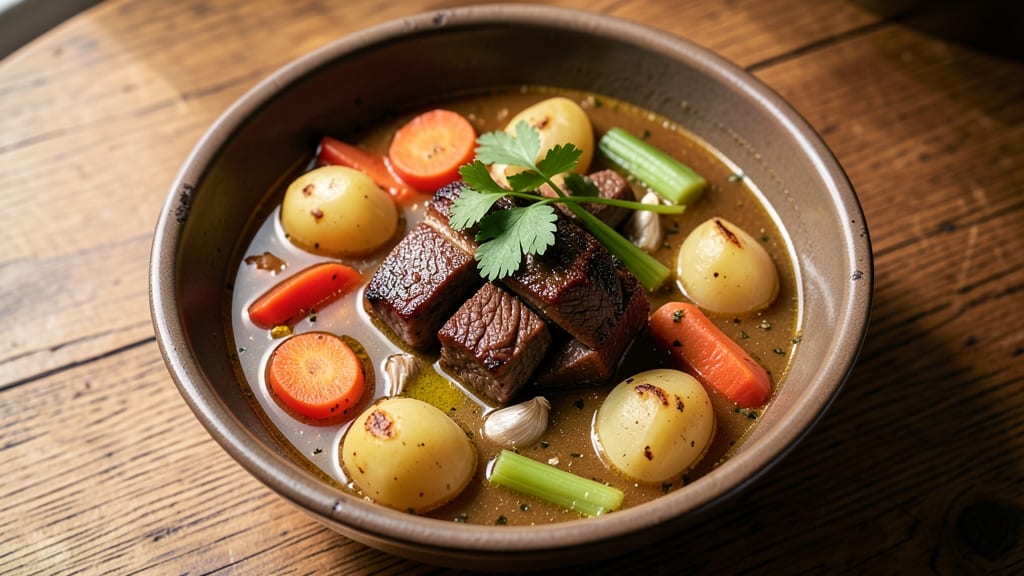
This 5-star vegetable beef soup transforms humble ingredients into a restaurant-worthy meal that simmers with deep umami and tender meat. The secret lies in slow-cooked beef that practically melts in your mouth, paired with vegetables that soften into perfect sweetness.
I’ve perfected this recipe over years of testing—each spoonful delivers a balance of savory, sweet, and herbal notes that make it unforgettable.
What sets this soup apart is the rich broth, built layer by layer with aromatics, mushrooms for umami depth, and a touch of miso for complexity. The beef—whether brisket or stew meat—cooks until fork-tender, while carrots, potatoes, and celery develop a natural sweetness that harmonizes with the savory base.
Fresh herbs added at the end brighten the flavors, ensuring every bite feels fresh and vibrant.
By the time you ladle this soup into bowls, you’ll have a dish that’s comforting yet refined—perfect for chilly evenings or family gatherings. The aroma alone will have everyone gathering around the table, and the first taste will confirm why this recipe earns its five-star reputation.
Serve it with crusty bread to soak up every last drop of that velvety broth.
The beauty of this recipe is its versatility. Use it as a standalone meal or pair it with a simple green salad for balance. Leftovers reheat beautifully, making it ideal for meal prep.
Whether you’re feeding a crowd or treating yourself to a cozy night in, this soup delivers restaurant-quality results at home.
Ingredients for 5 star vegetable beef soup
Humble ingredients transform into a velvety, umami-rich soup that's restaurant-worthy at home.
| Ingredient | Amount | Notes |
|---|---|---|
| Beef Stew Meat 🥩 | 2 lb | Chuck roast or brisket preferred |
| Yellow Onion 🧅 | 2 whole | Chopped into 1/2-inch pieces |
| Carrots 🥕 | 4 medium | Peeled and cut into 1-inch chunks |
| Russet Potatoes 🥔 | 3 medium | Peeled and cut into 1-inch cubes |
| Celery Stalks 🧄 | 4 whole | Chopped into 1/2-inch pieces |
| Garlic Cloves 🧄 | 6 cloves | Minced for depth of flavor |
| Fresh Mushrooms 🍄 | 8 oz | Cremini or baby bella preferred |
| Tomato Paste 🍅 | 2 tbsp | For rich, concentrated flavor |
| White Wine 🍷 | 1 cup | Dry variety like Sauvignon Blanc |
| Beef Broth 💧 | 6 cups | Homemade or high-quality store-bought |
| White Miso Paste 🧂 | 1 tbsp | For umami depth (optional but recommended) |
| Fresh Thyme 🌿 | 2 sprigs | Or 1 tsp dried thyme |
| Fresh Parsley 🌿 | ¼ cup | Chopped for garnish and freshness |
| Olive Oil 🫒 | 2 tbsp | Extra-virgin for richness |
| Salt 🧂 | 1 ½ tsp | Diamond Crystal kosher salt preferred |
| Black Pepper 🌶️ | ½ tsp | Freshly ground for best flavor |
The beef is non-negotiable—chuck roast or brisket delivers that melt-in-your-mouth texture. Grab it from the butcher counter if you can, or the pre-cut stew meat section at Whole Foods or Trader Joe's saves time. Look for good marbling; that's where the flavor hides. Fresh mushrooms add depth, so cremini or baby bella are ideal—Trader Joe's usually has them pre-sliced for convenience. The miso paste? White miso gives a cleaner flavor than red. Penzeys sells it in small jars perfect for this recipe.
No white wine? Substitute extra beef broth—just add a splash of apple cider vinegar for brightness. Swap fresh thyme for dried at one-third the amount, but trust me, fresh makes a difference. The tomato paste can be from a squeeze tube (no waste) or a small can—just use the same amount. Potatoes should be Russet or Yukon Gold for that creamy texture. Carrots can be baby carrots if that's what's in the fridge, but the flavor's better with fresh, peeled ones. Short on time? Pre-chopped veggie mixes work in a pinch.
This soup tastes even better the next day—reheat gently on the stove with a splash of broth to restore richness. Keeps 4-5 days in the fridge, or 3 months frozen. I double the batch and freeze half for lazy nights. Store in glass jars for reheating—plastic can absorb odors. The herbs? Add them at the end so they stay bright and fresh. Garnish with extra parsley for that restaurant touch.
Why You'll Love This Recipe
- One-Pot Wonder: I swear by this soup for lazy Sundays—just toss the beef, onions, carrots, and celery into a pot, add water, and let it simmer. No fancy steps, no extra pans, and the potatoes melt into the broth like they’re meant to be there.
- Deep Umami Magic: That beef stew meat? It’s the star. When it breaks down, the broth turns rich and savory, while the carrots and celery add sweetness that balances everything. Honestly, the first bite makes me forget it’s just a soup.
- Lunchbox Hero: Between us, this soup is my go-to for meal prep. The potatoes hold up perfectly when reheated, and the beef stays tender—ideal for packing lunches or feeding a crowd. My kids even ask for leftovers, and that’s saying something.
- Budget-Friendly Powerhouse: Russet potatoes and beef stew meat stretch this recipe far, and the veggies are cheap but pack serious flavor. I’ve made this for under $10 and fed four people—no guilt, just hearty comfort. Plus, it tastes better the next day.
Step-by-step instructions for vegetable beef soup with deep umami flavor
This is where the magic happens—slow-cooked beef and vegetables transform into restaurant-quality soup.
Sear the Beef for Maximum Flavor
Heat a large Dutch oven over medium-high heat and add the 2 tablespoons olive oil. Working in batches if needed, sear the 2 lb beef stew meat until deeply browned on all sides—about 3-4 minutes per side. This step builds the rich, caramelized foundation for your soup. Don't crowd the pan or the meat will steam instead of sear.
As the beef browns, you'll notice those beautiful crusty edges forming. That's your signal it's ready to move. Transfer the seared beef to a plate and set aside. You'll add it back later when the vegetables have developed their own flavors. Real talk: if you skip this step, your soup will taste like it's missing something—those browned bits are pure umami gold.
Build the Vegetable Base and Develop Depth
In the same Dutch oven, add the chopped 2 whole yellow onions, 4 whole celery stalks, and 4 medium carrots. Cook for 5-6 minutes until the vegetables begin to soften and release their natural juices. You're looking for that sweet aroma from the onions and the earthy scent from the celery and carrots.
Add the 6 minced garlic cloves and cook for another 30 seconds until fragrant. Here's where we get fancy: stir in the 2 tablespoons tomato paste and cook for 1 minute to deepen the color and flavor. Pour in the 1 cup white wine and scrape up all those browned bits from the bottom of the pot—this is called deglazing, and it captures all that concentrated flavor.
Let the wine simmer for 2-3 minutes until it reduces by half. The alcohol will cook off, leaving behind just the rich, fruity notes. This is the moment that matters: the wine's acidity will help tenderize the beef and brighten the final soup.
Simmer the Vegetables and Incorporate the Miso
Add the 6 cups beef broth and bring the mixture to a gentle boil. Once boiling, reduce heat to medium-low and add the 3 medium russet potatoes, 8 oz fresh mushrooms, 2 sprigs fresh thyme, 1 tablespoon white miso paste, 1.5 teaspoons salt, and 0.5 teaspoon black pepper. The miso paste will dissolve into the broth, adding that signature umami depth that makes this soup truly exceptional.
Simmer uncovered for 30 minutes, stirring occasionally. You'll notice the potatoes beginning to soften and the mushrooms releasing their juices. This is where the vegetables start to meld together, creating a harmonious base flavor. The soup should be bubbling gently but not vigorously—you're looking for a steady simmer that develops the flavors without breaking down the vegetables too much.
Cook the Beef Until Fork-Tender
Return the seared beef to the pot and add the 2 tablespoons tomato paste again (yes, it looks like too much, but trust me). The additional tomato paste will help tenderize the beef and add another layer of richness. Bring the soup back to a gentle simmer and cook uncovered for 1.5 to 2 hours, until the beef is fork-tender and easily pulls apart with minimal resistance.
Here's the thing—you'll know the beef is ready when you can pierce it with a fork and it offers just slight resistance before giving way. The vegetables should also be tender but still hold their shape. If the soup starts to reduce too much, add a little water or broth to maintain the proper consistency. The goal is a rich, velvety broth that coats the back of a spoon.
Finish with Fresh Herbs and Serve
Once the beef is tender, remove the soup from heat and let it rest for 10 minutes. This resting period allows the flavors to meld together and gives the vegetables a chance to absorb some of that delicious broth. Stir in the 0.25 cup chopped fresh parsley just before serving—this adds a bright, fresh finish that cuts through the richness of the beef and vegetables.
Taste and adjust seasoning if needed. Your soup should be perfectly balanced—rich from the beef and miso, bright from the wine and herbs, and tender from the slow cooking. Serve hot in deep bowls, garnished with additional parsley if desired. Each spoonful should deliver that perfect combination of hearty beef, sweet vegetables, and deep umami flavor that makes this soup truly five-star worthy.
Pro Tips For Making 5 Star Vegetable Beef Soup
- Brown the Beef Properly: I learned this the hard way—skipping a deep sear means your soup will taste like stewed beef instead of rich, caramelized flavor. Use a heavy pot, medium-high heat, and let those beef chunks develop a dark crust (about 5 minutes per side) before adding liquid. The Maillard reaction is your friend here.
- Cut Potatoes Evenly: Unevenly sized potatoes mean some will turn to mush while others stay rock-hard. Use a mandoline or sharp knife to slice them into 1.5-inch chunks—consistency is key. Russets hold up better than you’d think, but don’t skip this step unless you want a mushy bottom.
- Salt the Water Generously: This isn’t the time to be shy. Add 2 tablespoons of salt to the broth (yes, even if your beef is pre-seasoned) to guarantee the potatoes and carrots absorb flavor. I used to hold back, but the difference in depth of taste is noticeable—especially when paired with the beef’s natural richness.
- Add Celery Last: Celery loses its crispness fast in hot liquid. Toss it in during the final 10 minutes of simmering so it stays bright and adds a fresh bite. If you’re worried about bitterness, trim the ends and cut it into 1-inch pieces—just enough to flavor without overpowering.
Essential equipment for this recipe
Dutch Oven Must-Have
A 5-7 quart Dutch oven is your secret weapon for this soup—its heavy base distributes heat evenly, preventing scorching while creating that deep, caramelized flavor in the beef.
I swear by the Le Creuset Signature Round Dutch Oven (it’s pricey but lasts forever) or the Lodge 5.5 Quart for a more budget-friendly option. The deep sides also make stirring and serving easier. Never use a thin, flimsy pot—this recipe demands durability. 🔥
Immersion Blender for Silky Texture
An immersion blender transforms this soup from rustic to restaurant-quality by blending just the broth while keeping the beef and vegetables intact. My go-to is the Ninja BN601—it’s powerful enough to handle thick soups without overheating.
Pulse the broth for 10-15 seconds if you want a smoother texture, or skip it entirely for a heartier consistency. Pro tip: Blend in batches if your soup is very thick to avoid splattering.
Measuring Cups and Spoons
Precision matters in this recipe, especially with ingredients like tomato paste and miso paste, where too much can overpower the broth. Use stainless steel measuring spoons (like OXO Good Grips) for accuracy—they’re durable and easy to read.
For liquids, a clear glass measuring cup with markings lets you eyeball the 1 cup white wine and 6 cups beef broth without spills. Trust me, sloppy measurements ruin the balance of flavors. 💡
Wooden Spoon for Stirring
A heat-resistant wooden spoon (I love Oxo Good Grips) is essential for stirring without scratching your Dutch oven. Wood gently folds in the beef and vegetables while preventing the miso paste from sticking to metal.
Plus, it won’t conduct heat like a metal spoon, keeping your hands safe during the long simmer. Avoid plastic—it melts under high heat and can leach chemicals into your soup.
Fine-Mesh Strainer for Clarity
If you prefer a smoother broth, strain it through a fine-mesh sieve (like OXO Good Grips) lined with a cheesecloth or paper coffee filter for ultra-refined texture. This step removes any lingering bits of thyme or mushroom skins, giving your soup a velvety finish.
For a rustic touch, skip straining—just skim off any foam or impurities with a ladle before serving. 🌟
Kitchen Timer for Perfect Timing
This soup requires patience, and a kitchen timer (I use a simple analog one) ensures you don’t overcook the beef or under-simmer the vegetables. Set it for 30 minutes during the vegetable phase, then again for 1.5–2 hours for the beef.
A timer also reminds you to rest the soup for 10 minutes before serving—skipping this step means watery, uneven flavors. Never rely on your phone’s timer; it’s too easy to miss the alert. ⏰
Nutrition facts
Frequently asked questions
Can I substitute chicken or pork for the beef?
While beef gives this soup its signature richness, you can adapt it! For chicken, use 2 lb bone-in thighs and reduce simmering time to 45-60 minutes—they cook faster than beef. Pork (like shoulder) works too but needs 1.5 hours to tenderize. Just adjust seasoning—pork benefits from extra thyme and a splash of apple cider vinegar to balance fat. The umami depth will differ, but it’ll still be hearty and comforting.
How do I make this soup vegetarian?
Swap the beef for 2 lb portobello mushrooms or extra-firm tofu (pressed and cubed). Boost umami with 2 tbsp soy sauce and 1 tbsp nutritional yeast instead of miso. Use vegetable broth and add 1 tbsp smoked paprika for depth. The mushrooms will soak up the broth beautifully, creating a satisfying texture. Serve with crusty bread to soak up every drop of that flavorful liquid.
Why does my soup taste bland after simmering?
Blandness usually means one of three things: insufficient seasoning, lack of umami, or overcooking. First, check your salt—add ½ tsp at a time while tasting. For umami, stir in 1 tsp fish sauce or ½ tsp MSG (if you have it) at the end. If the soup reduced too much, add ½ cup hot water or broth and simmer 5 minutes to restore balance. Never rush the simmer—this soup needs at least 1.5 hours to develop deep flavor.
Can I make this soup in an Instant Pot?
Sear the beef first in a separate pan, then add all ingredients to the Instant Pot. Set to High Pressure for 40 minutes, then quick-release. The beef will be tender, but the broth may need 10-15 minutes on the stove to reduce and thicken properly. For extra richness, stir in 1 tbsp cornstarch mixed with 2 tbsp water at the end. The pressure cooker cuts time by half while keeping all the flavor intact.
What’s the best way to reheat leftovers?
Reheat gently on the stove over medium-low heat with a splash of beef broth or water to restore moisture. Never microwave—it creates a skin and weakens flavors. For extra richness, stir in 1 tsp butter or olive oil while warming. If the soup seems too thick, add a little liquid and simmer 5 minutes to blend. Leftovers taste even better the next day—this soup’s flavors deepen with time!