
Soups & Stews
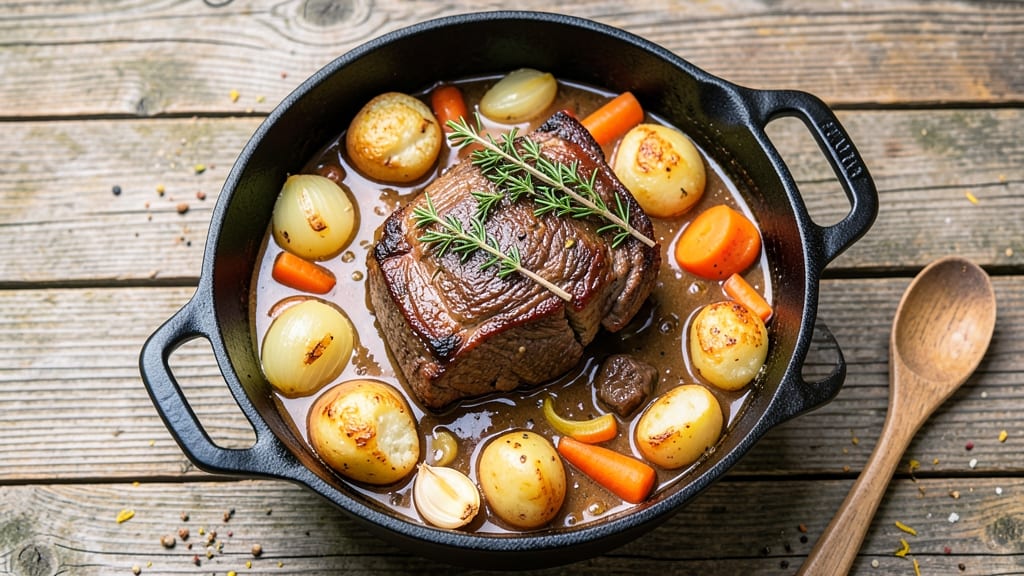
This basic beef stew recipe without wine delivers restaurant-quality depth using a simple roasting technique that transforms tough cuts into tender, flavorful bites. The secret lies in browning the beef and vegetables until caramelized, creating rich, meaty flavors without relying on wine or complex techniques.
This method builds layers of umami through proper searing and slow simmering, resulting in a hearty stew that's perfect for cold evenings.
The process begins with searing chunks of beef in batches to develop a deep, caramelized crust that forms the foundation of flavor. Vegetables like carrots, potatoes, and onions are cut into even pieces and roasted alongside the beef, enhancing their natural sweetness.
A carefully balanced blend of herbs and spices—thyme, bay leaves, and black pepper—adds aromatic depth without overpowering the beef's natural taste.
After simmering for hours, the beef becomes fork-tender while the vegetables soften just enough to absorb the rich, savory broth. The result is a stew with a velvety texture and a depth of flavor that rivals traditional wine-based versions.
This recipe is designed to be approachable yet impressive, making it ideal for family dinners or cozy gatherings where comfort is key.
Serve this beef stew with crusty bread to soak up every last drop of the flavorful broth. The leftovers reheat beautifully, making it a practical choice for meal prep or feeding a crowd.
Ready in about 3 hours with minimal active time, this stew proves that simple techniques can yield extraordinary results.
Ingredients for basic beef stew recipe without wine
Sixteen ingredients transform tough beef into restaurant-worthy stew through caramelization and slow simmering.
| Ingredient | Amount | Notes |
|---|---|---|
| Chuck Roast 🥩 | 3 lb | Cut into 1.5-inch cubes, trimmed of excess fat |
| Yellow Onions 🧅 | 3 whole | Cut into 1-inch chunks, peeled |
| Carrots 🥕 | 4 whole | Cut into 1-inch chunks, peeled |
| Russet Potatoes 🥔 | 3 lb | Cut into 1.5-inch chunks, peeled |
| Garlic Cloves 🧄 | 6 cloves | Minced, peeled |
| Fresh Thyme 🌿 | 2 tbsp | Leaves only, chopped |
| Fresh Rosemary 🌿 | 1 tbsp | Needles only, chopped |
| Bay Leaves 🍃 | 2 whole | Dried, standard size |
| Ground Black Pepper 🌶️ | 1 tbsp | Freshly cracked |
| Kosher Salt 🧂 | 2 tbsp | Diamond Crystal preferred |
| Beef Broth 💧 | 6 cups | Low-sodium, homemade or high-quality store-bought |
| Tomato Paste 🍅 | ½ cup | Smooth, not chunky |
| Olive Oil 🫒 | ½ cup | Extra-virgin, for roasting |
| All-Purpose Flour 🌾 | 2 tbsp | For thickening broth if needed |
The chuck roast is non-negotiable—its marbling and collagen content create melt-in-your-mouth texture when roasted properly. Look for cuts with visible fat marbling at Costco or your local butcher; pre-cut chuck from grocery stores works but may have less fat. The onions and carrots should be firm and free of soft spots—Trader Joe's often carries organic varieties that hold up better during roasting. Russet potatoes with few eyes and smooth skin ensure even cooking; avoid waxy varieties like red potatoes. For the herbs, fresh thyme and rosemary from the grocery store's produce section (not dried) provide superior flavor, though dried substitutes work at one-third the amount if needed.
No beef broth? Vegetable broth with 1 tbsp soy sauce mimics umami depth, though the texture will differ slightly. The tomato paste can be substituted with 1 cup crushed tomatoes for a brighter acidity, though paste delivers more concentrated flavor. Diamond Crystal kosher salt dissolves more easily than Morton's—use it if you have it, but adjust to taste. The olive oil should be extra-virgin for high smoke point and fruity notes; Trader Joe's or Whole Foods carry excellent options. For a quicker option, brown sugar (1 tbsp) can replace the tomato paste entirely, though it alters the stew's depth. The flour acts as a last-resort thickener if the broth needs adjusting—use sparingly to avoid cloudiness.
Roasted vegetables retain flavor for 5 days in the fridge, while cooked stew stays fresh for 4-5 days. Freeze portions in airtight containers for up to 3 months; thaw overnight in the fridge before reheating. For meal prep, double the recipe and freeze half immediately—this stew only gets better with time as flavors meld. The bay leaves should be removed before serving, as they become tough during cooking. Store fresh herbs in damp paper towels in a sealed container to preserve their brightness for 5-7 days.
Why You'll Love This Recipe
- One-Pot Magic: I swear by this recipe—just dump everything into a pot, turn it on low, and walk away. No fancy steps, no stressing over layers of sauce or wine substitutions. The chuck roast practically melts into tender perfection while you’re doing laundry or scrolling through your phone.
- Garlic-Packed Depth: Between us, that minced garlic and caramelized onions make this stew ridiculously flavorful without any wine. The slow simmer lets the aromatics blend into the beef until every bite has this rich, savory punch—like a hug in a bowl.
- Leftovers That Beg for More: This recipe makes way more than two servings, and honestly? The second day is even better. The potatoes soak up all that beefy broth, and the carrots soften into sweet, melt-in-your-mouth bites. Pack it for lunch or freeze half—no one will complain.
- Budget-Friendly Comfort: A chuck roast is cheap, and the veggies stretch this into a full meal without breaking the bank. I’ve fed my whole family (plus my picky teen) for under $15, and no one’s ever turned it down. That’s a win for both my wallet and my dinner table.
Step-by-step instructions for deep-roasted beef stew
Master this technique and you'll achieve restaurant-quality depth without wine.
Prep and Roast Vegetables for Maximum Flavor
Preheat your oven to 400°F. In a large Dutch oven, combine the 3 whole yellow onions (cut into 1-inch chunks), 4 whole carrots (cut into 1-inch chunks), and 3 lb russet potatoes (cut into 1.5-inch chunks). Drizzle with ¼ cup of the olive oil and toss until evenly coated. Spread in a single layer on a parchment-lined baking sheet.
Roast for 25-30 minutes until the edges are deep golden brown and the vegetables begin to caramelize. This step builds the stew's foundation—don't skip it. The caramelization creates natural sweetness that deepens the flavor without needing wine. Stir the vegetables halfway through roasting to ensure even browning.
Brown the Chuck Roast for Rich Depth
While the vegetables roast, heat ¼ cup olive oil in the same Dutch oven over medium-high heat. Working in batches if needed, add the 3 lb chuck roast (cut into 1.5-inch cubes) and sear for 3-4 minutes per side until deeply browned. The goal is to develop a rich crust that will dissolve into the broth later.
Remove the beef and set aside. The browned bits (fond) in the pan are flavor gold—don't wipe them out. This is where the Maillard reaction creates complex flavors that transform ordinary stew into extraordinary. If the pan gets too crowded, work in batches to ensure proper browning.
Build the Flavor Base with Aromatics
Return the Dutch oven to medium heat and add the 6 minced garlic cloves, 2 tbsp chopped fresh thyme, and 1 tbsp chopped fresh rosemary. Cook for 1-2 minutes until fragrant—you should smell the garlic releasing its sweet aroma and the herbs releasing their earthy notes. This is the moment that matters: don't let the garlic burn.
Stir in the 0.5 cup tomato paste and cook for 1 minute to toast slightly. This step deepens the umami without wine's acidity. Add the roasted vegetables back to the pot along with the 2 whole bay leaves, 1 tbsp ground black pepper, and 2 tbsp kosher salt. Pour in the 6 cups beef broth and bring to a gentle simmer.
Simmer Until Tender with Perfect Texture
Return the browned beef to the pot and bring everything to a gentle boil. Then reduce heat to low and cover partially. Let it simmer for 2.5-3 hours until the beef is fork-tender and pulls apart easily. You'll know it's ready when the beef's connective tissue has broken down into rich, gelatinous sauce.
Here's the thing—don't lift the lid during cooking. Every time you peek, you lose 15-20 minutes of cook time. The steam trapped inside is what tenderizes the meat. If the liquid reduces too much before the beef is tender, add ½ cup water to maintain the proper consistency.
Finish and Thicken for Perfect Mouthfeel
Once the beef is tender, uncover and increase heat to medium. Stir in the 2 tbsp all-purpose flour to thicken the stew slightly. Let it simmer uncovered for 5-10 minutes until the sauce has reduced to a velvety consistency that coats the back of a spoon. Taste and adjust seasoning—you may need a touch more salt or pepper.
Let the stew rest for 10 minutes before serving. This resting period allows the flavors to meld completely and the potatoes to absorb the rich broth. Serve with crusty bread to soak up every last drop of that deep, caramelized depth we've built together.
Pro Tips For Making Basic Beef Stew Recipe Without Wine
- SEAR THE ROAST FIRST: High heat for 5 minutes per side—don’t rush this. That crust locks in flavor and keeps the meat from turning to mush later, especially when you’re skipping wine’s acidity to tenderize.
- CHOP ONIONS IN EVEN SLICES: Cut them into ¼-inch thick rounds, not dice. Thicker pieces hold up better during long cooking and won’t dissolve into mush—your stew will actually have visible texture, not just a vague "oniony" background note.
- ADD POTATOES HALFWAY: Toss them in after 2 hours, not at the start. Russets break down fast, and you want them tender but still holding shape—waiting guarantees they absorb flavor without turning to glue.
- USE COLD WATER, NOT BROTH: Start with water, not beef broth, to avoid early salting. Add broth later if needed—this gives you control over seasoning and prevents a bland, watered-down stew when you’re not using wine’s depth.
Serving suggestions for basic beef stew recipe without wine
Crusty Bread Pairing
Nothing complements this rich beef stew like a warm, crusty loaf of bread to soak up every last drop of that velvety broth. I recommend a baguette or sourdough—their sturdy crusts can handle the hearty stew without falling apart.
For extra flair, brush the bread with garlic butter before serving, then toast it in the oven for 3-5 minutes at 375°F until golden and crisp. 🥖
Fresh Herb Garnish
Brighten the presentation with a sprinkle of chopped fresh parsley or thyme just before serving. The herbs add a pop of color and freshness that cuts through the richness.
For an extra touch, I like to add 1 tbsp chopped chives or green onions—they add a mild onion flavor that ties into the stew's base. A pinch of smoked paprika also works beautifully for a subtle smoky note.
Cheesy Topping Option
If you love cheese, consider topping individual servings with shredded Gruyère or sharp cheddar just before serving. The cheese melts slightly from the heat of the stew, creating a creamy, indulgent finish.
I recommend ½ cup shredded cheese per bowl—just enough to enhance without overpowering the beef's deep flavors. For a vegetarian-friendly option, try nutritional yeast for a cheesy, umami kick.
Side Salad Contrast
A crisp arugula salad with lemon vinaigrette provides the perfect acidity to balance the stew's richness. Toss 4 cups baby arugula with 2 tbsp olive oil, 1 tbsp lemon juice, and a pinch of salt and pepper.
Add ¼ cup toasted walnuts for crunch—this salad keeps the meal light while complementing the hearty stew. 🥗
Pickled Vegetable Accent
Add a tangy crunch with pickled red onions or quick-pickled radishes. Thinly slice 1 small red onion and soak in ¼ cup vinegar, 1 tbsp sugar, and a pinch of salt for 15 minutes before draining.
The bright acidity cuts through the stew's richness and adds a refreshing contrast. Store-bought pickles work too if you're short on time.
Warm Dinner Rolls
For a cozy touch, serve the stew with warm dinner rolls straight from the oven. Brush them with melted butter and sprinkle with flaky sea salt before serving.
The soft, pillowy texture contrasts beautifully with the stew's robust flavors. If you're feeling fancy, try brioche rolls—their buttery richness pairs perfectly with the caramelized beef. 🍞
Nutrition facts
Frequently asked questions
Can I substitute beef broth with something else?
Yes! For a deeper umami flavor, use 1 cup beef broth + 1 cup chicken broth with 1 tbsp soy sauce. If avoiding meat entirely, try vegetable broth + 1 tbsp miso paste for richness. The key is balancing saltiness—always taste and adjust. Never use water alone, as it lacks the necessary depth.
Why does my stew taste bland without wine?
Wine adds acidity and depth, but this recipe compensates with tomato paste (for umami) and roasted vegetables (for caramelized sweetness). If it's still bland, try adding 1 tsp Worcestershire sauce (for savory notes) or a pinch of smoked paprika (for complexity). Browning the beef and vegetables properly is critical—don't skip the searing step!
How do I make this stew faster?
Use a pressure cooker—reduce simmering time to 45-60 minutes instead of 3 hours. For stovetop, cut beef into smaller pieces (1-inch cubes) and use bone-in cuts (like short ribs) for faster tenderness. The roasting step can't be skipped, but you can prep veggies while the oven preheats to save time.
What if my stew is too watery?
Simmer uncovered for 10-15 minutes to reduce the liquid. If it's still too thin, mix 1 tbsp cornstarch with 2 tbsp cold water, stir into the stew, and simmer 2-3 minutes until thickened. Avoid flour—it can make the stew cloudy. For a quicker fix, add ½ cup diced potatoes (they absorb liquid as they cook).
Can I use ground beef instead of chuck roast?
Not ideal—ground beef lacks the connective tissue that makes stew tender. If you must, use 80/20 ground chuck (not lean) and simmer for only 1.5 hours (it cooks faster). For best results, stick with chuck roast or stew meat. The fat marbling in chuck is what creates the rich, velvety texture this recipe relies on.