
Main Courses
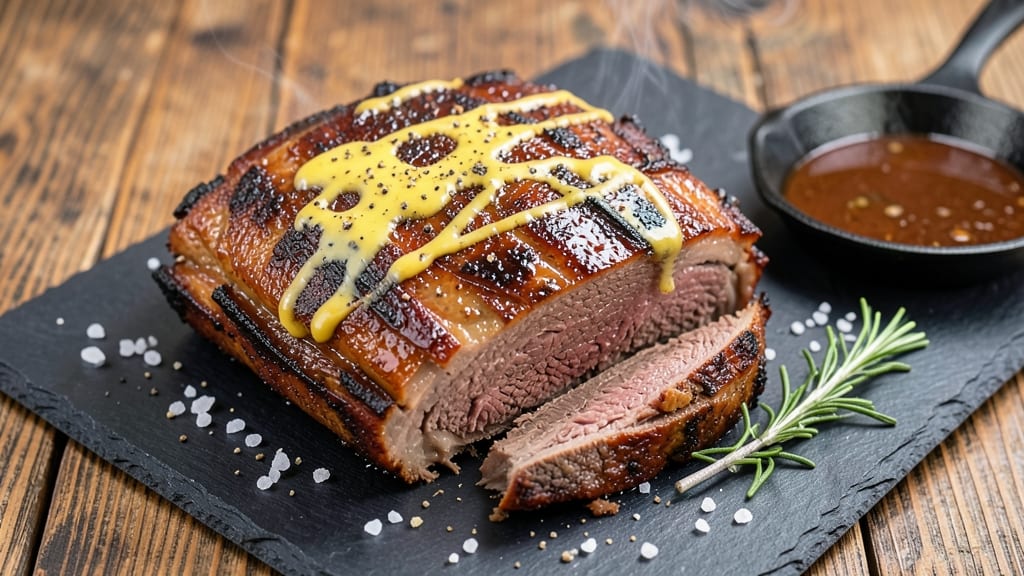
Mastering slow smoked beef brisket transforms tough cuts into melt-in-your-mouth perfection that feeds a crowd with minimal effort. This 12-hour process builds deep, smoky flavor while breaking down collagen for tender results that rival professional barbecue pits.
The key lies in precise temperature control and patience—no shortcuts here, just time-tested technique that delivers restaurant-quality bark and juicy layers.
Professional pitmasters rely on a simple but critical prep: a dry rub of coarse salt, black pepper, and smoked paprika applied generously to create that coveted bark. Using post oak or hickory wood chips adds authentic smoke flavor without overpowering the beef’s natural richness.
The brisket rests at 225°F for hours, allowing fat to render and connective tissue to dissolve into gelatin, ensuring every slice falls apart effortlessly.
What you’ll achieve is a brisket with a dark, crackling crust that gives way to tender, juicy meat so flavorful it disappears from plates. The bark alone tells the story—smoky, slightly sweet, and packed with umami depth that pairs perfectly with classic sides like creamy coleslaw or buttery cornbread.
This isn’t just a recipe; it’s an experience that turns any gathering into a memorable event.
Whether you’re hosting a backyard feast or simply craving a showstopping main course, this method guarantees results that impress even the most discerning guests. The secret?
Attention to detail in every step—from the initial trim to the final rest. Let’s get started on creating brisket that becomes the centerpiece of your table.
Ingredients for slow smoked beef brisket
Pantry staples meet smoky magic—just 12 hours and a few key ingredients transform brisket into crowd-pleasing perfection.
| Ingredient | Amount | Notes |
|---|---|---|
| Beef Brisket 🥩 | 8 lb | Whole packer cut, fat cap intact |
| Yellow Mustard 🍯 | ¼ cup | For initial fat cap coating |
| Coarse Kosher Salt 🧂 | ½ cup | Diamond Crystal preferred |
| Smoked Paprika 🌶️ | ¼ cup | High-quality for authentic bark |
| Freshly Ground Black Pepper 🌶️ | 2 tbsp | Coarsely cracked for texture |
| Granulated Garlic Powder 🧄 | 1 tbsp | Not garlic salt |
| Onion Powder 🧅 | 1 tbsp | For subtle depth |
| Post Oak Wood Chips 🌳 | 2 lb | Or hickory for classic smoke |
| Apple Juice 🍎 | 1 cup | For spritzing during cook |
| Beef Stock 🥫 | 1 cup | For spritzing, optional |
| Yellow Onion 🧅 | 1 whole | Quartered for wrap |
| Fresh Garlic 🧄 | 4 cloves | Smashed for aroma |
| Fresh Rosemary 🌿 | 2 sprigs | For herb wrap |
| Fresh Thyme 🌿 | 2 sprigs | For herb wrap |
The brisket is non-negotiable—look for a packer cut with intact fat cap at Costco or your local butcher. If buying whole, trim excess fat to 1/4-inch thickness for even bark. Texas-style briskets from specialty markets have the perfect fat-to-meat ratio. For wood chips, post oak delivers that authentic Texas BBQ flavor, but hickory works in a pinch. The key is to soak the wood chips for 30 minutes before using—never dry chips, or you'll choke your smoker. I grab mine from Traeger's website when I'm planning a big cook.
No post oak? Pecan or cherry wood chips add sweetness that pairs well. Running out of apple juice? White grape juice or even water works for spritzing—just add a splash of balsamic vinegar for depth. The herb wrap is optional but adds aromatic layers. If you're short on time, skip it, but don't skip the mustard coating on the fat cap—this prevents bark from sticking to the fat. For the rub, Penzeys spices are my go-to, but the grocery store stuff works if it's fresh. Quick test: if your smoked paprika smells like dust, toss it.
Brisket reheats beautifully—wrap tightly in foil and bake at 275°F for 1 hour. Keeps for 5-7 days in the fridge, but honestly, it's gone by day 3. For leftovers, slice against the grain and freeze in portioned vacuum bags for up to 6 months. Pro tip: save the fat trimmings—render them down for homemade tallow that's perfect for searing or basting. The bark alone makes this worth the wait, so don't rush the final stages. Let it rest 30 minutes before slicing, or you'll lose all that precious juice.
Why You'll Love This Recipe
- I’ll be real: the 24-hour dry-brine might sound intimidating, but it’s just setting it and forgetting it. Mix the 0.5 cup Coarse Kosher Salt, 0.25 cup Smoked Paprika, and 2 tbsp Freshly Ground Black Pepper in 5 minutes, slap it on the brisket, and let the fridge do the work. Even the mustard coat takes less time than waiting for a pizza delivery.
- No-Fuss Prep: I’ll be real: the 24-hour dry-brine might sound intimidating, but it’s just setting it and forgetting it. Mix the 0.5 cup Coarse Kosher Salt, 0.25 cup Smoked Paprika, and 2 tbsp Freshly Ground Black Pepper in 5 minutes, slap it on the brisket, and let the fridge do the work. Even the mustard coat takes less time than waiting for a pizza delivery.
- Smoky Bark, Creamy Magic: That first bite—where the Post Oak Wood Chips kiss the 0.25 cup Yellow Mustard barrier—is pure satisfaction. The bark cracks like dark chocolate, but inside? The meat falls apart at 203°F, so tender it melts like butter. (Yes, even on a Tuesday night.)
- Feeds a Crowd (No Stress): This isn’t just for holidays. The 8 lb brisket feeds 10+ with leftovers that actually taste better the next day. Wrap it in butcher paper with 1 whole Yellow Onion and 4 cloves Fresh Garlic? Suddenly, your potluck’s the star. And honestly, it’s gone by day 3—no sad fridge remnants here.
Step-by-step instructions for slow-smoked beef brisket
Here's how to transform a tough cut into melt-in-your-mouth perfection through patience and precision.
Prepare the Brisket with Mustard and Rub
Start by trimming the fat cap of the 8 lb Beef Brisket to about ¼-inch thickness, leaving the fat intact elsewhere. This ensures even cooking while preserving moisture. Pat the entire surface dry with paper towels—moisture is the enemy of that coveted bark.
In a small bowl, mix together the 0.5 cup Coarse Kosher Salt, 0.25 cup Smoked Paprika, 2 tbsp Freshly Ground Black Pepper, 1 tbsp Granulated Garlic Powder, and 1 tbsp Onion Powder. Rub this mixture generously over the entire brisket, pressing it into the meat so it adheres well. Then, spread 0.25 cup Yellow Mustard evenly over the fat cap. The mustard creates a barrier that helps render fat without sticking to the bark.
Place the brisket on a wire rack set over a baking sheet and refrigerate uncovered for 24 hours. This dry-brining step ensures deep flavor penetration and a crispy exterior. Don't skip this—it's non-negotiable for texture and tenderness.
Set Up the Smoker for Low-and-Slow Cooking
Soak the 2 lb Post Oak Wood Chips in water for at least 1 hour before using. Fill your smoker's wood chip tray and preheat to 225°F, using only indirect heat. You want to see steady, thin blue smoke—thick white smoke means the wood isn't burning properly and will impart a bitter taste.
Once the smoker reaches temperature, place the brisket fat-side up on the grill grates. The fat will render and baste the meat as it cooks. Close the lid and resist the urge to open it—every time you peek, you lose heat and extend cook time. This is where the magic happens: slow and steady wins the race.
After 2 hours, check the internal temperature using a meat thermometer inserted into the thickest part of the brisket (avoid the fat). If it's below 170°F, spritz with a mixture of 1 cup Apple Juice and 1 cup Beef Stock (if using). This keeps the bark moist and prevents it from drying out during the long cook.
Wrap and Finish for Maximum Tenderness
Continue smoking until the internal temperature hits 195-200°F, which typically takes 8-10 hours total. This is where the brisket hits "the stall"—a period where the temperature plateaus as moisture evaporates. Don't panic; this is normal and expected.
When you reach this point, it's time for the wrap. Quarter the 1 whole Yellow Onion, smash the 4 cloves Fresh Garlic, and combine with the 2 sprigs Fresh Rosemary and 2 sprigs Fresh Thyme in a small bowl. Wrap the brisket tightly in butcher paper (not foil), then place the herb-onion mixture on top of the brisket before sealing the wrap. Return it to the smoker and continue cooking.
The wrap traps steam, which breaks down collagen and tenderizes the meat without sacrificing the bark. The herbs infuse flavor as the brisket finishes. Continue smoking until the internal temperature reaches 203°F and the meat is fork-tender with no resistance. This final stage usually takes another 2-3 hours, depending on your smoker's consistency.
Rest and Slice for Juicy Perfection
Once the brisket reaches 203°F, remove it from the smoker and transfer it to a cutting board. Tent loosely with foil and let it rest for 2 hours. This resting period allows the juices to redistribute throughout the meat, ensuring every slice is moist and flavorful. Patience here is key—don't rush it.
After resting, slice the brisket against the grain into ¼-inch thick slices. The flat and point may have different grain directions, so adjust your angle accordingly. Serve immediately with the rendered juices spooned over the top. Each bite should deliver a perfect balance of tender, smoky meat with a crispy, dark bark that shatters with every cut.
Pro Tips For Making Slow Smoked Beef Brisket
- Trim That Fat Smart: Cut the fat cap to exactly ¼-inch—thinner means uneven cooking, thicker means greasy bark. I learned this the hard way when my first brisket turned into a soggy mess because I went too thin. Leave the rest of the fat intact; it’s your built-in basting sauce.
- Salt the Night Before: The 24-hour dry brine isn’t optional—it’s what turns tough brisket into melt-in-your-mouth magic. Skip it, and you’ll end up with a dry, flavorless slab. Trust me, your future self will thank you when every bite is juicy and packed with seasoning.
- Spritz Early, Spritz Often: After those first 2 hours, don’t let the bark dry out. Mix that 1 cup apple juice and 1 cup beef stock (if using) and spritz every 45-60 minutes. I used to wait too long, and the crust would crack into dull, uneven patches. Keep it moist for that perfect snap.
- Wrap Tight, Wrap Right: Butcher paper, not foil—this isn’t a shortcut, it’s a must. Foil steams too much and turns your bark into sad, limp skin. Seal that wrap like you’re wrapping a gift, and tuck those smashed garlic and herbs inside. The aromatics will infuse while the steam tenderizes, and your brisket will thank you with perfect texture.
Dietary considerations for this recipe
Gluten-Free Adaptations
The classic brisket recipe is naturally gluten-free, but the mustard coating and rub contain potential cross-contamination risks. Use gluten-free yellow mustard like Annie's or French's Gluten-Free to avoid any wheat traces. For the rub, double-check your smoked paprika and onion powder—brands like Penzeys clearly label gluten-free products.
The post oak wood chips and beef stock are safe, but always verify labels if you have celiac concerns. 🌾
Low-Carb Modifications
This recipe is already low-carb, but you can enhance it by skipping the apple juice spritz and replacing it with beef broth or water to maintain moisture. The 1 cup beef stock already in the recipe provides umami depth without carbs.
For the herb wrap, use only the 2 sprigs fresh rosemary and 2 sprigs fresh thyme—no onion or garlic if strict about carbs. The mustard and rub remain unchanged, keeping flavors rich and satisfying. 🥩
Dairy-Free Considerations
This brisket is naturally dairy-free, but watch for hidden dairy in your yellow mustard—some brands include whey. Choose a 100% plant-based mustard like Maille or French's Classic Yellow (check labels). The rub ingredients are all dairy-free, and the post oak wood chips and beef stock contain no dairy.
For serving, pair with dairy-free sides like pickled jalapeños or avocado salsa instead of coleslaw. 🧀
Allergen-Friendly Swaps
For nut allergies, ensure your smoked paprika and onion powder are processed in nut-free facilities. If soy is a concern, avoid any soy-based marinades or sauces—this recipe's ingredients are all soy-free. For egg allergies, the mustard coating is safe, but verify with your brand.
The herb wrap is naturally allergen-friendly, but always check fresh herbs for pesticide residues if severe allergies are present. 🚫
Protein-Packed Boost
This brisket is already a protein powerhouse with ~100g protein per 6-ounce serving, but you can enhance it by adding 1 tbsp coconut aminos to the spritz mix for extra umami.
For a higher-protein rub, blend 1 tsp nutritional yeast into the 0.5 cup coarse kosher salt—it adds a cheesy depth without dairy. The post oak smoke and beef stock already provide robust flavor, making this an ideal high-protein meal for muscle recovery. 💪
Nutrition facts
Frequently asked questions
Why is the 24-hour dry-brine so important for brisket?
The 24-hour dry-brine isn't just about flavor—it's about science. The 0.5 cup coarse kosher salt and 0.25 cup smoked paprika penetrate deep into the meat, while the mustard coating on the fat cap creates a barrier that prevents bark from sticking to rendered fat. This step also helps the bark form more evenly during smoking. Skipping it means softer bark and less flavor penetration.
Can I use a different wood chip than post oak?
While post oak delivers that authentic Texas-style smoke, hickory is a classic backup that works beautifully. For sweeter smoke, try pecan or cherry wood chips. Just soak them for 1 hour before using—never dry chips, or you'll risk bitter smoke. The key is consistent, thin blue smoke, not thick white vapor.
What's the "stall" and why shouldn't I panic?
The "stall" happens when the brisket's internal temp hits 170-195°F and plateaus for hours. This is normal—moisture is evaporating, not cooking. Don't open the smoker or add heat; just keep smoking at 225°F. The wrap at 195-200°F helps break through it by trapping steam. Patience here is everything—this is where collagen turns to gelatin for that melt-in-your-mouth texture.
How do I know when the brisket is done?
Use a meat thermometer to check the thickest part (avoid fat). It's done at 203°F—the meat should feel fork-tender with no resistance. The bark should be dark and crispy, almost like glass. If it's still firm at 200°F, wrap it and give it another 1-2 hours. Never rely on time alone; temperature is your guide.
What's the best way to reheat leftover brisket?
Wrap slices tightly in foil and reheat at 275°F for 1 hour—this keeps them moist. For whole leftovers, place the brisket in a foil-lined pan, cover with foil, and bake at 275°F for 1-2 hours. The low heat prevents drying out. Pro tip: Save the rendered juices and drizzle them over reheated slices for extra flavor.