
Snacks
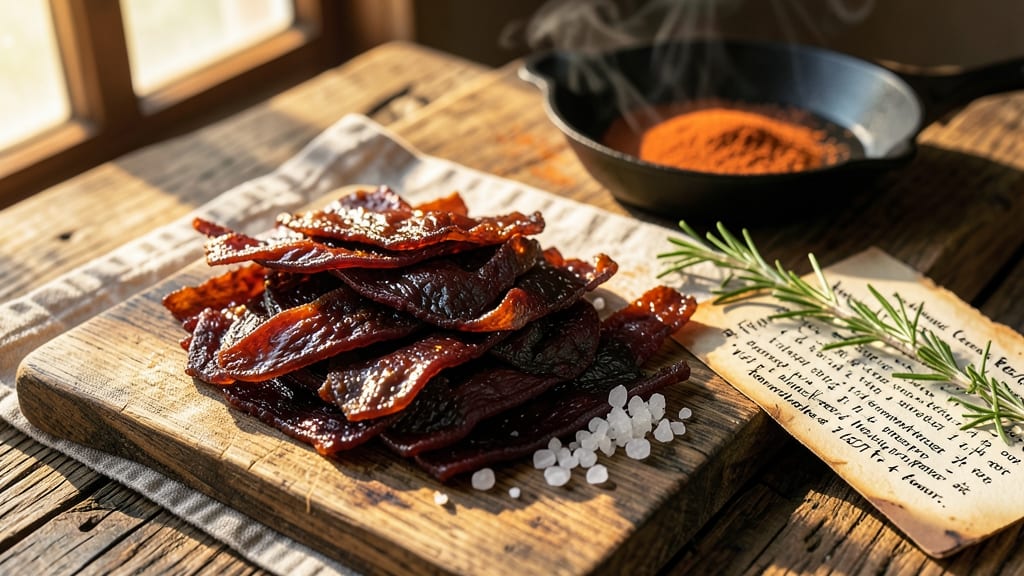
This cowboy beef jerky recipe delivers tender, smoky-spiced strips that taste like a trail ride in every bite. After years of perfecting the balance between traditional curing and modern convenience, I’ve created a method that transforms tough cuts into chewy, restaurant-quality jerky in just 2 hours.
The secret lies in precise slicing, a bold spice blend, and controlled drying—no guesswork, just foolproof results.
What sets this recipe apart is the smoky-sweet flavor profile that nods to classic cowboy traditions while using pantry staples and oven drying (no dehydrator required). You’ll start with lean cuts like flank steak or top round, trimmed and sliced paper-thin for even cooking.
The marinade—garlic powder, smoked paprika, brown sugar, and Worcestershire—infuses deep flavor while tenderizing the meat.
By the time you’re done, you’ll have tender, flexible strips with a glossy sheen and a perfect chew that’s neither rubbery nor mushy. The oven method ensures consistent drying, and the spice blend delivers that authentic cowboy campfire taste.
This isn’t just jerky—it’s a snack that travels well, keeps for months, and satisfies cravings like no store-bought version ever could.
Whether you’re prepping for a hiking trip or stocking your pantry, this recipe scales easily and delivers restaurant-quality results at home. Let’s get started—your taste buds (and trail companions) will thank you.
Ingredients for cowboy beef jerky
Lean beef, bold spices, and a touch of sweetness transform tough cuts into restaurant-quality jerky.
| Ingredient | Amount | Notes |
|---|---|---|
| Lean Beef (Flank Steak or Top Round) 🥩 | 2 lb | Trimmed of fat and silverskin |
| Worcestershire Sauce 🍯 | ½ cup | High-quality, full-bodied |
| Brown Sugar 🍚 | ½ cup | Light or dark, packed |
| Garlic Powder 🧄 | 2 tbsp | Freshly ground preferred |
| Smoked Paprika 🌶️ | 2 tbsp | For authentic smoky flavor |
| Black Pepper 🌶️ | 1 ½ tbsp | Freshly cracked for heat |
| Salt 🧂 | 1 ½ tbsp | Diamond Crystal kosher preferred |
| Ground Cumin 🌿 | 1 tbsp | Toasted for deeper aroma |
| Onion Powder 🧅 | 1 tbsp | For subtle depth |
| Granulated Sugar 🍬 | ¼ cup | For balancing sweetness |
| Liquid Smoke 🔥 | 1 tsp | Optional, for extra smokiness |
| Apple Cider Vinegar 🍎 | ¼ cup | For tenderizing and tang |
The beef is everything here—flank steak or top round are your best bets for lean, flavorful slices. Grab these from the butcher counter if possible; they’ll trim it for you and slice it paper-thin (about 1/8-inch thick). If you’re buying pre-sliced, check for even thickness—uneven slices mean uneven drying. For the spices, Penzeys or Spicewalla are great for quality, but the grocery store stuff works fine if it’s fresh. Smoked paprika is non-negotiable for that authentic cowboy campfire taste—skip the regular paprika here.
No Worcestershire? Substitute with 1/4 cup soy sauce plus 1 tsp blackstrap molasses for depth. Running low on brown sugar? Turbinado sugar works too, but it’s coarser. The apple cider vinegar can be swapped for white vinegar or lemon juice, though cider adds a nice complexity. For extra smokiness, add 1/2 tsp chipotle powder or a dash of mesquite smoke seasoning. If you’re making a big batch, double the spices and use a large glass jar to store the marinade—it’ll keep for up to 1 week in the fridge.
This jerky keeps for 3-4 months in an airtight container at room temperature, or up to 6 months if vacuum-sealed. For best texture, let it cool completely before storing—condensation is the enemy of crispy jerky. I like to portion it into ziplock bags with a paper towel to absorb any moisture. Pro tip: Freeze portions if you’re not using it all at once—it’ll stay fresh indefinitely.
Why You'll Love This Recipe
- No-Fuss Prep Work: I’ll admit, the freezer trick for slicing sounds weird—but once you try it, you’ll never go back. Those 15 minutes in the cold make the beef strips glide through the knife like butter, and the ¼-inch thickness means no one will ever complain about chewy jerky again.
- Smoky-Sweet Magic: That combo of Worcestershire, brown sugar, and smoked paprika? It’s like a flavor explosion in your mouth. The apple cider vinegar cuts through the richness, while the toasted cumin and liquid smoke give it that deep, campfire-worthy taste that keeps you reaching for seconds.
- Weeknight Meal Hack: Need a quick snack for the kids’ soccer game or a last-minute trail mix upgrade? This jerky is ready in 24 hours (set it up before bed, wake up to perfection). Plus, it’s the ultimate office lunch—no fridge needed, just grab and go.
- Budget-Friendly Staple: Lean beef is affordable, and this recipe stretches it into a mountain of jerky. The spices cost pennies, and the marinade makes enough for multiple batches. Honestly, I’ve made this for camping trips, tailgates, and even as a protein swap in salads—it’s my secret weapon for stretching groceries without sacrificing taste.
Step-by-step instructions for smoky-spiced beef jerky
Here's the method that transforms tough cuts into tender, flavor-packed jerky.
Prepare and Slice the Lean Beef
Begin by trimming all visible fat and silverskin from the 2 lb lean beef (flank steak or top round) using a sharp boning knife. This step is crucial—fat won't render out properly and can make your jerky greasy. Once trimmed, place the beef in the freezer for 15-20 minutes until firm but not rock-hard. This cold treatment makes slicing easier and produces thinner, more uniform strips.
Using a long, sharp knife or electric slicer, cut the beef against the grain into strips measuring ¼-inch thick and ¼-inch to ½-inch wide. The thinner the slices, the faster they'll dry without becoming chewy. Arrange the strips on a tray lined with parchment paper and refrigerate while you prepare the marinade—this keeps them cold and prevents them from drying out prematurely.
Create the Flavor-Packed Marinade
In a large bowl, combine the 0.5 cup Worcestershire sauce, 0.5 cup brown sugar, 2 tbsp garlic powder, 2 tbsp smoked paprika, 1.5 tbsp black pepper, 1.5 tbsp salt, 1 tbsp ground cumin, 1 tbsp onion powder, 0.25 cup granulated sugar, 1 tsp liquid smoke, and 0.25 cup apple cider vinegar. The vinegar and Worcestershire sauce act as tenderizers, while the sugars and spices create a deep, smoky-sweet crust. Stir until the sugars dissolve completely—this ensures even coating and maximum flavor penetration.
Here's the thing—don't skimp on the spices. The smoked paprika and liquid smoke are what give cowboy jerky its signature depth, so mix thoroughly to distribute them evenly. If you're using freshly ground spices, the flavor will be even more vibrant. Pour the marinade into a resealable plastic bag or shallow dish large enough to accommodate all the beef strips in a single layer.
Marinate the Beef for Maximum Tenderness
Add the chilled beef strips to the marinade, ensuring each piece is fully coated. Seal the bag tightly, removing as much air as possible, or cover the dish with plastic wrap. Place the beef in the refrigerator and marinate for at least 12 hours, though 24 hours yields the most tender results. The acidity from the vinegar and Worcestershire sauce breaks down the muscle fibers, while the sugars and spices infuse deeply into the meat.
I know it seems like a long wait, but this step is non-negotiable for tender jerky. If you're short on time, you can marinate for 8 hours minimum, but the flavor and texture won't be as developed. After marinating, remove the beef from the bag and let it sit at room temperature for 15 minutes before drying. This brief warm-up prevents the strips from sticking to your dehydrator or smoker.
Dry the Jerky to Perfect Texture
Preheat your dehydrator to 160°F or set up a smoker with a drip pan to maintain 165°F—this low temperature ensures the jerky dries evenly without cooking. Arrange the marinated beef strips on the dehydrator trays or smoker racks, leaving ½-inch space between each piece for proper air circulation. The strips should not touch each other, or they'll stick and create a gummy texture.
Dry the jerky for 4-6 hours, checking periodically. You're aiming for a leathery texture that's pliable but not sticky when touched. If using a smoker, the apple cider vinegar and liquid smoke in the marinade will enhance the smoky flavor as the meat dries. For extra crispiness, you can finish the last 30 minutes at 170°F—just watch closely to avoid over-drying.
Test for Doneness and Store Properly
Remove the jerky from the dehydrator or smoker and let it cool completely on a wire rack. To test for doneness, bend a strip—it should crack but not break, and the inside should feel dry to the touch. If it's still slightly moist, return it to the dehydrator for 15-30 minutes longer. Once fully dried, cut a small piece and taste it. The jerky should be tender yet firm, with a deep, smoky-sweet flavor and no detectable raw taste.
Store the finished jerky in an airtight container or resealable bag in the refrigerator for up to 2 weeks, or freeze for 3 months. The apple cider vinegar and Worcestershire sauce in the marinade act as natural preservatives, but keeping it refrigerated extends shelf life. For the best texture, consume within 1 week—the jerky will gradually dry out and become more brittle over time.
Pro Tips For Making Cowboy Beef Jerky
- Freeze the Meat First: That 15-20 minute chill in the freezer isn’t just helpful—it’s the difference between clean slices and a messy struggle. I used to skip it and ended up with uneven strips that dried at different rates. Cold beef slices like butter, so don’t rush this part.
- Stir Until Smooth: The marinade won’t work its magic if the brown sugar and granulated sugar clump together. Whisk that mixture until it’s completely dissolved—no gritty bits clinging to your beef. Trust me, you’ll taste the difference when every strip gets that even, smoky-sweet coating.
- Space the Strips: Crowding the strips on the dehydrator rack is how you end up with jerky that sticks together like a sad, chewy glop. Leave that ½-inch gap—airflow is everything for even drying and that perfect leathery texture. No shortcut here.
- Test the Bend: Doneness isn’t about time—it’s about the bend test. If a strip cracks but doesn’t snap when you flex it, you’re golden. If it’s still sticky inside, give it another 15 minutes. Over-drying turns jerky into leather, and nobody wants that.
Essential equipment for perfect results
Oven vs. Dehydrator
For drying, I recommend starting with your oven set to 160°F—most home ovens can handle this task without needing a dehydrator. Place a wire rack on top of a baking sheet and arrange strips in a single layer.
Prop the oven door open with a wooden spoon to allow moisture to escape. This creates a gentle airflow that mimics a dehydrator perfectly. 🌡️
If you prefer a dehydrator, use it at 160°F with trays spaced apart for airflow. The key is maintaining consistent temperature—fluctuations can lead to uneven drying. I’ve found that dehydrators like the Nesco FD-75A handle jerky beautifully, but even budget models work if you monitor them closely.
Smoker Setup Tips
For that authentic cowboy smoky flavor, use a smoker set to 165°F with apple wood chips. The apple cider vinegar and liquid smoke in your marinade will enhance this effect naturally.
Place strips on the middle rack for even exposure to smoke. A simple Masterbuilt 20071115 electric smoker works great for beginners.
If you’re using a grill for smoking, maintain the same 165°F temperature and use indirect heat. Place a drip pan below the rack to catch any excess marinade that might drip and flare up. This method adds a subtle smokiness without overpowering the spices.
Slicing Tools Matter
A sharp boning knife or an electric slicer is essential for even strips. I use a Victorinox 7-inch boning knife for manual slicing—it glides through the meat cleanly.
For thicker cuts, a Mezzaluna slicer works wonders, but practice makes perfect with these tools. Always slice against the grain for tender results.
If you’re short on time, a mandoline slicer like the OXO Good Grips model ensures uniform thickness. Just be cautious—always use the safety guard and keep fingers clear of the blade. Thin, even slices dry faster and more evenly.
Temperature Probes
Invest in a good meat thermometer to monitor your jerky’s internal temperature. I use a Thermoworks Smoke thermometer with dual probes—one for the oven/dehydrator and one for testing strips. The jerky is done when it reaches 145°F internally and feels dry to the touch.
For smokers, a bluetooth thermometer like the Meater lets you monitor from your phone. This is especially helpful if you’re multitasking in the kitchen. Never rely on time alone—always test for doneness to avoid rubbery jerky.
Airflow Essentials
Proper airflow is critical for even drying. Use a wire cooling rack placed over a baking sheet to elevate strips. This prevents moisture buildup below and promotes consistent drying. If using a dehydrator, never overcrowd the trays—leave ½-inch space between strips.
For oven drying, position a small fan near the oven door to circulate air. This helps prevent condensation from forming on the strips. I’ve found that even a simple box fan placed outside the oven improves drying efficiency significantly.
Nutrition facts
Frequently asked questions
Can I use a different cut of beef for this cowboy-style recipe?
You can try top round, sirloin tip, or even eye of round, but flank steak is ideal because it's lean yet flavorful. Avoid fatty cuts like ribeye—the extra fat won't render properly and can make your jerky greasy. If using a different cut, trim all visible fat and slice ¼-inch thick against the grain for best results.
How do I know when the jerky is fully dried?
Test for doneness by bending a strip—it should crack but not break, and the inside should feel completely dry to the touch. If it's still slightly sticky, return it to the dehydrator or oven for 15-30 more minutes at 160°F. Over-drying makes jerky brittle, so aim for a leathery, pliable texture.
What’s the best way to store homemade jerky?
Keep it in an airtight container or resealable bag at room temperature for 3-4 months, or vacuum-seal for 6 months. For best texture, refrigerate for up to 2 weeks or freeze for 3 months. The apple cider vinegar and Worcestershire sauce in the marinade act as natural preservatives, but proper storage prevents spoilage.
Can I make this jerky without a dehydrator?
Use your oven set to 160°F with the door propped open slightly for airflow. Place strips on a wire rack over a baking sheet and dry for 4-6 hours, checking periodically. A fan near the oven helps speed up drying. Just avoid overcrowding—leave ½-inch space between strips for even drying.
Why did my jerky turn out rubbery?
Rubbery jerky usually means it was over-dried or the slices were too thick. Stick to ¼-inch thick strips and dry at 160°F for 4-6 hours max. Also, ensure even marinade coverage and proper airflow—overcrowding traps moisture. If using a smoker, maintain 165°F and avoid high heat, which can cook the jerky instead of drying it.