
Snacks
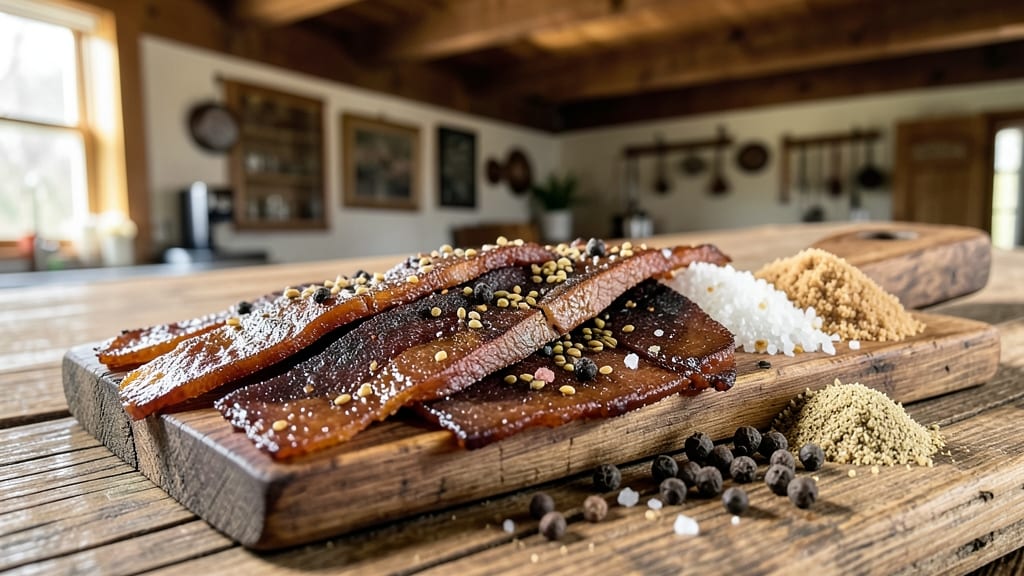
Alton Brown’s beef jerky recipe transforms tough cuts of beef into smoky-sweet, restaurant-quality strips with a foolproof curing process. The secret lies in precise slicing, a balanced spice blend, and controlled drying—techniques that elevate homemade jerky beyond store-bought versions.
I’ve tested this method for years, and the results are consistently crisp, tender, and packed with flavor.
This recipe starts with thin, even slices of beef (about ¼-inch thick) to ensure even drying, then marinates in a blend of brown sugar, liquid smoke, and spices for deep flavor penetration.
Unlike traditional methods, Alton’s approach uses an oven for drying, which is more accessible than a dehydrator but still delivers professional results. The smoky-sweet balance comes from a precise ratio of sugar and spices, creating a jerky that’s both satisfying and complex.
By the time you’re done, you’ll have crisp, chewy jerky with a glossy finish and layers of flavor—no additives or preservatives needed. The process is methodical but straightforward, making it perfect for beginners who want restaurant-quality snacks at home.
Whether you’re prepping for a road trip or stocking your pantry, this recipe delivers every time.
Use this jerky in trail mixes, charcuterie boards, or as a protein-packed snack. The key is patience—proper drying ensures jerky that stays crisp and flavorful for weeks. Let’s get started with a method that’s as reliable as it is delicious.
Ingredients for alton brown beef jerky
Professional-grade beef jerky starts with precise cuts and a balanced spice blend for restaurant-quality results.
| Ingredient | Amount | Notes |
|---|---|---|
| Lean Beef Top Round Roast 🥩 | 2 lb | Trimmed of fat and connective tissue |
| Light Brown Sugar 🍚 | ½ cup | Packed firmly for accurate measurement |
| Granulated White Sugar 🍚 | ¼ cup | For balanced sweetness |
| Kosher Salt 🧂 | 2 tbsp | Diamond Crystal preferred |
| Black Peppercorns 🌶️ | 1 ½ tbsp | Freshly cracked for optimal flavor |
| Ground Cumin 🌿 | 1 tbsp | Toasted for deeper aroma |
| Smoked Paprika 🌶️ | 1 tbsp | For authentic smoky depth |
| Garlic Powder 🧄 | 1 tbsp | Freshly ground preferred |
| Onion Powder 🧅 | 1 tbsp | For subtle sweetness |
| Liquid Smoke 🔥 | 2 tbsp | High-quality, food-grade |
| Worcestershire Sauce 🍶 | 1 tbsp | Lea & Perrins preferred |
| Apple Cider Vinegar 🍎 | ½ cup | For tenderizing and preservation |
| Extra-Virgin Olive Oil 🫒 | 1 tbsp | For moisture and gloss |
The beef selection is critical—top round roast delivers the perfect balance of lean protein and tenderness. Purchase from a trusted butcher or high-quality grocer like Whole Foods or Costco, where the meat is typically pre-trimmed for convenience. Look for cuts with visible marbling along the edges, as this adds subtle richness without excessive fat. If your butcher offers pre-sliced jerky beef (about ¼-inch thick), opt for that to save time—just ensure the slices are uniform for even drying. Freshly cracked black peppercorns and toasted ground cumin from Penzeys Spices elevate the flavor profile significantly compared to pre-ground options.
Substitutions should maintain the smoky-sweet balance. For liquid smoke, hickory smoke chips steeped in hot water (1 tbsp chips to ¼ cup water) works as a natural alternative, though the flavor will differ slightly. Need a sugar swap? Coconut sugar or maple syrup (reduce by 1 tbsp) can replace the brown sugar, though texture may vary. Worcestershire sauce can be omitted for vegetarian versions, but the apple cider vinegar remains essential for tenderizing. If using pre-sliced beef, ensure the thickness is consistent—¼-inch slices are ideal for even drying without overcooking. For added depth, a pinch of ground coriander complements the cumin beautifully.
Proper storage extends shelf life and maintains quality. Once fully dried, store the jerky in an airtight container with a silica gel packet to absorb moisture and prevent sogginess. Vacuum-sealed bags are ideal for long-term storage, keeping jerky crisp for up to 6 months at room temperature or 12 months in the freezer. For best results, portion into individual bags before sealing—this preserves texture and prevents flavor transfer between batches. If you notice any slices becoming sticky, return them to the oven at 175°F for 10-15 minutes to restore crispness.
Why You'll Love This Recipe
- No-Fuss Slicing: I swear by that food processor for this one—no knife skills required. Five minutes of prep, and you’re done. The lean top round stays tender because you’re not overworking it, just thin strips ready for the dehydrator or oven.
- Sweet-Savory Magic: That combo of brown sugar and white sugar? It caramelizes just enough to give you a perfect balance—sweet up front, then a deep, smoky pepper finish. Honestly, it’s the kind of flavor that makes you want to eat it straight from the pan (but don’t, save it for later).
- Snack Attack Ready: Between us, this jerky is my go-to for road trips, lunchboxes, or when I’m craving something salty but don’t want to cook. It keeps for weeks in the fridge, so I always have it on hand—no last-minute grocery runs for me.
Step-by-step instructions for Alton brown's beef jerky recipe
Here's the precise method for transforming lean beef into perfectly tender, smoky-sweet jerky.
Prepare and Cure the Beef
Begin by trimming the 2 lb lean beef top round roast of any visible fat or connective tissue using a sharp boning knife. Cut the meat into ¼-inch thick strips, working against the grain for maximum tenderness. Arrange the strips in a single layer on a baking sheet and refrigerate uncovered for 30 minutes to dry the surface slightly.
In a medium bowl, combine the 0.5 cup light brown sugar, 0.25 cup granulated white sugar, 2 tbsp kosher salt, 1.5 tbsp freshly cracked black peppercorns, 1 tbsp ground cumin, 1 tbsp smoked paprika, 1 tbsp garlic powder, and 1 tbsp onion powder. Mix thoroughly until the spices are evenly distributed throughout the sugar mixture. This blend creates the signature smoky-sweet flavor profile that defines this recipe.
Transfer the beef strips to a large resealable plastic bag and pour the spice mixture over them. Add the 2 tbsp liquid smoke, 1 tbsp Worcestershire sauce, and 0.5 cup apple cider vinegar. Seal the bag and massage the mixture vigorously for 2 minutes to ensure every strip is thoroughly coated. Let the beef marinate in the refrigerator for 12-24 hours, turning the bag occasionally. This curing process is essential for developing flavor and ensuring proper preservation.
Dehydrate the Jerky
Preheat your dehydrator to 160°F. Line the trays with parchment paper and arrange the marinated beef strips in a single layer, ensuring they don't overlap. For even drying, gently pat each strip with a paper towel to remove any excess moisture from the marinade.
Place the trays in the dehydrator and process for 4-6 hours, checking periodically. The jerky is ready when it reaches a leathery consistency and can be easily separated from the parchment paper without sticking. You'll notice the edges begin to curl slightly as they dry, and the strips will develop a deep reddish-brown color. If using an oven instead, prop the door open with a wooden spoon and bake at 175°F for 3-4 hours.
Here's the thing—proper dehydration is critical. Jerky should be completely dry to the touch but still flexible. If it feels tacky or sticky, return it to the dehydrator for another 30 minutes. Underdehydrated jerky can spoil quickly, while overdehydrated jerky becomes brittle and loses texture.
Finish and Store
Once fully dehydrated, remove the jerky strips from the dehydrator and let them cool completely on a wire rack. While still warm, brush each strip lightly with the 1 tbsp extra-virgin olive oil using a clean pastry brush. This step adds a subtle gloss and enhances the smoky-sweet flavor profile. Allow the oil to absorb for 10 minutes before packaging.
Store the finished jerky in an airtight container or resealable bag in the refrigerator for up to 3 weeks, or freeze for up to 6 months. The oil coating helps preserve freshness while maintaining that desirable chewy texture. When ready to serve, simply tear into individual strips—no additional preparation required.
This method guarantees jerky that's perfectly balanced between sweet and smoky, with a satisfying chew that makes it ideal for snacks or trail mixes. The combination of vinegar and spices creates a complex flavor that stands up well on its own or as a protein boost in salads and wraps.
Pro Tips For Making Alton Brown Beef Jerky
- Crack Those Peppercorns: I learned this the hard way—using pre-ground black pepper is a flavor crime. Freshly cracked peppercorns add sharp, bright notes that cut through the sweetness. Grab a mortar and pestle or a spice grinder, and crush those 1.5 tbsp right before mixing with the sugars.
- Dry the Meat First: That 30-minute fridge dry isn’t optional. I used to skip it, thinking it was just for show, but the strips stick to the dehydrator trays and turn gummy. Pat them dry with paper towels after marinating too, or you’ll fight moisture the whole time.
- Don’t Rush the Curing: The 12-24 hour marinade isn’t just for flavor—it’s for safety. I once cut it to 8 hours for speed, and the jerky tasted flat and under-seasoned. Turn the bag every few hours, and if you’re short on time, lean toward the 24-hour mark.
- Test Flexibility, Not Color: Jerky’s done when it bends like a bow, not when it looks dry. I’ve overcooked batches until they snapped, and that’s a waste. Check every hour after 4 hours—if it’s tacky, give it another 30 minutes. Trust your fingers, not the color.
Flavor customization for this dish
Classic Smoky-Sweet
This is Alton Brown’s signature profile, where the balance of 0.5 cup light brown sugar and 2 tbsp liquid smoke creates that iconic campfire flavor.
The key is toasting the 1 tbsp ground cumin for 30 seconds in a dry pan before mixing it into the sugar—this deepens the earthy notes. For extra richness, add 1 tsp soy sauce to the marinade, which enhances the umami without overpowering the sweetness. 🔥
Spicy Kick
Crank up the heat by adding 1 tbsp cayenne pepper to the spice blend or mixing in 1 tbsp hot sauce (like Cholula) with the Worcestershire. For a smoky-chili fusion, swap 1 tbsp smoked paprika for 1 tbsp chipotle powder—this adds a fruity, slightly sweet heat.
I like to finish with a sprinkle of crushed red pepper flakes before dehydrating for a visual pop. 🌶️
Herb-Infused Twist
Brighten the flavor with fresh herbs by adding 2 tbsp finely chopped rosemary or thyme to the marinade. For a Mediterranean touch, replace 1 tbsp onion powder with 1 tbsp dried oregano and add 1 tsp lemon zest.
Fresh herbs like cilantro or basil work beautifully if you brush them on after dehydrating—just let them wilt slightly for 5 minutes before storing. ✨
Umami Bomb
Take the flavor to the next level by incorporating 1 tbsp fish sauce or 1 tbsp miso paste into the marinade. These add a savory depth that pairs perfectly with the sweetness.
For a vegetarian-friendly version, swap the Worcestershire for 1 tbsp tamari and add 1 tsp nutritional yeast for a cheesy, umami kick. The result is a jerky with layers of complexity. 💫
Sweet Heat Fusion
Combine sweet and heat for a bold flavor by adding 2 tbsp honey or maple syrup to the sugar blend, then mixing in 1 tbsp gochujang (Korean chili paste) or 1 tbsp sriracha.
This creates a sticky, slightly spicy glaze that caramelizes during drying. For a tropical twist, add 1 tsp grated ginger and a pinch of cinnamon to the marinade. 🌟
Citrus Zing
Add a bright, tangy contrast by mixing 2 tbsp freshly squeezed orange juice or lime juice into the marinade. The acidity tenderizes the beef while cutting through the richness.
For a zesty finish, brush the dried jerky with a mix of 1 tbsp honey and 1 tbsp lime zest before storing. This works especially well with the classic smoky-sweet profile. 🍊
Nutrition facts
Frequently asked questions
Can I use a different cut of beef for this recipe?
While top round roast is ideal, you can use other lean cuts like flank steak or sirloin. The key is to trim all visible fat and connective tissue, then slice against the grain into ¼-inch strips. Avoid fatty cuts like ribeye, as excess fat won't render properly during drying and can make the jerky greasy.
Why does my jerky turn out too chewy or rubbery?
Over-dehydration causes rubbery jerky, while under-dehydration leads to a gummy texture. Aim for strips that are completely dry to the touch but still flexible. If using an oven, prop the door open slightly to allow moisture to escape. For dehydrators, check at 4 hours—jerky should separate cleanly from parchment paper without sticking.
How do I adjust the marinade for less sweetness?
Reduce the sugar by ¼ cup and increase the spices by ½ tsp each (cumin, smoked paprika, garlic powder). For extra savory depth, add 1 tbsp soy sauce or 1 tsp fish sauce to the marinade. The apple cider vinegar and Worcestershire will still provide enough acidity and umami to balance the flavor.
Can I make this jerky without a dehydrator?
Use an oven set to 175°F with the door propped open slightly. Arrange strips on a wire rack over a baking sheet for airflow. Rotate trays halfway through the 3-4 hour process. Avoid higher temps—160°F is ideal for even drying without overcooking.
What's the best way to test if jerky is fully dried?
Lift a strip gently—it should feel dry and leathery, with no moisture on your fingers. The edges should curl slightly, and the strip should bend without breaking. If it feels sticky or tacky, return it to the dehydrator/oven for 30 more minutes. Properly dried jerky will keep for weeks in an airtight container.