
Soups & Stews
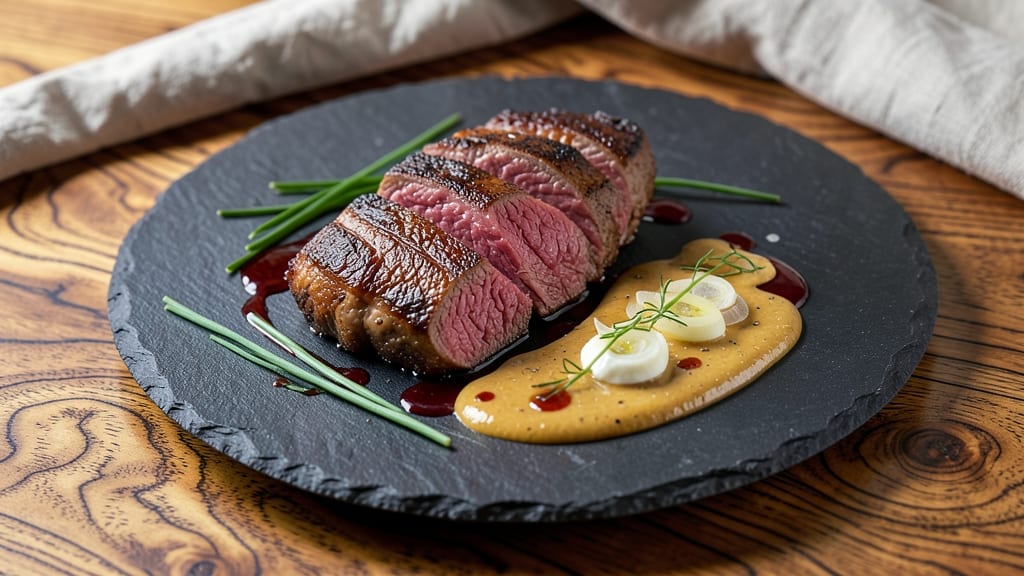
This beef bearnaise recipe transforms a simple steak into a restaurant-worthy masterpiece with its velvety, buttery herb sauce. The secret lies in perfecting two techniques: searing beef to medium-rare precision and emulsifying the bearnaise without breaking.
I've refined this method over years of testing, ensuring the sauce remains silky smooth while the steak stays juicy and caramelized.
The bearnaise begins with a classic reduction of shallots, vinegar, and tarragon, then incorporates butter and egg yolks for that signature richness. Meanwhile, the beef develops a deep, flavorful crust through proper pan-searing techniques.
What you'll achieve is a dish where every bite delivers tender meat paired with a sauce that's both elegant and approachable.
This recipe delivers restaurant-quality results at home, with a sauce that's easier to master than you might think. The key steps—properly timing the sauce reduction and controlling the steak's internal temperature—ensure foolproof execution.
By the time you plate this dish, you'll have a meal that looks and tastes like it belongs on a fine-dining menu.
The beauty of this combination lies in its versatility. Serve it with pan-seared steak, chops, or even roasted beef, and the bearnaise will elevate each cut to new heights.
The sauce's delicate balance of herbs and acidity cuts through the richness of the meat, creating harmony in every bite. Let's get started on this timeless classic.
Ingredients for beef bearnaise
Restaurant-quality beef bearnaise begins with premium steak and precise ingredient ratios for velvety perfection.
| Ingredient | Amount | Notes |
|---|---|---|
| Ribeye Steak 🥩 | 1 ½ lb | Bone-in preferred, 1-1.5 inches thick |
| Shallots 🧅 | ½ cup | Minced finely, about 6-8 shallots |
| White Wine Vinegar 🍷 | ½ cup | Dry, high-quality variety |
| Fresh Tarragon 🌿 | ¼ cup | Chopped finely, stems removed |
| Fresh Chives 🌱 | 2 tbsp | Chopped finely, for garnish |
| Unsalted Butter 🧈 | 1 ½ cups | Cold, cubed, European-style preferred |
| Large Egg Yolks 🥚 | 3 whole | Fresh, room temperature |
| Diamond Crystal Kosher Salt 🧂 | 1 ½ tsp | For seasoning, adjust to taste |
| Freshly Ground Black Pepper 🌶️ | ½ tsp | Coarsely ground |
| Extra-Virgin Olive Oil 🫒 | 2 tbsp | For searing, high smoke point |
| Heavy Cream 🥛 | ½ cup | Full-fat for richness |
| Fresh Parsley 🌿 | ⅛ cup | Chopped, for garnish |
The ribeye steak is non-negotiable for this dish—its marbling ensures juiciness and depth of flavor. Opt for bone-in cuts from a trusted butcher, like D'Artagnan or your local specialty shop, where they can source dry-aged beef for enhanced richness. If using frozen steak, thaw it in the refrigerator for 24 hours to maintain even cooking. The shallots should be sweet and firm, not sprouting—Whole Foods or Trader Joe's carry excellent quality. For the tarragon, fresh is essential; dried lacks the nuanced anise flavor that defines bearnaise. Look for bright green stems at the market or specialty grocers like Harris Teeter—avoid wilted leaves.
No white wine vinegar? Apple cider vinegar works in a pinch, though it adds subtle sweetness. Substituting dried tarragon requires half the amount, but the flavor won't match fresh. For the butter, European-style (like Plugrá) emulsifies better than American varieties due to its higher fat content. If you're short on egg yolks, aquafaba (chickpea brine) can replace one yolk per tablespoon, though texture may differ slightly. The heavy cream should be full-fat—Organic Valley or Horizon are reliable brands. For a lighter version, reduce cream by one-third and add extra butter to compensate. Always chill your butter cubes before adding to the sauce to prevent breaking the emulsion.
Store the steak in the coldest part of your fridge, wrapped in parchment paper, for up to 5 days—it reheats beautifully when properly sealed. The bearnaise sauce should be made fresh, as it separates when reheated. However, you can prep all components (reduced vinegar, emulsified base) ahead and assemble just before serving. For leftovers, portion the sauce into ice cube trays, cover with plastic wrap, and freeze for up to 3 months. Thaw overnight in the fridge before reheating gently over a double boiler. The steak freezes well for up to 3 months if vacuum-sealed, though texture may change slightly.
Why You'll Love This Recipe
- No Fuss Sauce: I’ll be real—this sauce is ridiculously forgiving. You don’t need to slave over a stove; just toss in finely chopped shallots, a splash of white wine vinegar, and a handful of tarragon while the steak rests. The emulsifying happens almost by itself—no stress, no blender required.
- Tarragon Magic: That bright, anise-like kick from fresh tarragon? It’s the secret weapon here. It cuts through the richness of the ribeye like a cool breeze on a summer day, and the chives add a final green peppery punch. Honestly, the flavor balance is so good I’ve caught myself dipping toast into the leftover sauce.
- Date Night Ready: This isn’t just a steakhouse move—it’s a real date night in 30 minutes. The bearnaise feels fancy, but the prep is simple enough to pull off when you’re both exhausted but still want to impress. Pair it with a crisp white wine, and suddenly you’re serving restaurant-quality without the wait.
- Sauce Leftovers Win: Between us, the bearnaise sauce is way better the second day. Store it in the fridge, and it thickens up perfectly for dipping fries, drizzling over eggs, or even tossing with pasta. I’ve stretched one batch into three meals, and my wallet (and taste buds) thank me.
Step-by-step instructions for beef bearnaise recipe
Master this classic sauce technique for a velvety, herb-infused accompaniment that transforms steak into a gourmet experience.
🍳 Step 1: Prepare the Bearnaise Base
In a medium saucepan, combine the 0.5 cup white wine vinegar and 0.5 cup minced shallots. Bring to a simmer over medium heat and cook for 5-7 minutes until the mixture reduces by half and the shallots soften. This reduction removes acidity and concentrates flavor—don't skip this crucial step.
While the vinegar mixture simmers, melt 1 cup of the unsalted butter (reserve the remaining ½ cup for later) in a separate saucepan over low heat. The butter should melt completely but not brown. Keep both pans warm as you'll need them both for the next step. The butter will form the rich, velvety foundation of your sauce.
🍳 Step 2: Infuse with Tarragon and Create the Emulsion
In a heatproof bowl, whisk together the 3 whole large egg yolks and 1.5 tsp diamond crystal kosher salt until smooth and slightly thickened. This mixture should be pale yellow and uniform—any lumps will create a broken sauce. Place the bowl over a pot of barely simmering water (double boiler method) to gently warm the yolks to 160°F while whisking constantly.
Slowly pour the melted butter into the warm egg yolk mixture, whisking vigorously to create a smooth emulsion. This is where the magic happens—the butter should incorporate completely, creating a thick, creamy base. Once fully combined, remove from heat and stir in the 0.25 cup finely chopped fresh tarragon and 0.5 tsp freshly ground black pepper. The tarragon will impart its signature anise-like flavor that defines bearnaise sauce.
🥘 Step 3: Combine and Reduce the Sauce
Return the reduced vinegar-shallot mixture to the bowl with the butter emulsion. Whisk constantly over low heat for 3-5 minutes until the sauce thickens slightly and coats the back of a spoon. If the sauce thickens too much, whisk in 1 tablespoon of heavy cream at a time until you reach a glossy, pourable consistency. This step ensures the sauce clings beautifully to your steak without being overly thick.
For extra richness, whisk in the remaining ½ cup cold unsalted butter, one cube at a time, allowing each to fully incorporate before adding the next. The sauce should now have a luxurious, velvety texture with a beautiful golden hue. Keep the sauce warm (but not boiling) over low heat while you prepare the steak.
🔥 Step 4: Sear the Ribeye to Perfection
Pat the 1.5 lb ribeye steak completely dry with paper towels—this is critical for achieving a perfect crust. Season both sides generously with 1.5 tsp diamond crystal kosher salt and 0.5 tsp freshly ground black pepper, pressing the seasoning into the meat. Let the steak sit at room temperature for 30 minutes to ensure even cooking.
Heat 2 tbsp extra-virgin olive oil in a heavy skillet over high heat until shimmering. Add the steak and sear for 3-4 minutes per side for medium-rare (adjust time for your preferred doneness). The steak should develop a deep brown crust with a golden-brown sear—this is your signal that it's ready. Transfer to a warm plate and let rest for 10 minutes before slicing.
🍽️ Step 5: Finish and Serve
Just before serving, return the bearnaise sauce to gentle heat and whisk in the 0.5 cup heavy cream to lighten the texture slightly. The sauce should remain warm but not boiling—if it separates, whisk vigorously to re-emulsify. Taste and adjust seasoning with additional salt or pepper if needed.
Slice the ribeye against the grain into ¼-inch thick portions and drizzle generously with the bearnaise sauce. Garnish with 2 tbsp chopped fresh chives and 0.125 cup chopped fresh parsley for a pop of color and freshness. Serve immediately with crusty bread or roasted vegetables to soak up every last drop of that luxurious sauce.
Pro Tips For Making Beef Bearnaise
- Sweat Shallots Slow: I used to rush this step and end up with bitter, waterlogged shallots—don’t. Over medium-low heat with a splash of water, let them melt into a glossy paste, stirring every 30 seconds. If they darken, you’ve gone too far.
- Save the Vinegar: Skip the full reduction—just cook it until it smells tangy and the alcohol burns off (about 2 minutes). Too much evaporation ruins the balance, and you’ll end up chasing flavor instead of building it.
- Butter in Stages: Add the cold butter in small cubes, one at a time, and whisk until fully melted before adding more. Dumping it all in at once turns your sauce into a greasy mess—trust me, I’ve done it.
- Tarragon Timing: Add the fresh tarragon leaves last, just before serving. If you cook them too long, they turn bitter and muddy the sauce. A few seconds of whisking is all it takes—no need to overthink it.
Wine and beer pairings for this dish
Classic Red Wine
A Bordeaux-style red blend (like Château Margaux or Château Montelena) is my go-to pairing for beef bearnaise—its rich tannins and dark fruit notes complement the sauce's buttery texture while standing up to the steak's intensity.
Look for wines with 20-25% Merlot in the blend to soften the structure. Serve slightly chilled (60-64°F) to enhance the sauce's velvety mouthfeel. 🍷
Crisp White Wine
For a lighter approach, try a dry Chardonnay from Burgundy (like Louis Latour) or a Sauvignon Blanc from New Zealand (like Cloudy Bay). The Chardonnay's buttery notes mirror the bearnaise, while the Sauvignon Blanc's citrus acidity cuts through the richness.
Keep whites at 45-48°F to preserve their crispness and let them refresh your palate between bites.
Beer Pairings
A Belgian Dubbel (like Westmalle Trappist) brings caramel and spice notes that harmonize with the bearnaise's tarragon and shallot flavors. For a lighter option, a German Helles Lager (like Weihenstephaner Original) cleanses the palate without overpowering.
Serve beers at 45-50°F—colder for lagers, slightly warmer for Dubbels to highlight their complexity. 🍺
Unexpected Twist
Try a dry Riesling (like Dr. Loosen Blue Slate) for its bright acidity and mineral notes—it surprisingly balances the bearnaise's richness while adding a refreshing contrast. The wine's slight sweetness (from residual sugar) also enhances the sauce's herbal depth.
This pairing works beautifully for a spring or summer dinner when you want something lighter than red wine.
Serving Temperature
Wine and beer temperatures are critical for this dish. Red wines should be served 10-15°F cooler than room temperature, while whites and beers benefit from being 5-10°F cooler. Use an ice bucket with water (not ice) to chill bottles gradually—this prevents temperature shock.
For beers, a beer chiller (like Owler) maintains precise temperatures without dilution. Always taste your wine before serving—it should feel slightly cool on your lips, not icy.
Nutrition facts
Frequently asked questions
Why does my bearnaise sauce break or separate?
Sauce separation usually happens from one of three issues: overheating (boiling breaks emulsions), adding cold ingredients too quickly (like butter cubes), or insufficient whisking. Always whisk constantly over low heat and add cold butter one cube at a time while whisking vigorously. If it separates, whisk in 1 tablespoon hot water per ¼ cup sauce to re-emulsify.
Can I make bearnaise sauce ahead of time?
You can prep the components separately, but never make the complete sauce ahead—it separates when reheated. Reduce the vinegar-shallot mixture and melt the butter, then store them separately in the fridge for up to 2 days. When ready to serve, combine everything fresh over low heat while whisking constantly. The sauce should be made within 30 minutes of serving for best results.
What's the best cut of beef for bearnaise?
Ribeye is ideal for its marbling and rich flavor, but filet mignon or New York strip also work beautifully. Look for cuts that are 1-1.5 inches thick—thinner cuts will overcook while you're making the sauce. Bone-in cuts add extra flavor, but boneless works fine too. Always choose USDA Choice or Prime beef for optimal tenderness and taste.
How do I adjust this recipe for a larger group?
Double the recipe carefully—bearnaise is delicate and requires precise ratios. For 8 servings, use 3 lb beef, 1 cup vinegar, 1 cup minced shallots, 6 egg yolks, and 3 cups butter. Make the sauce in batches using two heatproof bowls and double boilers. Keep each batch warm separately until combining just before serving to maintain consistency.
What can I substitute if I don't have fresh tarragon?
Fresh tarragon is essential for authentic flavor, but you can use ½ tsp dried tarragon (not dried basil or oregano) as a last resort. For a different herbal note, try ½ tsp dried basil or thyme, though the flavor won't be identical. The best alternative is to omit it entirely and add 1 tbsp fresh chives for brightness. Never use dried herbs in the same quantity as fresh—they're much more concentrated.