
Sauces & Condiments
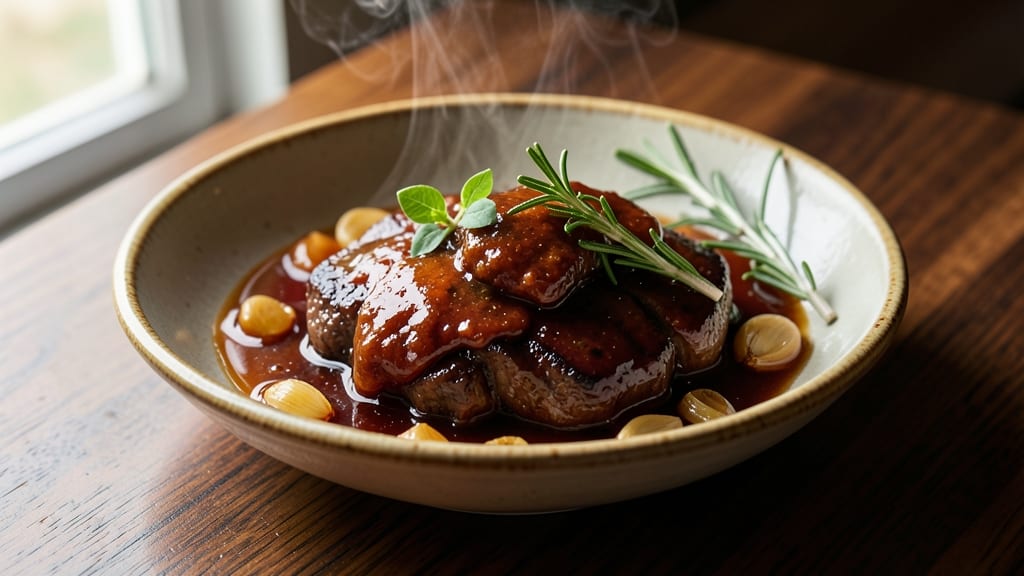
This beef basting sauce recipe transforms ordinary pan-searing into a showstopping experience with its rich, caramelized depth. 🔥 The secret lies in balancing butter, beef broth, and aromatic herbs to create a sauce that both baste and glaze, locking in flavors while building a glossy crust on your meat.
I developed this after years of experimenting with restaurant-quality techniques at home—no fancy equipment required, just patience and proper timing.
The foundation of this sauce begins with a simple blend of butter, beef broth, and a splash of red wine for acidity. As it simmers, the sauce reduces to a velvety consistency, intensifying its umami richness while developing a beautiful caramelized sheen.
The key is continuous basting during the final minutes of cooking, ensuring every surface of your steak or roast develops that perfect golden-brown crust we all crave.
What makes this sauce truly special is its dual purpose: it bastes while cooking and becomes a luxurious finishing sauce. The result is meat that's perfectly seared on the outside with tender, juicy centers, all coated in a glossy glaze that adds layers of flavor.
This isn't just a sauce—it's the difference between good steak and restaurant-quality perfection every time.
Use it for pan-seared steaks, roasted beef tenderloin, or even grilled cuts where you want that restaurant-worthy finish. The beauty of this recipe is its versatility—make a double batch and keep it in the fridge for spontaneous weeknight dinners. Here's how to create it from scratch in just 15 minutes.
Ingredients for beef basting sauce
Rich butter and bold wine create the perfect sauce for pan-seared beef perfection.
| Ingredient | Amount | Notes |
|---|---|---|
| Unsalted Butter 🧈 | ½ cup | Cold, cut into small cubes |
| Beef Broth 💧 | 1 cup | Homemade or high-quality store-bought |
| Dry Red Wine 🍷 | ¼ cup | Bold variety like Cabernet Sauvignon |
| Shallots 🧅 | 2 whole | Minced for aromatic depth |
| Fresh Thyme Leaves 🌿 | 1 tbsp | Or 1 tsp dried thyme |
| Fresh Rosemary 🌿 | 1 tbsp | Finely chopped, fresh preferred |
| Garlic Cloves 🧄 | 3 cloves | Minced for flavor foundation |
| Dijon Mustard 🍯 | 1 tsp | For subtle tang |
| Balsamic Vinegar 🍷 | 1 tsp | For caramelized depth |
| Sea Salt 🧂 | ½ tsp | Kosher or fine grain |
The butter is non-negotiable here—European-style unsalted gives the most flavor. Plugrá or Kerrygold are my go-tos, but any good-quality brand works. For the beef broth, homemade is ideal, but Annie's or Pacific Foods are solid store-bought options. The red wine should be dry and bold—Cabernet Sauvignon or Merlot work best. If you're short on time, a good-quality cooking wine like Bertolli will do in a pinch, but don't skimp on the actual wine if you've got it.
No red wine? Extra beef broth with a splash of balsamic vinegar mimics the acidity. Fresh herbs are ideal, but dried thyme and rosemary work at one-third the amount. For the shallots, if you can't find them, 1 small yellow onion minced works too. The Dijon mustard adds depth—Maille is the gold standard, but any good-quality brand will work. If you're making this ahead, the sauce actually tastes better the next day as the flavors meld together.
Store any leftovers in an airtight container in the fridge for up to 5 days. The sauce thickens as it cools, so add a splash of warm water when reheating. For longer storage, freeze in ice cube trays—just thaw in the fridge overnight. I always make a double batch because it disappears fast, especially when paired with that perfect pan-seared steak.
Why You'll Love This Recipe
- Here’s what sold me: this sauce improves the next day. The flavors meld even better, and it’s perfect for reheating with a splash of water. I keep a jar in the fridge for last-minute dinners—because sometimes, you just need that rich, umami punch without starting from scratch.
- One-Pot Magic: I swear by this recipe because it’s all in one pot—no extra bowls, no extra mess. Just melt butter, toss in shallots, deglaze with wine, and let the broth do the work. Twenty minutes later, you’ve got something restaurant-worthy with zero cleanup.
- Rich Without Effort: That first sip of wine hitting the pan? Chef’s kiss. The butter and thyme turn simple beef broth into something deep and savory—like a hug in sauce form. It’s the kind of flavor that makes you pause mid-bite and go, “Wait, I made this?”
- Weeknight Hero: Between us, this is my secret weapon for busy nights. Drizzle it over steak, toss it with roasted veggies, or even slather it on grilled chicken—it works every time. No fancy plating, no stress, just good food that doesn’t require a Pinterest-perfect spread.
Step-by-step instructions for beef basting sauce
Here's how to build a rich, glossy sauce that'll elevate any seared beef.
🍳 Step 1: Sauté Aromatics Until Fragrant
Heat a medium saucepan over medium heat and add the 0.5 cup unsalted butter, cut into small cubes. Let it melt completely, then add the 2 whole minced shallots and cook for 3-4 minutes until they become translucent and just beginning to soften.
Add the 3 cloves minced garlic and stir for 30 seconds until you can smell that irresistible aroma. Here's where it gets good—toss in the 1 tbsp fresh thyme leaves and 1 tbsp finely chopped fresh rosemary. Stir for another 30 seconds until the herbs release their oils and the mixture smells like a cozy French bistro.
🍳 Step 2: Deglaze with Wine and Reduce
Pour in the 0.25 cup dry red wine and scrape up any browned bits from the bottom of the pan. These bits are pure flavor—don't miss them! Let the wine simmer for 2-3 minutes until it reduces by about half and the alcohol smell disappears completely.
This reduction step concentrates the flavors and forms the base of your sauce. If you're worried about the wine not reducing enough, just give it a little more time—you want it thick enough to coat the back of a spoon but still pourable.
🍳 Step 3: Build Depth with Broth and Seasonings
Add the 1 cup beef broth, 1 tsp Dijon mustard, 1 tsp balsamic vinegar, and 0.5 tsp sea salt. Stir everything together and bring to a gentle simmer over medium-low heat. Let it cook for 5-6 minutes until the sauce thickens slightly and coats the aromatics.
Real talk: this is where the magic happens. The balsamic vinegar adds a subtle caramelized depth, while the mustard gives a gentle tang that balances the richness. Taste as you go—you might want to adjust the salt slightly depending on your broth's saltiness.
⏰ Step 4: Finish and Strain for Silky Texture
Once the sauce has thickened to your liking, remove it from the heat. For a completely smooth sauce, strain it through a fine-mesh sieve into a clean saucepan. This step ensures you get that silky texture perfect for basting.
If you prefer a slightly rustic texture with visible herbs, you can skip the straining. Either way, return the sauce to low heat and let it warm through. The sauce should be glossy and coat the back of a spoon—this is your perfect basting consistency.
👨🍳 Step 5: Use Immediately for Maximum Flavor
Transfer the warm sauce to a small sauceboat or gravy boat. This sauce is best used immediately while cooking your beef—it's designed to be poured over hot meat to create that beautiful caramelized crust.
Here's a pro tip: keep a small amount of the sauce in the pan while searing your beef, then deglaze with a splash of water or broth to capture all those delicious browned bits. Add this to your sauceboat and whisk together for an even richer flavor.
Pro Tips For Making Beef Basting Sauce
- DEGLaze AGGRESSIVELY: After the shallots caramelize, don’t just splash in the wine—scrape the browned bits off the pan with a wooden spoon first. That’s where half the flavor hides, and skipping it means a duller sauce. (Yes, it’s messy, but so is burning your sauce—pick your battle.)
- SWAP WINE FOR STOCK: Short on good red wine? Use an equal part beef stock instead—it won’t mimic the acidity, but it’ll still deepen the sauce without tasting like cooking wine. Just reduce the broth by half first to keep the sauce thick.
- SIMMER LOW AND SLOW: Once the wine and broth reduce, drop the heat to a bare simmer. After burning three batches trying to rush this, I learned: a slow finish (10-15 minutes) lets the butter emulsify properly, while high heat turns it into scrambled eggs.
- SALT THE BUTTER: Unsalted butter? Add a pinch of salt before melting it into the sauce—it balances the richness upfront, so you’re not playing catch-up with salt later. (I used to add it at the end and wonder why the sauce tasted flat.)
Creative variations of this recipe
Red Wine Reduction
Swap the red wine for 2 tbsp red wine vinegar plus ¼ cup beef broth if you're avoiding alcohol. The vinegar provides the same acidity to cut through the richness while the extra broth maintains the sauce's consistency.
I've used this version with great success when cooking for guests who prefer alcohol-free options—it still delivers that deep, caramelized flavor you crave. 🍷
Herb Variations
For a French bistro twist, add 1 tsp fresh tarragon along with the thyme and rosemary. The tarragon brings a subtle anise-like note that pairs beautifully with beef.
If you're making this for a Mediterranean-inspired dish, swap the rosemary for 1 tbsp fresh oregano—it adds a bright, citrusy brightness that works wonderfully with grilled lamb or beef kebabs.
Umami Boost
Add 1 tsp soy sauce or 1 tsp Worcestershire sauce to deepen the umami profile. This works especially well if you're using leaner cuts of beef that need extra flavor.
I like to use this variation when making the sauce for flank steak—the extra umami helps balance the meat's natural leanness while keeping the sauce's elegant balance. 💪
Spicy Kick
For heat lovers, stir in ½ tsp smoked paprika or a pinch of cayenne pepper during the final simmer. The smoked paprika adds a subtle earthiness that complements red meat beautifully, while cayenne brings a sharp, bright heat.
This version is perfect for spicy beef tenderloin or when serving with jalapeño corn bread on the side.
Creamy Finish
After straining the sauce, whisk in 1 tbsp heavy cream or 1 tbsp crème fraîche for a luxurious finish. This version works exceptionally well as a finishing sauce for beef Wellington or filet mignon.
The cream adds a velvety texture while keeping the sauce's glossy sheen. Just be sure to add it off the heat to prevent curdling.
Make-Ahead Adaptations
For a slow-cooked version, reduce the sauce by half first, then store it in the fridge. When ready to use, reheat gently and add 1 tbsp beef tallow or 1 tbsp olive oil to restore moisture.
This method works perfectly for braised beef dishes where you want that deep, concentrated flavor without the alcohol. The sauce actually improves overnight as the flavors meld together beautifully. ⏰
Nutrition facts
Frequently asked questions
Can I use this sauce for grilled beef instead of pan-seared?
This sauce works beautifully for grilled beef too. The key is to keep the sauce warm in a small saucepan while grilling, then baste the meat during the last 5-7 minutes of cooking. For extra flavor, add 1 tbsp olive oil to the sauce before grilling to help it cling better to the meat.
What's the best way to reheat leftover basting sauce?
Reheat gently over low heat in a small saucepan, stirring frequently to prevent scorching. If the sauce thickens too much, add 1-2 teaspoons warm water or beef broth to restore its glossy consistency. Never microwave it—this can make the sauce grainy and lose its velvety texture.
Can I make this sauce without wine?
Yes! Replace the red wine with 2 tablespoons red wine vinegar plus ¼ cup beef broth for the same acidity and depth. The vinegar cuts through the richness while maintaining the sauce's balance. This version works especially well for alcohol-free cooking while keeping all the great flavor.
How do I prevent the sauce from burning when basting?
Keep the sauce at a gentle simmer (low heat) while basting, and never let it boil. Use a spoon to skim off any foam that forms on the surface. For extra insurance, transfer the sauce to a small sauceboat or gravy boat before basting—this keeps it at a safe temperature while you work.
What's the best beef cut to use with this sauce?
This sauce shines with ribeye, filet mignon, or sirloin steaks, as well as beef tenderloin roasts. For extra flavor development, sear the meat first, then baste during the final 5-10 minutes of cooking. The sauce's richness complements both tender and slightly chewy cuts beautifully.