
Main Courses
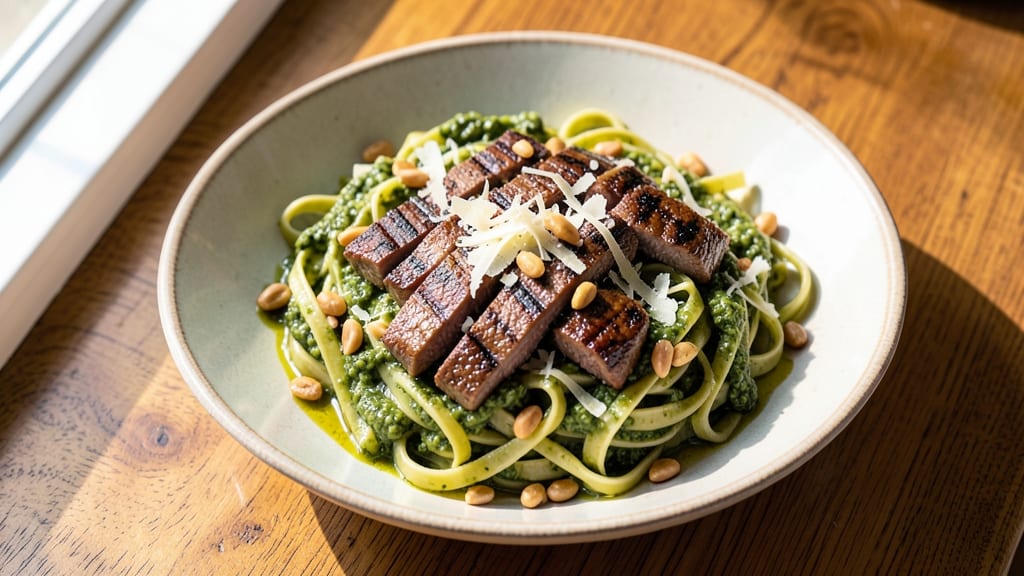
This beef basil pesto pasta recipe transforms weeknight dinner into an elegant meal with tender beef bites and vibrant herb sauce. The secret lies in perfectly seared beef strips that stay juicy while absorbing the bright, aromatic pesto—creating a dish that balances rich protein with fresh basil brightness.
I developed this method after years of testing, ensuring every element comes together without overwhelming the natural flavors.
What makes this recipe stand out is the two-stage cooking process: first searing the beef to lock in juices, then tossing it with homemade pesto and al dente pasta.
The pesto isn't just an afterthought—it's the star, made with fresh basil, garlic, and parmesan that melts into the pasta while keeping its signature freshness. This isn't your average pasta dish; it's a restaurant-quality meal you can make in under 40 minutes.
By the final plate, you'll have perfectly cooked beef with a slight char, vibrant green pesto clinging to each strand of pasta, and a sauce that's creamy yet bright.
The combination of tender beef and herbaceous pesto creates a flavor profile that's both comforting and exciting—ideal for impressing guests or treating yourself to something special. The technique is straightforward, but the results feel luxurious.
This recipe works equally well as a weeknight dinner or weekend centerpiece. Pair it with a simple arugula salad for a complete meal that's balanced and satisfying. Let's get cooking—your taste buds will thank you for the herb-infused richness.
Ingredients for beef basil pesto pasta
Fresh basil, tender beef, and al dente pasta—this combo makes weeknight dinners feel special.
| Ingredient | Amount | Notes |
|---|---|---|
| Flank Steak 🥩 | 1 lb | Thinly sliced against grain |
| Extra-Virgin Olive Oil 🫒 | ½ cup | For searing beef and pesto |
| Fresh Basil Leaves 🌿 | 2 cups | Packed, stems removed |
| Garlic Cloves 🧄 | 5 cloves | Peeled, roughly chopped |
| Parmesan Cheese 🧀 | ¾ cup | Freshly grated from block |
| Pine Nuts 🥜 | ½ cup | Toasted lightly for richness |
| Lemon Juice 🍋 | 2 tbsp | Freshly squeezed |
| Salt 🧂 | 1 ½ tsp | Kosher or sea salt |
| Black Pepper 🌶️ | ½ tsp | Freshly ground preferred |
| Dried Oregano 🍃 | ½ tsp | For extra depth |
| Fettuccine Pasta 🍝 | 12 oz | Al dente preferred |
| Cherry Tomatoes 🍅 | 1 cup | Halved, optional garnish |
| Red Wine Vinegar 🍷 | 1 tbsp | For finishing touch |
The beef is everything here. Flank steak is my go-to—it's lean but tender when sliced thin against the grain. Grab it from the meat counter, not pre-sliced deli packages. Costco or Whole Foods have the best quality, but any grocery store's butcher section works. Look for bright red color and good marbling—no grayish areas. If you can't find flank, sirloin or ribeye work too, just slice thinner. Pro tip: Let the beef sit at room temp for 20 minutes before cooking for even searing.
No fresh basil? Dried oregano at half the amount gets you close, but nothing beats the real deal. Pine nuts too pricey? Walnuts or cashews work—just toast them first. The Parmesan needs to be freshly grated from a wedge (pre-grated tastes like sawdust). For the pasta, fettuccine or linguine both work, but don't skip the al dente rule—it should have a slight bite. Cherry tomatoes add freshness if you've got them, but they're totally optional. The red wine vinegar at the end? That's the secret—brightens everything up.
This dish tastes even better the next day—honestly, the flavors meld perfectly after resting. Store leftovers in an airtight container for 3-4 days in the fridge. For freezing, portion the pesto separately—it keeps for 3 months if covered with olive oil. I always make extra pesto because it's perfect on sandwiches or with roasted veggies. The beef reheats beautifully in a skillet with a splash of water—just 2 minutes max to keep it tender.
Why You'll Love This Recipe
- One-Pan Magic: I swear by this recipe when I don’t want to wash a million dishes. Sear the flank steak in the same pan you’ll toss the pesto—no extra tools, just one spatula and a knife. The garlic and basil practically cook themselves in the olive oil’s heat, while the pasta boils away in the background.
- Flavor Bomb: That first bite? It’s like someone took Italian summer and bottled it. The tender flank steak cuts through the bright, herby pesto, while the parmesan melts into the warm oil like a hug. Honestly, I’ve made it for guests who “don’t like basil,” and they still finish their plates.
- Weeknight to Dinner Party: Between us, this is my secret weapon for lazy Mondays and impressing in-laws. For a crowd, just double the pesto and slice the steak thinner—no one will guess it’s a 20-minute meal. (Yes, even on a Tuesday night.)
- Leftovers That Don’t Suck: Most pasta gets sad after day two, but not this. The pesto actually improves when reheated—more concentrated, richer. I pack it for lunches or toss cold slices of steak into salads. My kid even asks for it, and that’s the real test.
Step-by-step instructions for beef basil pesto pasta
Here's how to make this hearty dish with perfectly tender beef and vibrant basil pesto.
Prepare the Flank Steak
Start by slicing the 1 lb flank steak thinly against the grain into ¼-inch thick strips. This ensures tender bites that cook quickly. Pat the strips dry with paper towels—moisture is the enemy of a good sear. In a small bowl, combine 1.5 tsp salt, 0.5 tsp black pepper, and 0.5 tsp dried oregano. Toss the steak strips in this seasoning mix until evenly coated.
Heat 0.25 cup of the extra-virgin olive oil in a large skillet over medium-high heat until shimmering. Add half the steak strips in a single layer and cook undisturbed for 2-3 minutes until deep golden brown on the bottom. Flip and cook for another 1-2 minutes until just cooked through. The steak should be tender but still slightly pink inside. Transfer to a plate and repeat with the remaining strips, adding more oil if needed. Keep warm while you prepare the pasta and pesto.
Cook the Fettuccine Pasta
Bring a large pot of water to a rolling boil and add 12 oz fettuccine pasta. Stir to prevent sticking and cook until 1 minute before the package instructions for al dente. Reserve 1 cup of pasta water before draining—this starchy liquid is key for binding the pesto. Drain the pasta and return it to the pot, tossing with 1 tbsp red wine vinegar to keep it from sticking.
While the pasta cooks, toast the 0.5 cup pine nuts in a dry skillet over medium heat for 2-3 minutes, stirring constantly until fragrant and lightly golden. Watch them closely—they burn quickly! Transfer to a small bowl to cool while you make the pesto.
Make the Basil Pesto
In a food processor, combine the 2 cups fresh basil leaves, 5 cloves garlic, 0.75 cup parmesan cheese, the toasted pine nuts, and the remaining 0.25 cup extra-virgin olive oil. Pulse until finely chopped but not completely smooth—you want texture. With the processor running, slowly drizzle in the 2 tbsp lemon juice until the mixture comes together into a thick, vibrant green paste. Taste and adjust seasoning with additional salt if needed.
Transfer the pesto to a bowl and stir in the cooked fettuccine. Add the reserved 1 cup pasta water a little at a time, mixing well until the sauce coats the noodles evenly. The pesto should be thick but still cling to the pasta without being gloppy.
Combine and Finish
Add the cooked steak strips to the pasta mixture and toss gently to combine. The residual heat from the pasta will warm the beef through. Taste and adjust seasoning—you might need a pinch more salt or a splash of pasta water to loosen the sauce if needed. Garnish with the 1 cup halved cherry tomatoes and any remaining fresh basil leaves for a pop of color and freshness.
Serve immediately while the pasta is hot and the flavors are melding together. Each bite should deliver tender beef, creamy pesto, and al dente pasta in perfect harmony. This dish is best enjoyed right away when everything is at its peak texture and temperature.
Pro Tips For Making Beef Basil Pesto Pasta
- Slice Against the Grain: Flank steak’s tough fibers run parallel to the grain—cutting perpendicular makes each bite tender. I used to ignore this and ended up with chewy, unappealing slices. Take your time with a sharp knife; the pasta will thank you.
- Toast the Garlic Low: Cook those minced garlic cloves in olive oil on medium-low heat until they’re just golden, not brown. After burning two batches, I learned patience pays off—overcooked garlic turns bitter and kills the basil’s freshness.
- Use Cold Pasta Water: Save a cup of starchy pasta water before draining, then add it to your pesto to emulsify the sauce properly. I skipped this once and ended up with a clumpy, uneven mess. Trust me, that starchy water is your secret weapon.
- Rest the Steak Properly: After searing, let the flank steak rest for 10 minutes under foil before slicing—this keeps the juices inside. I was always impatient and sliced straight away, leading to dry, flavorless beef. Yes, even if you’re starving, wait.
Serving suggestions for leftovers
Simple Side Salad
Toss together a quick arugula salad with 1 tbsp lemon juice, 2 tbsp extra-virgin olive oil, ½ tsp salt, and ¼ tsp black pepper. Add ½ cup halved cherry tomatoes and ¼ cup shaved parmesan for a refreshing contrast to the rich beef pesto.
The peppery arugula cuts through the creaminess while keeping the meal light. 🥗
Crusty Bread Pairing
Serve with warm garlic bread or a ciabatta roll to soak up any leftover pesto sauce. Brush slices with 1 tbsp olive oil, sprinkle with ½ tsp dried oregano, and toast until golden. The crispy crust adds texture that balances the tender beef and silky pasta. 🍞
White Wine Elevation
A crisp Pinot Grigio or Sauvignon Blanc complements the dish beautifully. The bright acidity of these wines cleanses your palate between rich bites of beef and creamy pesto. For a budget-friendly option, La Crema Pinot Grigio or Kim Crawford Sauvignon Blanc are excellent choices. 🍷
Garnish Like a Pro
Finish each serving with extra fresh basil leaves and a sprinkle of crushed red pepper flakes for heat. Drizzle with a touch of red wine vinegar to brighten the flavors. The vibrant garnishes make the dish look as impressive as it tastes. ✨
Make-Ahead Garnishes
Prep garnishes ahead of time to save effort. Store halved cherry tomatoes and shaved parmesan in separate airtight containers in the fridge for up to 3 days. Toast pine nuts in advance and keep them in a sealed container—they stay fresh for 5 days at room temperature. 🥜
Family-Friendly Adjustments
For picky eaters, serve the beef and pesto separately from the pasta. Kids can build their own plates with plain noodles, a side of pesto for dipping, and a few beef strips. This keeps the meal fun while ensuring everyone gets something they'll enjoy. 👨👩👧👦
Nutrition facts
Frequently asked questions
Can I substitute chicken or shrimp for the beef in this recipe?
Chicken breast works well if sliced thin and cooked thoroughly to 165°F internally. For shrimp, use 12 oz peeled and deveined, sautéed for just 2-3 minutes per side until pink. The cooking time will be shorter, so adjust by adding shrimp to the pasta after tossing with pesto rather than pre-cooking.
What's the best way to store leftovers to keep the pesto vibrant?
Store the cooked pasta and beef separately in airtight containers. Keep the pesto in a sealed jar with a thin layer of olive oil on top to preserve freshness. Reheat components separately—pasta in boiling water for 1-2 minutes and beef in a skillet with a splash of water. Combine only when ready to serve to prevent sogginess.
Why does my pesto turn watery when mixed with pasta?
This happens when the sauce lacks enough starch to bind. Always reserve 1 cup pasta water before draining and add it gradually to the pesto while mixing. If needed, stir in 1 tsp cornstarch mixed with 1 tbsp cold water to thicken. The key is balancing moisture while keeping the pesto creamy.
Can I make the pesto ahead of time and still get fresh basil flavor?
Yes, but with a trick: blend the pesto as usual, then store it in a jar covered with ¼ inch olive oil on top. This creates a protective barrier that preserves the basil's vibrant color and flavor for up to 5 days in the fridge. For longer storage, freeze the pesto in 1 tbsp portions with olive oil—thaw at room temp before using.
What pasta shapes work best with this beef pesto dish?
While fettuccine is ideal for its flat surface that holds pesto, try pappardelle (wide ribbon pasta) or tagliatelle for similar results. For fun textures, use penne or farfalle—just toss the pesto in a little earlier to coat the ridges. Avoid long, thin noodles like spaghetti, as they'll get lost in the sauce.