
Soups & Stews
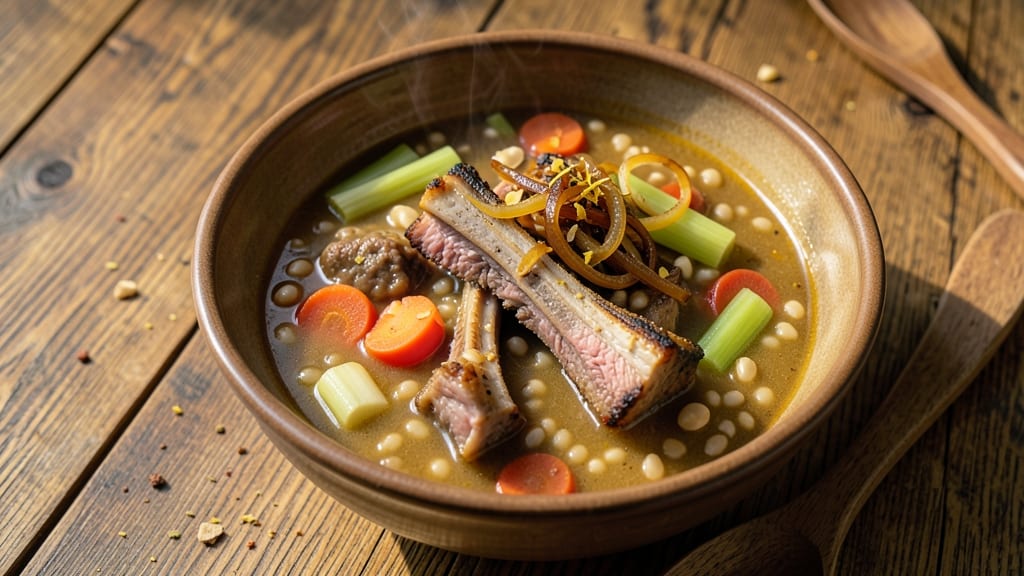
This beef barley soup recipe with prime rib bones transforms simple ingredients into a deeply flavorful, restaurant-quality dish that simmers for hours. The secret lies in extracting rich gelatin and collagen from prime rib bones, creating a velvety broth that forms the heart of every spoonful.
What starts as a collection of bones, vegetables, and barley evolves into a comforting, hearty meal that feels like a warm embrace on cold days.
The process begins with slow-roasting the bones to deepen their natural flavors before simmering them with aromatic vegetables and herbs. This homemade stock builds layers of complexity as it reduces, while pearl barley softens into a satisfying, chewy texture.
The result is a soup where every ingredient—tender beef, hearty barley, and aromatic broth—works in perfect harmony.
By the time you ladle the first bowl, you'll taste the difference between store-bought broth and this rich, homemade foundation. The broth clings to the barley and tender beef, creating a cohesive, flavorful bite that's both comforting and sophisticated.
Serve it with crusty bread to soak up every last drop of that golden, gelatinous goodness.
This recipe delivers on its promise of depth and tradition, making it ideal for family dinners, holiday gatherings, or cozy weeknight meals. The slow-simmering process ensures maximum flavor extraction, while the barley adds substance without overpowering the delicate beef notes.
Perfect for those who appreciate the art of slow cooking and the reward of homemade stock.
Ingredients for beef barley soup recipe with prime rib bones
Sixteen ingredients transform into a restaurant-quality beef barley soup with velvety bone broth.
| Ingredient | Amount | Notes |
|---|---|---|
| Prime Rib Bones 🦴 | 3 lb | Cut into 3-inch pieces, marrow intact |
| Pearl Barley 🌾 | 1 ½ cups | Uncooked, rinsed thoroughly |
| Yellow Onions 🧅 | 2 whole | Peeled, quartered, root intact |
| Carrots 🥕 | 4 whole | Scrubbed, cut into 2-inch chunks |
| Celery Stalks 🌿 | 4 whole | Trimmed, cut into 2-inch pieces |
| Garlic Cloves 🧄 | 6 cloves | Peeled, smashed lightly |
| Fresh Thyme Sprigs 🌿 | 4 whole | Stems intact, leaves stripped |
| Fresh Parsley 🌿 | ¼ cup | Chopped, stems removed |
| Tomatoes 🍅 | 2 whole | San Marzano, crushed by hand |
| Beef Chuck Roast 🥩 | 2 lb | Cut into 1.5-inch cubes |
| Bay Leaves 🌿 | 2 whole | Dried, standard size |
| Black Peppercorns 🌶️ | 1 tbsp | Freshly cracked |
| Kosher Salt 🧂 | 2 tbsp | Diamond Crystal preferred |
| Extra-Virgin Olive Oil 🫒 | 2 tbsp | For roasting bones |
| Red Wine 🍷 | 1 cup | Dry, bold variety |
| Beef Stock 💧 | 6 cups | Homemade preferred |
The prime rib bones are the foundation of this soup—look for marrow-rich bones at specialty butchers or high-end grocery stores like Whole Foods or Eataly. If you can't find prime rib bones, beef marrow bones or short ribs work as substitutes, though the gelatin yield will differ. Roast the bones uncovered at 425°F for 30 minutes before adding liquids to deepen their flavor. The beef chuck roast should have visible marbling; Costco or local butchers often carry high-quality cuts. For the barley, Bob's Red Mill or Bulk Barn offer excellent organic options—avoid quick-cooking varieties as they break down too fast.
No red wine? Substitute with additional beef stock and a splash of balsamic vinegar—it mimics the acidity without altering the flavor profile. Fresh thyme and parsley can be swapped for dried at one-third the amount, but the brightness they add is worth the effort. If San Marzano tomatoes aren't available, Roma tomatoes work well, though they lack the same sweetness. For the stock, homemade is ideal, but high-quality store-bought like Kettle & Fire suffices in a pinch. The carrots and celery can be pre-chopped for convenience, but cutting them just before adding to the pot preserves their freshness longer. The garlic should be lightly smashed—not minced—to prevent bitterness.
This soup improves with time—reheat gently on the stove, adding a splash of water or stock if needed. It keeps for 5-6 days in the fridge or 3 months in the freezer, though the texture may change slightly after freezing. For long-term storage, freeze in portion-sized containers with a layer of broth on top to prevent freezer burn. The barley softens further upon reheating, so adjust cooking time if using leftovers. Serve with crusty sourdough or baguette to soak up every last drop of that golden, gelatinous broth.
Why You'll Love This Recipe
- Here’s what sold me: those prime rib bones melt into the broth, turning it into liquid gold—deep, savory, and effortlessly flavorful. No need for bouillon cubes or secret spices; the marrow and collagen do all the heavy lifting while the barley soaks up every last bit.
- One-Pot Wonder: I swear by this recipe because it’s literally dump-and-simmer. Toss the prime rib bones straight from the fridge into a pot with chopped onions, carrots, and celery—no fancy prep, no stress. By the time the barley’s tender, the house smells like a cozy Sunday, and I haven’t even broken a sweat.
- Rich Without Effort: Here’s what sold me: those prime rib bones melt into the broth, turning it into liquid gold—deep, savory, and effortlessly flavorful. No need for bouillon cubes or secret spices; the marrow and collagen do all the heavy lifting while the barley soaks up every last bit.
- Leftovers That Beg for More: Between us, this soup only gets better the next day. The barley softens just right, the broth thickens into something almost stew-like, and I’ve caught myself reheating it for lunch because it’s that good. Honestly? I make double batches on purpose.
Step-by-step instructions for beef barley soup with prime rib bones
Transforming prime rib bones into a deeply flavorful soup requires patience and precision.
Roast the Prime Rib Bones for Maximum Flavor
Preheat your oven to 425°F and position a rack in the center. Arrange the 3 lb prime rib bones on a baking sheet, marrow side up, and brush lightly with 2 tablespoons extra-virgin olive oil. Roast for 30-40 minutes until the bones develop a deep mahogany color and the marrow begins to soften.
This roasting step is critical—it caramelizes the bone surfaces, creating layers of complex flavor that will infuse your broth. You'll know it's ready when the bones smell richly nutty and the marrow yields slightly when pressed with a spoon. Transfer the bones to a large pot, leaving any rendered fat behind in the pan.
Build the Aromatic Base with Vegetables and Wine
In the same oven-safe pot, add 2 tablespoons extra-virgin olive oil (if needed) and sauté the 2 whole yellow onions, 4 whole carrots, and 4 whole celery stalks over medium heat for 8-10 minutes until softened but not browned. Add the 6 cloves garlic cloves and cook for another 30 seconds until fragrant.
Deglaze the pot with the 1 cup red wine, scraping up all the browned bits from the bottom. This step captures all the flavor that would otherwise stick to the pot. Add the 2 whole tomatoes, 4 whole fresh thyme sprigs, and 2 whole bay leaves, stirring to combine. The wine should reduce by half, leaving a rich, concentrated base.
Simmer the Bones and Vegetables for Deep Flavor
Pour in the 6 cups beef stock and add the roasted prime rib bones. Bring to a gentle simmer, then reduce heat to maintain a barely perceptible bubble at the surface. Partially cover the pot and let it simmer for 2 hours, skimming any foam that rises to the surface with a fine-mesh skimmer.
This slow simmering extracts collagen and marrow from the bones, transforming them into a velvety broth. Stir occasionally to prevent the bones from sticking, and add water as needed to maintain the liquid level. The soup should develop a rich, amber color and an aroma that fills your kitchen—this is when you'll know the bones have surrendered their essence.
Add Barley and Beef Chuck Roast for Hearty Texture
After 2 hours, remove the prime rib bones (they're done contributing) and discard them. Add the 2 lb beef chuck roast, cut into 1.5-inch cubes, and the 1.5 cups pearl barley. Return the soup to a simmer and cook for another 45-60 minutes, until the beef is fork-tender and the barley is al dente.
Pearl barley should have a slight bite—it should hold its shape but be tender enough to chew easily. Taste the soup and adjust seasoning with 2 tablespoons kosher salt and 1 tablespoon freshly cracked black peppercorns as needed. The beef should pull apart easily with a fork, and the barley should be plump and firm.
Finish with Fresh Herbs and Serve Warm
Strain the soup through a fine-mesh sieve into a clean pot, pressing gently on the solids to extract maximum flavor. Stir in the 0.25 cup chopped fresh parsley and adjust the seasoning one final time. The soup should be rich, deeply flavored, and perfectly balanced between the hearty beef, nutty barley, and velvety broth.
Ladle the soup into bowls and serve immediately, garnished with an additional sprinkle of parsley. The aroma alone will make your kitchen smell like a rustic European bistro. This soup tastes even better the next day as the flavors continue to meld, so consider making extra for leftovers.
Pro Tips For Making Beef Barley Soup Recipe With Prime Rib Bones
- CRISP THE BONES FIRST: Don’t skip browning those prime rib bones—sear them hard in a dry pot until they’re deep mahogany, not just pink. I learned this the hard way when my soup tasted like broth, not flavor. Five minutes per side, no crowding, and let the fat pool up—it’s your foundation.
- SOAK BARLEY 30 MINUTES: Pearl barley swells up better if you rinse it first, then soak in cold water for 30 minutes. Skipping this step leaves you with grainy, undercooked bits that never soften, no matter how long you simmer. Drain before adding—wet barley turns your soup into a gluey mess.
- SIMMER LOW AND LONG: This isn’t a race. After the initial boil, drop the heat to a gentle simmer where bubbles barely break the surface. I used to rush it, and the barley stayed chalky while the broth turned cloudy. Two hours minimum—three if you want that melt-in-your-mouth texture.
- STRAIN THE VEGETABLES: Yes, even if you love texture, pull out the carrots and celery after 45 minutes. They’ll turn to mush and make the soup heavy. My grandmother swore by this—it keeps the broth clear and the barley the star. Reserve a cup of the strained veggie water to thin the soup later if needed.
Best sauces and condiments for this dish
Classic Horseradish Cream
This tangy, slightly spicy condiment elevates your beef barley soup to new heights. Mix ½ cup sour cream with 1 tablespoon prepared horseradish (I love Gourmet Garden for consistency) and 1 teaspoon lemon juice. Stir in ½ teaspoon Dijon mustard and ¼ teaspoon salt to balance the heat.
Dollop on top of each bowl or serve on the side for dipping crusty bread. The horseradish's sharpness cuts through the soup's richness beautifully. ✨
Crispy Fried Onion Topping
For a crunchy contrast, fry 1 cup thinly sliced yellow onions in 2 tablespoons vegetable oil until golden brown (5-6 minutes). Drain on paper towels and sprinkle with ½ teaspoon smoked paprika for depth.
These onions add texture and a subtle sweetness that pairs perfectly with the hearty soup. Store in an airtight container for up to 3 days—they stay crispy if kept dry. 🌟
Garlic-Herb Oil Drizzle
Infuse ½ cup extra-virgin olive oil with 3 smashed garlic cloves, 1 tablespoon fresh thyme leaves, and 1 tablespoon fresh parsley. Heat the oil gently for 5 minutes (don't let it smoke), then strain and drizzle over the finished soup.
This adds aromatic layers without overpowering the broth's natural depth. I keep a jar in my fridge for quick flavor boosts on other dishes too. 💛
Whole-Grain Mustard Swirl
Stir 1 tablespoon whole-grain mustard (like French's) into the soup during the final 10 minutes of cooking. The mustard's nutty crunch and mild heat complement the beef and barley perfectly.
For extra richness, whisk in 1 tablespoon heavy cream at the end. This simple addition transforms the soup from ordinary to extraordinary with minimal effort. 🔥
Spiced Apple Cider Reduction
Simmer 1 cup apple cider with 1 cinnamon stick, 2 star anise pods, and 1 strip orange peel until reduced by half (10-12 minutes). Strain and drizzle over the soup just before serving.
The warm spices and slight tartness create a sophisticated contrast to the savory broth. This works especially well with the prime rib's deep, meaty flavors. 🍎
Nutrition facts
Frequently asked questions
Why do prime rib bones make the broth so much richer than regular beef stock?
The prime rib bones contain abundant marrow and collagen, which dissolve during the long simmering process to create a thick, velvety texture. Unlike regular stock, these bones release gelatin that gives the broth its signature richness and body. This is why traditional recipes prioritize marrow-rich bones for soups and stews.
Can I substitute prime rib bones with other beef bones?
Yes, but the texture will differ. Beef marrow bones or short ribs work well as substitutes—they still provide gelatin and flavor. However, avoid knuckle bones or neck bones, as they yield less collagen. For best results, choose bones with visible marrow and roast them first to deepen the flavor.
How do I know when the barley is cooked properly?
Pearl barley should be tender but still hold its shape—think "al dente." Test by tasting a grain: it should be soft enough to chew easily but not mushy. If it breaks apart too quickly, it's overcooked. For extra insurance, check the package cooking time (usually 45-60 minutes for pearl barley in broth).
What if I don't have red wine for deglazing?
No problem! Use 1 cup beef stock + 1 tablespoon balsamic vinegar instead. The vinegar mimics the acidity of wine, helping dissolve browned bits and adding depth. Alternatively, a splash of apple cider vinegar works too—just adjust seasoning afterward, as vinegar can be tart.
Can I make this soup in a slow cooker instead of on the stove?
Roast the bones first, then transfer everything to a 6-quart slow cooker. Cook on low for 8-10 hours (or high for 5-6 hours). The slow cooker excels at extracting collagen, so the broth will be even richer. Just skip the skimming step—foam won't form as much in a slow cooker.