
Soups & Stews
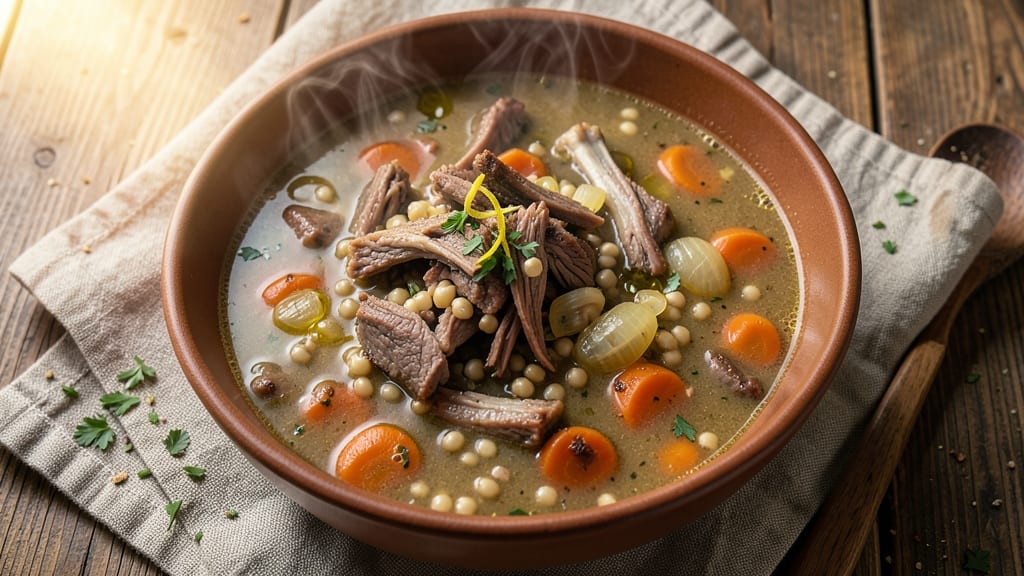
Leftover prime rib deserves a second life in this beef barley soup, where every bite delivers restaurant-quality umami depth. I developed this recipe after realizing how much flavor gets wasted when we don't repurpose our holiday leftovers properly. The key is slow simmering—transforming tough meat scraps into tender, flavorful pieces that infuse the broth with rich, savory notes.
What makes this soup special is the balance of textures and flavors: chewy barley, tender beef, and a broth that's deeply aromatic from caramelized onions, garlic, and fresh herbs.
Unlike many recipes that rely on beef broth, we build our flavor foundation from scratch using aromatics and leftover bones, creating a depth that store-bought broth can't match. The result is a soup that's hearty enough for winter nights but simple enough for weeknight dinners.
This method ensures you'll use up every last bit of that prime rib without sacrificing quality. The barley absorbs the rich beef broth while maintaining its satisfying chew, and the beef pieces become so tender they practically melt.
What you end up with is a soup that's comforting, nourishing, and packed with that special umami richness that makes it worth the effort.
Perfect for turning holiday leftovers into a new centerpiece dish or creating a satisfying meal from scratch. The technique is straightforward but delivers professional results—ideal for home cooks who want restaurant-quality meals without the fuss. Let's get started with this flavorful transformation.
Ingredients for beef barley soup recipe with leftover prime rib
Repurpose holiday leftovers into a rich, umami-packed beef barley soup with just these 14 ingredients.
| Ingredient | Amount | Notes |
|---|---|---|
| Leftover Prime Rib 🥩 | 1 ½ lb | With bones and fat for rich broth |
| Yellow Onions 🧅 | 2 whole | Chopped, medium size preferred |
| Carrots 🥕 | 4 whole | Medium size, peeled and chopped |
| Garlic Cloves 🧄 | 4 cloves | Minced for deep flavor |
| Pearl Barley 🌾 | 1 cup | Uncooked, rinsed well |
| Beef Bones 🦴 | 1 lb | From leftover prime rib |
| Tomato Paste 🍅 | 2 tbsp | For depth and richness |
| Dried Thyme 🌿 | 1 tsp | Or 1 tbsp fresh thyme |
| Bay Leaves 🍃 | 2 whole | For aromatic depth |
| Black Peppercorns 🌶️ | 1 tsp | Crushed for texture |
| Salt 🧂 | 1 ½ tsp | Kosher or sea salt |
| Fresh Parsley 🌿 | ¼ cup | Chopped for garnish |
| Water 💧 | 8 cups | For initial broth |
| Red Wine 🍷 | 1 cup | Dry red like Cabernet |
The prime rib is the star—use every scrap, including bones and fat, for maximum flavor. Costco or Whole Foods often have high-quality beef cuts perfect for leftovers. If your rib has tougher pieces, don't worry—the slow simmer will make them tender. For the barley, Bob's Red Mill is my go-to brand, but any pearl barley works. The carrots and onions should be fresh but firm—no mushy spots. If you're using pre-chopped veggies from the store, give them a quick rinse to remove excess starch that can cloud the broth.
No red wine? Dry sherry or beef broth works in a pinch, though wine adds that special depth. Fresh thyme is ideal, but dried works at one-third the amount. The tomato paste can be from a tube or a can—just make sure it's San Marzano if using canned for the best flavor. If you're short on time, baby carrots or pre-chopped onions from the salad bar save prep work. The beef bones? If you don't have any, beef bouillon cubes can add umami, though homemade bones are far superior. For extra richness, toast the barley lightly in a dry pan before adding to the soup—it deepens the nutty flavor.
This soup tastes even better the next day as flavors meld. Store in an airtight container in the fridge for up to 5 days or freeze for 3 months. I like to portion it into containers for easy lunches—just reheat with a splash of water or broth. The barley thickens when cold, so stir it in gently when reheating. For serving, garnish with fresh parsley and a drizzle of the broth from the pot—it's that good.
Why You'll Love This Recipe
- I swear by this trick: just dice the onions and carrots roughly—no fancy julienne needed. The prime rib falls apart with a spoon, so you’re basically shredding it while you stir.
- No Chopping Stress: I swear by this trick: just dice the onions and carrots roughly—no fancy julienne needed. The prime rib falls apart with a spoon, so you’re basically shredding it while you stir.
- Rich Without Effort: That leftover prime rib? It’s the star. The slow simmer pulls all the meaty flavor into the broth while the barley soaks it up like a sponge—no fancy reductions, just pure, satisfying depth.
- Sunday Supper to Weeknight Win: Between us, this is my go-to when I’ve got a crowd and zero energy. Toss in the veggies, add the beef, and let it simmer. Even my picky teenagers ask for seconds—(yes, even on a Tuesday night).
Step-by-step instructions for beef barley soup with leftover prime rib
Transform your leftover prime rib into a hearty, umami-packed soup that tastes even better the next day.
Build the Flavor Base with Meat and Bones
Begin by placing the 1.5 lb leftover prime rib and 1 lb beef bones from the rib in a large Dutch oven or heavy pot. Add the 2 whole yellow onions (chopped), 4 whole carrots (peeled and chopped), and 4 cloves garlic cloves (minced). This combination creates a rich, complex foundation for your soup.
Cook over medium-high heat for 10 minutes, stirring occasionally, until the onions soften and begin to caramelize slightly. The garlic should release its aromatic oils—this is when your kitchen will smell amazing. If the mixture starts to stick, add a splash of the 8 cups water to deglaze and keep everything moving.
Develop Depth with Wine and Tomato Paste
Once the vegetables have softened, pour in the 1 cup red wine and scrape up any browned bits from the bottom of the pot. These bits are packed with flavor—don't miss them! Let the wine simmer for 3-4 minutes until it reduces by about half, intensifying its richness.
Stir in the 2 tbsp tomato paste and cook for another 2 minutes, allowing it to meld with the wine and vegetables. This step builds the umami depth that makes this soup so satisfying. Add the 1 tsp dried thyme, 2 whole bay leaves, and 1 tsp black peppercorns (crushed), then pour in the remaining 8 cups water. Bring everything to a boil.
Simmer the Broth Until Rich and Flavorful
Reduce heat to low and let the soup simmer uncovered for 1 hour. This long simmer time is crucial—it allows all the flavors to meld together and the broth to develop a deep, meaty richness. Skim off any foam that rises to the surface during the first 15 minutes of simmering for a cleaner broth.
After 1 hour, taste the broth and adjust seasoning with the 1.5 tsp salt if needed. The soup should be well-seasoned but not overly salty. If the broth has reduced too much, add water ½ cup at a time until you reach your desired consistency. The meat should be falling off the bones—remove it with tongs and shred it into bite-sized pieces, then return it to the pot.
Cook the Barley to Perfect Tenderness
Rinse the 1 cup pearl barley under cold water to remove any dust or debris. Add it to the soup and stir gently to distribute it evenly. Return the soup to a gentle simmer and cook for 30-40 minutes, stirring occasionally. The barley should be tender but still have a slight bite—it should hold its shape but be easily mashed with a fork.
Check the barley periodically during the last 10 minutes of cooking. If it's absorbing too much liquid, add more water ¼ cup at a time to maintain the soup's consistency. The soup is done when the barley is tender and the broth has thickened slightly from the starch released by the barley.
Finish and Serve with Fresh Herbs
Remove the 2 whole bay leaves from the soup and discard them. Stir in the shredded prime rib and let the soup sit off the heat for 5 minutes to allow the flavors to meld one last time. Ladle the soup into bowls, garnishing each serving with ¼ cup fresh parsley (chopped). The bright green parsley adds a fresh contrast to the rich, hearty flavors of the soup.
Serve immediately while hot, with crusty bread to soak up every last drop of that flavorful broth. This soup tastes even better the next day as the flavors continue to develop, so make extra if you can—it's that good.
Pro Tips For Making Beef Barley Soup Recipe With Leftover Prime Rib
- CUT PRIME RIB IN STRIPS: Shred the leftover prime rib against the grain into ½-inch strips—thin enough to cook evenly but thick enough to stay tender. I learned this the hard way: wider chunks turn mushy, and tiny bits disappear into the soup.
- SOAK BARLEY 30 MINUTES: Skip the long soak, but give pearl barley a quick 30-minute soak in cold water before adding to the pot. It cuts cooking time by 20 minutes and prevents that gummy texture you hate.
- SWEAT ONIONS LOW AND SLOW: Cook onions in a dry pot over medium-low heat for 8-10 minutes until deeply golden, stirring often. Rushing this step makes the soup taste raw—yes, even if you’re impatient like me.
- USE THE FAT: Sear the prime rib strips in the drippings from the leftover roast—no need to add extra oil. That rendered fat adds flavor and helps build a rich base for the soup. (Your future self will thank you.)
Make-ahead tips for leftovers
Prep Ahead Strategy
Start by prepping all your vegetables the night before—chop the 2 onions, 4 carrots, and 4 garlic cloves and store them in airtight containers in the fridge.
This saves 20 minutes of prep time on soup day. I like to use quart-sized glass containers from Pyrex because they stack neatly and keep everything fresh. 💡
Broth Development
Build the broth base in advance by roasting the vegetables and meat at 400°F for 20 minutes before simmering. This caramelization adds deep, complex flavors that take hours to develop during regular cooking.
Transfer the roasted mixture to an airtight container and refrigerate for up to 2 days before completing the soup. The aromas alone will make your kitchen smell amazing when you're ready to finish it.
Barley Pre-Cooking
Toast the 1 cup pearl barley in a dry skillet over medium heat for 5 minutes to enhance its nutty flavor, then store it in an airtight container. When you're ready to cook, simply add it directly to the simmering broth.
This step can be done up to 3 days ahead—just keep it in a sealed container until you're ready to use it. The toasted barley will keep its texture perfectly.
Freezer-Friendly Prep
For maximum convenience, freeze the fully cooked soup (without the barley) in 1-gallon freezer bags with 1 inch of headspace for easy reheating. When ready to serve, thaw overnight in the fridge, then add the barley and simmer for 20-30 minutes until tender.
This method preserves all the rich flavors while making weeknight dinners effortless. Just add fresh parsley when serving to brighten the dish. ❄️
Make-Ahead Serving
Portion the completed soup into individual quart-sized containers for easy grab-and-go lunches. Reheat portions in the microwave at 70% power for 3-4 minutes, stirring halfway through. For the best texture, add 2 tbsp water or broth before reheating to prevent drying.
I always make extra because this soup tastes even better the next day—perfect for meal prep Sundays. 💪
Nutrition facts
Frequently asked questions
Can I use other beef cuts instead of prime rib?
Yes, but prime rib's rich fat and marrow make it ideal for deep flavor. For similar results, try chuck roast or short ribs—both add excellent umami. Brisket works too, but it's leaner and may need extra fat or butter to match the richness. Avoid overly fatty cuts like ground beef, as they can make the soup greasy.
How do I adjust the recipe if I have more or less leftover meat?
For more meat, increase the simmering time to 1 hour 15 minutes to fully tenderize. For less meat, add ½ cup dried lentils or mushrooms to maintain heartiness. The key is balancing meat-to-broth ratio—aim for about 1 lb meat per 4 cups broth for perfect texture. Never rush the simmering, even with extra meat.
Can I substitute pearl barley with other grains?
For a quicker option, use ½ cup farro or wheat berries (cook time: 20 minutes). For gluten-free, try ½ cup quinoa or wild rice (cook time: 15 minutes). The barley's chewy texture is unique, but these alternatives add different textures. Just reduce the water by ½ cup if using denser grains like farro.
Why does my soup taste bland even after simmering?
Blandness usually means insufficient umami or seasoning. Boost flavor by adding 1 tbsp soy sauce or Worcestershire during simmering, or a pinch of fish sauce for depth. Check your salt—taste as you go! Also ensure you're using bones (they're flavor gold) and that the wine fully reduced. If all else fails, finish with a splash of balsamic vinegar.
What's the best way to reheat leftovers without drying them out?
Reheat gently on the stove over low heat with 2 tbsp water or broth per serving. For microwave safety, cover with a damp paper towel and heat at 50% power for 2-3 minutes, stirring halfway. The barley absorbs liquid when cold, so add extra broth when reheating. Never reheat to boiling—just until steaming hot.