
Soups & Stews
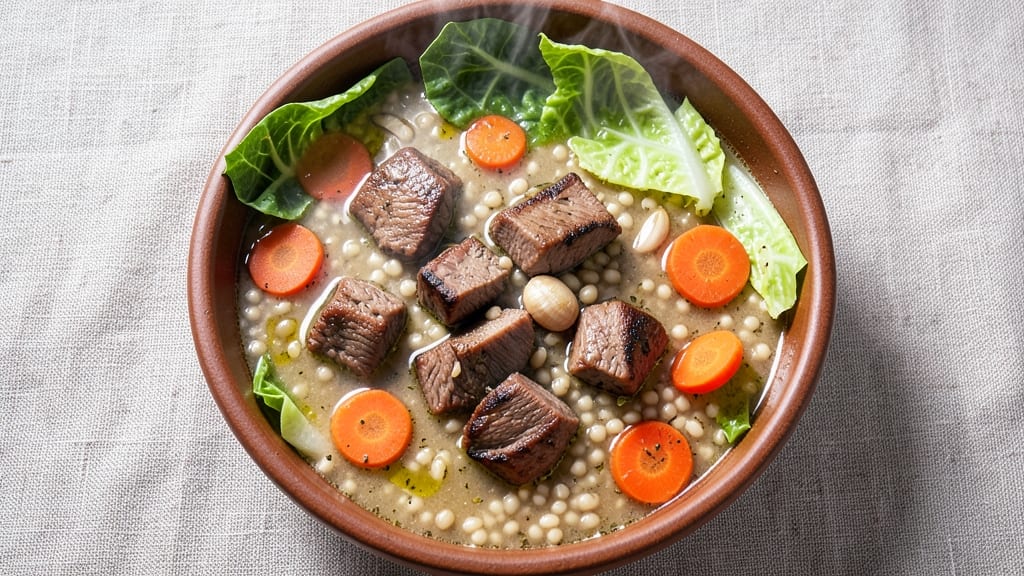
This beef barley and cabbage soup recipe delivers the kind of hearty, comforting meal that warms you from the inside out—perfect for chilly evenings or when you crave something nourishing. 💛 The secret lies in slow-cooked beef, caramelized onions, and barley that softens just enough to release its nutty flavor, all simmered with tender cabbage and aromatic herbs for depth that lingers long after the last spoonful.
What sets this soup apart is the balance of textures and flavors: tender beef chunks, chewy barley, and crisp-tender cabbage, all bathed in a rich, savory broth that develops as it simmers.
The process is straightforward—browning the beef for deep flavor, sautéing onions until golden, and letting everything meld together over time—but the result is restaurant-quality comfort food that feels like a hug in a bowl.
The beauty of this recipe is its versatility. It’s hearty enough to satisfy even the hungriest appetites but light enough to feel balanced, thanks to the cabbage’s natural crunch and the barley’s gentle earthiness.
Every bite delivers layers of savory, slightly sweet, and umami-rich notes that make it impossible to resist.
Whether you're meal prepping for the week or craving a cozy dinner tonight, this soup adapts effortlessly. The ingredients are simple, the technique is foolproof, and the result is a dish that tastes even better the next day—just like grandma used to make. Let’s get cooking!
Ingredients for beef barley cabbage soup
The heart of this soup lies in rich beef, caramelized onions, and nutty barley—simple ingredients that create deep, comforting flavors.
| Ingredient | Amount | Notes |
|---|---|---|
| Chuck Roast 🥩 | 1 ½ lb | Trimmed of excess fat |
| Yellow Onions 🧅 | 2 whole | Medium-sized, sliced thin |
| Carrots 🥕 | 4 whole | Medium-sized, peeled and chopped |
| Green Cabbage 🥬 | 1 small head | Core removed, chopped |
| Pearl Barley 🌾 | 1 cup | Rinsed thoroughly |
| Garlic Cloves 🧄 | 4 cloves | Minced for depth |
| Beef Broth 💧 | 6 cups | Low-sodium preferred |
| Tomato Paste 🍅 | ½ cup | For richness |
| Bay Leaves 🌿 | 2 whole | Dried, removed before serving |
| Thyme Leaves 🌿 | 1 tbsp | Fresh or dried |
| Black Peppercorns 🌶️ | 1 tsp | Freshly cracked |
| Salt 🧂 | 1 ½ tsp | Adjust to taste |
| Olive Oil 🫒 | 2 tbsp | For browning beef |
| Fresh Parsley 🌿 | ¼ cup | Chopped for garnish |
The chuck roast is non-negotiable for this soup—its fat content renders down into the broth, creating that unmistakable depth. Buy it pre-cut at Costco or your local butcher if you can, as it saves time. Look for good marbling; if you're buying a whole roast, trim excess fat yourself. The carrots and cabbage can be prepped ahead and stored in airtight containers for 3 days—just chop them the night before to save time on cooking day. For the barley, Pearl Barley from the bulk section is ideal, but any pearl barley will work.
No chuck roast? Substitute beef stew meat or even short ribs—just adjust cooking time accordingly. The tomato paste can be swapped for 1 cup crushed tomatoes if you prefer, though it won’t be as concentrated. Fresh thyme and parsley are ideal, but dried thyme at one-third the amount works in a pinch. For the beef broth, low-sodium is key—you’ll be adding salt later, and you don’t want to overdo it. The bay leaves add subtle earthiness, but don’t skip them—they’re what makes this soup taste like it simmered all day.
This soup tastes even better the next day, so double the batch and freeze half for a quick meal later. Store leftovers in the fridge for 4-5 days or freeze for 3 months. The barley softens as it sits, so reheat gently with a splash of broth or water. For serving, I like to garnish with fresh parsley and a drizzle of olive oil—it adds a bright pop of color and freshness that cuts through the richness.
Why You'll Love This Recipe
- One-Pot Magic: I swear by this recipe—just toss everything in one pot and walk away. No chopping boards, no extra pans, just that rich, simmering beef and barley doing all the work while you sip your coffee.
- Deep Umami Bomb: The chuck roast turns tender and melts in your mouth, while the barley soaks up all that savory broth. Honestly, the first spoonful makes me close my eyes—it’s that good.
- Meal Prep MVP: This soup only gets better over time, so I make a big batch on Sundays. By Wednesday, it’s even more flavorful, and I’m serving up bowls like I’m a five-star chef (without the stress).
- Budget-Friendly Powerhouse: Chuck roast and cabbage stretch into enough servings to feed my whole family for days. Between us, it’s my go-to when groceries are tight—filling, hearty, and still feels like a treat.
Step-by-step instructions for beef barley and cabbage soup
This hearty winter stew builds rich flavor through careful layering and slow simmering.
🔥 Step 1: Brown the Chuck Roast for Deep Flavor
Heat the 2 tablespoons olive oil in a large Dutch oven over medium-high heat. Pat the 1.5 lb chuck roast dry with paper towels and season generously with 1 teaspoon salt and ½ teaspoon black peppercorns. This step is critical—browning creates the Maillard reaction that forms complex flavors.
Sear the roast on all sides until deeply browned, about 8-10 minutes total. Don't rush this; you want a rich, caramelized crust. Once browned, remove the roast and set it aside on a plate. You'll notice the oil will darken—this is where all the flavor begins.
👨🍳 Step 2: Sauté Vegetables and Aromatics
In the same Dutch oven, add the 2 whole yellow onions and 4 whole carrots, sliced into even pieces. Cook for 5-6 minutes until the onions soften and begin to caramelize. This step develops natural sweetness that balances the hearty beef.
Add the 4 cloves garlic cloves (minced) and cook for 30 seconds until fragrant. Then stir in the ½ cup tomato paste and cook for 1 minute until it darkens slightly. The tomato paste adds depth that complements the beef beautifully. Here's where the soup's rich foundation takes shape.
🥘 Step 3: Build the Soup Base
Pour in the 6 cups beef broth and scrape up any browned bits from the bottom of the pot. This deglazing captures all the flavor you've built so far. Add the 2 whole bay leaves, 1 tablespoon thyme leaves, and the remaining ½ teaspoon salt. Bring to a gentle boil, then reduce heat to medium-low and return the roast to the pot.
Simmer uncovered for 1 hour, skimming any foam that rises to the surface. This initial simmering time is crucial for tenderizing the beef and extracting its natural flavors into the broth. You'll notice the broth will darken and develop a rich, meaty aroma.
🍳 Step 4: Add Barley and Cabbage for Texture
After the initial simmer, remove the roast and shred it using two forks directly in the pot. Return the shredded beef to the broth. Add the 1 cup pearl barley (rinsed) and 1 small head green cabbage (chopped). Stir well to combine all ingredients.
Return to a simmer and cook uncovered for another 45-50 minutes, until the barley is tender and the cabbage is wilted but still holds its shape. The barley should absorb the broth but remain slightly firm—this is the perfect texture. You'll know it's ready when the barley grains are translucent at the edges.
⏰ Step 5: Finish and Garnish
Remove the 2 whole bay leaves and adjust seasoning if needed. The soup should be well-seasoned but not salty. Ladle the soup into bowls and garnish each serving with 1 tablespoon fresh parsley. The parsley adds a bright contrast to the rich, hearty flavors.
Serve immediately with crusty bread to soak up every last bit of that flavorful broth. This soup tastes even better the next day as the flavors continue to meld, but it's best enjoyed fresh while the barley is at its ideal texture.
Pro Tips For Making Beef Barley Cabbage Soup
- BLISTER THE ONIONS: I learned this the hard way—skip the gentle sauté and crank the heat until the onions turn deep golden, almost caramelized. That’s where the flavor lives, not in slow cooking. (Yes, even if you’re impatient like me.)
- SEAR THE CHUCK ROAST: Don’t just brown the meat—cut it into 1-inch chunks and sear them in batches. The crust locks in moisture and deepens the beefy flavor. Crowd the pan? You’ll steam the meat instead of searing it.
- PREP THE BARLEY RIGHT: Rinse the pearl barley before adding it to the pot—this cuts down on cooking time and prevents a gummy texture. I used to skip it, and the soup always ended up gluey.
- SIMMER LOW AND LONG: After the initial boil, drop the heat to a bare simmer—just enough to keep tiny bubbles breaking the surface. High heat turns barley mushy and toughens the beef. (Your future self will thank you.)
Make-ahead tips for this dish
Prep Ahead Essentials
Chop all vegetables the night before and store them in airtight containers in the fridge. I keep carrots and onions in one container and cabbage in another—this saves 20 minutes of prep time on cooking day.
The barley can also be rinsed and stored in a dry container until ready to use. 🥕
Slow Cooker Adaptation
For a hands-off approach, brown the beef as directed, then transfer everything to a 6-quart slow cooker. Add all remaining ingredients and cook on low for 8 hours or high for 5 hours.
The slow cooker's gentle heat ensures the barley cooks perfectly without burning. I love this method for busy weeknights!
Freezing for Later
This soup freezes beautifully for up to 3 months. Let it cool completely, then portion into airtight containers or heavy-duty freezer bags. When reheating, thaw overnight in the fridge, then warm on the stove with ½ cup water or broth to restore texture.
The flavors actually deepen after freezing! ❄️
Double Batch Strategy
Make a double batch and freeze half immediately. Store the other half in the fridge for 4-5 days. This is my go-to meal prep tactic—having a ready-made soup means fewer takeout nights. Just reheat portions as needed and adjust seasoning with a pinch of salt or black pepper.
Barley Cooking Shortcut
If you're short on time, use pre-cooked barley (available in the canned goods aisle). Drain and rinse it well before adding to the soup. This cuts 45 minutes off your cooking time while maintaining the same hearty texture. I keep a can on hand for those last-minute soup cravings.
Garnish Prep
Chop the fresh parsley ahead of time and store it in a small container with a damp paper towel. This keeps it fresh for up to 3 days in the fridge. A sprinkle of parsley just before serving adds brightness and makes the soup look restaurant-worthy. 🌿
Nutrition facts
Frequently asked questions
Can I use a different type of barley?
Pearl barley is the traditional choice, but you can substitute wild rice or quinoa for a quicker cook time (20-25 minutes instead of 45-50 minutes). For a gluten-free option, use certified gluten-free barley or buckwheat groats. Just note that textures and cooking times will vary slightly.
How can I make this soup vegetarian?
Swap the beef for mushrooms (like cremini or portobello) or hearty beans (like kidney or black beans). Use vegetable broth instead of beef broth and add 1 teaspoon soy sauce or miso paste for umami depth. The cabbage and barley will still provide that comforting texture!
Why did my barley turn mushy?
Overcooking is the most common culprit! Barley should simmer gently for 45-50 minutes—any longer and it absorbs too much liquid. If it's still mushy, stir in 1-2 tablespoons of broth to restore thickness. For next time, check the barley 10 minutes early and taste it—it should be tender but still hold its shape.
Can I add potatoes to this soup?
Add 2-3 diced potatoes with the carrots in Step 2. They'll cook through in the same time as the barley. For extra richness, try Yukon Gold potatoes
Is this soup freezer-friendly?
Yes, this soup freezes beautifully! Let it cool completely, then portion into airtight containers or freezer bags. It keeps for 3 months. When reheating, thaw overnight in the fridge, then warm on the stove with ½ cup water or broth to restore texture. The flavors actually deepen after freezing—it's like a second simmer!