
Soups & Stews
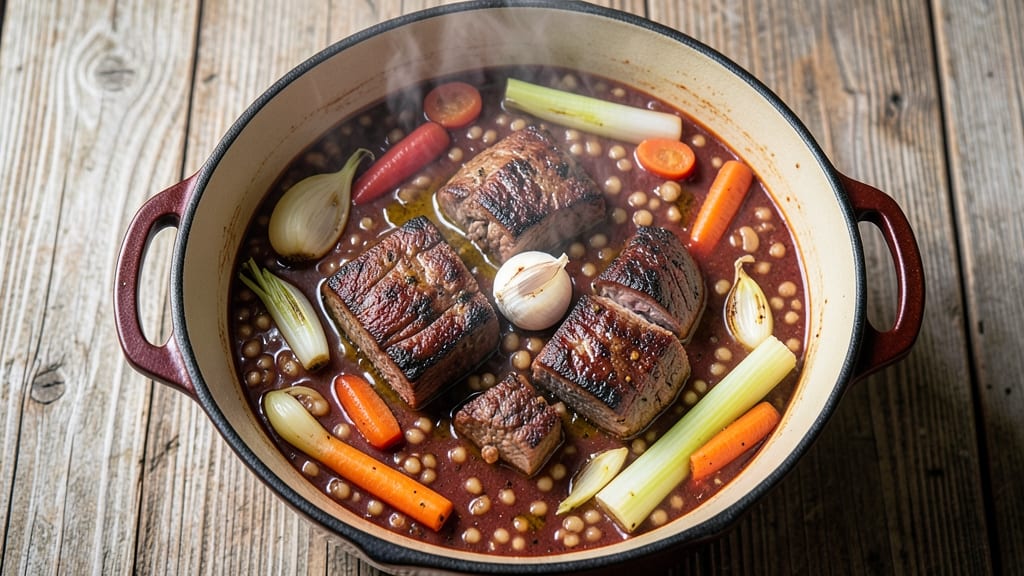
This beef and barley stew recipe transforms tough cuts into melt-in-your-mouth tenderness through slow simmering on the stove top. The secret lies in browning the beef first—this step creates deep, caramelized flavors that build as the stew simmers for hours.
Every spoonful delivers rich, savory beef, hearty barley, and vegetables that soften just enough to soak up the flavorful broth.
What sets this recipe apart is the balance of techniques: traditional browning and deglazing for maximum flavor, paired with a foolproof simmering method that ensures the barley absorbs the broth perfectly. The result is a stew that tastes even better the next day, when flavors meld completely.
No pressure cooker needed—just patience and a few key steps to unlock restaurant-quality depth at home. The texture is where this stew truly shines: tender beef that practically falls apart, al dente barley with a satisfying bite, and vegetables that stay intact but absorb the rich, herby broth.
The aroma alone—warm spices, caramelized onions, and simmering meat—transforms any kitchen into a cozy gathering spot. This is comfort food at its finest, built layer by layer on the stove top. Serve with crusty bread to soak up every last drop of that velvety broth.
The recipe scales easily, making it perfect for feeding a crowd or prepping for meal prep. Ready to make the most of your slow cook? Here’s how to bring this hearty stew to life.
Ingredients for beef and barley stew recipe stove top
Pantry staples meet slow-cooked comfort—just 16 ingredients for rich, hearty beef and barley stew.
| Ingredient | Amount | Notes |
|---|---|---|
| Chuck Roast 🥩 | 2 lb | Cut into 1.5-inch cubes |
| Yellow Onions 🧅 | 2 whole | Medium, sliced into half-moons |
| Carrots 🥕 | 4 whole | Medium, peeled and chopped |
| Celery Stalks 🥬 | 4 whole | Fresh, chopped into 1-inch pieces |
| Garlic Cloves 🧄 | 4 cloves | Peeled and minced |
| Pearl Barley 🌾 | 1 cup | Rinsed before cooking |
| Beef Broth 💧 | 4 cups | Low-sodium preferred |
| Red Wine 🍷 | 1 cup | Dry, like Cabernet Sauvignon |
| Tomato Paste 🍅 | 2 tbsp | Smooth, not chunky |
| Fresh Thyme 🌿 | 2 sprigs | Or 1 tsp dried thyme |
| Fresh Rosemary 🌿 | 1 sprig | Or 0.5 tsp dried rosemary |
| Bay Leaves 🌿 | 2 whole | Removed before serving |
| Olive Oil 🫒 | 2 tbsp | Extra-virgin for browning |
| All-Purpose Flour 🌾 | 2 tbsp | For dusting beef |
| Salt 🧂 | 1 ½ tsp | Kosher or sea salt |
| Black Pepper 🌶️ | 1 tsp | Freshly ground |
The chuck roast is non-negotiable here—it's packed with connective tissue that breaks down into tender, melt-in-your-mouth beef. Costco or Whole Foods often carry pre-cut chunks, but if you're buying a whole roast, ask the butcher to cube it for you. Look for good marbling—this fat renders during cooking, keeping the beef juicy. The onions, carrots, and celery form your 'holy trinity' of aromatics, so don't skimp on freshness. Trader Joe's sells pre-chopped mirepoix that saves time, but if you're chopping yourself, aim for even-sized pieces so they cook uniformly. The pearl barley needs rinsing to remove excess starch that can make the stew gummy.
No red wine? Substitute with beef broth and a splash of balsamic vinegar—it adds depth without alcohol. Fresh thyme and rosemary can be swapped for dried at one-third the amount, but the aroma is worth the effort. For tomato paste, Rao's or Muir Glen are reliable, but the squeeze tubes from Trader Joe's are perfect for single-use portions. If you're watching sodium, use low-sodium broth and add salt gradually at the end. The bay leaves are optional but add complexity—just remember to remove them before serving. For extra richness, some cooks add a splash of Worcestershire sauce (ensure it's vegetarian if needed), but it's not essential.
This stew only gets better with time, so plan ahead. The beef and barley can be refrigerated for 4-5 days or frozen for up to 3 months—freezing actually concentrates the flavors. I like to double the recipe and freeze half for lazy weeknights. For reheating, add a splash of water or broth to prevent drying out. Serve with crusty bread to soak up that velvety broth—it's the perfect vehicle for every last drop of flavor. The leftovers reheat beautifully, making this an ideal meal prep option for busy schedules.
Why You'll Love This Recipe
- One-Pot Magic: I swear by this recipe because it’s literally one pot—no chopping boards, no extra pans, just dump, simmer, and forget. The chuck roast practically melts into tender perfection while the barley soaks up every last bit of flavor, and honestly? That’s the kind of meal where you can walk away and come back to something better than takeout.
- Garlic Bomb Flavor: Between us, the garlic and caramelized onions in this stew are dangerously addictive. I don’t even need to add extra seasoning—just sear the chuck roast until it’s browned, toss in those onions and garlic, and let them mingle with the beef. The slow simmer? That’s when the real magic happens, turning simple ingredients into something that tastes like a hug in a bowl.
- Leftovers for Days: This stew is my secret weapon for lazy mornings. I’ll make a big batch on Sunday, and by Wednesday, I’m reheating it for lunch—still rich, still hearty, still ridiculously good. The barley thickens just enough to hold up to reheating, and the beef stays juicy if you’re not in a rush. (Yes, even on a Tuesday night.)
- Budget-Friendly Comfort: Chuck roast is cheap, onions and carrots last forever, and celery? You’ll use it up before it goes bad. I’ll be real: this recipe stretches to feed four for dinner and still gives me leftovers for lunch. It’s the kind of meal that makes grocery bills feel less painful, and that’s saying something when you’re feeding a family. Plus, it’s the one dish that makes my wallet and my taste buds happy.
Step-by-step instructions for hearty beef and barley stew
This method transforms tough chuck roast into tender, flavorful beef with perfectly cooked barley.
Sear the Beef for Deep Flavor
Heat a heavy pot or Dutch oven over medium-high heat until hot. Add the 2 tablespoons olive oil and swirl to coat the bottom. Working in batches, add the 2 lb chuck roast cut into 1.5-inch cubes, leaving space between pieces. Don't crowd the pot—this prevents steaming instead of searing.
Let the beef brown undisturbed for 3-4 minutes per side until deeply golden. I press down gently on the cubes during the first minute to prevent curling. This creates a flavorful crust that forms the base of your stew. Once browned, transfer the beef to a plate and set aside.
Build the Aromatic Vegetable Base
In the same pot, add the 2 tablespoons all-purpose flour and stir to coat the browned bits. This creates a light roux that thickens the stew. Immediately add the sliced 2 whole yellow onions, chopped 4 whole carrots, and 4 whole celery stalks to the pot.
Cook the vegetables over medium heat for 8-10 minutes, stirring occasionally, until softened and beginning to caramelize. Add the 4 cloves minced garlic and cook for another 30 seconds until fragrant. This step develops the stew's foundational flavors—don't rush it. If the vegetables stick, add a splash of beef broth to deglaze.
Deglaze and Simmer the Stew
Pour in the 1 cup red wine and scrape up any browned bits from the bottom of the pot with a wooden spoon. This deglazing captures all the meaty flavors you worked so hard to create. Let the wine simmer for 2-3 minutes until reduced by half.
Add the 2 tablespoons tomato paste, 4 cups beef broth, 1 cup rinsed pearl barley, 2 sprigs fresh thyme, 1 sprig fresh rosemary, and 2 whole bay leaves. Stir well to combine, then bring the mixture to a gentle boil. Once boiling, reduce heat to low and cover the pot partially with a lid.
Cook Until Tender and Flavorful
Simmer the stew for 2.5-3 hours, stirring occasionally, until the beef is fork-tender and the barley is fully cooked. I check the beef's tenderness by inserting a fork—it should slide in easily with minimal resistance. The barley should be soft but still hold its shape slightly.
About 30 minutes before the stew is done, skim off any excess fat that rises to the surface. This helps create a cleaner, more elegant presentation. Taste and adjust seasoning with 1.5 teaspoons salt and 1 teaspoon black pepper as needed. The stew should be rich and flavorful without being overly salty.
Finish and Serve
Remove the 2 whole bay leaves and discard them. If you used fresh herbs, you can also remove the thyme and rosemary sprigs, though they're not strictly necessary. Let the stew sit uncovered for 5-10 minutes to allow the flavors to meld and thicken slightly.
Serve the stew hot, ladling each portion with some of the barley and vegetables. The beef should be tender enough to pull apart with a fork, and the barley should be cooked through with a slight bite. Pair with crusty bread to soak up every last drop of that rich, savory broth.
Pro Tips For Making Beef And Barley Stew Recipe Stove Top
- Brown the Chuck Twice: I learned this the hard way—skipping the second sear means your stew will taste more like braised beef than rich, caramelized beef. After browning the roast on all sides (high heat, 4-5 minutes per side), pull it out, reduce the heat to medium-low, and add a splash of beef broth to deglaze. Let that bubble for 2 minutes, scraping up all the browned bits. Then return the roast to the pot. This step alone makes the difference between "good" and "unforgettable."
- Cut Onions Like a Pro: No, you don’t need to dice onions into perfect cubes for stew. Instead, slice them into ¼-inch thick half-moons—big enough to stay intact but small enough to soften quickly. My grandmother swore by this, and she was right: oversized onion chunks turn to mush and make the stew taste watery. (Yes, even if you're impatient like me, resist the urge to go smaller.)
- Don’t Rush the Simmer: After adding the barley and liquid, the stew needs at least 90 minutes of steady simmering—no peeking, no stirring. I used to check it every 15 minutes, and the barley would turn to paste. Cover the pot, set the heat to low (just enough to keep tiny bubbles breaking the surface), and walk away. The longer it simmers, the deeper the flavors, and the barley will absorb the broth perfectly.
- Upgrade with Umami: Skip the bouillon cubes—your stew needs real depth. Add a teaspoon of soy sauce or Worcestershire sauce when you deglaze the pot, and toss in a handful of dried porcini mushrooms (rehydrated and squeezed dry) with the barley. Sounds weird, but it works: the mushrooms add earthy richness without overpowering, and the soy sauce cuts through the fat. (Your future self will thank you.)
Dietary considerations for beef and barley stew recipe stove top
Gluten-Free Adaptation
Swap the pearl barley for certified gluten-free barley or quinoa to keep this stew hearty while accommodating gluten sensitivities. Use 1 cup gluten-free barley or 1½ cups quinoa (rinsed well) and adjust cooking time—quinoa cooks in 15-20 minutes while gluten-free barley may need an extra 30-45 minutes.
Always check labels to avoid cross-contamination, especially with barley products. 🌾
Low-Sodium Options
Reduce sodium by using low-sodium beef broth and omitting added salt until the end. I like Imagine Foods or Pacific Foods low-sodium broths—they deliver flavor without excess salt.
Taste the stew before adding salt, then adjust gradually. Fresh herbs (thyme, rosemary) and Worcestershire sauce (check for low-sodium versions) add depth without relying on salt. 🧂
Vegetarian Swap
Replace the beef with mushrooms (cremini or portobello) and lentils for a hearty vegetarian version. Sauté 1 lb mushrooms in batches until golden, then add 1 cup brown or green lentils (rinsed) to the stew.
Lentils cook in 20-25 minutes—add them with the barley. Boost umami with 1 tbsp soy sauce or 1 tsp miso paste for depth. 🍄
Dairy-Free Notes
This recipe is naturally dairy-free, but double-check your beef broth for hidden dairy additives. If using tomato paste, opt for brands without milk solids—Muir Glen or Rao's are typically safe.
For extra richness, stir in 2 tbsp coconut milk during the final 10 minutes of simmering. The stew remains creamy without dairy. 🥥
Allergen-Friendly Tips
For nut allergies, avoid garnishes like toasted almonds. If shellfish allergies are a concern, skip Worcestershire sauce (some contain anchovies). Always verify ingredient labels—even spices like thyme or rosemary can sometimes be processed in shared facilities. When in doubt, use single-ingredient spices from trusted brands like Penzeys. 💡
Nutrition facts
Frequently asked questions
Can I use a slow cooker instead of stove top?
Yes! For a slow cooker version, brown the beef first, then transfer everything to your slow cooker. Cook on low for 8 hours or high for 4-5 hours until the beef is tender. The barley may need an extra 30 minutes on high heat at the end. The texture will be slightly softer than stove top, but still delicious.
What's the best cut of beef for this recipe?
Chuck roast is ideal because its connective tissue breaks down beautifully during slow cooking. Brisket or stew meat also work well—just cut into 1.5-inch cubes for even cooking. Avoid lean cuts like sirloin, as they won't become tender enough with this method.
How do I know when the barley is done?
Pearl barley should be tender but still hold its shape slightly—like al dente pasta. Test by tasting a grain: it should be soft with a slight bite (about 2-3 hours of simmering). Overcooking turns it mushy. If it's still firm after 3 hours, add ½ cup extra broth and simmer 15 more minutes.
Can I make this stew ahead of time?
This stew tastes even better the next day as flavors meld. Store in an airtight container in the fridge for 4-5 days or freeze for 3 months. Reheat gently on the stove with a splash of broth to restore moisture. The barley absorbs extra liquid while chilled, so add a little water when reheating.
Why did my stew turn out too thin?
This usually happens if the barley overcooked and released too much starch, or if you didn't skim excess fat. To fix it, mix 1 tbsp cornstarch with 2 tbsp cold water, stir into the stew, and simmer 5 minutes until thickened. For prevention, skim fat regularly during cooking and remove the barley 10 minutes early, then return it to soak up broth at the end.