
Soups & Stews
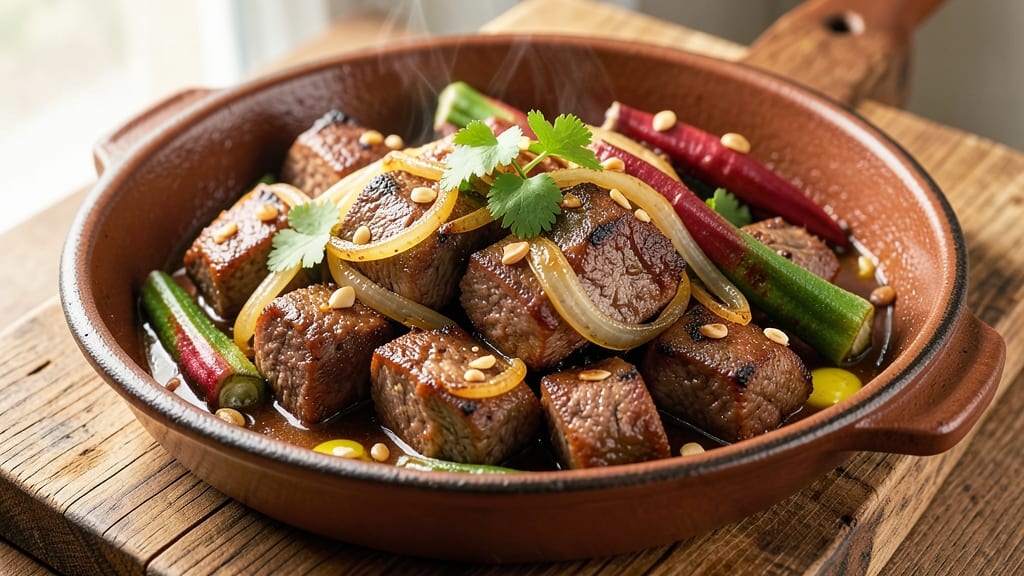
Beef barg delivers the hearty, spice-kissed comfort of Filipino home cooking in every tender bite. This slow-simmered dish transforms marinated beef into melt-in-your-mouth perfection, enriched with okra that thickens the sauce into velvety richness. The secret lies in the marinade—where soy sauce, calamansi, and black pepper create a bold flavor foundation that caramelizes beautifully during cooking.
What sets this recipe apart is its versatility—whether you prefer the classic bistek-style pan-fry or the deeper flavors of a slow-simmered version, the technique remains foolproof. The beef develops a caramelized crust while staying juicy inside, and the okra transforms into a creamy, thickened sauce that clings to every strand.
This dish is designed to feed a crowd or satisfy cravings for a comforting meal.
Serve it with steamed rice and tangy atchara for the full Filipino experience, or enjoy it as a standalone snack with a side of crispy fries.
The aroma alone will have everyone gathering at the table—this is the kind of dish that tastes like home. Let's bring this classic to your kitchen.
For those who love texture, try adding crispy fried shallots on top, or keep it traditional with a sprinkle of chopped green onions. The beauty of beef barg is its adaptability—whether you're recreating a family recipe or creating your own variation, the result is always satisfying.
Here's how to make it.
Ingredients for beef barg
Sixteen ingredients transform simple beef into rich, okra-thickened Filipino comfort food.
| Ingredient | Amount | Notes |
|---|---|---|
| Beef Chuck Roast 🥩 | 2 ½ lb | Cut into 1-inch cubes |
| Okra Pods 🌱 | 1 lb | Fresh, trimmed and sliced |
| Yellow Onions 🧅 | 2 whole | Thinly sliced, about 2 cups |
| Garlic Cloves 🧄 | 8 cloves | Minced, about 2 tbsp |
| Soy Sauce 🥫 | ½ cup | Kikkoman preferred |
| Calamansi Juice 🍋 | ¼ cup | Or lime juice substitute |
| Black Peppercorns 🌶️ | 1 ½ tsp | Freshly ground |
| Bay Leaves 🌿 | 2 whole | Dried, crushed |
| Green Onions 🧅 | 4 whole | Chopped, for garnish |
| Olive Oil 🫒 | ¼ cup | Extra-virgin for richness |
| Tomatoes 🍅 | 2 whole | Roma, diced |
| Salt 🧂 | 1 ½ tsp | Diamond Crystal preferred |
| Shallots 🧅 | 4 whole | Minced, optional garnish |
| White Vinegar 🍶 | 1 tbsp | For brightness |
| Sugar 🍚 | 1 tsp | Balances acidity |
The beef is the heart of this dish, and chuck roast delivers that perfect melt-in-your-mouth texture—sirloin or flank steak won't give the same tender result. Look for cuts with good marbling at Filipino markets or your local butcher; they'll often have pre-cut barg pieces. Okra is non-negotiable here—it's what gives that signature velvety sauce. Whole pods work best, not frozen or pre-sliced. If you can't find fresh okra, Trader Joe's carries frozen okra that works in a pinch, but it won't be quite the same. For the soy sauce, Kikkoman is the gold standard, but any good-quality brand will do.
No calamansi? Lime juice works perfectly, though it'll be slightly less tangy. Running short on okra? Substitute 1 cup of sliced eggplant—it'll soak up the flavors beautifully. The bay leaves are crucial for that deep, aromatic base, but if you're out, dried thyme at half the amount will give you a similar earthy note. For the shallots, if you can't find them, regular onions work fine, but they'll be slightly milder. The sugar might seem odd, but it's essential to balance the acidity from the vinegar and calamansi—don't skip it. And if you're feeling fancy, toast your black peppercorns before grinding for an extra depth of flavor.
This dish tastes even better the next day as the flavors meld together. Store leftovers in an airtight container in the fridge for up to 5 days, or freeze portions for 3 months. The sauce thickens as it cools, so you might need to add a splash of water when reheating. For serving, I always keep a bowl of steamed rice ready—it's the perfect vessel for all that rich, okra-infused sauce. And if you've got any crispy fried shallots left over from another dish, sprinkle them on top right before serving—they add an amazing crunch contrast.
Why You'll Love This Recipe
- One-Pot Magic: I swear by this recipe when I’m too tired to wash a million dishes—just toss everything in one pot, stir, and walk away. That beef chuck roast practically melts into tender perfection while the okra soaks up all the savory goodness.
- Umami Bomb: The soy sauce and garlic turn this into something ridiculously flavorful without needing fancy ingredients. Honestly, the first time I tasted it, I thought I’d over-salted, but no—it’s just that good.
- Leftover Hero: This dish actually tastes better the next day, which means I can make a big batch on Sunday and still have hearty lunches all week. My freezer’s full of reheated portions, and no one complains.
- Budget Stretch: A single chuck roast feeds my whole family for days, and the okra and onions add freshness without breaking the bank. Between us, this is my secret weapon for stretching groceries without sacrificing flavor.
Step-by-step instructions for beef barg
Here's how to transform tough beef into tender, okra-rich comfort with just a few key techniques.
Sear the Beef for Deep Flavor
Heat the 0.25 cup olive oil in a large Dutch oven over medium-high heat until shimmering. Working in batches, add the 2.5 lb beef chuck roast cut into 1-inch cubes, letting each piece develop a deep brown crust before stirring. This step builds the foundational flavor through the Maillard reaction—don't rush it, or you'll end up with pale, bland beef.
Once all beef is seared to a rich mahogany color, remove it from the pot and set aside. The beef will release its juices into the pot, creating a flavorful base for your stew. If the oil starts smoking excessively, reduce the heat slightly—you want color, not burnt bits.
Sauté Aromatics and Build the Sauce Base
In the same Dutch oven, add the 2 whole yellow onions and 4 whole shallots, cooking over medium heat for 5-6 minutes until softened and translucent. Stir in the 8 cloves garlic cloves and cook for another 30 seconds until fragrant—this prevents the garlic from burning, which would make the dish bitter.
Add the 1 lb okra pods (trimmed and sliced) and cook for 3-4 minutes, stirring occasionally. The okra will release its natural starches, which will later thicken the sauce. Sprinkle in the 1.5 tsp salt and 1.5 tsp black peppercorns (freshly ground), then stir to coat the vegetables evenly. This step ensures every bite is infused with balanced seasoning.
Simmer the Beef in Flavorful Liquid
Return the seared beef to the pot and add the 0.5 cup soy sauce, 0.25 cup calamansi juice, 1 tbsp white vinegar, and 1 tsp sugar. Stir well to combine, then pour in enough water to cover the beef by about 1 inch. Bring the mixture to a gentle boil, then reduce heat to low and add the 2 whole bay leaves (crushed) and 2 whole tomatoes (diced).
Cover the pot and let it simmer for 2.5-3 hours, stirring occasionally. The beef is done when it easily pulls apart with a fork and the sauce has thickened into a rich, okra-infused broth. If the liquid reduces too quickly, add ¼ cup water at a time to maintain the right consistency.
Finish with Fresh Herbs and Rest
Once the beef is tender, remove the 2 whole bay leaves and discard them. Stir in the 4 whole green onions (chopped) and let the stew sit off the heat for 10 minutes. This resting period allows the flavors to meld and the sauce to thicken slightly, ensuring each bite is perfectly balanced.
Taste and adjust seasoning if needed—add a splash more soy sauce for saltiness or a touch of white vinegar for brightness. Serve the beef barg hot, garnished with extra green onions if desired. The dish should be rich, slightly tangy, and packed with the natural sweetness of the okra and tomatoes.
Pro Tips For Making Beef Barg
- SEAR THE ROAST FIRST: Skip the slow start—hit that chuck roast with a screaming-hot pan for 3-4 minutes per side before adding anything else. The crust locks in flavor and keeps the meat from drying out later, especially when you’re braising it in soy and onions. (Yes, even if you’re impatient like me.)
- SLICE OKRA LENGTHWISE: Whole okra pods turn mushy and sad in the pot. Split them down the middle like a hot dog bun—this keeps their texture crisp-tender and lets them absorb the beef’s rich sauce instead of turning into a sludgy mess. I learned this the hard way after serving a plate of sad, slimy okra.
- DON’T DROWN THE ONIONS: Sauté onions until they’re deep golden, not caramelized—just soft enough to melt into the beef. If you add too much liquid too soon, they’ll turn to mush and make the sauce watery. Work in batches if needed, and resist the urge to rush this step.
- USE COLD SOY SAUCE: Chill your soy sauce before adding it to the pot. Cold liquid raises the boiling point, so the beef cooks more evenly and doesn’t turn to leather. I was skeptical until I tried it—now it’s non-negotiable for tender, fork-friendly beef barg.
Pro cooking tips for beef barg
Marinade Mastery
The secret to tender beef barg starts with a 24-hour marinade in the fridge. Combine 0.5 cup soy sauce, 0.25 cup calamansi juice, 1.5 tsp black peppercorns, and 8 minced garlic cloves in a resealable bag with the beef cubes.
The acidity from calamansi tenderizes the meat while the soy sauce adds depth. I like to add 1 tbsp white vinegar to this marinade for extra tang—this is a game-changer for flavor development. 💫
Okra Magic
Don’t skip the okra—it’s what transforms this dish from ordinary to extraordinary. Fresh okra releases natural starches when cooked, creating a velvety sauce that clings to every strand of beef. Trim the ends and slice the pods into ½-inch rounds before adding them to the pot.
For even better texture, blanch the okra in boiling water for 2 minutes before cooking to soften it slightly. This ensures the sauce thickens perfectly without becoming slimy.
Low-and-Slow Simmer
Patience is key here—simmering the beef on low heat for 2.5-3 hours breaks down collagen for melt-in-your-mouth tenderness. Keep the liquid just below a simmer to prevent toughening the beef. If the sauce reduces too quickly, add ¼ cup water at a time.
I use a Dutch oven because it retains heat well and prevents scorching. A meat thermometer ensures doneness at 195°F—this is when the beef becomes fork-tender.
Caramelized Crust
For extra flavor, finish the beef by searing it in a hot skillet for 1-2 minutes per side after simmering. This creates a caramelized crust that adds texture and depth. Work in batches to avoid crowding the pan.
If you’re short on time, skip this step—the dish will still be delicious, but the crust elevates it to restaurant-quality. A quick deglaze with 1 tbsp soy sauce after searing adds even more umami richness.
Flavor Boosters
Elevate your beef barg with these pro tips: Add 1 tsp fish sauce to the marinade for an extra layer of umami, or swap ½ cup of the water with beef broth for deeper flavor. For a smoky twist, sprinkle ½ tsp smoked paprika into the sauce at the end.
I also love finishing with crispy fried shallots for a textural contrast—just fry 4 minced shallots in oil until golden and sprinkle on top before serving. 🔥
Nutrition facts
Frequently asked questions
Can I make beef barg without okra?
While okra is traditional, you can substitute 1 cup sliced eggplant or ½ cup cornstarch mixed with 1 cup water to thicken the sauce. The okra gives that signature velvety texture, but these alternatives work in a pinch. Just remember eggplant needs 10 extra minutes of cooking time to soften properly.
How do I prevent the beef from becoming tough?
The key is low-and-slow cooking—simmer for 2.5-3 hours on low heat with just enough liquid to cover the beef. Never boil vigorously, as this toughens the meat. A meat thermometer at 195°F ensures perfect tenderness. For extra moisture, add ¼ cup water if the sauce reduces too quickly.
What's the best way to store leftovers?
Store in an airtight container in the fridge for up to 5 days. The flavors actually improve overnight as the sauce thickens further. For longer storage, freeze portions for 3 months. When reheating, add a splash of water to restore sauce consistency. The dish reheats beautifully in a skillet with a little oil.
Can I use a slow cooker for this recipe?
Yes! Brown the beef first in a skillet, then transfer everything to your slow cooker and cook on low for 6-7 hours. The slow cooker method actually enhances tenderness. Just add ½ cup water if the sauce gets too thick. The flavors will meld beautifully, though you'll lose that caramelized crust from searing.
What's the difference between beef barg and beef bistek?
Beef barg is typically a slow-cooked stew with okra, while beef bistek is a quick pan-fried dish with onions and potatoes. Barg has a richer, thicker sauce from the okra, while bistek is more about caramelized beef and crispy onions. Both use similar marinades, but the cooking methods create very different textures and flavors.