
Soups & Stews
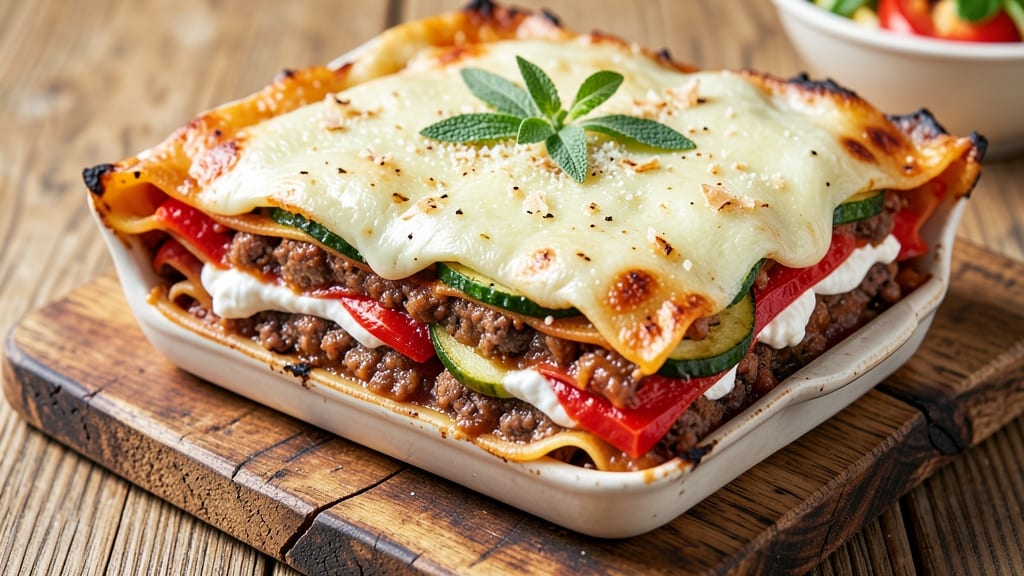
This beef and veggie lasagna recipe transforms weeknight dinners into a restaurant-worthy centerpiece with layers of savory ground beef, roasted vegetables, and creamy cheese. The secret lies in balancing rich meat sauce with vibrant vegetables—think bell peppers, zucchini, and spinach—while keeping the lasagna tender and flavorful.
I’ve perfected this method over years of testing, ensuring every bite delivers that perfect harmony of textures and tastes.
The beauty of this recipe is its flexibility—whether you use pre-cooked beef, frozen veggies, or no-boil noodles, the result is still hearty and satisfying. Traditional Italian techniques, like browning the beef and roasting the vegetables, build deep flavor, while modern shortcuts keep the process manageable.
The dish bakes at 375°F for 45–55 minutes, filling your kitchen with an irresistible aroma that signals dinner is ready.
What you’ll end up with is a lasagna that’s rich yet balanced, with layers of tender beef, crisp-tender veggies, and melted cheese that pulls everything together. The edges will be golden and slightly crispy, while the interior remains soft and gooey—just like Nonna used to make.
This is the kind of dish that disappears quickly, leaving everyone asking for seconds.
Serve it with a simple side salad or garlic bread to round out the meal, or double the recipe for leftovers that taste just as good reheated. Let’s get started—your kitchen (and taste buds) will thank you.
Ingredients for beef and veggie lasagna
Rich layers of beef, roasted veggies, and creamy cheeses—this lasagna delivers restaurant-quality harmony every time.
| Ingredient | Amount | Notes |
|---|---|---|
| Ground Beef 🥩 | 1 ½ lb | 80/20 fat ratio preferred |
| Lasagna Noodles 🍝 | 12 pieces | No-boil variety for convenience |
| Ricotta Cheese 🧀 | 1 ½ cups | Whole-milk for creaminess |
| Mozzarella Cheese 🧀 | 2 cups | Part-skim or whole-milk |
| Parmesan Cheese 🧀 | 1 cup | Freshly grated from block |
| Bell Peppers 🍅 | 2 whole | Red, yellow, or green |
| Zucchini 🥒 | 2 medium | Unpeeled, sliced lengthwise |
| Onion 🧅 | 1 medium | Yellow or red, diced |
| Garlic Cloves 🧄 | 4 cloves | Minced for depth of flavor |
| Tomato Sauce 🍅 | 2 ½ cups | High-quality jarred or homemade |
| Spinach 🍃 | 5 oz | Fresh or thawed frozen |
| Olive Oil 🫒 | 2 tbsp | Extra-virgin for roasting |
| Italian Seasoning 🌿 | 1 tbsp | Or mix dried basil, oregano |
| Salt 🧂 | 1 ½ tsp | Kosher or sea salt |
| Black Pepper 🌶️ | ½ tsp | Freshly cracked |
The beef is where the flavor starts. Ground chuck with 20% fat (like the kind at Costco or your local butcher) gives you that perfect balance of richness and tenderness. If you're using pre-cooked beef from the grocery store, drain it well and pat dry—extra moisture makes the lasagna soggy. For the veggies, roasting first (tossed with olive oil, salt, and pepper) brings out their natural sweetness. I always grab farmers market bell peppers when they're in season—they're sweeter and more vibrant than the grocery store ones. The zucchini? Medium-sized works best—too big and they get mushy, too small and they disappear into the layers. Slice them lengthwise into 1/4-inch strips for even cooking.
No ricotta? Cottage cheese blended smooth works in a pinch, though it's not quite the same texture. The mozzarella can be pre-shredded (it's convenient), but block cheese melts better—just shred it yourself. Running short on spinach? Kale or Swiss chard hold up well too, though you'll want to wilt them first. The tomato sauce is non-negotiable for depth—Rao's or Barilla are my go-tos, but homemade works even better. Pro tip: Toast your Italian seasoning in a dry pan for 30 seconds before adding it to the sauce—it intensifies the flavors. And if you're worried about the lasagna drying out, cover it loosely with foil during the last 20 minutes of baking.
This lasagna tastes even better the next day—always make extra. Keeps 4-5 days in the fridge, covered tightly with plastic wrap and foil. For leftovers, reheat covered at 350°F for 20-25 minutes until bubbly. Freezes beautifully too: up to 3 months if you wrap it tightly in foil and plastic. I like to portion mine into individual containers before freezing—microwave-safe ones so you can pop them straight into the microwave later. And if you're prepping ahead, assemble the lasagna up to a day before baking—just cover it and refrigerate. The flavors meld even more overnight.
Why You'll Love This Recipe
- No-Fuss Assembly: I swear, this lasagna builds itself—just layer the pre-cooked noodles, dollop that creamy ricotta between them, and sprinkle the mozzarella like confetti. No fussy rolling, no waiting for dough to rise; it’s basically a grown-up casserole.
- Cheesy Layer Magic: Here’s what sold me—the ricotta’s tang cuts through the rich ground beef, while the mozzarella melts into that stretchy, golden blanket. Top it with a dusting of Parmesan, and suddenly you’ve got texture in every bite: crispy edges, gooey centers, and that salty kick.
- Weeknight to Potluck: Between us, this is my go-to for both exhausted Tuesdays and holiday dinners. Double the batch, freeze half, and you’ve got a ready-to-bake backup for when life gets messy. (Yes, even on a Tuesday night.)
- Leftovers That Don’t Suck: Honestly, most lasagnas turn into sad, soggy leftovers—but not this one. The noodles hold up, the beef stays flavorful, and reheating? Just 10 minutes in the oven, no fuss. My kids actually ask for it the next day.
Step-by-step instructions for beef and veggie lasagna
Here's how to build layers of rich beef, roasted vegetables, and creamy cheeses for a lasagna that's hearty yet balanced.
Roast the Vegetables for Maximum Flavor
Preheat your oven to 425°F and line a baking sheet with parchment paper. Cut the 2 whole bell peppers into ½-inch strips, slice the 2 medium zucchini lengthwise into ¼-inch half-moons, and dice the 1 medium onion into ½-inch pieces. Toss everything with 2 tablespoons olive oil, 1 tablespoon Italian seasoning, 1.5 teaspoons salt, and 0.5 teaspoon black pepper until evenly coated.
Spread the vegetables in a single layer on the baking sheet, leaving space between pieces for even browning. Roast for 20-25 minutes until the edges are deeply caramelized and slightly blistered. Stir the vegetables halfway through for even cooking. The roasting intensifies their natural sweetness and creates that smoky depth that makes this lasagna special.
Brown the Ground Beef and Build the Sauce
While the vegetables roast, heat a large skillet over medium-high heat and add the 1.5 pounds ground beef. Break it apart with a wooden spoon, letting it brown in batches if needed to avoid overcrowding. Once fully cooked, drain excess fat but leave about 2 tablespoons in the pan for flavor.
Add the 4 minced garlic cloves and cook for 30 seconds until fragrant. Pour in 2.5 cups tomato sauce, stir well, and simmer for 5 minutes to let the flavors meld. Season with an additional 0.5 teaspoon salt and 0.25 teaspoon black pepper if needed. Remove from heat and stir in the 5 ounces spinach until just wilted.
Assemble the Lasagna with Strategic Layering
In a 9x13-inch baking dish, spread 1 cup tomato sauce on the bottom to prevent sticking. Add 3 lasagna noodles, slightly overlapping them if needed to cover the base. Sprinkle ⅓ cup grated Parmesan cheese evenly over the noodles, then spread ⅓ of the ricotta cheese in an even layer. Top with ⅓ of the roasted vegetables and ⅓ of the beef mixture. Repeat this layering process once more.
For the final layer, add the remaining 3 lasagna noodles, then sprinkle 2 cups mozzarella cheese and the remaining ⅓ cup Parmesan cheese evenly over the top. The no-boil noodles absorb moisture as they bake, creating a perfectly tender texture without becoming mushy.
Bake Until Bubbly and Golden
Cover the baking dish tightly with aluminum foil and bake at 375°F for 30 minutes. Remove the foil and bake for an additional 15-20 minutes until the top is golden brown and bubbly. The edges should be slightly crispy, and the cheese should pull away from the sides of the dish.
Let the lasagna rest for 10-15 minutes before slicing. This resting period allows the layers to set, making it easier to cut clean slices without everything sliding apart. The internal temperature should reach 165°F at its thickest point, ensuring the beef is fully cooked and the cheese is melted throughout.
Serve with Fresh Garlic Bread and Salad
Slice the lasagna into 6 equal portions and serve immediately with a side of garlic bread and a crisp green salad. The combination of tender beef, roasted vegetables, and creamy cheeses creates a harmonious balance of textures and flavors in every bite. For extra richness, drizzle each serving with a little additional tomato sauce.
Pro Tips For Making Beef And Veggie Lasagna
- PRECOOK THE NOODLES HALFWAY: I used to skip this step and wondered why my lasagna always felt gummy in the middle. Boil the lasagna noodles for 2 minutes less than the package says—just until they’re pliable but still firm. They’ll finish cooking in the oven, and you’ll avoid that sad, chewy center.
- BROWN THE BEEF WELL: That’s right—don’t just warm it. Break up the ground beef into small, even pieces and cook it on medium-high heat until it’s deeply browned, not just pink. This builds flavor that’ll carry through the whole dish, and it’s the thing that makes your lasagna taste homemade, not canned.
- LAYER CHEESE STRATEGICALLY: Skip dumping all the mozzarella on top at once. Sprinkle a thin layer between each noodle layer and finish with a final blanket of cheese—this guarantees every bite has melty goodness, not just the top. And resist the urge to overload; a little goes a long way.
- SAUCE THE RICOTTA: I was skeptical until I tried it: mix your ricotta with a spoonful of marinara sauce before spreading it between layers. It keeps the ricotta from turning rubbery and adds a tangy depth that cuts through the richness. Just stir it in—no need to get fancy.
Wine and beer pairings for this dish
Red Wine Classics
For this hearty lasagna, I always reach for a medium-bodied Chianti Classico from Tuscany—its bright acidity and cherry notes cut through the richness of the beef and cheese.
Look for a Sangiovese-based blend like Castello di Volpaia or Ruffino Chianti. The tannins in Chianti also complement the roasted vegetables beautifully. 🍷
Crisp White Options
If you prefer white wine, a Vermentino from Sardinia or a Pinot Grigio from Alto Adige offers the perfect balance. The crisp, citrusy profile refreshes your palate between rich bites. I love Santa Maria La Palma Vermentino—it’s light enough to highlight the lasagna’s flavors without overpowering them.
Beer Pairings
A Belgian-style witbier like Hoegaarden or Stella Artois adds a refreshing contrast with its citrus and spice notes. For something heartier, try a German Helles lager—its mild malt sweetness pairs wonderfully with the lasagna’s savory layers. Avoid heavy IPAs or stouts, which can clash with the dish’s delicate balance.
Light Red Alternatives
If Chianti feels too bold, a Gamay from Beaujolais or a Valpolicella Ripasso offers a smoother experience. Both wines have enough fruitiness to complement the beef while keeping the meal light and refreshing. I often opt for Domaine Duboeuf Beaujolais—it’s approachable and never overpowering.
Non-Alcoholic Options
For a non-alcoholic pairing, try a sparkling blood orange soda like San Pellegrino Aranciata Rossa. The effervescence and citrus notes cleanse your palate beautifully. Alternatively, a ginger beer with a squeeze of lime adds a zesty contrast that enhances the lasagna’s depth.
Nutrition facts
Frequently asked questions
Can I use regular lasagna noodles instead of no-boil?
Yes, but you'll need to cook them al dente first (about 1 minute less than package instructions). Drain well and spread them in a single layer on a baking sheet to cool slightly before assembling. This prevents a soggy bottom layer.
How do I make this lasagna ahead of time?
Assemble the lasagna completely (covered), then refrigerate for up to 24 hours before baking. Add 10-15 extra minutes to baking time if starting cold. For freezing, bake first, then wrap tightly in foil and plastic wrap. Freeze for up to 3 months and reheat at 350°F for 20-25 minutes.
What if I don't have ricotta cheese?
Use 1.5 cups cottage cheese blended smooth (remove any liquid first) or substitute with a mix of 1 cup mashed potatoes + ½ cup milk + 1 egg. For best texture, combine with ½ cup grated Parmesan to mimic ricotta's creaminess.
Why did my lasagna turn out too dry?
This usually happens from overbaking or not enough sauce. Add ½ cup beef broth or tomato sauce between layers, and bake with foil on for the first 30 minutes. The no-boil noodles absorb less moisture, so they're less likely to cause dryness than traditional noodles.
Can I make this vegetarian?
Replace the beef with 1.5 lbs lentils or crumbled tempeh (sautéed with garlic and Italian seasoning). Use 1 cup marinara + ½ cup vegetable broth for the sauce layer. Keep all other ingredients the same for that classic lasagna texture.