
Sauces & Condiments
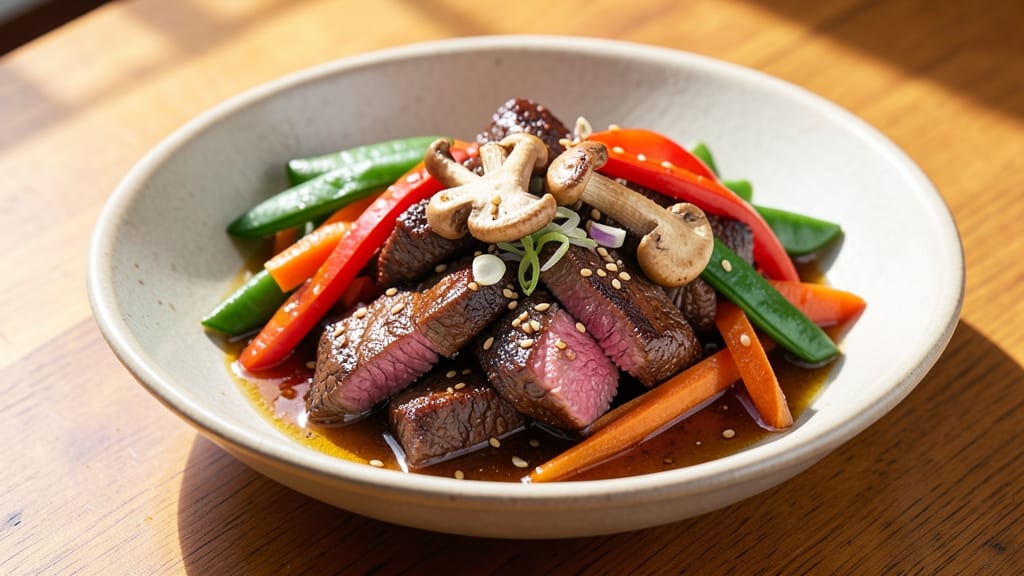
This beef and vegetable stir-fry sauce recipe delivers the deep umami balance that transforms simple stir-fries into restaurant-quality meals. The secret lies in a harmonious blend of soy sauce, oyster sauce, and aromatics that develop rich, savory notes when simmered together.
I've perfected this sauce over years of testing—it's the foundation of every wok-fired dish I make at home.
The beauty of this sauce is its versatility. Use it to coat beef and vegetables during stir-frying for maximum flavor absorption, or serve it as a dipping sauce for extra richness. With just 8 simple ingredients and 15 minutes of active time, you'll have a sauce that elevates any dish.
The combination of garlic, ginger, and sesame oil creates layers of complexity that stand up to bold flavors.
What makes this recipe truly professional is its balance—sweet from honey, tangy from rice vinegar, and umami-rich from oyster sauce. The sauce keeps well in the fridge for up to 5 days or freezes beautifully for longer storage.
Once you taste how this sauce transforms a basic stir-fry into a flavor-packed masterpiece, you'll never go back to store-bought versions.
Perfect for meal prep, this sauce can be made ahead and stored in the refrigerator. Double the batch to have it ready for quick weeknight dinners. The possibilities are endless—use it as a marinade, a stir-fry sauce, or even a dipping sauce for spring rolls. Here's how to make it:
Ingredients for beef and vegetable stir fry sauce
Eight ingredients blend to create a sauce that transforms stir-fries into restaurant-quality dishes.
| Ingredient | Amount | Notes |
|---|---|---|
| Light Soy Sauce 🍶 | ½ cup | High-quality, preferably Japanese |
| Oyster Sauce 🦪 | ⅓ cup | Thick, rich variety preferred |
| Honey 🍯 | ¼ cup | Pure, preferably raw |
| Rice Vinegar 🍶 | ¼ cup | Seasoned for subtle tang |
| Sesame Oil 🫒 | 2 tbsp | Toasted, for nutty aroma |
| Fresh Garlic 🧄 | 4 cloves | Minced, for bold flavor |
| Fresh Ginger 🌿 | 1 tbsp | Grated, finely for heat |
| Vegetable Oil 🫒 | 1 tbsp | Neutral, high smoke point |
The soy sauce and oyster sauce are the umami powerhouses here—look for Japanese light soy sauce at Trader Joe's or Asian markets for that clean, salty depth. Oyster sauce should be thick and glossy; Lee Kum Kee is the gold standard, but any reputable brand works. Fresh ginger and garlic are non-negotiable for that bright, aromatic kick—buy organic if possible, as the skin-on versions often have more punch. The honey should be raw and unfiltered for subtle floral notes that balance the sauce's richness. If you're short on time, a small jar of pre-minced garlic works, but fresh is always better.
No sesame oil? Toasted peanut oil adds a similar nutty depth, though the flavor will differ slightly. Short on rice vinegar? Apple cider vinegar works in a pinch, but you'll lose that delicate sweetness. The sauce thrives on balance—adjust honey to taste if your soy sauce is particularly salty. For extra umami without oyster sauce, a splash of fish sauce (if not vegetarian) or mushroom powder (for plant-based versions) can bridge the gap. The vegetable oil is just for simmering; avocado oil works too if you prefer a neutral base with a higher smoke point.
This sauce keeps beautifully—cover and refrigerate for up to 5 days, or freeze in ice cube trays for 3 months. The flavors actually deepen overnight, so making it ahead is ideal. I like to portion it into small jars for easy grab-and-go stir-fry sessions. For best results, let it come to room temperature before using—cold sauce can mute the aromatics. Double the batch and freeze half; you'll thank yourself later when you're craving wok-fired flavors on a Tuesday night.
Why You'll Love This Recipe
- Five-Ingredient Magic: This sauce comes together in one bowl—no fancy techniques, just a splash of soy, a drizzle of honey, and a whisper of sesame oil. Honestly, I keep the ingredients measured out in a jar so I can toss it together while the wok heats up.
- Umami-Packed Punch: The oyster sauce and light soy create this deep, savory richness that clings to every bite, while the honey cuts through with just enough sweetness. Between us, that first bite after the beef caramelizes? Pure satisfaction.
- Weeknight & Meal Prep Hero: I use half the sauce for a quick stir-fry and save the rest for later—it keeps for days in the fridge. Slap it on leftover rice with frozen veggies, or drizzle it over cold noodles when I’m too tired to cook. (Yes, even on a Tuesday night.)
- Budget-Friendly Boost: This sauce costs pennies per serving but makes ordinary beef taste like a restaurant dish. The honey and vinegar stretch the flavors, so I can feed my family hearty portions without breaking the bank. My wallet and my taste buds thank me.
Step-by-step instructions for beef and vegetable stir fry sauce
This sauce delivers that perfect harmony of sweet, salty, and umami that transforms simple stir-fry into a restaurant-quality dish.
Bloom the Aromatics in Neutral Oil
Heat the 1 tablespoon vegetable oil in a small saucepan over medium-low heat. Add the 4 cloves fresh garlic and 1 tablespoon fresh ginger, stirring constantly for 30 seconds until the garlic becomes fragrant but doesn't brown. This step unlocks the full flavor potential of these aromatics without bitterness.
I use medium-low heat here because garlic burns faster than you think. Watch closely—when the kitchen fills with that irresistible garlic aroma, you're ready for the next ingredient. The oil should shimmer gently, indicating it's hot enough for even cooking without scorching.
Combine Wet Ingredients for Balanced Flavor
Pour in the 0.5 cup light soy sauce and 0.33 cup oyster sauce, stirring continuously to fully incorporate the aromatics. Let the mixture simmer gently for 2 minutes until slightly reduced. This initial reduction concentrates the flavors and prepares the sauce for the sweet and acidic components.
The soy and oyster sauces should meld together, creating a rich umami base. You'll notice the sauce darkening slightly as it reduces—this is normal and actually enhances the depth of flavor. Don't walk away; constant stirring prevents scorching and ensures even flavor distribution.
Add Sweetness and Acid for Complexity
Reduce heat to low and whisk in the 0.25 cup honey and 0.25 cup rice vinegar. Simmer for 3-4 minutes until the sauce thickens slightly and coats the back of a spoon. The honey will dissolve completely, creating a glossy sheen that indicates proper emulsification.
Here's where the magic happens—the honey balances the saltiness while the rice vinegar adds a subtle tang that brightens the entire sauce. Taste as you go; if you want more depth, add a pinch of sugar or an extra splash of vinegar. The sauce should be smooth with no graininess from the honey.
Finish with Sesame Oil for Nutty Depth
Remove the sauce from heat and let it cool for 1 minute. Then stir in the 2 tablespoons sesame oil until fully incorporated. The sesame oil should infuse the sauce with its characteristic nutty aroma and rich flavor. This final step adds complexity that separates good stir-fry sauce from exceptional.
The sesame oil should be added off the heat to prevent its delicate flavor from cooking off. You'll notice the sauce becomes slightly more opaque with a beautiful sheen. Let the sauce sit for 5 minutes before using—this resting period allows all the flavors to fully meld together for maximum impact in your stir-fry.
Adjust Consistency for Perfect Wok Application
If the sauce is too thick, thin it with 1-2 teaspoons hot water at a time until it reaches your desired consistency—it should be pourable but still cling to ingredients. For extra vibrancy, strain the sauce through a fine-mesh sieve to remove any ginger fibers if you prefer a completely smooth texture.
This sauce is incredibly versatile—use it immediately for stir-fry or store it in an airtight container in the refrigerator for up to 1 week. When reheating, warm gently over low heat and stir occasionally to maintain its perfect consistency. The balance of flavors will only improve with a short rest after reheating.
Pro Tips For Making Beef And Vegetable Stir Fry Sauce
- Whisk the Honey First: I learned this the hard way—dumping honey straight into cold soy sauce just makes it clump like syrup. Instead, warm the honey (10 seconds in the microwave) and whisk it into the hot wok before adding other liquids. This keeps your sauce smooth, not streaky, and lets the flavors meld faster.
- Taste Before Oyster Sauce: Oyster sauce is salty and thick—it’s easy to overdo it. Build your sauce in stages: mix soy, vinegar, and honey first, then taste. Add oyster sauce last and adjust to balance. (Pro move: use a cheap bottle for testing, save the fancy one for finishing.)
- Skip the Sesame Oil Last: Drizzle sesame oil after everything’s off heat—it burns in seconds. If you add it too early, it’ll turn bitter. For extra aroma, let the wok cool for 30 seconds before tossing it in, then stir like you’re mixing a cocktail.
- Deglaze with Vinegar Early: Those caramelized bits stuck to the wok? Scrape them up immediately with a splash of rice vinegar while the pan’s still hot. It cuts through the bitterness and adds brightness to the sauce—no extra vinegar needed later. (Yes, even if you’re impatient like me.)
Storing and reheating your beef and vegetable stir fry sauce
Fridge Storage Tips
Store your beef and vegetable stir-fry sauce in an airtight glass container—I use Pyrex with a snap-on lid—and refrigerate for up to 5 days. The glass preserves the sauce's vibrant color and prevents any off-flavors from absorbing through plastic.
Always let the sauce cool completely before sealing to avoid condensation, which can dilute flavors. 🌡️
I like to portion the sauce into small jars (like 8-ounce mason jars) for easy grab-and-go stir-fry sessions. Label each jar with the date to track freshness—this sauce actually tastes better after 24 hours as the flavors meld together.
Keep it in the coldest part of your fridge, away from strong-smelling foods like fish or onions.
Freezing for Long-Term Use
For longer storage, freeze the sauce in ice cube trays—each cube makes a perfect single-serving portion for quick stir-fries. Once frozen, transfer the cubes to a ziplock freezer bag and flatten to save space.
This method preserves texture and prevents freezer burn, keeping the sauce fresh for up to 3 months. 🧊
When ready to use, thaw the frozen sauce in the fridge overnight or quickly in a bowl of warm water (never microwave directly). The sauce may thicken slightly after freezing—just add 1-2 teaspoons of water and stir to restore its ideal consistency for wok application.
Reheating Without Ruining Texture
To reheat, pour the sauce into a small saucepan and warm over low heat for 2-3 minutes, stirring constantly. Avoid high heat—it can break down the delicate balance of flavors and cause separation.
If the sauce looks too thick after reheating, thin it with 1 teaspoon of hot water at a time until it reaches a smooth, pourable consistency. 🔥
For extra vibrancy, add a dash of sesame oil (about ½ teaspoon) after reheating to restore that nutty aroma. The sauce should be glossy and cling to the back of a spoon—if it's watery, simmer it for another 30 seconds to reduce slightly.
Always taste and adjust seasoning before using, as flavors can concentrate during storage.
Reviving Stale Sauce
If your sauce has been sitting in the fridge for 4-5 days and tastes slightly flat, don't toss it! Revive it by adding ½ teaspoon of fresh ginger juice or 1 teaspoon of rice vinegar to brighten the flavors.
For extra umami, stir in ½ teaspoon of oyster sauce or a pinch of white pepper. These tweaks can bring back that restaurant-quality depth. ✨
Pro tip: If the sauce separates after storage, whisk vigorously or blend briefly with an immersion blender to recombine the ingredients. The emulsification should return quickly—just avoid adding too much liquid at once, or you'll dilute the flavor entirely.
Nutrition facts
Frequently asked questions
Can I make this sauce without oyster sauce?
For a vegetarian version, replace the ⅓ cup oyster sauce with 2 tablespoons soy sauce plus 1 tablespoon mushroom powder or 1 teaspoon fish sauce (if not vegetarian). The umami will still shine, though oyster sauce adds that signature depth. For extra richness, add ½ teaspoon MSG (optional).
How much sauce should I use for a typical stir-fry?
For a standard 12-ounce beef and vegetable stir-fry, use about 3-4 tablespoons of this sauce. Start with less and add more to taste—it's easier to adjust than to fix an over-sauced dish. The sauce clings beautifully to ingredients, so a little goes a long way.
Can I use this sauce for other dishes besides stir-fry?
This versatile sauce works perfectly as a dipping sauce for spring rolls or dumplings, a marinade for beef or tofu, or even a glaze for roasted vegetables. For marinades, reduce the honey slightly to 2 tablespoons to prevent over-sweetening. The balance of flavors translates well across applications!
Why did my sauce separate after reheating?
Separation usually happens when the sauce cools too quickly or if water is added too aggressively. To fix it, whisk vigorously or blend briefly with an immersion blender. For prevention, reheat over low heat and stir constantly. The sesame oil helps stabilize the emulsion—if needed, add ½ teaspoon after reheating.
What's the best way to store leftovers?
Store in an airtight glass container in the fridge for up to 5 days or freeze in ice cube trays for 3 months. Portion into small jars for easy use—just thaw overnight in the fridge. The sauce actually improves with time as flavors meld! Keep it away from strong-smelling foods to preserve its delicate balance.