
Soups & Stews
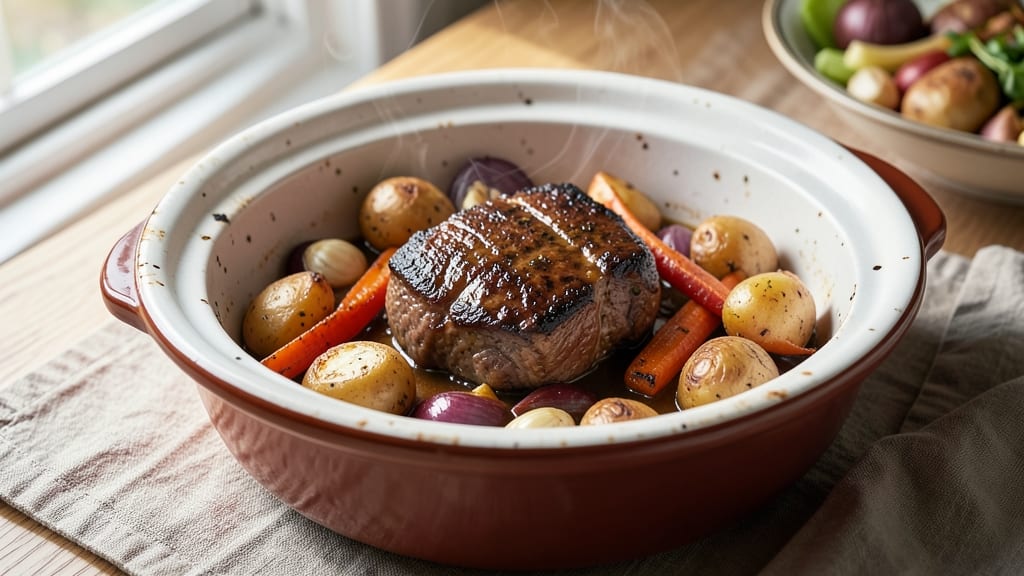
This beef and vegetable slow cooker recipe transforms tough cuts into fork-tender perfection with minimal effort—ideal for busy weeknights when you crave hearty, flavorful meals without standing over the stove. The slow cooker does all the work, melting beef into rich, savory strands while vegetables soften into sweet, caramelized bites.
I developed this recipe after years of testing, ensuring the perfect balance of tender beef, vibrant vegetables, and aromatic herbs that make every bite satisfying.
The beauty of this dish lies in its simplicity: just a few staple ingredients—like chuck roast, potatoes, carrots, and onions—simmer together with herbs and spices until everything falls apart effortlessly. Unlike traditional stovetop methods, the slow cooker preserves moisture and deepens flavors without requiring constant attention.
The result is a one-pot wonder that’s rich, comforting, and packed with protein and vegetables, making it a complete meal in itself.
What sets this recipe apart is its versatility—adjust the liquid to your preference, swap in seasonal vegetables, or add aromatics like garlic and thyme for extra depth.
The slow cooker’s gentle heat ensures the beef remains tender while the vegetables develop a natural sweetness, creating a harmonious blend of textures and flavors. Whether you’re feeding a family or meal prepping for the week, this dish delivers restaurant-quality results with minimal effort.
Serve it over mashed potatoes, with crusty bread, or as-is for a satisfying, no-fuss dinner. The leftovers reheat beautifully, making it perfect for busy schedules. Let’s get started—your slow cooker is about to become your new favorite tool for effortless, hearty meals.
Ingredients for beef and vegetable slow cooker
Six hearty ingredients and your slow cooker transform tough beef into melt-in-your-mouth perfection with zero fuss.
| Ingredient | Amount | Notes |
|---|---|---|
| Chuck Roast 🥩 | 2 ½ lb | Boneless, cut into 2-inch chunks |
| Yellow Onions 🧅 | 2 whole | Medium size, sliced into wedges |
| Carrots 🥕 | 1 ½ lb | Whole, peeled, cut into 2-inch pieces |
| Russet Potatoes 🥔 | 2 lb | Cut into 2-inch chunks, peeled optional |
| Garlic Cloves 🧄 | 6 cloves | Minced or crushed for depth |
| Beef Broth 💧 | 2 cups | Low-sodium preferred, or homemade |
| Tomato Paste 🍅 | ½ cup | Squeeze tube or canned, no sugar added |
| Dried Thyme 🌿 | 1 tbsp | Or 1 tbsp fresh thyme leaves |
| Dried Rosemary 🌿 | 1 tsp | Crushed between fingers for aroma |
| Bay Leaves 🍃 | 2 whole | Remove before serving |
| Worcestershire Sauce 🍶 | 2 tbsp | Vegetarian version if needed |
| Kosher Salt 🧂 | 1 ½ tsp | Diamond Crystal preferred |
| Ground Black Pepper 🌶️ | 1 tsp | Freshly cracked for best flavor |
| Olive Oil 🫒 | 2 tbsp | For searing beef initially |
The chuck roast is the star—look for cuts with good marbling at Costco or your local butcher for the best texture. I always ask for it to be cut into 2-inch chunks myself, but pre-cut packages at Kroger save time. Fresh thyme and rosemary make a difference here, but dried works in a pinch (just double the amount). For the Worcestershire, Lea & Perrins is my go-to—it adds that umami punch that takes this from good to restaurant-quality. The beef broth? Homemade is ideal, but Swanson or Pacific Foods low-sodium options work perfectly without altering the flavor balance.
No Worcestershire? Extra soy sauce plus a splash of vinegar gets you close. Fresh thyme unavailable? Dried oregano at half the amount bridges the gap. The tomato paste can be that squeeze tube from Trader Joe's—it’s shelf-stable and perfect for small batches. Swap carrots for celery or parsnips if you prefer, but keep the 2-inch cut for even cooking. The potatoes? Russets hold up best, but Yukon Golds add creaminess if you're serving this with mashed potatoes on the side. And yes, you can absolutely use frozen veggies—they work just as well in slow cookers.
This reheats like a dream—better the next day as flavors meld. Store in an airtight container for 4-5 days in the fridge or freeze portions for 3 months. I double the recipe every time and portion it into containers for easy lunches. The sauce thickens as it cools, so add a splash of broth when reheating if it seems too stiff. Leftovers make the best sandwich filling too—just pile it high on crusty bread with a sprinkle of fresh parsley.
Why You'll Love This Recipe
- Deep Flavor Magic: That chuck roast? It melts into fork-tender perfection, while the garlic and onions caramelize just enough to coat every bite. Honestly, the slow cooker turns basic ingredients into something that tastes like you simmered it for hours (even when you didn’t).
- Leftovers That Don’t Suck: Between us, most slow-cooker meals leave you with sad, dry seconds. Not this one. The potatoes stay creamy, the beef stays juicy, and I’ve reheated these leftovers three times without complaint—even my picky husband asks for it.
- Budget-Friendly Feast: A single chuck roast feeds my family of four for days, and the veggies? They’re cheap staples. I’m talking $10 for a meal that fills the house with warmth and keeps everyone full without breaking the bank. (Yes, even on a Tuesday night.)
Step-by-step instructions for beef and vegetable slow cooker masterpiece
Here's how to transform tough chuck roast into fork-tender perfection with minimal effort.
Sear the Chuck Roast for Maximum Flavor
Heat a large skillet over medium-high heat and add the 2 tablespoons olive oil. Once shimmering, add the 2.5 lb chuck roast in a single layer, working in batches if needed. Sear for 4-5 minutes per side until deeply browned with a crust forming. This step develops the rich, caramelized foundation for your dish.
Real talk: Don't rush this part. You want that meat to develop a deep brown crust—this creates layers of flavor that slow cooking alone can't achieve. As you sear, you'll notice the beef releases juices and fat—let them pool in the pan. After searing, transfer the roast to your slow cooker.
Prepare and Layer the Vegetables
In the same skillet (no need to clean it), add the 2 whole yellow onions and 1.5 lb carrots cut into 2-inch pieces. Sauté for 3-4 minutes until the onions soften and carrots begin to caramelize slightly. This jump-starts their flavor development.
Transfer these to your slow cooker, then add the 2 lb russet potatoes cut into 2-inch chunks and the 6 cloves garlic cloves (minced or crushed). The potatoes will absorb all that rich beef flavor as they cook. Here's the thing—don't overcrowd the slow cooker. Arrange vegetables in a single layer around the chuck roast for even cooking.
Build the Flavor Base in the Slow Cooker
Return the skillet to medium heat and add the 0.5 cup tomato paste, stirring constantly for 1 minute until it darkens slightly. This creates a concentrated flavor bomb. Pour this into the slow cooker, followed by the 2 cups beef broth, 2 tablespoons Worcestershire sauce, 1.5 teaspoons kosher salt, and 1 teaspoon ground black pepper.
Add the 1 tablespoon dried thyme, 1 teaspoon dried rosemary (crushed between your fingers to release aroma), and 2 whole bay leaves. Stir everything together gently—just enough to combine. The slow cooker will work its magic from here, so no need to overmix. This is where all the flavors begin to meld together beautifully.
Cook Until Fork-Tender Perfection
Place the lid on your slow cooker and select the low setting. Cook for 7-8 hours until the chuck roast is fork-tender with no resistance. You'll know it's ready when a knife slides in easily and the meat pulls apart with minimal effort. The vegetables should be completely tender with the carrots and potatoes falling apart when pierced.
I know it seems like a long time, but patience pays off here. The slow cooking process breaks down the tough muscle fibers in the chuck roast, transforming it into melt-in-your-mouth goodness. If you're short on time, you can cook it on high for 5-6 hours, but low and slow gives you the best texture.
Finish and Serve with Confidence
Once cooked, carefully remove the 2 whole bay leaves (they can be bitter if left in). Taste the sauce and adjust seasoning if needed—you might want to add a pinch more salt or a splash of Worcestershire sauce to deepen the flavor. The dish should be rich, savory, and perfectly balanced.
Serve immediately over crusty bread or mashed potatoes to soak up every last bit of that delicious sauce. This hearty stew keeps well in the refrigerator for up to 4 days, making it perfect for meal prep. The flavors actually improve as it sits, so leftovers might be even better the next day!
Pro Tips For Making Beef And Vegetable Slow Cooker
- SEAR THE ROAST FIRST: Chuck roast needs that crust to stay juicy. Brown it hard in a hot pan with oil before dumping it in the slow cooker—even if you’re skipping other steps. I used to skip this, and the meat always turned out dry by the end.
- CUT POTATOES UNEVENLY: Russets break apart too easily when sliced neatly. Toss them in rough, 2-inch chunks—some whole, some halved—so they cook at different rates. This ensures some stay tender while others get that buttery collapse you want.
- ADD CARROTS LAST: Tossing carrots in at the start means mush. Wait until the last 2 hours of cooking, then nestle them around the beef so they soften just enough to be edible without turning to puree. (Your picky eaters will notice.)
- USE WHOLE GARLIC CLOVES: No need to mince—just smash them with the flat side of a knife. They’ll infuse the broth beautifully without turning it into a garlic-flavored sludge. (Yes, even if you’re impatient like me.)
Wine and beer pairings for these flavors
Red Wine Classics
For this hearty beef and vegetable stew, I always reach for a medium-bodied red wine with enough structure to stand up to the rich beef flavors while complementing the caramelized vegetables. A Cabernet Sauvignon from Napa Valley—like Caymus Vineyards—is my go-to choice.
Its dark fruit notes and subtle oak balance the dish's savory depth beautifully. If you prefer something more approachable, a Merlot from Washington State (try Chateau Ste. Michelle) offers softer tannins and plum flavors that harmonize perfectly with the thyme and rosemary.
Crisp White Alternatives
Don't overlook whites if you prefer them! A dry Riesling from Germany—like Dr. Loosen Blue Slate—works surprisingly well. Its bright acidity cuts through the richness while its mineral notes enhance the caramelized carrots and onions.
For something lighter, a Sauvignon Blanc from New Zealand (such as Oyster Bay) brings citrusy freshness that cleanses your palate between bites. The key is avoiding heavy, oaky whites that would clash with the stew's depth.
Beer Pairings
A dark ale is my top beer recommendation for this dish. Try a Belgian Dubbel like Westmalle Trappist—its caramel and raisin notes mirror the stew's slow-cooked sweetness while the maltiness complements the beef.
For something more accessible, a brown ale (such as Newcastle Brown Ale) offers a smooth, nutty profile that pairs beautifully with the thyme and Worcestershire sauce. Avoid hoppy IPAs, as their bitterness can overpower the dish's delicate flavors.
Seasonal Adjustments
In summer, I switch to a Pinot Noir from Oregon (like Domaine Serene)—its lighter body and red fruit notes feel refreshing against the warm-weather vegetables.
For winter, a Syrah from the Rhône Valley (such as Guigal Côtes du Rhône) brings spicy pepper notes that enhance the rosemary and black pepper in the stew. The key is matching the wine's intensity to the season's cooking approach—lighter in summer, bolder in winter.
Non-Alcoholic Options
For those skipping alcohol, a sparkling grape juice like Martinelli's Sparkling Brut works surprisingly well. Its acidity and bubbles cleanse the palate, while its grape notes complement the stew's fruitiness.
Alternatively, a ginger beer (such as Feather Ginger Beer) adds a zesty contrast that brightens the dish's richness. Both options keep the meal feeling celebratory without the alcohol.
Nutrition facts
Frequently asked questions
Can I use frozen vegetables instead of fresh?
Frozen vegetables work perfectly in slow cooker recipes—they're pre-cut, convenient, and won't dilute the flavor like fresh ones might as they release moisture. Just don't thaw them first; add them directly to the slow cooker with the other ingredients. The cooking time remains the same, and you'll get that same tender texture.
What cut of beef works best for this recipe?
Chuck roast is ideal because it's flavorful and becomes fork-tender when slow-cooked. Other good options include beef stew meat, short ribs, or even brisket. Avoid lean cuts like sirloin—they won't get as tender. If you can't find chuck roast, ask your butcher for "beef for stew" or "pot roast" cuts.
How do I adjust the liquid if my slow cooker is small?
If your slow cooker has less than 6 quarts capacity, reduce the beef broth to 1.5 cups and the tomato paste to 0.25 cup—this prevents a watery stew. The dish will still be flavorful because the vegetables and beef release their own juices during cooking. Just stir occasionally to distribute the liquid evenly.
Can I make this recipe in an Instant Pot?
Yes! Use the same ingredients but cook on high pressure for 45 minutes, then let it naturally release for 10 minutes. For best results, sear the beef first (as in the recipe) and sauté the vegetables. The Instant Pot version will be ready about 1 hour faster than the slow cooker, but the texture may be slightly firmer.
Why did my beef turn out tough instead of tender?
Overcooking or using the wrong heat setting is usually the culprit. Always cook on low for 7-8 hours—high heat can dry out the beef. Also, make sure your beef is cut into 2-inch chunks (smaller pieces cook faster). If it's still tough, try adding 1 cup extra broth and cooking another 1-2 hours on low.