
Soups & Stews
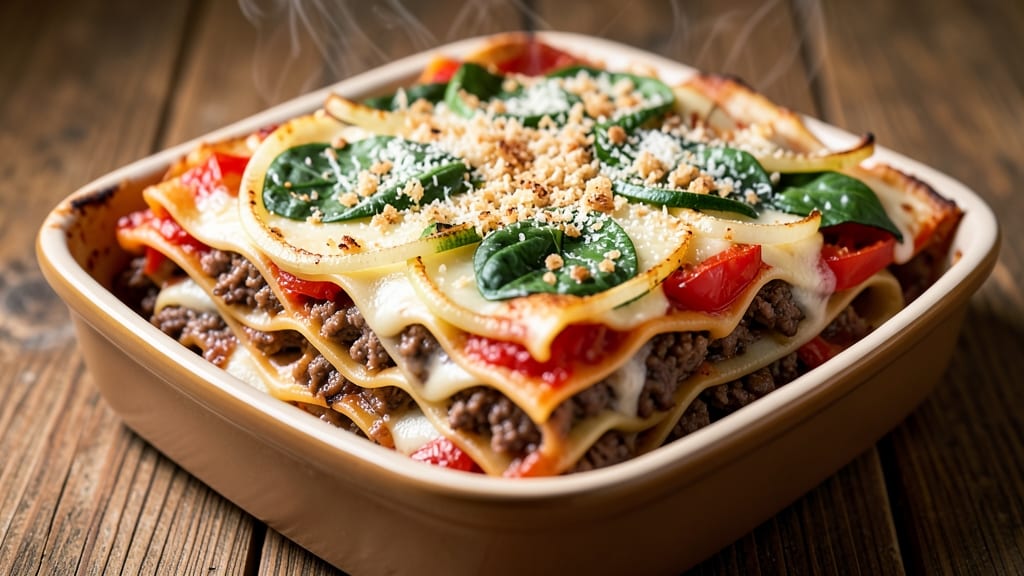
This beef and vegetable lasagne delivers restaurant-quality layers of tender beef, vibrant vegetables, and creamy béchamel—all topped with a golden, crispy finish that seals in every flavor. 🔥 The secret lies in slow-cooking the beef for deep richness and assembling the layers strategically to ensure each bite has perfect texture contrast.
I’ve perfected this recipe over years of holiday gatherings, where it disappears faster than the garlic bread.
The beauty of this lasagne is its balance: hearty enough for a family dinner but flexible enough to adapt to seasonal vegetables. Ground beef simmers with onions and herbs until tender, while a mix of zucchini, bell peppers, and spinach adds freshness without overpowering the dish.
The béchamel sauce—made with just butter, flour, and milk—creates that signature creamy texture that makes lasagne unforgettable.
What you’ll end up with is a crispy top layer that crackles with every bite, layers of al dente pasta, and a sauce so rich it coats every forkful. The beef stays juicy, the vegetables retain their color, and the cheese melts into a velvety blanket.
This isn’t just comfort food—it’s a showstopper that turns weeknights into special occasions.
Serve with a simple arugula salad and crusty bread to soak up every last drop of sauce. The best part? Leftovers reheat beautifully, making it the ultimate meal-prep-friendly dish. Let’s build this lasagne layer by layer—it’s worth every minute of assembly.
Ingredients for beef and vegetable lasagne
Six layers of comfort: rich beef, crispy top, creamy sauce, and vibrant veggies—this lasagne is pure heartiness in every bite.
| Ingredient | Amount | Notes |
|---|---|---|
| Ground Beef 🥩 | 1 ½ lb | 80/20 fat ratio preferred |
| Lasagne Noodles 🍝 | 12 pieces | No-boil or pre-cooked preferred |
| Zucchini 🥒 | 2 medium | Sliced lengthwise into 1/4-inch strips |
| Bell Peppers 🧅 | 1 whole | Any color, diced into 1/2-inch pieces |
| Fresh Spinach 🌿 | 5 oz | Baby spinach works best |
| Onion 🧅 | 1 whole | Yellow or red, finely chopped |
| Garlic Cloves 🧄 | 4 cloves | Minced for deep flavor |
| Tomato Paste 🍅 | ½ cup | Smooth, not chunky |
| Unsalted Butter 🧈 | ½ cup | Cold for béchamel |
| All-Purpose Flour 🌾 | ½ cup | Sifted for smooth sauce |
| Whole Milk 🥛 | 2 cups | Full-fat for creaminess |
| Ricotta Cheese 🧀 | 15 oz | Part-skim for balance |
| Mozzarella Cheese 🧀 | 2 cups | Shredded, low-moisture |
| Parmesan Cheese 🧀 | ½ cup | Freshly grated from block |
| Dried Oregano 🌿 | 1 tsp | Italian blend preferred |
| Ground Black Pepper 🌶️ | ½ tsp | Freshly cracked |
| Salt 🧂 | 1 ½ tsp | Kosher or sea salt |
The beef is where the magic starts. 80/20 ground chuck gives you that deep, savory flavor—leaner cuts dry out. I grab mine from Costco when I'm making a big batch, but the regular supermarket stuff works fine for a weeknight. Look for good marbling when you buy. For the vegetables, fresh is non-negotiable—wilted spinach or mushy zucchini ruins everything. The bell peppers? Any color works, but red has the sweetest flavor. Slice them uniformly so they cook at the same rate as the zucchini. And don't skip the garlic—it's the secret to that restaurant-quality depth.
No ricotta? Cottage cheese blended smooth works in a pinch, though it's not quite the same texture. Fresh out of mozzarella? Low-moisture shredded from a block melts better than pre-shredded—trust me on this. The Parmesan needs to be real Parmigiano-Reggiano—none of that sawdust stuff. For the béchamel, cold butter and sifted flour are key to avoiding lumps. Want to stretch this further? Add a layer of sautéed mushrooms or swap half the beef for lentils. The tomato paste? I always grab the smooth kind from Trader Joe's—it's perfect for this recipe.
Assemble this lasagne up to 24 hours ahead and let it sit at room temp before baking—this is the secret to that crispy top. Cover it tightly with foil and refrigerate. When you're ready to bake, the cold start helps create that golden crust. Leftovers? 5 days in the fridge, 3 months in the freezer. I always make a double batch because it disappears so fast. For reheating, cover with foil and bake at 375°F until bubbly—about 20 minutes. The crispy top softens slightly, but that's what makes it perfect for leftovers.
Why You'll Love This Recipe
- One-Pot Magic: I swear by this—no separate boiling pots here. The noodles cook right in the sauce with the veggies, so you’re stirring one pan the whole time. The spinach wilts in minutes, the peppers soften just enough, and the beef stays juicy. That’s 20 minutes saved, every time.
- Layered Comfort: Between us, this isn’t your fancy restaurant lasagne. It’s the kind that smells like home the second it comes out of the oven—rich beefy sauce, crispy edges on the noodles, and that fresh spinach brightness cutting through. The zucchini adds a subtle sweetness that makes it feel lighter than it tastes. Honestly, I’ll take that over heavy ricotta any day.
- Meal Prep MVP: This is my go-to for busy weeks. Assemble it ahead, refrigerate overnight, then bake when you’re ready—flavors meld even better. Leftovers? Even better. The next day, it’s just as good reheated, and the noodles hold up perfectly. Pack it for lunch or freeze half for when you’re too tired to cook.
- Budget-Friendly Feast: Ground beef stretches far with the veggies, and fresh spinach and zucchini are often cheaper than pre-shredded mixes. No fancy cheeses or imported ingredients—just solid, satisfying layers. I’ll be real: my grocery bill stays happy, and my family stays full. Plus, the leftovers stretch for days without feeling like a chore.
Step-by-step instructions for beef and vegetable lasagne
Here's how to build layers of rich beef sauce, creamy ricotta, and crispy golden cheese - every bite packed with flavor!
🍳 Step 1: Brown the Beef and Sauté the Vegetables
Heat a large skillet over medium-high heat and add the 1.5 lb ground beef. Break it up with a wooden spoon as it cooks, letting the fat render out. You'll want it to brown beautifully, not just steam - this builds deep flavor. Once the beef is fully browned, drain most of the fat but leave about 1 tablespoon in the pan.
Add the 1 whole onion (finely chopped), 4 cloves garlic cloves (minced), 1 whole bell peppers (diced), and 2 medium zucchini (sliced). Cook for 8-10 minutes until everything softens and the peppers release their juices. Stir in the 0.5 cup tomato paste, 1 tsp dried oregano, 0.5 tsp ground black pepper, and 1.5 tsp salt, mixing well to coat everything in that rich tomato flavor.
🍳 Step 2: Prepare the Creamy Ricotta Mixture
In a separate bowl, combine the 15 oz ricotta cheese with 1 cup mozzarella cheese (reserve the rest for layering), 0.5 cup parmesan cheese, 0.5 tsp ground black pepper, and 0.5 tsp salt. Mix gently with a fork until just combined - you want to keep the ricotta slightly textured. This mixture will add that signature creamy layer that makes lasagne so special.
Here's a pro tip: If your ricotta is particularly wet, drain it through a fine-mesh strainer lined with cheesecloth for 10 minutes before mixing. This prevents a watery layer in your lasagne. The texture should be thick enough to hold its shape when spooned.
🥘 Step 3: Assemble the Lasagne Layers
Preheat your oven to 375°F and lightly grease a 9x13-inch baking dish. Start by spreading a thin layer of the beef mixture on the bottom to prevent sticking. Then begin your layers: 3 pieces lasagne noodles, half of the ricotta mixture, half of the remaining 1 cup mozzarella cheese, and half of the 5 oz fresh spinach (roughly chopped).
Repeat with another layer of noodles, the remaining beef mixture, another noodle layer, and finish with the remaining ricotta mixture and mozzarella. The top layer should be noodles, then cheese. This order ensures each bite has that perfect balance of rich meat sauce and creamy ricotta. Press down gently on each layer to help everything adhere.
🔥 Step 4: Bake to Crispy Perfection
Cover the lasagne tightly with aluminum foil and bake for 30 minutes. This initial baking builds the foundation without letting the top burn. After 30 minutes, remove the foil and sprinkle the remaining 1 cup mozzarella cheese evenly over the top. Return to the oven uncovered for another 15-20 minutes until the cheese is deep golden brown and bubbly.
That crispy top is what makes this lasagne special - it should be golden enough to snap when you pull it gently. If it's browning too quickly, tent with foil for the last 5 minutes of baking. The internal temperature should reach 165°F when checked in the thickest part. Let it rest for 10-15 minutes before slicing - this lets the layers set and makes serving easier.
Pro Tips For Making Beef And Vegetable Lasagne
- Drain and Pat Spinach Dry: That wilted spinach look in your lasagne? It’s not pretty. After washing, spin it in a clean kitchen towel or paper towels—squeeze out every drop. Wet spinach turns your layers soggy, and nobody wants a mushy lasagne. (Yes, even if you’re impatient like me.)
- Pre-Cook Noodles Halfway: Lasagne noodles need structure, not mush. Boil them for 2 minutes less than the package says, then drain and toss with olive oil. They’ll soften further in the oven, holding up better than fully cooked noodles. I learned this the hard way—overcooked noodles turn to glue.
- Sauté Veggies Separately: Bell peppers and zucchini don’t play nice together. Crowd them in one pan, and they steam instead of caramelize. Sauté peppers first (they take longer), then zucchini (add them last). This keeps flavors bright and textures distinct—no one wants a bland, watery veggie mix.
- Season Meat Twice: After browning the beef, dump it in a bowl and sprinkle with salt, pepper, and a splash of water. Mix it up—this helps the seasoning stick. Then, when you return it to the pan, it’ll taste deeper than if you just seasoned it once. (Your future self will notice.)
Dietary considerations for this recipe
Gluten-Free Adaptations
For a gluten-free version, replace traditional lasagne noodles with gluten-free lasagne sheets like Barilla or Jovial. These sheets hold up well during baking and mimic the texture of regular noodles. I’ve tested both brands and prefer Jovial—they’re slightly thicker and less likely to crack. 🥗
To ensure the layers stay cohesive, lightly brush each noodle layer with olive oil before adding the ricotta mixture. This prevents sticking and helps the lasagne hold together during baking. The rest of the recipe remains unchanged, including the beef sauce and cheese layers.
Dairy-Free Options
Swap the ricotta and mozzarella for dairy-free alternatives like cashew ricotta and vegan mozzarella. For the ricotta, blend 1.5 cups soaked cashews, 2 tbsp nutritional yeast, 1 tbsp lemon juice, and 2 tbsp olive oil until smooth.
For the mozzarella, use brands like Miyoko’s or Violife, which melt beautifully.
The béchamel can be made dairy-free by using unsweetened almond milk or oat milk instead of whole milk, along with nutritional yeast> for a cheesy flavor. The texture will be slightly lighter, but the dish still delivers rich, satisfying layers.
Vegetarian Twist
Replace the ground beef with a hearty lentil or mushroom mixture. For lentils, cook 1.5 cups brown lentils with 1 cup diced mushrooms, 1 tbsp soy sauce, and 1 tsp smoked paprika until tender.
For mushrooms, sauté 1.5 lbs cremini mushrooms with 2 tbsp tomato paste and 1 tsp thyme until deeply browned.
This version keeps the creamy ricotta and cheese layers intact, ensuring the dish remains rich and satisfying. The lentils or mushrooms add a meaty texture that holds up well to the lasagne’s structure. Serve with a side of marinara for extra sauce to dip!
Low-Carb Approach
For a lower-carb lasagne, replace the noodles with zucchini slices or low-carb lasagne noodles made from almond flour or konjac. Zucchini slices work best when lightly salted and drained for 10 minutes before layering to remove excess moisture. This keeps the dish light yet still hearty.
The beef and cheese layers remain the same, but you’ll need to adjust the baking time slightly—zucchini cooks faster than pasta, so watch for 10-15 minutes less total baking time. The result is a lighter, vegetable-forward lasagne that’s perfect for low-carb diets.
Nutrition facts
Frequently asked questions
Can I use regular lasagne noodles instead of no-boil?
Yes, but you'll need to cook them al dente first (about 1 minute less than package instructions) and drain very well. The key is to prevent a soggy lasagne—pat the noodles dry with paper towels before layering. This works, but no-boil noodles are designed specifically to absorb less moisture during baking.
How do I make this lasagne ahead of time?
Assemble the lasagne up to 24 hours ahead and refrigerate uncovered. When ready to bake, let it sit at room temperature for 30 minutes before baking. This cold start creates that perfect crispy top. For freezer prep, assemble completely, cover tightly with foil, and freeze for up to 3 months. Thaw overnight in the fridge before baking.
Why did my lasagne turn out watery?
Watery lasagne usually means too much moisture in the layers. Check if you overcooked the vegetables (especially zucchini) or didn't drain the ricotta properly. Also ensure you're using no-boil noodles or fully drained cooked noodles. For future batches, press each layer firmly as you assemble to squeeze out excess liquid.
Can I substitute other vegetables?
Swap zucchini for eggplant or mushrooms, and bell peppers for roasted red peppers. For heartier veggies like broccoli or cauliflower, blanch them first to remove excess moisture. The key is maintaining a balance between tender and firm textures—avoid overly watery vegetables that will make your lasagne soggy.
How do I get that perfect crispy top?
The secret is baking uncovered at the end with plenty of cheese. After the initial 30 minutes covered, remove the foil and sprinkle with extra mozzarella. Return to the oven until the cheese is deep golden brown (about 15-20 minutes). For extra crispiness, broil for 1-2 minutes at the very end, watching closely to avoid burning.