
Soups & Stews
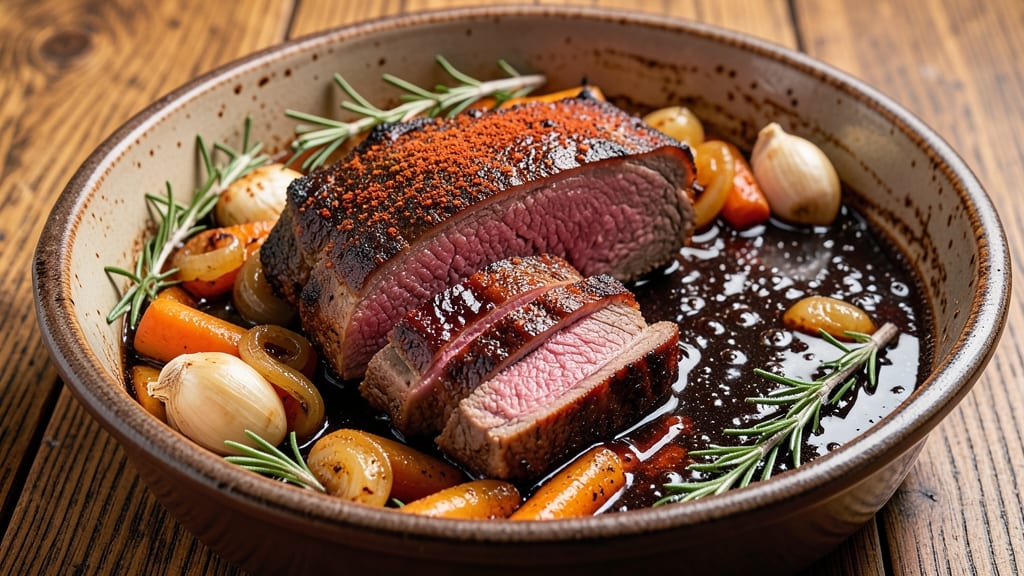
This beef and stout recipe transforms tough cuts into melt-in-your-mouth tenderness with the magic of dark beer. The malty depth of stout doesn’t just flavor—it tenderizes, creating a rich, caramelized crust that locks in juices while infusing every bite with roasted spice and smoky complexity.
I’ve perfected this technique over years of testing, balancing slow braising with bold seasoning to deliver restaurant-quality results at home.
The secret lies in the marriage of high heat searing and low-simmer braising, where stout beer reduces into a velvety sauce that clings to the beef like a second skin.
Unlike lighter beers, stout’s roasted maltiness stands up to hearty spices—think smoked paprika, allspice, and black pepper—while its natural acidity cuts through fat for a cleaner, more refined finish. This isn’t just a stew; it’s a deeply flavorful centerpiece that commands attention.
By the time you’re done, you’ll have fall-apart beef swimming in a glossy, aromatic sauce that’s perfect for ladling over creamy mashed potatoes or crusty bread.
The stout’s bitterness mellows into a caramelized sweetness that pairs beautifully with the beef’s natural richness, while the spices add layers of warmth that linger long after the last bite. This is comfort food elevated—bold enough for a dinner party, simple enough for a weeknight.
Whether you’re using short ribs, chuck roast, or even beef shanks, the technique remains the same: sear, braise, reduce. The stout isn’t just an ingredient—it’s the backbone of the dish, turning a simple pot roast into something unforgettable. Let’s get to work.
Ingredients for beef and stout
Six hearty ingredients transform tough beef into restaurant-quality melt-in-your-mouth perfection.
| Ingredient | Amount | Notes |
|---|---|---|
| Beef Chuck Roast 🥩 | 3 lb | 2-3 inch thick cut preferred |
| Imperial Stout Beer 🍺 | 2 cups | Guinness or similar malty stout |
| Yellow Onions 🧅 | 2 whole | Medium size, sliced into wedges |
| Carrots 🥕 | 4 medium | Whole, peeled and halved lengthwise |
| Garlic Cloves 🧄 | 6 cloves | Peeled, smashed with side of knife |
| Smoked Paprika 🌶️ | 2 tbsp | High-quality for authentic flavor |
| Ground Allspice 🌿 | 1 tsp | Freshly ground preferred |
| Ground Black Pepper 🌶️ | 1 ½ tbsp | Freshly cracked preferred |
| Kosher Salt 🧂 | 1 ½ tbsp | Diamond Crystal preferred |
| Tomato Paste 🍅 | ½ cup | High-quality, no sugar added |
| Vegetable Oil 🫒 | 2 tbsp | For searing, high smoke point |
| Fresh Thyme 🌿 | ¼ cup | Stems removed, chopped |
| Fresh Rosemary 🌿 | ¼ cup | Stems removed, chopped |
| Beef Stock 💧 | 1 cup | Homemade preferred, low sodium |
The beef cut is everything here—chuck roast delivers that coveted fall-apart texture, while short ribs add extra richness. Costco or Whole Foods carry excellent pre-cut options, but if buying whole, look for good marbling. Onions and carrots should be fresh, with vibrant color—no wilted or rubbery veggies. The stout? Guinness is ideal, but any malty stout like Samuel Smith's Imperial Stout works. For the spices, Penzeys or bulk bins at natural markets ensure maximum freshness. The tomato paste matters too—San Marzano is the gold standard, but any high-quality paste without added sugar will do.
No stout on hand? Dark beer like porter or even black coffee can substitute in a pinch, though the flavor will differ. Fresh thyme and rosemary are ideal, but dried at one-third the amount works if you're in a bind. The beef stock can be swapped for extra stout or even water if absolutely necessary, though the flavor will be less rich. For the tomato paste, Trader Joe's squeeze tubes are perfect—they're convenient, last months, and keep well. If you're feeling adventurous, add a 1 tsp of espresso powder to deepen the malty notes.
This dish tastes even better the next day as flavors meld. Store in the fridge for up to 5 days or freeze portions for 3 months. I always double the recipe—one for dinner, one for leftovers that turn into sandwiches the next day. For reheating, low heat is key to prevent drying out the beef. The sauce thickens as it cools, so a splash of stout or beef stock brings it back to perfection. Portion into containers for easy lunches—just add fresh herbs when serving.
Why You'll Love This Recipe
- One-Pot Magic: I swear by this—just toss the chuck roast, onions, carrots, and garlic into a Dutch oven, pour in that stout, and let it do the work. No chopping boards piled with scraps, no multiple pans to wash. The beer braises everything in one go while you sip your own glass of stout and pretend you’re a chef.
- Rich Without Effort: That imperial stout isn’t just for drinking—it’s the secret weapon. The maltiness caramelizes into a glossy, deep sauce that clings to the beef like it’s been slow-cooked for hours (because it has, but you didn’t have to babysit it). Add a splash of Worcestershire, and suddenly, you’ve got restaurant-level depth with zero fancy techniques.
- Leftovers That Beg for More: Between us, the second day of this dish is better than the first. The beef gets even more tender, the sauce thickens into a glossy glaze, and reheating it takes all of two minutes. I make this on Sundays just so I can eat it for lunch all week—no excuses, no takeout runs.
- Budget Beef, Big Payoff: A chuck roast is cheap, and stout beer is cheaper than wine. You’re basically getting a steakhouse-worthy meal for half the price, and the leftovers stretch across meals like a hero. Honestly, this is how I feed my family without crying every time I check the grocery bill. (Yes, even on a Tuesday night.)
Step-by-step instructions for deep roasted beef with stout and spice
Here's how to transform a simple chuck roast into a rich, malty masterpiece with layers of spice and depth.
Sear the Beef Chuck Roast for Maximum Flavor
Pat the 3 lb Beef Chuck Roast completely dry with paper towels—this is non-negotiable for crispy crust. Heat 2 tbsp Vegetable Oil in a heavy Dutch oven over medium-high heat until shimmering. Place the roast in the pot, fat-side down, and sear undisturbed for 5 minutes until deeply browned. Flip and repeat on the other side.
Here's the thing—don't rush this step. You want that beautiful Maillard reaction happening. After searing both sides, remove the roast and set it aside. The goal is to build flavor in the pan, and we'll use that later. If you see the oil smoking excessively, reduce heat slightly—you want golden brown, not charred.
Build the Spiced Vegetable Base
In the same Dutch oven, add the 2 whole Yellow Onions and 4 medium Carrots (halved lengthwise). Sauté for 8-10 minutes until the onions soften and the carrots begin to caramelize. Add the 6 cloves Garlic Cloves (smashed with the side of your knife) and cook for another 1 minute until fragrant.
Now it's time for the spice blend. Add 2 tbsp Smoked Paprika, 1 tsp Ground Allspice, 1.5 tbsp Ground Black Pepper, and 1.5 tbsp Kosher Salt. Stir everything together for 1 minute to toast the spices and let their aromas bloom. This is where the deep, smoky, slightly sweet complexity starts developing. You'll smell that malty promise we're chasing.
Deglaze with Stout and Tomato Paste
Pour in the 2 cups Imperial Stout Beer, scraping up all those beautiful browned bits from the bottom of the pot. Let it simmer for 5 minutes until reduced by about half. Then stir in the 0.5 cup Tomato Paste and cook for another 3 minutes until thickened slightly. This creates a rich, velvety base that will carry all the flavors.
The stout is doing double duty here—it's both a cooking liquid and a flavor enhancer. That malty depth from the beer will penetrate the beef as it roasts, creating a tender, flavorful result. If you're using a particularly hoppy stout, you might want to reduce it a bit longer to concentrate those flavors.
Add Herbs and Braise to Tender Perfection
Return the seared beef roast to the pot, along with the 0.25 cup Fresh Thyme and 0.25 cup Fresh Rosemary. Pour in the 1 cup Beef Stock and bring everything to a simmer. Cover the pot and transfer to a 325°F oven. Here's where patience pays off—braise for 3-3.5 hours until the beef is fork-tender and easily pulls apart.
About halfway through cooking, check the liquid level. If it's reduced too much, add a splash of water or more stout to keep the beef moist. The internal temperature should reach 203°F at the thickest part—this is the "probe tender" stage where connective tissues break down completely. Real talk: this is the moment that matters, so don't rush it.
Rest and Serve with Confidence
Remove the roast from the pot and transfer it to a cutting board. Tent loosely with foil and let it rest for 15-20 minutes. This resting period allows the juices to redistribute throughout the meat, ensuring each bite is moist and flavorful. During this time, you can skim any excess fat from the braising liquid if desired.
Slice the beef against the grain into ½-inch thick pieces. The result should be fork-tender with a rich, malty sauce clinging to each bite. Serve with the reduced stout braising liquid spooned over the top. This dish delivers deep, complex flavors that balance the richness of the beef with the earthy notes from the stout and aromatic spices. Perfect for feeding a crowd or enjoying a hearty weeknight meal.
Pro Tips For Making Beef And Stout
- SEAR THE ROAST FIRST: Don’t just toss that chuck roast straight into the pot—get it screaming hot in a dry skillet for 3-4 minutes per side before adding the beer. The crust locks in flavor and keeps the meat from turning into mush later. (Yes, even if you’re impatient like me.)
- USE COLD BEER: Grab that stout straight from the fridge and pour it in at the end of searing, not when the pot’s already bubbling. Cold beer adds body and cuts through the richness without turning the sauce into a boozy puddle. I learned this the hard way after making a batch that tasted like warm, flat swill.
- CHOP ONIONS IN CHUNKS: Skip the dice—cut those yellow onions into ½-inch chunks so they soften but don’t disappear into the sauce. Whole cloves of garlic (peeled, but left intact) add depth without turning the dish into a mushy puree. (Your future self will thank you for not overcomplicating it.)
- SKIP THE CROWDED POT: If your Dutch oven looks like a soup can after adding everything, spread the veggies out in a single layer first. Overcrowding steams the onions and carrots instead of caramelizing them, and that’s when the dish starts tasting bland. Trust me, a little patience here makes a real difference.
Essential equipment for great beef and stout
Heavy-Duty Dutch Oven
This is your workhorse for this recipe—I swear by a 5-6 quart Dutch oven with a tight-fitting lid. Look for Le Creuset or All-Clad for durability, but Lodge cast iron is a budget-friendly alternative that still delivers.
The thick base distributes heat evenly, preventing hot spots that could burn your stout sauce or dry out the beef. I’ve made this recipe in a stainless steel pot, but the flavor development just isn’t as consistent. 🔥
Meat Thermometer
You cannot skip this. A digital instant-read thermometer like the Thermoworks Smoke or Meater ensures your beef hits the perfect 203°F internal temperature without overcooking. I’ve seen home cooks guess and end up with tough, dry meat.
The probe should go into the thickest part of the roast—no fat or bone—so you’re reading the muscle temperature accurately. Pro tip: Calibrate your thermometer before use to avoid false readings.
Carving Knife
For slicing the braised beef, invest in a sharp 8-inch carving knife like the Wüsthof Ikon or Mac Knife Pro. A dull knife crushes the tender meat, releasing juices and making clean slices impossible. I slice against the grain in ½-inch thick pieces to maximize tenderness.
If you don’t have a dedicated carving knife, a high-quality chef’s knife will work—just hone it well first. Never force the knife; let the blade do the work. 💡
Tongs for Handling
Use heat-resistant silicone or stainless steel tongs (like OXO Good Grips) to handle the hot Dutch oven and flip the beef during searing. They give you better grip than spatulas and prevent splatters from the stout beer.
I also keep a small ladle nearby to skim excess fat from the braising liquid if needed. Avoid wooden utensils—they can absorb flavors and burn easily with the high heat.
Slow Cooker Alternative
If you’re short on time, a 6-quart slow cooker (like Instant Pot or Crock-Pot) works in a pinch. Brown the beef in a separate skillet first, then transfer everything to the slow cooker and cook on low for 8 hours.
The stout reduces more slowly, so you’ll need to adjust the sauce consistency at the end. Just don’t skip the sear—it’s what builds the deep, caramelized crust that makes this dish special. 🍲
Nutrition facts
Frequently asked questions
Can I substitute a different beer for stout in this recipe?
While stout provides that signature malty depth and roasted complexity, you can use dark beers like porter, black IPA, or even black coffee in a pinch. For best results, choose a beer with at least 4% ABV and avoid light lagers or pilsners—they lack the body and flavor needed to tenderize the beef properly. If using coffee, add 1 tsp instant espresso powder to the spice blend for a similar depth.
How do I adjust this recipe for a slow cooker?
Brown the beef in a skillet first, then transfer everything to a 6-quart slow cooker with the stout, veggies, and spices. Cook on low for 8 hours (high would be too fast). The sauce will reduce more slowly, so you may need to thicken it with a cornstarch slurry or extra tomato paste before serving. Never skip the initial sear—it's what creates that flavorful crust!
Why does my beef turn out tough instead of tender? This usually happens from overcooking or insufficient liquid. Always use a meat thermometer to check for 203°F internal temp—never guess! If the liquid evaporates too quickly, add ½ cup beef stock halfway through cooking. Also,
Can I make this recipe ahead of time?
This dish tastes even better the next day as flavors meld. Store in the fridge for up to 5 days or freeze portions for 3 months. Reheat gently on the stove with a splash of stout or beef stock to restore moisture. The sauce will thicken as it cools, so add liquid when reheating to reach your preferred consistency.
What's the best way to serve this beef and stout dish?
Pair it with creamy mashed potatoes or crusty sourdough bread to soak up the rich sauce. For a complete meal, add roasted root vegetables or a simple green salad with a tangy vinaigrette. The malty flavors also complement dark chocolate desserts like stout beer cake or chocolate-dipped strawberries for an unexpected but delicious pairing!