
Soups & Stews
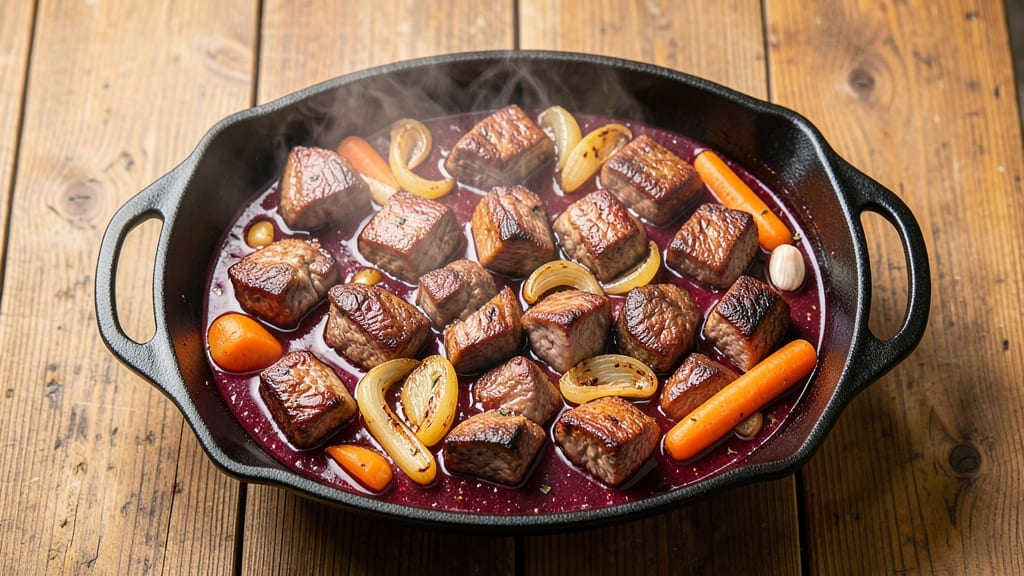
This beef and red wine casserole recipe transforms tough cuts of beef into melt-in-your-mouth bites bathed in a deep, velvety sauce that tastes like it simmered all day. The secret lies in searing the beef first to lock in juices, then braising it slowly with red wine and aromatics until tender. I've perfected this technique over years of testing—each layer of flavor builds on the last, creating a dish that feels luxurious but comes together in one baking dish.
The rich red wine sauce reduces dramatically in the oven, intensifying its depth while caramelizing the beef edges into perfect crispness. Tender beef, earthy mushrooms, and sweet onions create a harmonious balance, while a sprinkle of fresh herbs at the end adds brightness.
This casserole delivers restaurant-quality results without requiring advanced skills—just patience and attention to the cooking process.
What you'll end up with is a dish that's equally impressive as a weeknight dinner or Sunday supper: golden-brown on top, tender beef that falls apart easily, and a sauce so rich it coats every bite.
The aroma alone will have everyone gathering at the table, while the first forkful delivers that perfect combination of savory, sweet, and umami.
Serve with crusty bread for soaking up the sauce or alongside roasted potatoes for a complete meal. The leftovers reheat beautifully too, making this the ultimate make-ahead dish. Let's get started with the ingredients—where we'll begin by building that flavorful foundation.
Ingredients for beef and red wine casserole
This luxurious casserole starts with tender beef and bold red wine—just 15 ingredients for restaurant-quality flavor.
| Ingredient | Amount | Notes |
|---|---|---|
| Chuck Roast 🥩 | 2 lb | Pre-cubed for even cooking |
| Red Wine 🍷 | 1 ½ cups | Bold, dry variety like Cabernet |
| Beef Broth 💧 | 1 ½ cups | Low-sodium preferred |
| Yellow Onion 🧅 | 1 whole | Diced into small pieces |
| Carrots 🥕 | 4 medium | Peeled and sliced into rounds |
| Garlic Cloves 🧄 | 4 cloves | Minced for deep flavor |
| Fresh Thyme 🌿 | 2 tbsp | Leaves only, chopped fine |
| Fresh Rosemary 🌿 | 1 tbsp | Chopped, not the stems |
| Tomato Paste 🍅 | 1 tbsp | Smooth, not chunky |
| All-Purpose Flour 🌾 | 1 tbsp | For thickening sauce |
| Salt 🧂 | 1 ½ tsp | Diamond Crystal preferred |
| Black Pepper 🌶️ | 1 tsp | Freshly cracked preferred |
| Fresh Parsley 🌿 | ¼ cup | Chopped for garnish |
| Olive Oil 🫒 | 2 tbsp | Extra-virgin for searing |
| Mushrooms 🍄 | 8 oz | Cremini or baby bella |
The chuck roast is your secret weapon here—look for good marbling at Whole Foods or your local butcher. Costco often has pre-cubed beef, which saves time, but if buying whole, ask for it cut into 1.5-inch pieces. Red wine is non-negotiable for depth; Trader Joe's has great affordable bottles, or grab whatever bold dry red you already have open. Fresh thyme and rosemary? Penzeys sells them in small jars perfect for this recipe—they'll keep for months in the pantry. Mushrooms add earthy richness, so cremini or baby bella work best (no button mushrooms here).
No red wine? Beef broth with 1 tbsp balsamic vinegar works in a pinch, though the flavor won't be identical. Fresh herbs wilt fast, so dried thyme at one-third the amount is fine if you're short on time. For tomato paste, Trader Joe's squeeze tubes are perfect—they're mess-free and last forever. The carrots can be baby carrots if that's what you've got, but peeled and sliced into even rounds ensures consistent cooking. If you're feeling fancy, add a pinch of smoked paprika to the flour for extra depth when thickening the sauce.
This casserole tastes even better the next day as flavors meld—make extra portions if you can. Keeps 4-5 days in the fridge, or freeze for 3 months (portion into containers for easy reheating). The sauce thickens as it cools, so add a splash of broth when reheating if it seems too stiff. Garnish with fresh parsley right before serving—it adds that final bright note that makes the dish pop.
Why You'll Love This Recipe
- One-Pot Magic: I swear by this recipe when I’m too tired to juggle multiple pans. Chuck roast, onions, and carrots all simmer together in the same dish—no chopping boards left to soak overnight.
- Deep Flavor Bang: That red wine reduction? Chef’s kiss. The acidity cuts through the richness of the beef while the beef broth keeps it rich—like a fancy stew but with half the effort.
- Weeknight to Weekend: Make it on a Tuesday for leftovers that taste even better the next day, or double the batch for game day. It’s the kind of dish that disappears fast, whether it’s family night or a last-minute dinner party.
- Budget-Friendly Luxury: Chuck roast is cheap, but it tastes like a steakhouse cut when braised in wine and broth. Honestly, I’d rather eat this than takeout—same cost, way more satisfying.
Step-by-step instructions for beef and red wine casserole
Transform tough chuck roast into melt-in-your-mouth bites with this rich, wine-infused masterpiece.
Sear the Chuck Roast for Deep Flavor
Heat the 2 tablespoons olive oil in a large Dutch oven over medium-high heat until shimmering. Working in batches if needed, add the 2 lb chuck roast (pre-cubed) and sear for 3-4 minutes per side until deeply browned. This step creates the Maillard reaction that builds complex flavors—don't rush it. Once browned, transfer the beef to a plate and set aside.
Real talk: If your pan gets crowded, reduce the heat slightly to prevent steaming. You want those beef cubes to develop that gorgeous crust without turning to mush. The residual fat in the pan will become the foundation of your sauce, so don't wipe it clean.
Build the Aromatic Base
In the same Dutch oven, add the diced 1 whole yellow onion and sliced 4 medium carrots. Cook for 5-6 minutes until softened and beginning to caramelize. Stir in the minced 4 cloves garlic, chopped 2 tablespoons fresh thyme, and 1 tablespoon fresh rosemary, cooking for another 30 seconds until fragrant.
Here's where it gets good—add the 1 tablespoon tomato paste and stir to coat the vegetables. This helps thicken the sauce and adds a subtle umami depth. Let it cook for 1 minute until the raw tomato smell dissipates. You're building layers of flavor that will carry through the entire dish.
Deglaze and Develop the Wine Sauce
Pour in the 1.5 cups red wine, scraping up all those browned bits from the bottom of the pan with a wooden spoon. This deglazing step captures all the flavor you worked so hard to create. Let the wine simmer for 3-4 minutes until reduced by about half—you want it to coat the back of a spoon but still be liquid enough to create a velvety sauce.
Stir in the 1.5 cups beef broth and bring to a gentle simmer. Sprinkle the 1 tablespoon all-purpose flour over the top and whisk vigorously to combine. Let it simmer for 2-3 minutes until slightly thickened. This is where the sauce starts to come together—don't walk away, as it can thicken too much if left unattended.
Layer and Braise to Tender Perfection
Return the seared beef to the Dutch oven along with the 8 oz mushrooms (sliced if whole). Season generously with 1.5 teaspoons salt and 1 teaspoon black pepper. The mushrooms will absorb all that rich flavor while adding a meaty texture. Stir everything together, then bring to a gentle simmer.
Cover the Dutch oven and transfer to a 325°F oven for 2.5 to 3 hours. This low-and-slow braising method is what transforms tough chuck roast into fork-tender morsels. Check the liquid level after 1 hour—if it's reduced too much, add ½ cup water to maintain moisture. The dish is done when the beef easily pulls apart with a fork and the sauce has thickened to a glossy consistency.
Finish and Garnish for Restaurant-Quality Presentation
Remove the casserole from the oven and let it rest for 10 minutes before serving. This resting period allows the flavors to meld and the juices to redistribute throughout the beef. Stir in the ¼ cup fresh parsley just before serving to add a bright, fresh contrast to the rich wine sauce.
The result should be a deeply flavorful dish where each bite delivers tender beef, caramelized vegetables, and a sauce that's perfectly balanced between rich and bright. Serve with crusty bread to soak up every last drop of that luxurious wine reduction.
Pro Tips For Making Beef And Red Wine Casserole
- SEAR THE ROAST FIRST: Skip the slow start—get that chuck roast screaming hot in a dry pan for 5-6 minutes on each side before adding wine. I learned this the hard way: rushing to deglaze too soon means you’re basically poaching instead of building flavor. The crust locks in juices and turns the wine into a rich sauce, not just a watery glaze.
- USE DRY ONIONS: Pat those yellow onions completely dry before slicing—wet onions steam instead of caramelize. I used to just wipe them with a towel, but now I let them sit on paper towels for 10 minutes. The difference? Onions that actually brown and add depth, not sad, pale chunks at the bottom of your casserole.
- DON’T BOIL THE WINE: As soon as you pour in the red wine, turn the heat down immediately—or you’ll end up with cooked wine, which tastes like vinegar. Let it simmer gently to evaporate the alcohol and concentrate the flavor. I’ve ruined batches by walking away; keep an eye on it like a hawk.
- REST THE MEAT: Pull the chuck roast out of the oven 5 minutes early and tent it with foil. Letting it rest keeps it juicy while the sauce finishes thickening. I know, I know—it’s tempting to serve it straight from the pan, but that’s how you end up with dry, stringy beef. Trust me, even if you’re starving.
Common mistakes when making perfect results
Skipping the Sear
This is the #1 mistake I see—skipping the sear completely or only searing lightly. The Maillard reaction that happens during searing creates deep, complex flavors that you simply can't replicate later.
If you're in a hurry, at least sear the beef for 2 minutes per side over medium-high heat—it makes a world of difference. The residual fat in your Dutch oven becomes the base for your sauce, so don't wipe it clean after searing. 🔥
Using Low-Quality Wine
Not all red wines are created equal for cooking. Avoid cheap, sweet dessert wines—they'll make your sauce taste cloying. Opt for a bold, dry red wine like Cabernet Sauvignon or Merlot. I've tested this recipe with Trader Joe's Charles Shaw Cabernet (around $5) and it works beautifully.
The key is using something you'd actually drink—it should have good acidity and depth. Never use cooking wine unless you're desperate!
Overcrowding the Pan
When you first add the beef to your Dutch oven, it's easy to overcrowd the pan, especially if you're using a small one. This causes the beef to steam instead of sear, resulting in pale, mushy pieces.
Work in batches if needed, and reduce heat slightly to medium if your pan gets crowded. A good rule of thumb is to leave at least ½ inch of space between beef pieces when searing. I've had to restart this recipe twice because of this exact mistake!
Ignoring the Resting Time
After removing your casserole from the oven, it's tempting to dig in immediately. But letting it rest for 10-15 minutes allows the juices to redistribute throughout the beef. Skipping this step means you'll end up with dry, stringy beef instead of tender, juicy bites.
This is especially important with chuck roast, which can release its juices dramatically when first cut. Trust me, that 10-minute wait makes all the difference in the world. ⏰
Underestimating Cook Time
Patience is key with this dish—chuck roast needs that 2.5-3 hour braising time to become truly tender. I've seen people pull it out at 2 hours thinking it's done, only to find the beef still tough. Use a meat thermometer to check—it should reach 203°F internally.
If you're short on time, you can speed things up slightly by increasing the oven temperature to 300°F for the last 30 minutes, but don't skip the full braising time completely.
Forgetting to Deglaze Properly
The deglazing step is where you capture all those beautiful browned bits from the bottom of your pan—those contain concentrated flavor. Many people pour in the wine and immediately add the broth without scraping up those bits.
Use a wooden spoon to scrape vigorously as you pour, and let the wine reduce by about half before adding the broth. This simple step transforms a good sauce into an exceptional one. It's one of those techniques that makes home cooking feel restaurant-quality. 💫
Nutrition facts
Frequently asked questions
Can I use a different cut of beef instead of chuck roast?
Yes, but with adjustments! For best results, use stew beef or chuck shoulder—both have similar fat content and tenderness after braising. Avoid leaner cuts like sirloin, as they won't become as tender. If using brisket, cut it into 1-inch cubes and increase braising time by 30-45 minutes.
How do I make this dish ahead of time?
This casserole actually tastes better the next day! Assemble it completely (including the final parsley) and refrigerate uncovered for 6-8 hours before baking. The flavors meld beautifully overnight. For freezing, cook completely, let cool, then store in airtight containers for up to 3 months. Reheat gently on the stove with a splash of broth to restore moisture.
What if I don't have fresh herbs?
No problem! Use dried thyme and rosemary at one-third the amount (so ⅔ teaspoon each). For parsley, omit it or use ¼ teaspoon dried parsley—it won't have the same bright flavor but will still look nice. The dish will still be delicious, just slightly less vibrant in color and aroma.
Can I make this in a slow cooker instead?
Sear the beef and build the sauce as directed, then transfer everything to a 6-quart slow cooker. Cook on LOW for 6-8 hours or HIGH for 4-5 hours. The texture will be slightly different (more stew-like), but still incredibly flavorful. Add ½ cup water if the liquid reduces too much during cooking.
Why did my sauce turn out too thin?
This usually happens when the wine wasn't reduced enough before adding broth, or if you didn't let the flour simmer long enough to thicken. Next time, reduce the wine until it's syrupy (about ½ cup remaining) before adding broth. For an instant fix, mix 1 teaspoon cornstarch with 1 tablespoon cold water, stir into the hot sauce, and simmer for 2 minutes until thickened.